TOKYO (AP) — Japan was assessing damage Tuesday and cautioning people of potential aftershocks after a late-night 7.5 magnitude earthquake caused injuries, light damage and a tsunami in Pacific coastal communities.
At least 34 people were injured, one seriously, the Fire and Disaster Management Agency said. Most of them were hit by falling objects, public broadcaster NHK reported.
Click to Gallery
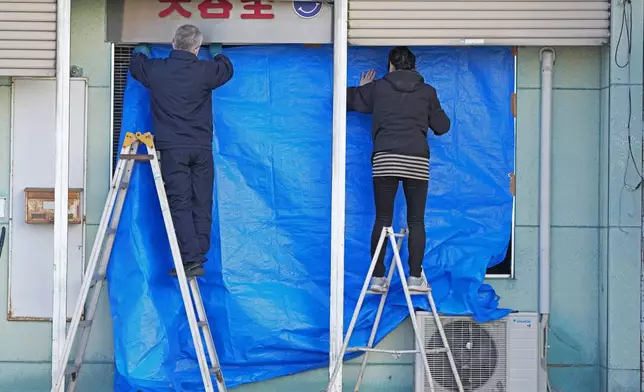
People cover the broken glasses with a blue sheet at a beauty salon in Hachinohe, Aomori prefecture, northern Japan Tuesday, Dec. 9, 2025, following a powerful earthquake on late Monday. (Kazuki Kozaki/Kyodo News via AP)
Japan's Prime Minister Sanae Takaichi speaks to reporters at the prime minister's office in Tokyo after a strong earthquake struck northeastern Japan. (Kyodo News via AP)
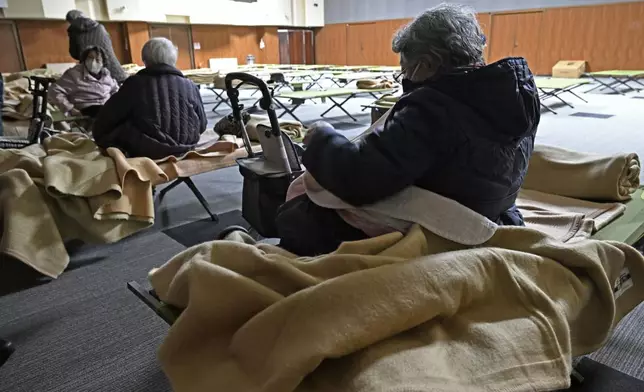
Evacuees get ready to return home as a tsunami advosory has been lifted in Hidaka town, northern Japan Tuesday, Dec. 9, 2025, following a powerful earthquake on late Monday. (Kyodo News via AP)
Papers are scattered on the floor at an office in Hakodate, Hokkaido, northern Japan Tuesday, Dec. 9, 2025, following a powerful earthquake on late Monday. (Kyodo News via AP)
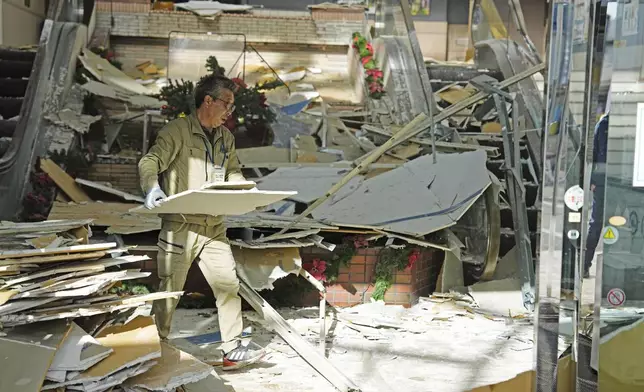
A man clears the debris from a powerful earthquake at a commercial facility in Hachinohe, Aomori prefecture, northern Japan Tuesday, Dec. 9, 2025. (Ren Onuma/Kyodo News via AP)
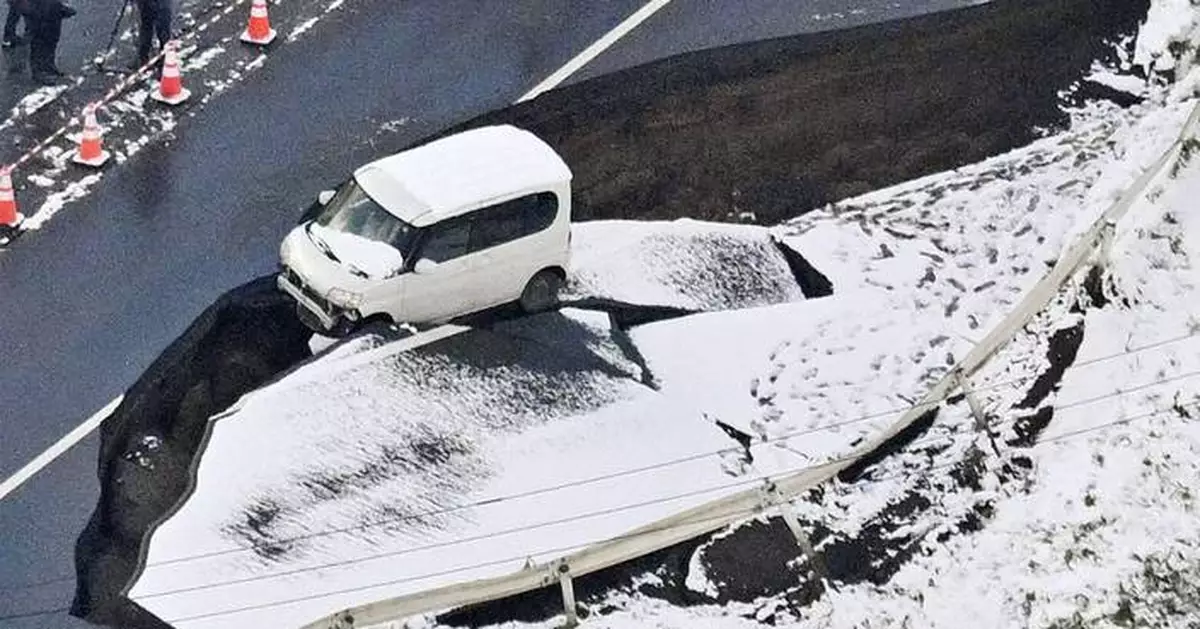
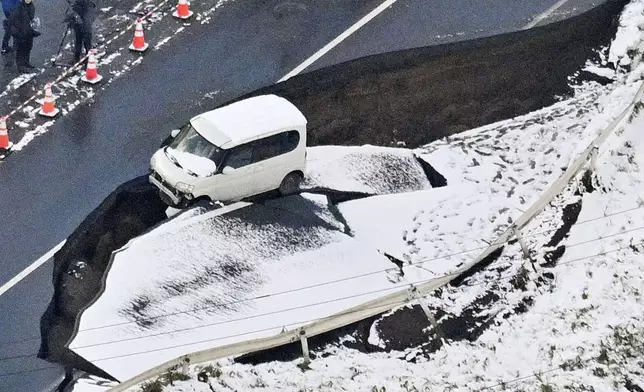
This aerial photo shows a vehicle sitting on a damaged road in Tohoku town, Aomori prefecture, northern Japan Tuesday, Dec. 9, 2025, following a powerful earthquake on late Monday. (Kyodo News via AP)
Prime Minister Sanae Takaichi told reporters an emergency task force was formed to urgently assess damage. “We are putting people’s lives first and doing everything we can,” she said.
At a parliamentary session Tuesday, Takaichi pledged the government would continue its utmost effort and reminded people they have to protect their own lives.
The 7.5 magnitude quake struck around 11:15 p.m. in the Pacific Ocean, around 80 kilometers (50 miles) off the coast of Aomori, the northernmost prefecture of Japan’s main Honshu island. The U.S. Geological Survey measured the quake at 7.6 magnitude and said it occurred 44 kilometers (27 miles) below the surface.
A tsunami of up to 70 centimeters (2 feet, 4 inches) was measured in Kuji port in Iwate prefecture, just south of Aomori, and waves up to 50 centimeters struck other communities in the region, the Japan Meteorological Agency said. NHK reported the waves damaged some oyster rafts.
The agency lifted all tsunami advisories by 6:30 a.m. Tuesday.
Chief Cabinet Secretary Minoru Kihara said about 800 homes were without electricity and Shinkansen bullet trains and some local lines were suspended in parts of the region in the early hours of Tuesday. East Japan Railway said bullet trains resumed operation in the region later Tuesday.
Power was mostly restored by Tuesday morning, according to the Tohoku Electric Power Co.
About 480 residents sheltered at Hachinohe Air Base and 18 defense helicopters were mobilized for a damage assessment, Defense Minister Shinjiro Koizumi said.
About 200 passengers were stranded for the night at New Chitose Airport in Hokkaido, NHK reported. Part of a domestic terminal building was unusable Tuesday after parts of its ceiling cracked and fell to the floor, according to the airport operator.
The Nuclear Regulation Authority said about 450 liters (118 gallons) of water spilled from a spent fuel cooling area at the Rokkasho fuel reprocessing plant in Aomori, but that its water level remained within the normal range and there was no safety concern. No abnormalities were found at other nuclear power plants and spent fuel storage facilities, the NRA said.
JMA cautioned about possible aftershocks in the coming days. It said there is a slight increase in risk of a magnitude 8-level quake and possible tsunami occurring along Japan's northeastern coast from Chiba, just east of Tokyo, to Hokkaido. The agency urged residents in 182 municipalities in the area to monitor their emergency preparedness in the coming week, reminding them that the caution is not a prediction of a big one.
Monday's quake occurred just north of the coastal region where the magnitude 9.0 quake and tsunami in 2011 killed nearly 20,000 people and destroyed the Fukushima Daiichi nuclear power plant.
“You need to prepare, assuming that a disaster like that could happen again," JMA official Satoshi Harada said.
Smaller aftershocks were continuing Tuesday. The U.S. Geological Survey reported a magnitude 6.6 and later a 5.1 quake in the hours after the initial temblor.
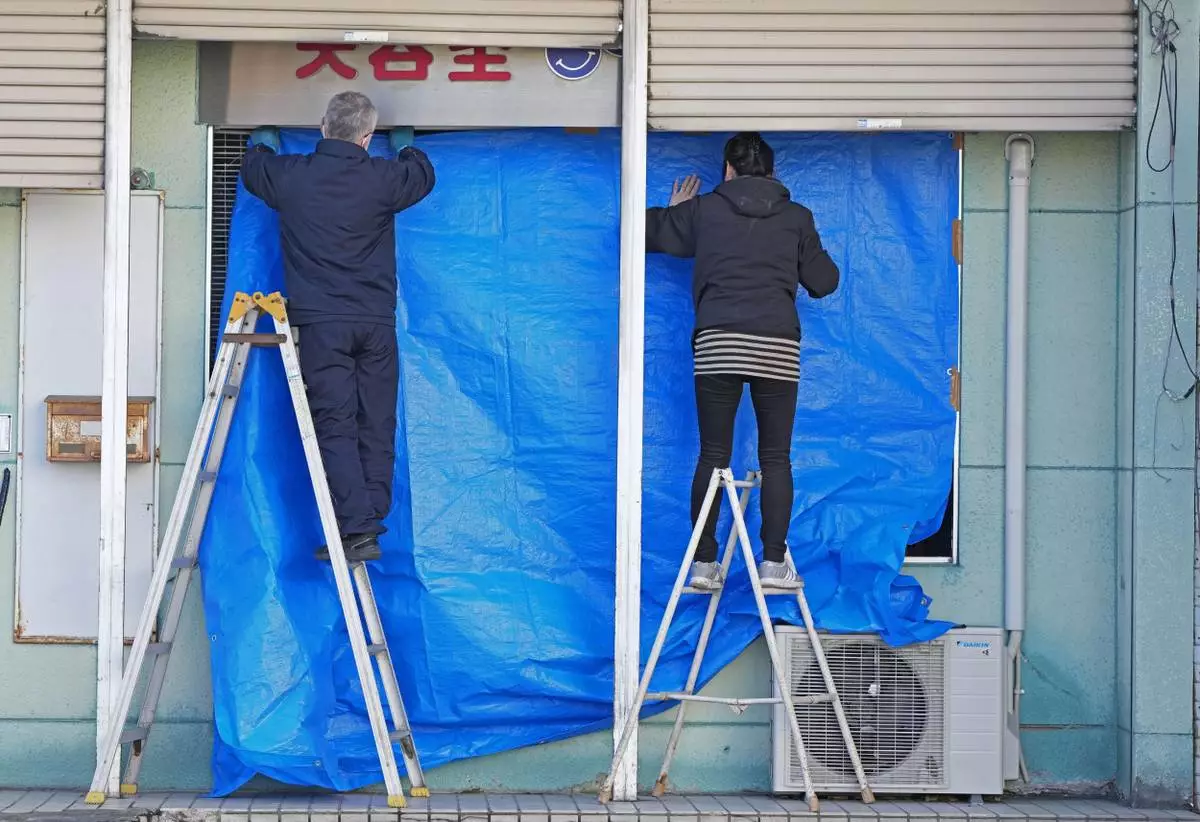
People cover the broken glasses with a blue sheet at a beauty salon in Hachinohe, Aomori prefecture, northern Japan Tuesday, Dec. 9, 2025, following a powerful earthquake on late Monday. (Kazuki Kozaki/Kyodo News via AP)
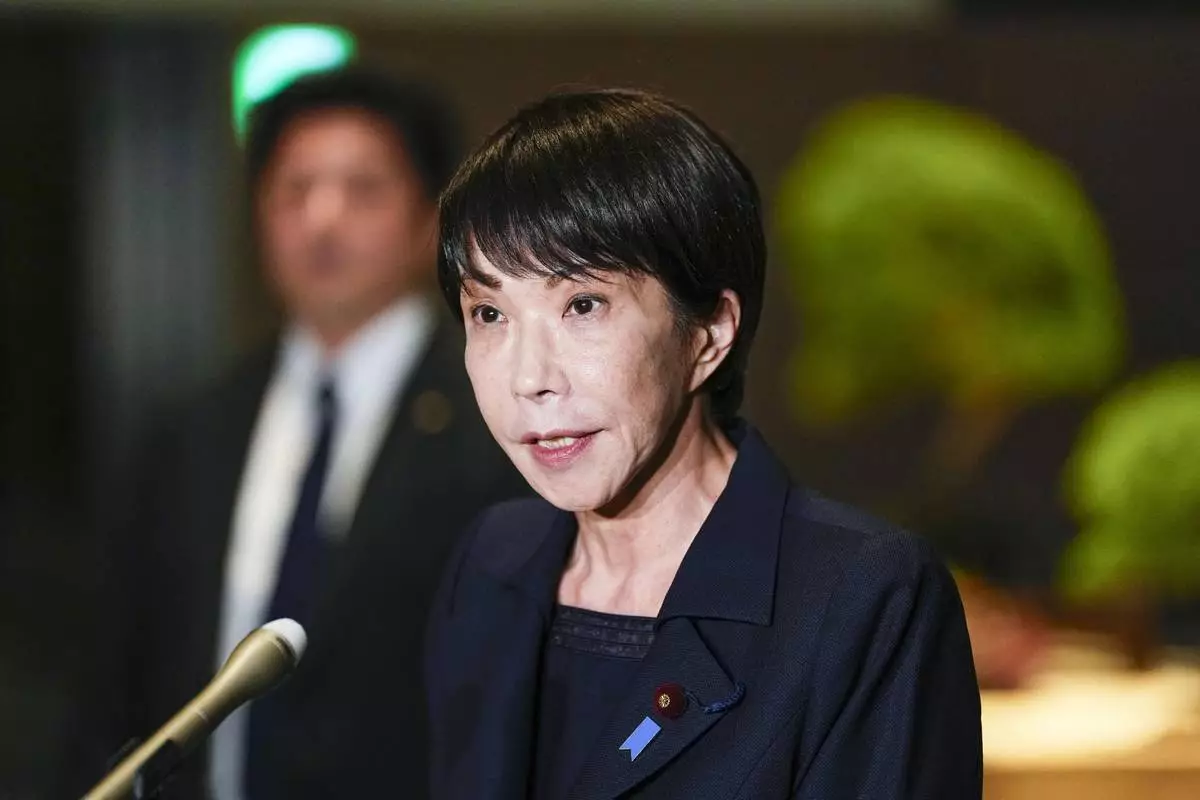
Japan's Prime Minister Sanae Takaichi speaks to reporters at the prime minister's office in Tokyo after a strong earthquake struck northeastern Japan. (Kyodo News via AP)
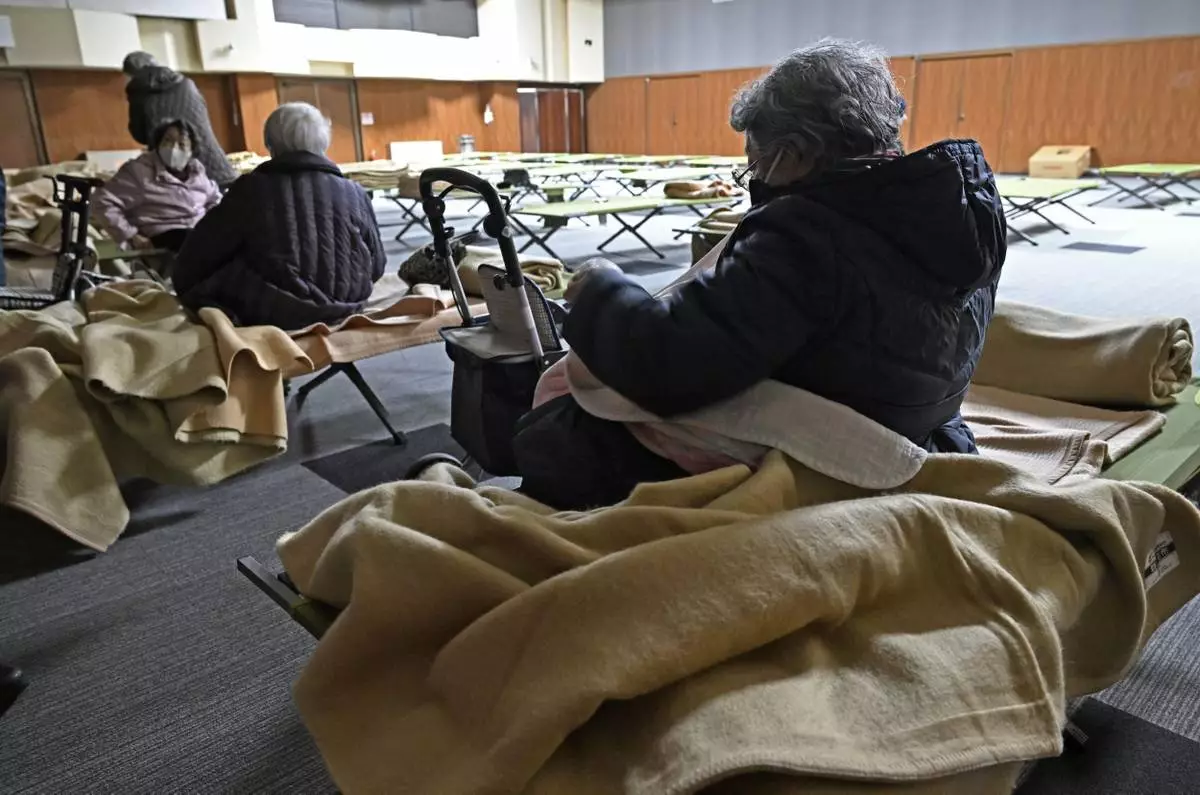
Evacuees get ready to return home as a tsunami advosory has been lifted in Hidaka town, northern Japan Tuesday, Dec. 9, 2025, following a powerful earthquake on late Monday. (Kyodo News via AP)
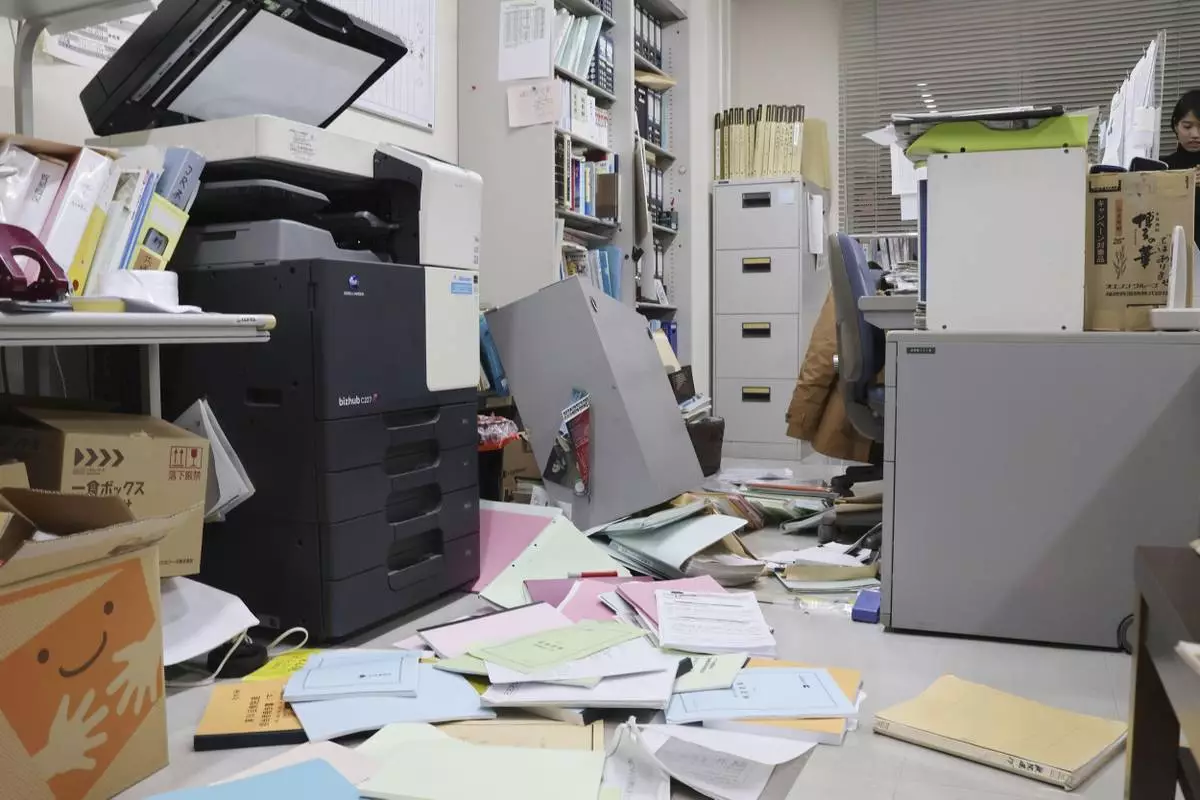
Papers are scattered on the floor at an office in Hakodate, Hokkaido, northern Japan Tuesday, Dec. 9, 2025, following a powerful earthquake on late Monday. (Kyodo News via AP)
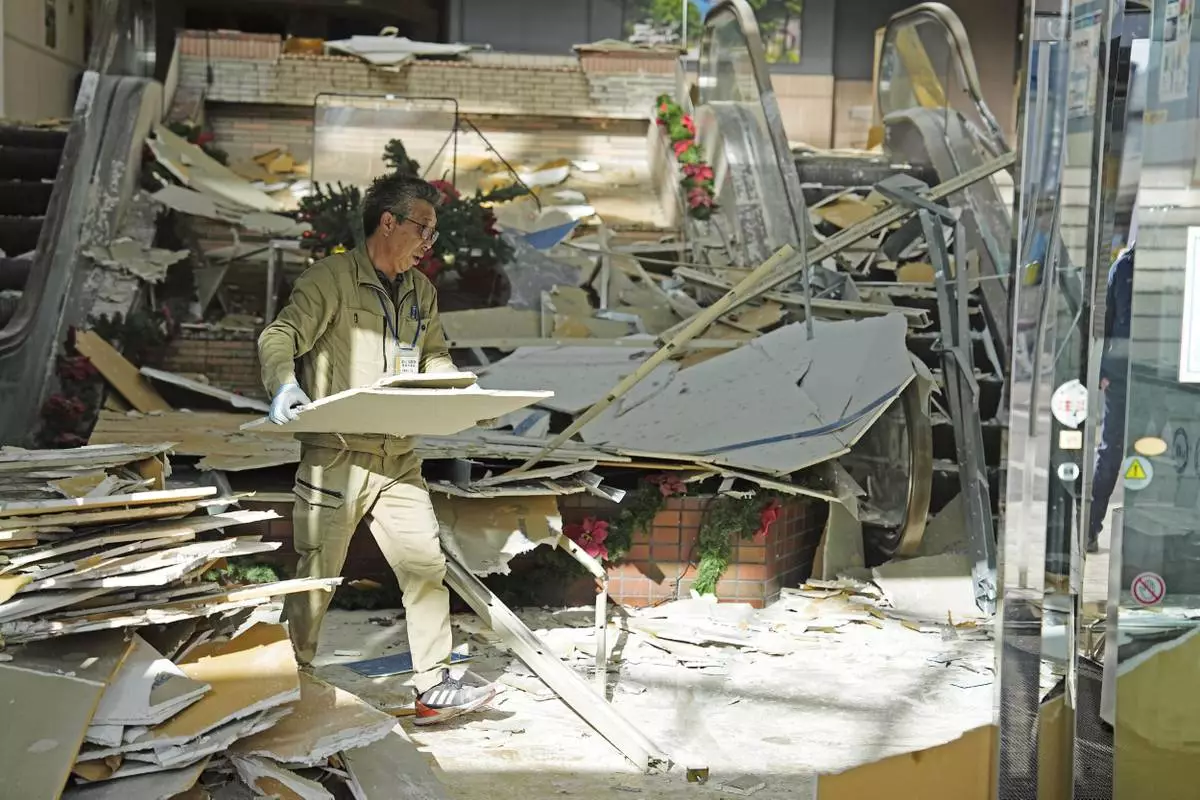
A man clears the debris from a powerful earthquake at a commercial facility in Hachinohe, Aomori prefecture, northern Japan Tuesday, Dec. 9, 2025. (Ren Onuma/Kyodo News via AP)
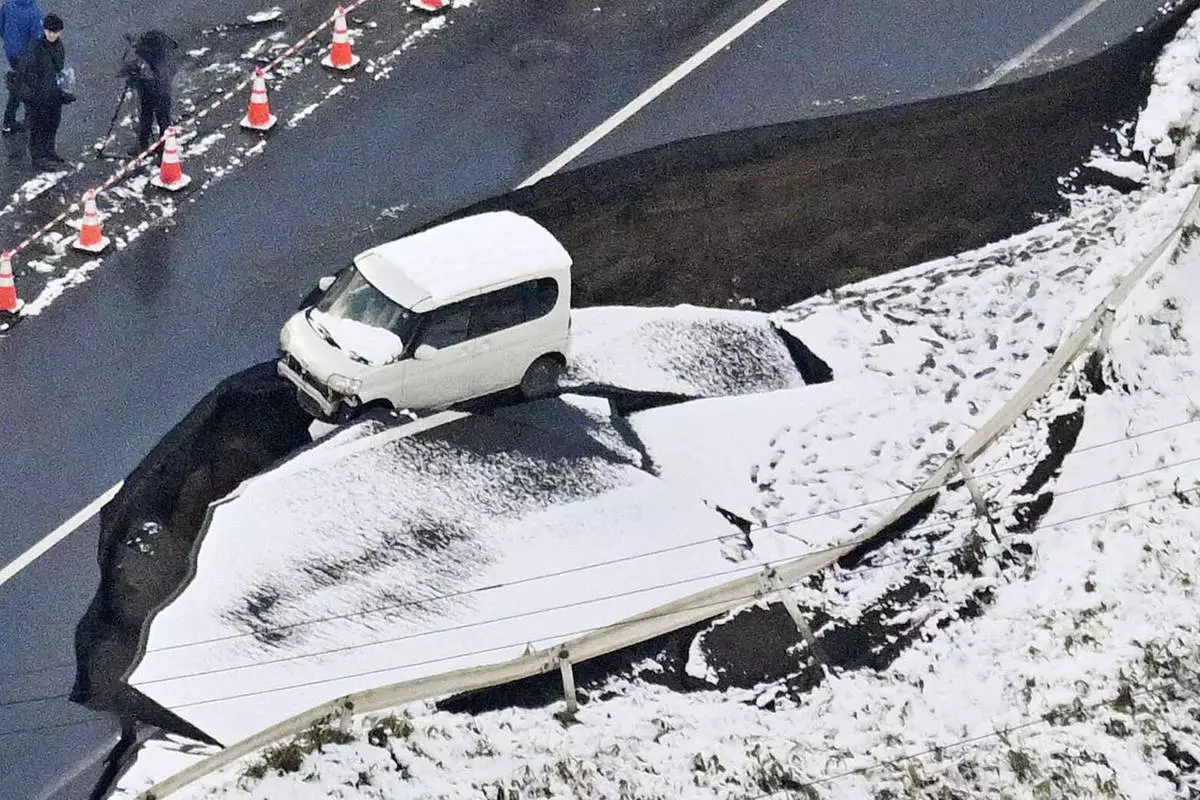
This aerial photo shows a vehicle sitting on a damaged road in Tohoku town, Aomori prefecture, northern Japan Tuesday, Dec. 9, 2025, following a powerful earthquake on late Monday. (Kyodo News via AP)
WASHINGTON (AP) — A House committee investigating Jeffrey Epstein labored for six months to question former President Bill Clinton and former Secretary of State Hillary Clinton, but once they finally had a chance to sit down with some of the highest-ranked officials to ever be deposed by Congress, the sessions veered off track with a leaked photo, talk of the pizzagate conspiracy theory and questions about disclosing government information on UFOs.
Videos released Monday by the House Oversight Committee of depositions for both Bill and Hillary Clinton from last week showed how overall the former Democratic president distanced himself from Epstein, even as he said it was important for anyone with information about Epstein's abuse to come forward. Hillary Clinton repeatedly told the committee she never even recalled meeting Epstein during hours of questioning that at times became heated.
Lawmakers are trying to meet demands for a reckoning over Epstein, who killed himself in 2019 in New York while facing charges for sex trafficking and abusing underage girls. High-status men around the world have been forced into resignations because of revelations about their relationships with Epstein, but so far there are few signs in the U.S. of serious legal consequences coming.
After the depositions last week, Republicans seem to be moving on from scrutinizing the Clintons for their decades-old connections to Epstein and his former girlfriend Ghislaine Maxwell.
The closed-door depositions showed how Republican lawmakers at times seemed not able to resist the spectacle of questioning a couple who for decades led the Democratic Party.
The deposition of Hillary Clinton on Thursday was hardly underway when it was put on pause because Republican Rep. Lauren Boebert had sent a photo of Hillary Clinton at the session to a conservative influencer who posted it online. It violated the committee's protocol for depositions and threatened for a moment to derail the session.
“I am done with this if you guys are doing that,” Hillary Clinton said. “You can hold me in contempt from now until the cows come home.”
The two sides reached an agreement to continue. But as the afternoon wore on, Hillary Clinton started to lose her patience with Republicans' repeated questions about whether she had any connections to Epstein. “I am so tired of answering that question,” she said at one point.
She also sparred with Republican Rep. Nancy Mace when she was asked about her connection to Commerce Secretary Howard Lutnick. Hillary Clinton had worked with Lutnick in the aftermath of the Sept. 11, 2001 attacks and became visibly perturbed and pounded her palm on the table as she responded to Mace.
Boebert, R-Colo., also asked Hillary Clinton whether there were emails in the case files on Epstein that referenced pizzagate, which posited that Democratic Party insiders harbored child sex slaves in a Washington pizza parlor.
Hillary Clinton responded by saying, “I can't believe you're even referencing it” and reminding her that the conspiracy theory resulted in a man bringing a gun to a Washington restaurant.
However, Republicans did find some agreement with Hillary Clinton when it came to providing more disclosure on what information the government has gathered on UFOs.
Rep. Eric Burlison, R-Mo., asked the former secretary of state for her opinion on releasing more information, and she agreed that any releases should not include national security information but that “this is an issue of real importance to so many people.”
On Friday, Bill Clinton faced searching questions both from Republicans and Democrats about photos of the former president that have been released as part of the case files on Epstein.
The former Democratic president said he first remembered meeting Epstein when he flew aboard the financier's private jet in 2002 for the Clintons' humanitarian work, and they parted ways the year after.
Whether the subject was a note Clinton wrote for Epstein’s 50th birthday or their travel together for the Clinton Foundation, he described their relationship as little more than “cordial.” Bill Clinton described an arrangement with Epstein where the financier provided his private jet for humanitarian trips in exchange for Clinton discussing politics and economics with him.
Larry Summers, who had worked as treasury secretary in Clinton’s administration, helped make that connection, Clinton said. But Clinton said they went separate ways after he sensed that Epstein was not deeply interested in the humanitarian work.
“We were friendly, but I didn’t know him well enough to say we were friends,” he said.
Epstein visited the White House numerous times during Clinton’s presidency, and there are photos of them shaking hands. Clinton told lawmakers he did not recall those interactions.
In response to a Democratic lawmaker's questions about a photo that showed him in a pool with a woman whose face was redacted, the former president said he did not know the woman and did not engage in sexual activity with her.
He said the photo was from a trip to Brunei for charitable work and a number of people in their travel party were swimming. He also said that he was not aware that one young woman who was ostensibly working as a masseuse and gave him a neck massage on one flight was in fact a victim of sexual abuse.
“There’s nothing that I saw when I was around him that made me realize he was trafficking women,” he told the committee.
He said he had once visited Epstein's townhouse in New York City, but said repeatedly he had never visited Epstein's private island or other properties.
Asked by Republicans whether they had talked about young women or girls together, Clinton responded emphatically: “No.”
Clinton acknowledged he maintained a closer relationship with Ghislaine Maxwell, Epstein's former girlfriend and confidant. But he maintained that was largely because of close mutual connections. He also said “she has to be punished” for her conviction on sex trafficking charges.
One line of questioning stirred up curiosity from lawmakers, and that was what Clinton had to say about President Donald Trump. He made clear he believed it was important for anyone, including presidents, to come forward and testify to their knowledge of Epstein.
Clinton also shared how he and Trump had briefly discussed Epstein at a charity golf tournament more than 20 years ago. He said Trump had never “said anything to me to make me think he was involved in anything improper with regard to Epstein,” but also remarked that those two men had a falling-out over a real estate deal.
Republican lawmakers left the deposition pointing to Clinton's words and arguing that it showed there is no evidence that Trump ever did anything wrong in his own relationship with Epstein.
Democrats, meanwhile, said Clinton's testimony counters what Trump has said more recently about why he and Epstein had a falling-out. Trump has told reporters they had a disagreement because Epstein had hired people away from Trump's Mar-a-Lago club in Florida.
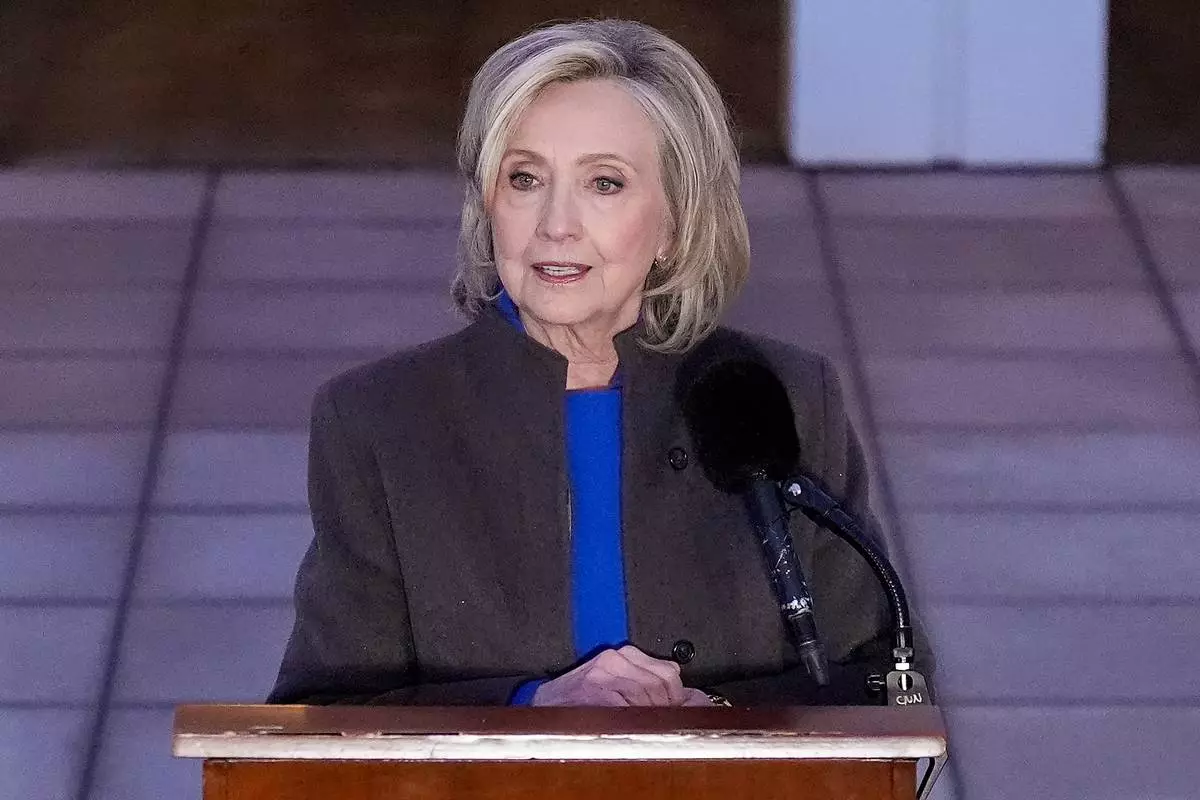
Former Secretary of State Hillary Clinton speaks outside the Chappaqua Performing Arts Center, after testifying before U.S. House lawmakers as part of a congressional investigation into convicted sex offender Jeffrey Epstein, Thursday, Feb. 26, 2026, in Chappaqua, N.Y. (AP Photo/Yuki Iwamura)
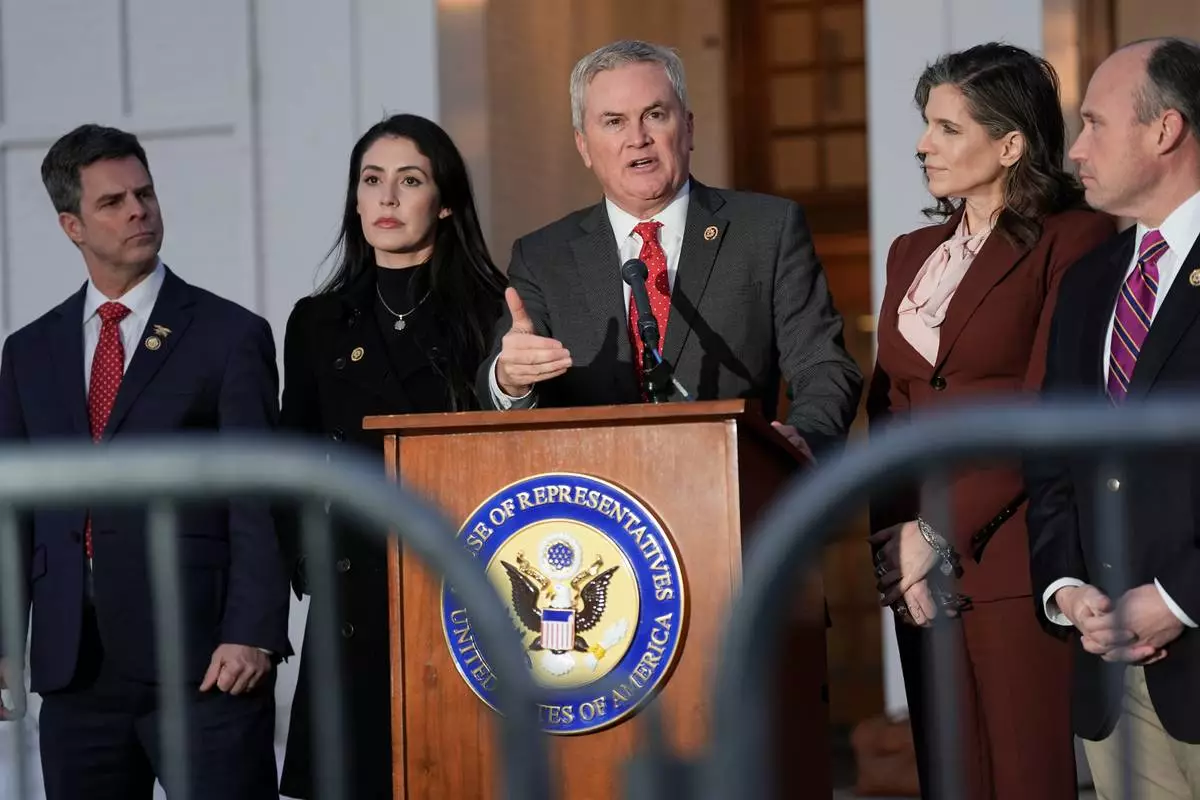
Rep. James Comer, R-Ky., speaks outside the Chappaqua Performing Arts Center where former President Bill Clinton was testifying before U.S. House lawmakers as part of a congressional investigation into convicted sex offender Jeffrey Epstein, Friday, Feb. 27, 2026, in Chappaqua, N.Y. (AP Photo/Angelina Katsanis)
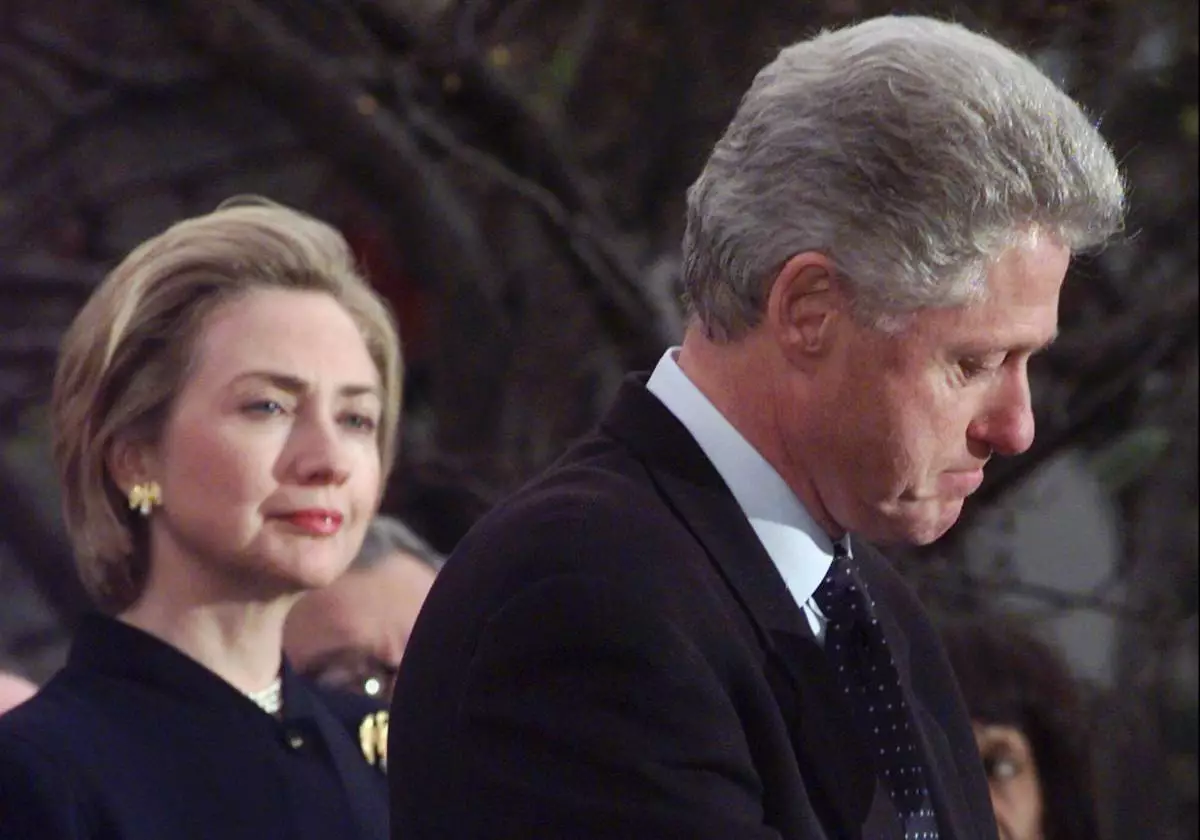
FILE - President Clinton makes a statement as first lady Hillary Clinton looks on at the White House, Dec. 19, 1998 in Washington. (AP Photo/Susan Walsh, file)