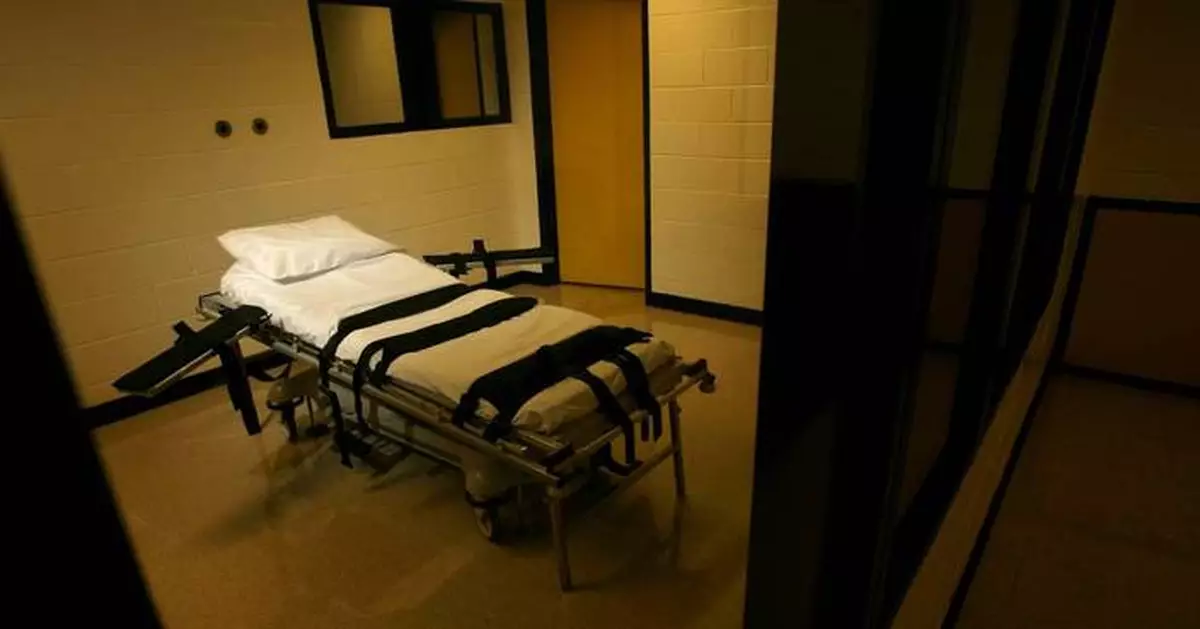
ATLANTA (AP) — Lawyers for a man set to be put to death next week in Georgia argue that an agreement entered into by the state and death penalty defense attorneys during the COVID-19 pandemic should shield their client from execution for the time being.
A federal judge is set to hear arguments Wednesday in a lawsuit filed by lawyers for Stacey Humphreys, who is scheduled to die on Dec. 17. Humphreys, 52, was convicted of malice murder in the 2003 killings of 33-year-old Cyndi Williams and 21-year-old Lori Brown at the real estate office where they worked in a suburb of Atlanta.
After Georgia put executions on hold during the pandemic, the state attorney general's office entered into an agreement with lawyers for people on death row to set the terms under which they could resume. The state Supreme Court has affirmed that the agreement is a binding contract.
The text of the agreement says it applies only to people on death row whose requests to have their appeals reheard were denied by the 11th U.S. Circuit Court of Appeals while a pandemic-related judicial emergency was in place. The judicial emergency was lifted in June 2021 and the appeals court rejected Humphreys' request in October 2024. Lawyers for the state argue that Humphreys is, therefore, not covered by the agreement and his execution should be allowed to proceed.
The agreement includes three conditions that must be met before executions could be scheduled for the covered prisoners: the expiration of the state’s COVID-19 judicial emergency, the resumption of normal visitation at state prisons and the availability of a COVID-19 vaccine “to all members of the public.”
Additionally, state lawyers agreed that once those conditions were met, they would provide three months' notice before pursuing an execution warrant for one of the prisoners covered by the agreement and six months’ notice for the rest.
Although the judicial emergency was lifted more than four years ago, defense attorneys say the other two conditions have not been met because visitation is “severely restricted” compared with its pre-pandemic levels and infants under 6 months old are not eligible for the vaccine.
A judge ruled earlier this year that the vaccine condition hasn't yet been met, and the state's appeal of that ruling is pending before the Georgia Supreme Court. The judge plans to handle the visitation issue separately.
Humphreys' lawyers wrote in a lawsuit filed in October that the agreement's clear purpose was to allow lawyers for people on death row to adequately prepare for clemency proceedings and for the “frantic time period immediately leading up to execution proceedings.”
They argue that seeking to execute people who weren't included while the agreement remains in effect creates “a distinct, disfavored class” of death row prisoners who won't be guaranteed he same level of legal representation in violation of their constitutional rights to equal protection and due process.
“What matters is that the harms the Agreement's conditions were designed to protect against still exist today for all death row prisoners,” Humphreys' lawyers wrote.
Lawyers for the state dispute that Humphreys' due process and equal protection rights would be violated, arguing that he has failed to show how his lawyers have been restricted from preparing for his upcoming execution because of COVID-19 or that the state has arbitrarily chosen to exclude him from the agreement.
The state's lawyers also point out that death row prisoner Willie James Pye made similar arguments before his execution in March 2024 and a federal judge found that “the State clearly has a valid basis for drawing a line between the inmates covered and not covered by the Agreement.” A similar case brought by three other people on Georgia's death row was rejected by a federal judge and is pending before the 11th Circuit.
This story has been updated to correct that the hearing is scheduled for Wednesday, not Tuesday.
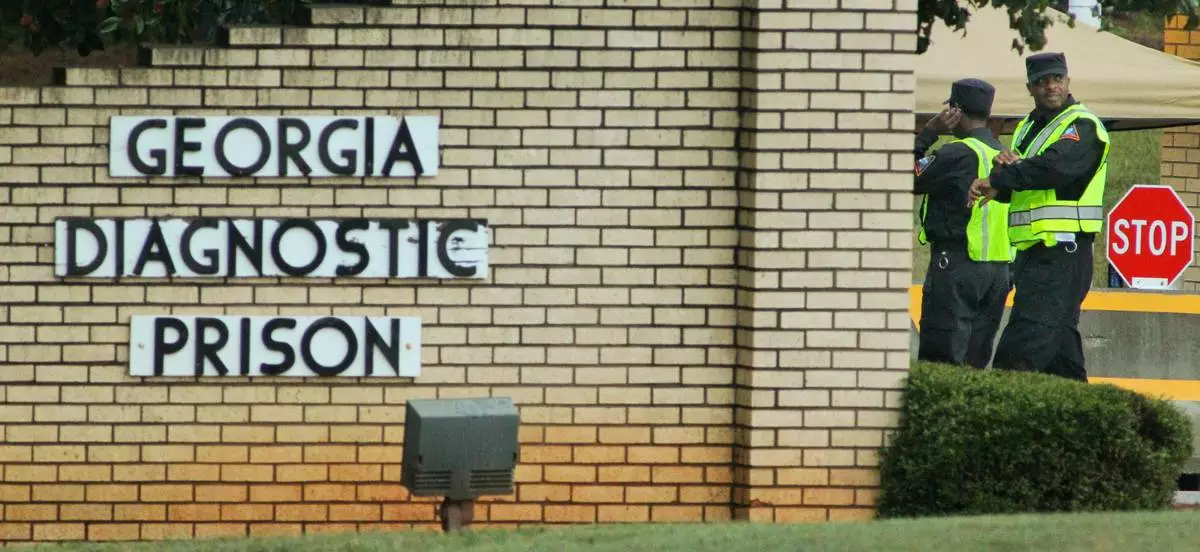
FILE - Guards stand at the front of Georgia Diagnostic Prison, Wednesday, Sept. 21, 2011, in Jackson, Ga. (John Spink/Atlanta Journal-Constitution via AP, File)
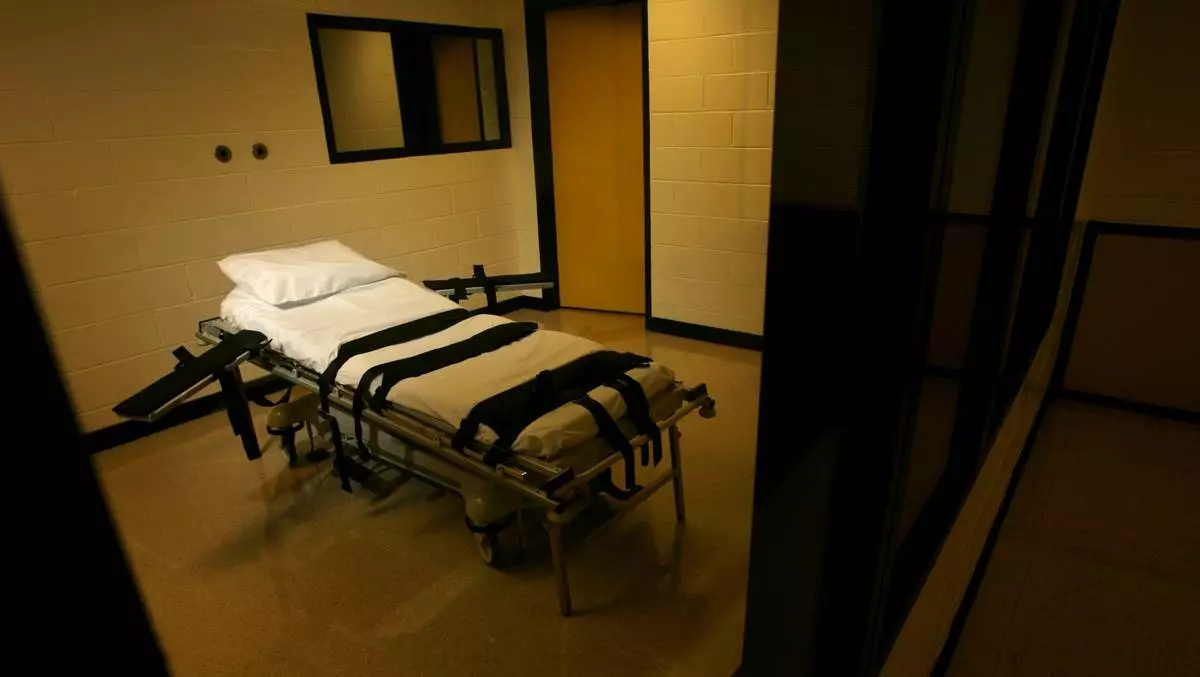
FILE - The gurney used for lethal injections sits behind glass windows in a small cinder block building at the Georgia Diagnostic and Classification Prison in Jackson, Ga., Sept. 7, 2007. (Ben Gray/Atlanta Journal-Constitution via AP, File)
When Kevin Ketels bought an electric 2026 Chevrolet Blazer last year, he wasn't thinking about the cost of gas. He just thought EVs were better and “wanted to be part of the future.” Now that the Iran war is spiking prices at the pump, the Detroit man is happy he is no longer filling up his 11-year-old gas-powered SUV.
“Electricity can go up, but it won’t go up nearly as much as gas will and it won’t go up nearly as fast, either,” said Ketels, 55, an assistant professor of global supply chain management at Wayne State University.
Experts say prolonged high gas prices may drive some EV interest and sales, especially if drivers assume their electricity prices won't be affected by the crises.
But many factors influence consumer EV purchases — and electricity rates.
Drivers of gas-powered vehicles are much more vulnerable to fluctuating prices that result from global conflict than those who charge their cars. The national average for a gallon of regular gas this week was $3.57, up from $2.94 a month ago, according to AAA.
Meanwhile, “residential electricity prices are regulated and are much less volatile than gasoline prices,” said University of California, Davis economics professor Erich Muehlegger. “As a result, EV owners are largely unaffected by oil price shocks.”
But experts say electricity prices have been increasing nationally for a variety of reasons, including surging power demand from new data centers.
“This is an inflationary event,” Holt Edwards, principal in Bracewell’s Policy Resolution Group, said of the war. “Is this the driver in electricity prices? I think probably not. But it’s certainly a contributing factor.”
To what extent oil and gas conflicts could translate to the electricity sector is yet to be seen.
When it comes to the electricity an EV owner is tapping, much of the cost depends on which sources of electricity are in a local grid's power mix, experts say.
Because regulators set residential electricity prices annually, most households are sheltered from month-to-month changes in natural gas costs. Though experts say higher natural gas prices can increase the cost of generating electricity, natural gas prices haven’t risen as quickly or as much as oil prices have recently.
Those are just two of many energy sources — including coal, nuclear and renewables — that power the electric grid.
“The energy component varies depending on the energy you’re using and the price of the energy that you’re using to generate electricity,” said Pierpaolo Cazzola, an energy expert at Columbia University’s Center on Global Energy Policy. “What happens is that in the U.S., the variation of the price of the energy component is smaller than it is elsewhere.”
The experts said persistent war could affect electricity bills in the future. And that is all the more reason for countries to transition to clean power, they said.
“Clean power and electrification combined is what provides the most security,” said Euan Graham, an analyst at energy think tank Ember.
Michael B. Klein, a 56-year-old software developer in Evanston, Illinois, has driven EVs for the past eight years to save on fuel costs and because of environmental concerns.
Every time electrical grid efficiency improves — especially as renewables are added — “I get that benefit no matter what,” said Klein, who drives a Chevy Bolt. “They can improve the efficiency of gas engines, but you have to get a new car in order to reap the benefit of that.”
Several experts say high gasoline prices are a strong driver of EV sales, particularly if high prices persist. Drivers also consider more gasoline-efficient hybrid vehicles during these times.
Car-shopping resource Edmunds analyzed consumer shopping data for the week starting March 2, after the Iran war had begun. They found that interest in hybrids, plug-in hybrids and battery EVs accounted for 22.4% of all vehicle research activity on their site that week, up from 20.7% the previous week. Analysts also looked back at the last major nationwide fuel price surges in 2022, and they saw that consideration of electrified vehicles rose sharply then, too.
But whether this means more EV purchases depends on whether buyers expect to save not just now but in the future, experts say.
Adding to the complexity: A sudden increase in EV demand could drive up prices, Graham said.
“I think the real step change would be in whether this causes governments to shift tax, tariff policies around EVs,” Graham said. Doing so would help reduce fossil fuel dependence, he said.
Pretty much.
People who buy EVs have a “really substantial” gas savings over the life of their vehicles even without government tax credits, said Peter Zalzal, an attorney with Environmental Defense Fund.
“We’re talking about thousands and thousands of dollars” in savings, Zalzal said. “And as gas prices increase, those savings are only greater. Fuel costs are a big piece of overall vehicle costs, and increases in fuel prices have significant impacts on people.”
However, the upfront cost of a new EV is still more than that of a gasoline-powered vehicle; new EVs sold for an average of $55,300 last month, while new vehicles overall sold for an average $49,353, according to auto-buying resource Kelley Blue Book. Some experts also expressed national security concerns with EVs because China dominates significant parts of the EV supply chain.
Ketels, the EV owner and professor, said he believes EVs and renewable energy should be a strategic priority for individuals and the U.S. because they could be produced domestically “and we don’t have those fluctuations and those worries.”
But because the federal government has withdrawn many incentives for both, “it puts us at a disadvantage globally,” Ketels said. “I think it’s been a terrible mistake to withdraw these incentives and to attack the sustainable energy industry,” and the war “is just making it that much more obvious.”
Read more of AP’s climate coverage.
The Associated Press’ climate and environmental coverage receives financial support from multiple private foundations. AP is solely responsible for all content. Find AP’s standards for working with philanthropies, a list of supporters and funded coverage areas at AP.org.
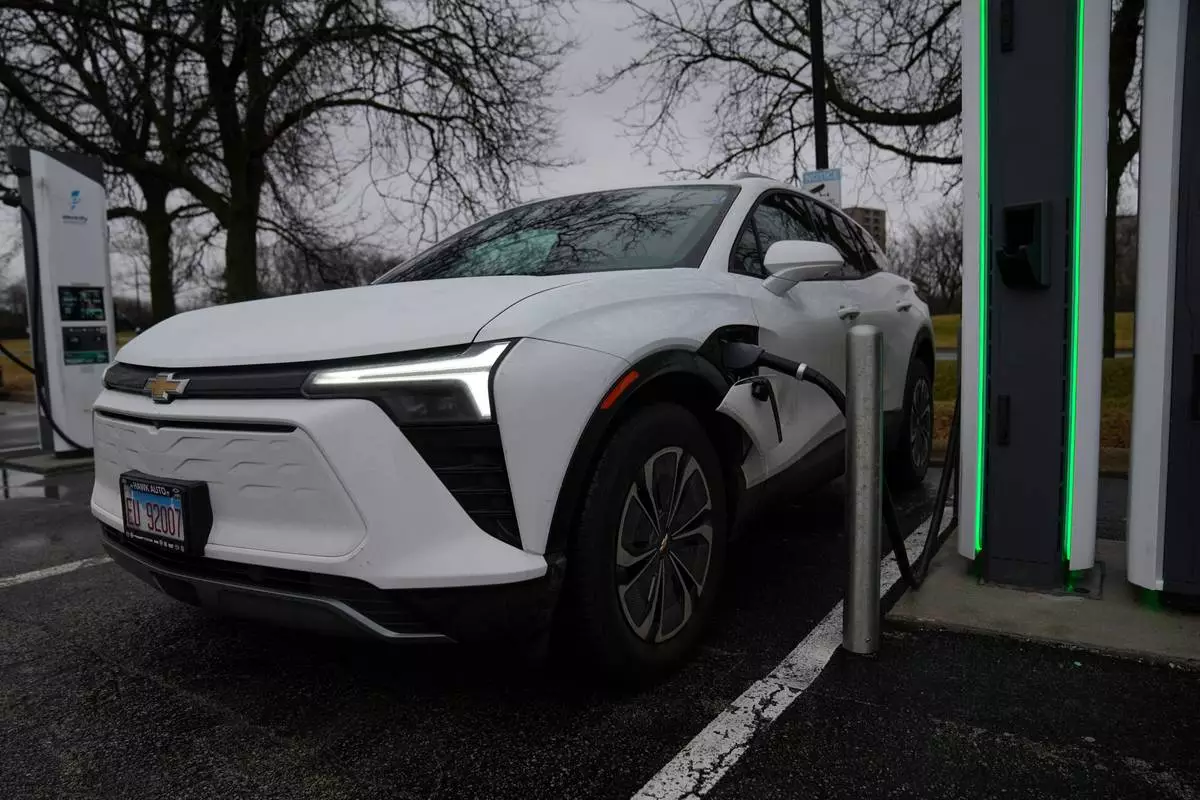
An electric vehicle charges at a station Wednesday, March 11, 2026, in Lincolnwood, Ill. (AP Photo/Erin Hooley)
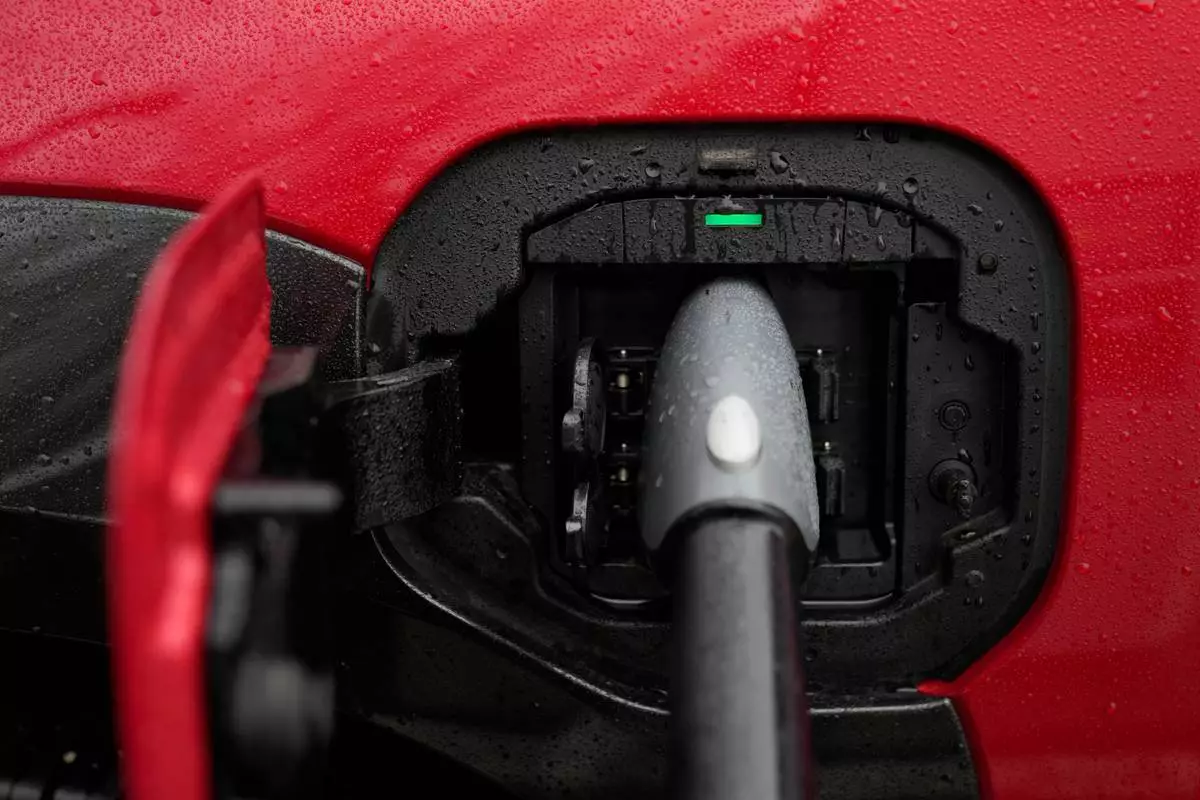
An electric vehicle charges at a station Wednesday, March 11, 2026, in Lincolnwood, Ill. (AP Photo/Erin Hooley)
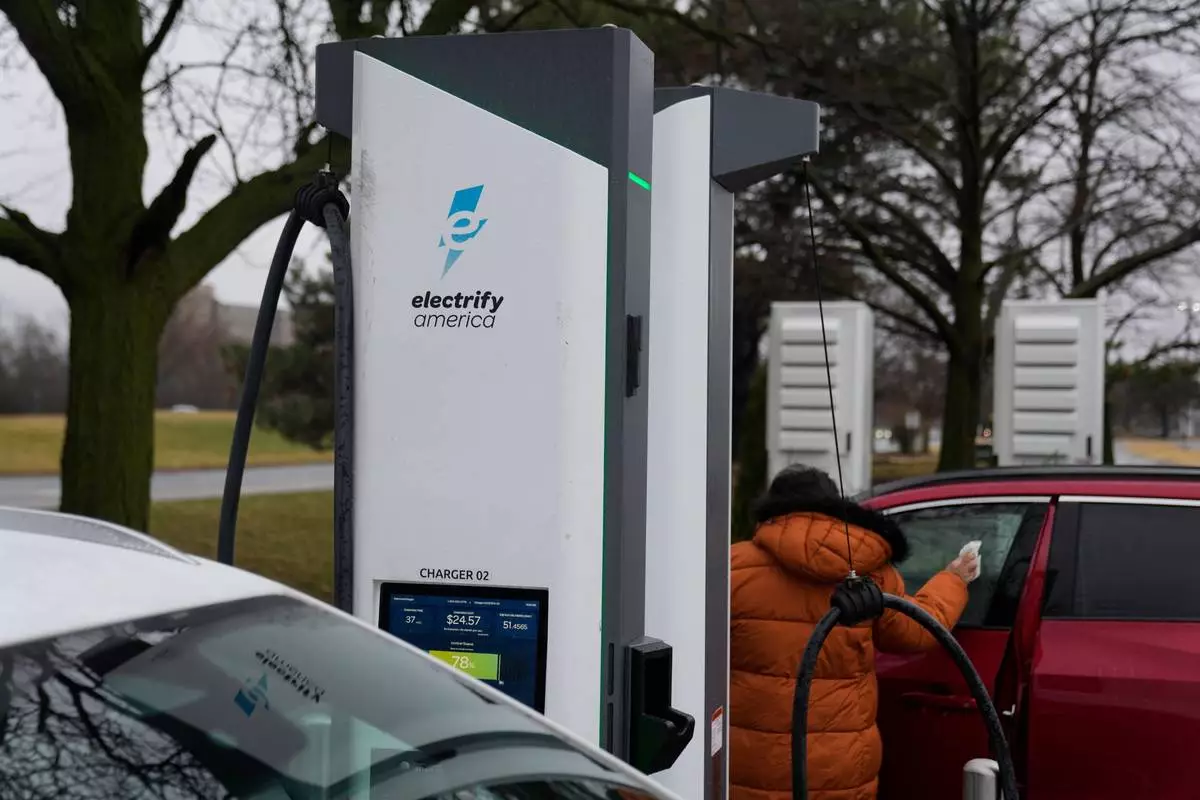
Electric vehicles charge at a station Wednesday, March 11, 2026, in Lincolnwood, Ill. (AP Photo/Erin Hooley)