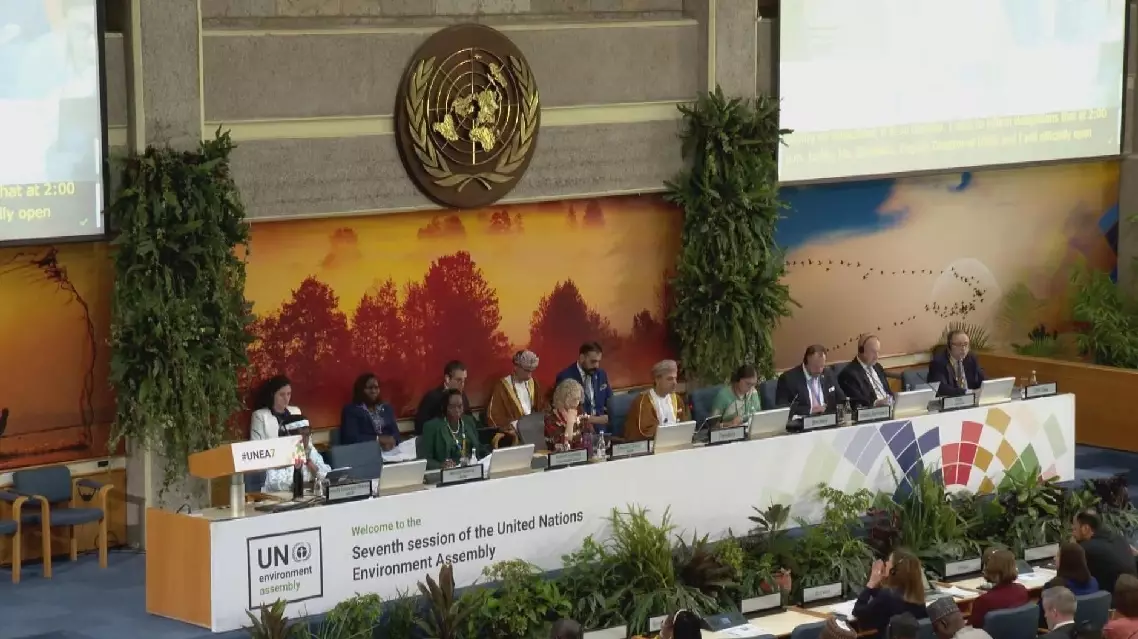
The seventh session of the United Nations Environment Assembly (UNEA-7) opened on Monday in Nairobi, the Kenyan capital, amid calls for a lasting solution to mounting threats facing the planet.
Hailing from over 170 countries, nearly 6,000 delegates are attending the five-day conference under the theme "Advancing Sustainable Solutions for a Resilient Planet." Attendees include environment officials and representatives from multilateral agencies, academia, industry, and civil society.
As the world's highest-level decision-making body on matters related to the environment, UNEA has been held since 2014 with universal membership of all 193 UN member states.
During this year's edition, delegates will discuss 15 draft resolutions and three draft decisions calling for enhanced protection of glaciers, sustainable production of metals and minerals, and reducing the ecological footprint of Artificial Intelligence.
Sustainable management of transboundary freshwater resources, a shift to circularity, migratory species, ocean governance, and climate justice are among the topics set for discussions.
UNEA-7 President Abdullah Bin Ali Al-Amri said the forum will give impetus to the global green agenda, guided by science and the spirit of consensus.
Strengthening multilateral environmental agreements, promoting inclusivity and cooperation, will occupy center stage at the assembly to help chart resilient pathways for the planet and its inhabitants, Abdullah said.
In her opening remarks, Inger Andersen, executive director of United Nations Environment Programme, emphasized the urgent need for global cooperation in tackling escalating environmental challenges. She urged all parties to deliver sustainable solutions for a resilient planet. She also called on countries and organizations to maintain a long-term perspective, build consensus, and collaborate to safeguard the future of the planet.
During a thematic side event on the green energy held on the same day, guests engaged in in-depth discussions on the topic, "Promote New-Type Electrification Centered on Clean Energy: Seeking Sustainable Energy Solutions for a Resilient Planet."
They emphasized the importance of leveraging the global energy internet as a pivotal platform to support countries in meeting their emission reduction commitments and protecting the ecological environment.
According to Thomas Opande, Africa Energy Lead at WWF-International, many countries in the Global South will be looking toward Chinese leadership as these efforts advance.
"We know that China is the biggest producer of renewable energy, solar panels and other renewable energy effects. And as Africa, we rely on our brothers and sisters in China together with our brothers and sisters everywhere to improve access, to improve finance for renewable energy and for technology transfers," said Opande, speaking on the sidelines of the event.
UN environment assembly opens in Kenya with call to safeguard planetary health