DURHAM, N.C.--(BUSINESS WIRE)--Dec 9, 2025--
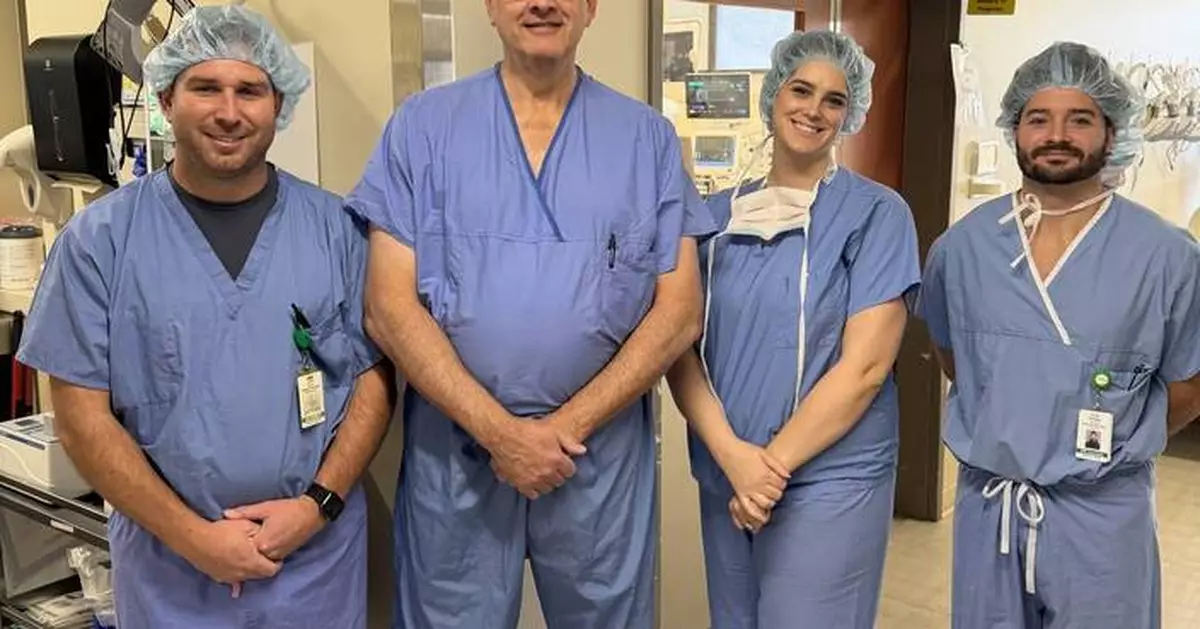
restor3d, a leader in 3D-printed, personalized orthopedic solutions, today announced the successful completion of the first clinical cases using the iTotal Identity™ CR 3DP Porous Fully Personalized Total Knee Replacement System. The inaugural procedure was performed by William J. Berghoff, MD, at Parkview Orthopedic Hospital in Fort Wayne, Indiana, marking a major milestone in the system’s limited market release and the next evolution of personalized knee arthroplasty.
This press release features multimedia. View the full release here: https://www.businesswire.com/news/home/20251209824212/en/
The iTotal Identity CR 3DP Porous System represents the first fully personalized, cementless total knee replacement offering within the Identity platform, following FDA 510(k) clearance earlier this year. Built on restor3d’s proven digital-to-implant design workflow, the system integrates CT-based planning, automated personalization, and advanced 3D-printed porous structures on all metallic components to deliver optimal fit, fixation, and function for every patient.
“It’s remarkable to see a fully personalized, cementless knee replacement come to life in the operating room,” said Dr. William J. Berghoff. “The combination of patient-specific design and a truly advanced porous architecture provide a level of stability, coverage, and precision that is unlike anything we’ve used before. My patients had an excellent experience, and I’m excitedabout what this technology means for the future of knee replacement.”
The cementless system leverages restor3d’s proprietary TIDAL Technology™ on the tibia, femur, and patella implants. This next-generation porous architecture is engineered to achieve optimized osseointegration strength, enhanced fatigue resistance, and efficient load distribution. The tibial baseplate, designed to individual patient anatomy, provides optimal bone coverage without sacrificing component rotation, critical for successful cementless fixation. The femoral component preserves each patient’s native joint mechanics through restoration of their individual J-curves.
Delivered in a sterile, single-use kit, the system also incorporates a pre-navigated surgical workflow, reducing intraoperative variability and streamlining operating room efficiency. By eliminating intraoperative adjustments associated with traditional implant sets, surgeons can rely on a consistent and reproducible implantation experience tailored to each patient's anatomy.
“Launching the first cementless, personalized and fully 3D printed knee system into clinical use is a transformative step for orthopedic care,” said Ken Gall, CCO of restor3d. “We are proud to partner with leading surgeons like Dr. Berghoff as we continue advancing truly individualized joint replacement options that improve patient outcomes and strengthen the standard of care.”
restor3d will continue collaborating with select surgeon partners throughout the system’s limited market release, gathering clinical insights as it moves toward a full commercial launch.
About restor3d, Inc.
restor3d is a world leader in 3D printed patient specific musculoskeletal implants and driven by the belief that every patient deserves personalized care. The company holds proprietary expertise and intellectual property in 3D printing of osseointegrative materials, AI-based planning and design automation tools, and digital health solutions to provide seamless data-backed care to optimize individual patient outcomes. Alongside its customers, restor3d is reimagining the musculoskeletal reconstruction landscape. More information is available at www.restor3d.com.
Forward-Looking Statements
Certain statements made in this release that are not statements of historical or current facts are forward-looking statements which involve known and unknown risks, uncertainties and other factors that may cause the actual results, performance or achievements of the company to be materially different from historical results or from any future results or projections expressed or implied by such forward-looking statements. In many cases, forward-looking statements can be identified by terms such as “future,” “believes,” “expects,” “may,” “will,” “should,” “potential,” “estimates,” “intends,” “anticipates” or “plans” or the negative of these terms or other comparable terminology. Forward-looking statements are based upon management’s beliefs, assumptions and current expectations but are subject to known and unknown risks and uncertainties including, without limitation, distribution challenges, market trends and demand, product efficacy and safety concerns, product or raw material availability and other supply constraints. Although management believes that the expectations reflected in the forward-looking statements are reasonable, forward-looking statements are not, and should not be relied upon as a guarantee of future performance or results. The forward-looking statements included are made only as the date of this release. The company assumes no obligation to update any information or forward-looking statement contained herein, save for any information required to be disclosed by law.
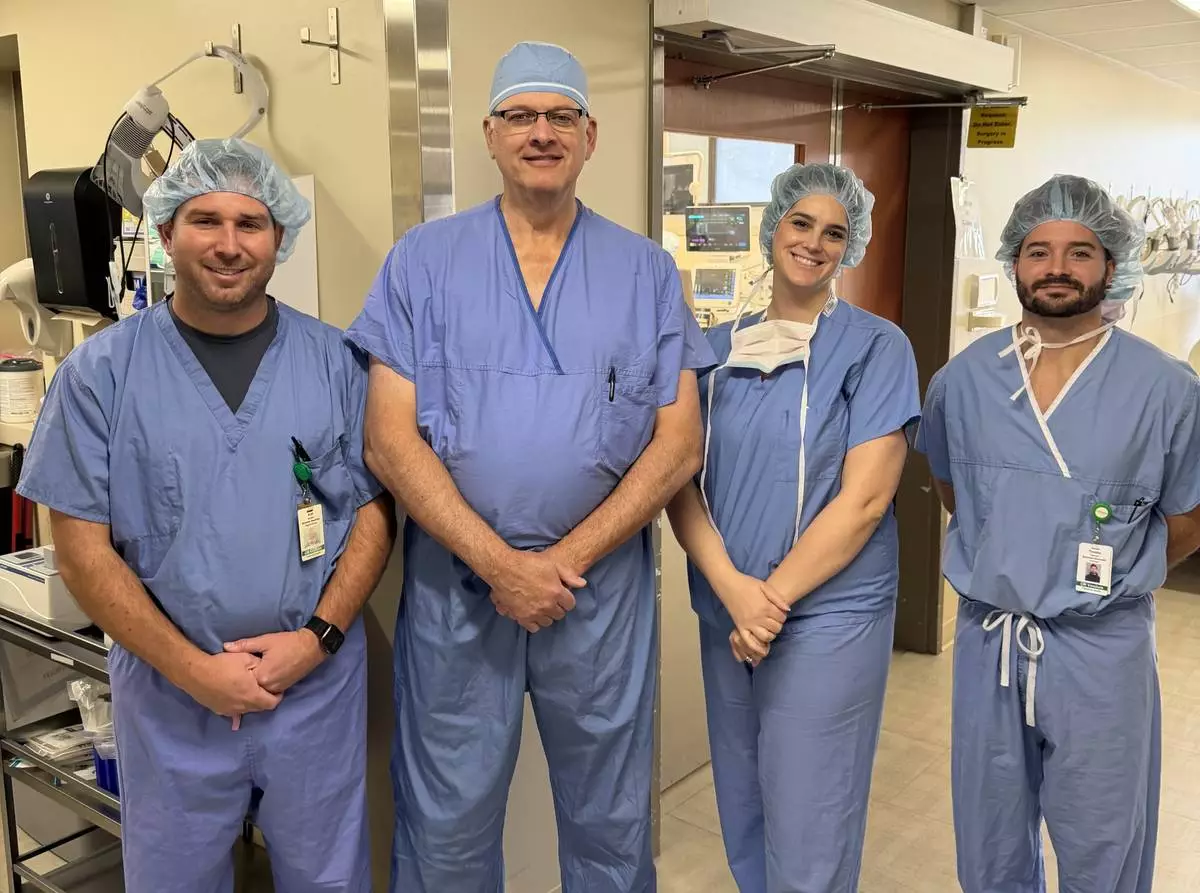
The inaugural procedure was performed by William J. Berghoff, MD, at Parkview Orthopedic Hospital in Fort Wayne, Indiana, marking a major milestone in the system’s limited market release and the next evolution of personalized knee arthroplasty.
BRUSSELS (AP) — As sympathy for immigrants erodes around the world, European nations agreed Wednesday to consider changes that rights advocates say would weaken migrant protections that have underpinned European law since World War II.
The consensus coalesced as mainstream political parties across Europe have adopted tougher migration policies as a way to blunt the momentum of far-right politicians exploiting discontent over immigration, even though illegal border crossings are actually falling.
Members of the 46 countries that make up the Council of Europe acknowledged "challenges" posed by migration while reaffirming their respect for the European Convention on Human Rights and the European Court of Human Rights, the council's secretary general, Alain Berset, told journalists after discussions in Strasbourg, France.
Berset described the 75-year-old convention as a “living instrument." While nations reaffirmed their commitment to the rights and freedoms of the convention, they also recognized countries’ responsibility to “safeguard national vital interests such as security.”
The convention and the court, which handles complaints against the council, have been increasingly criticized by some member states, including Italy, Denmark and the United Kingdom. They argue that they are too limited in how far they can go to tackle illegal migration and deport migrants who commit crimes.
Ministers of the 46 countries will now begin debating a political declaration on migration to be adopted in May and a new recommendation to deter human smuggling, Berset added.
The council, which is not an European Union institution, was set up in the wake of World War II to promote peace and democracy.
Discussions over the need to reform or reinterpret the convention as it relates to migrants began last year after nine nations signed a letter attempting to curtail the power of the court, the council's independent legal arm.
The group of nations argued that the court’s interpretation of rights and obligations prevented them from expelling migrants who commit crimes and keeping their countries safe. Berset defended the court's independence at the time, but support for a tougher stance has only grown.
While Berset sought to downplay the division, 27 nations signed a separate statement Wednesday calling for a less restrictive interpretation of the law, echoing the arguments made last year.
"A right balance has to be found between the migrants’ individual rights and interests and the weighty public interests of defending freedom and security in our societies,” it read.
Andrew Forde, co-founder of the AGORA group of academics, researchers and lawyers, said Wednesday's conclusions and the statement signed by two-thirds of the members showed clearly that the majority of governments supported a more conservative understanding of the convention based on political interest.
“For the first time in the history of the Council of Europe, member states have pinpointed a specific group of people that they want to afford fewer rights protection to,” said Forde who previously worked for the council.
Meanwhile, the prime ministers of Denmark and the U.K. published an op-ed Tuesday in the Guardian newspaper calling for tighter migration controls to deny entry to those seeking better economic opportunities as opposed to fleeing conflict.
“The best way of fighting against the forces of hate and division is to show that mainstream, progressive politics can fix this problem,” wrote Mette Frederiksen and Keir Starmer.
Separately, in Brussels, European Commission President Ursula von der Leyen spoke to ministers from the 27 nations of the EU and pledged to dismantle smuggling networks that bring people into the bloc illegally.
“Our goal is simple. We want to bankrupt their businesses through all means available,” von der Leyen said at an event marking the second anniversary of the EU-led Global Alliance to Counter Migrant Smuggling.
While migration is high on the political agenda, irregular border crossings into the EU were down 22% from January to October this year compared with the same period last year, according to Frontex, the EU’s border and coast guard agency. The agency recorded 152,000 unauthorized border crossings in the first 10 months of the year.
Most migration to Europe is legal, with many migrants entering on visas that they then overstay.
The EU has spent billions of euros (dollars) to deter illegal migration, paying countries in Africa and the Middle East to intercept migrants trying to cross the Mediterranean and the Atlantic.
At the same time, European nations facing aging populations and labor shortages have been investing in programs to attract and train foreign workers.
Brito reported from Barcelona.
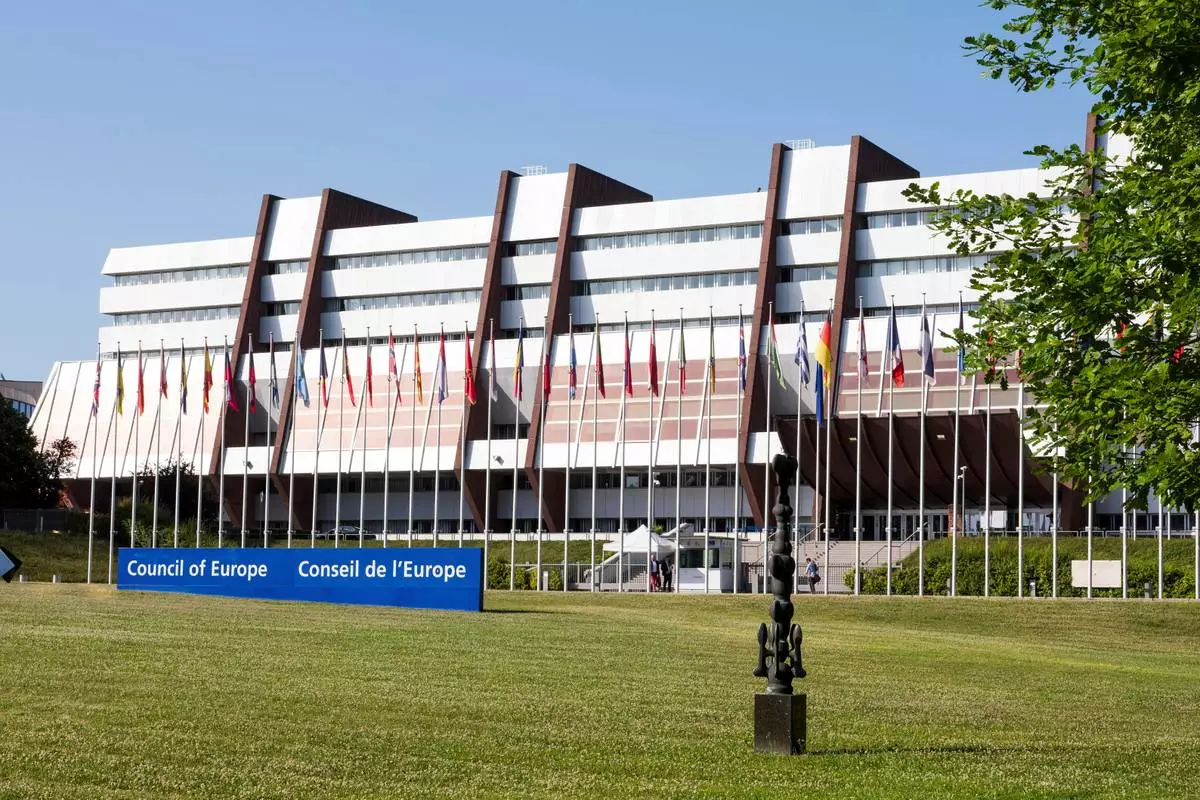
FILE - View of the Council of Europe, Wednesday, June 25, 2025 in Strasbourg, eastern France. (AP Photo/Pascal Bastien, File)
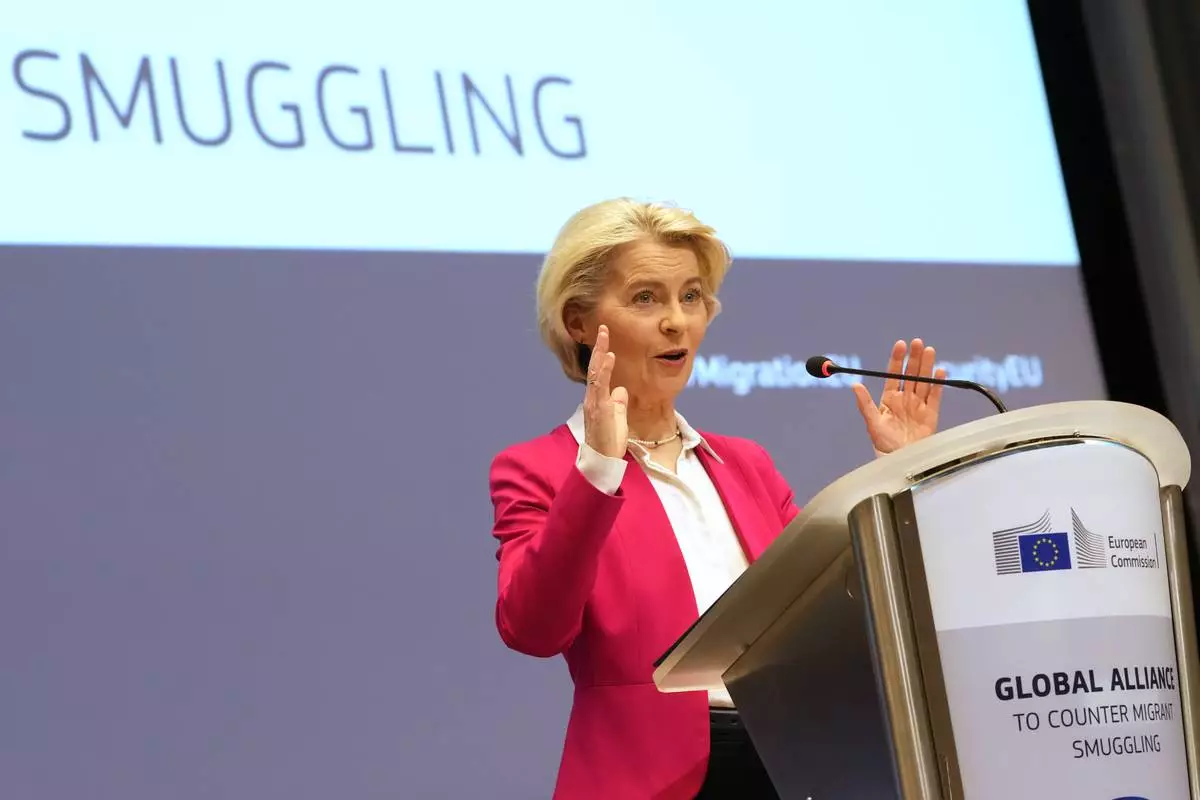
European Commission President Ursula von der Leyen addresses a Conference of the Global Alliance to Counter Migrant Smuggling at the EU Charlemagne building in Brussels, Wednesday, Dec. 10, 2025. (AP Photo/Virginia Mayo)
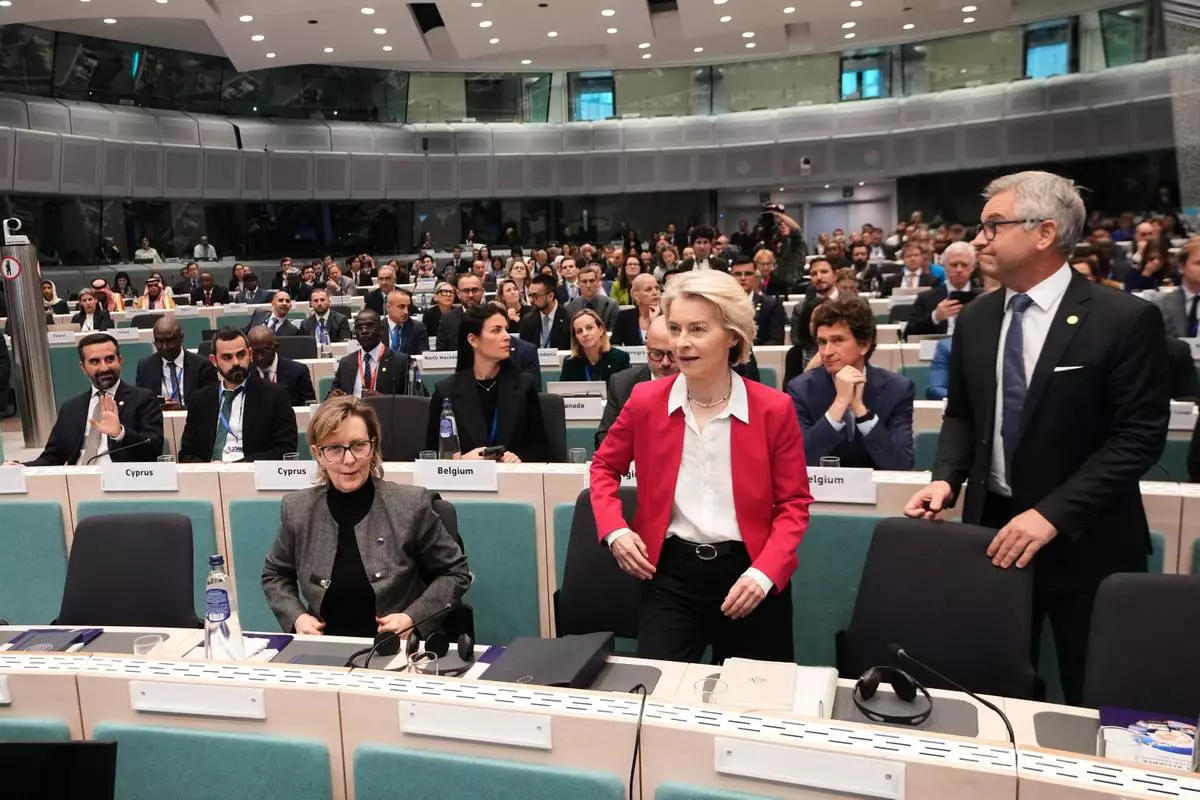
From left, European Commissioner for Financial Services Maria Luis De Albuquerque, European Commission President Ursula von der Leyen and European Commissioner for Internal Affairs and Migration Magnus Brunner arrive for a Conference of the Global Alliance to Counter Migrant Smuggling at the EU Charlemagne building in Brussels, Wednesday, Dec. 10, 2025. (AP Photo/Virginia Mayo)
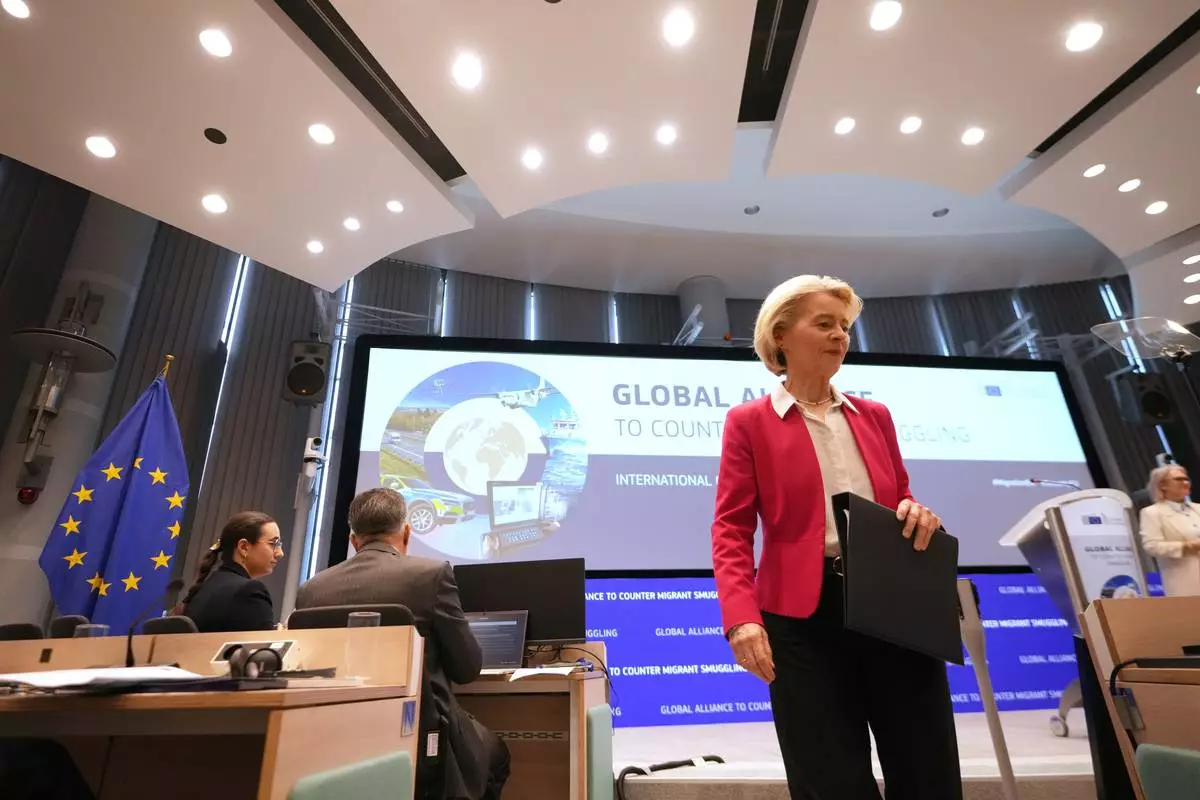
European Commission President Ursula von der Leyen steps off the podium after addressing a Conference of the Global Alliance to Counter Migrant Smuggling at the EU Charlemagne building in Brussels, Wednesday, Dec. 10, 2025. (AP Photo/Virginia Mayo)
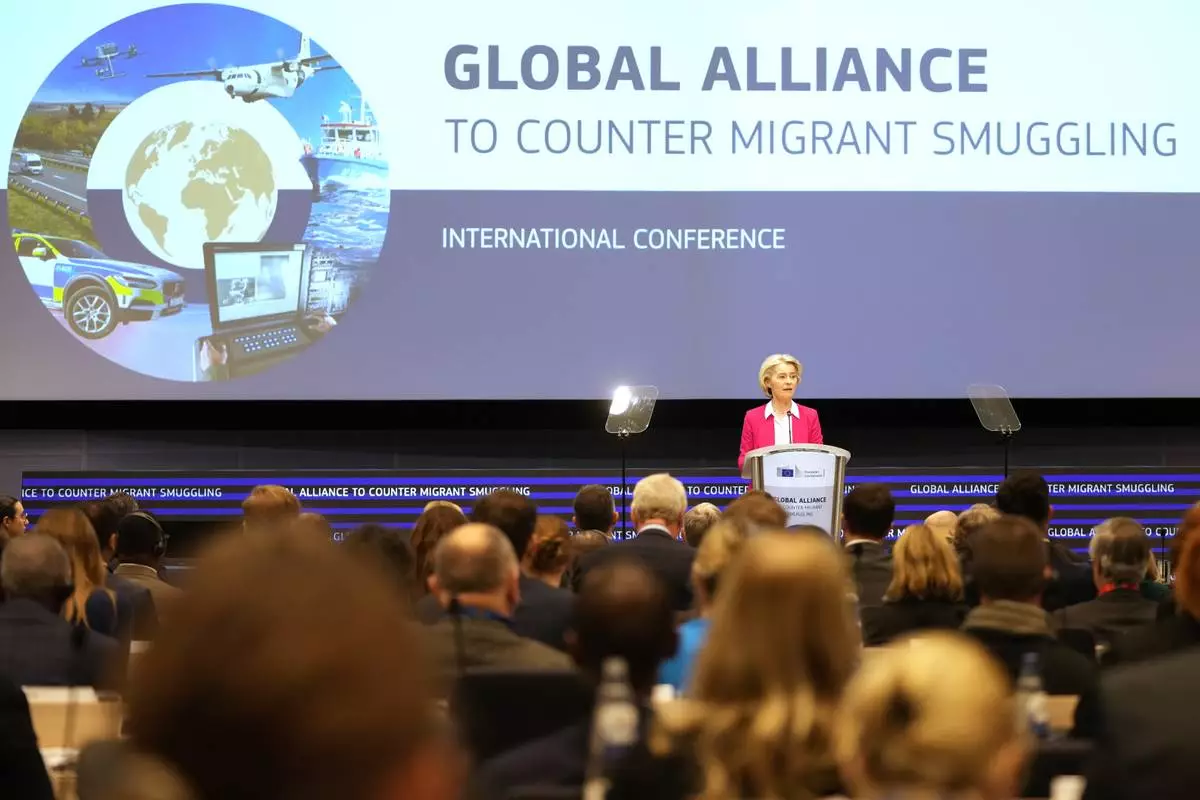
European Commission President Ursula von der Leyen addresses a Conference of the Global Alliance to Counter Migrant Smuggling at the EU Charlemagne building in Brussels, Wednesday, Dec 10, 2025. (AP Photo/Virginia Mayo)