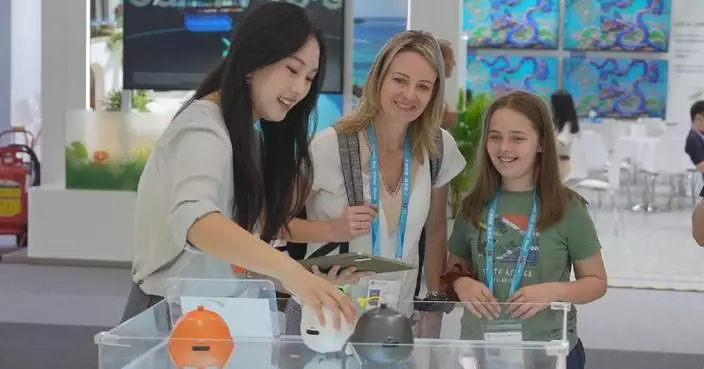
During the ongoing 12 National Games for Persons with Disabilities and the 9th National Special Olympic Games of China, venues, hotels and transport hubs are all using a range of assistive devices backed by advanced technology for people with disabilities, from sign-language translators to brain-computer-interface wheelchairs.
At the Pazhou Lab in Guangzhou City of south China's Guangdong Province, which co-hosts the special sports events with the neighboring Hong Kong and Macao Special Administrative Regions, researchers showcased new assistive devices developed for the Games. One highlight was an AI sign-language translator, now deployed in several hotels hosting athletes.
To complement the device, developers have also published a sign-language translation application. Users with hearing impairments can request a translator with a single tap.
"Once you click the 'Call Now' button, you will be connected to a sign-language interpreter, who will provide service free of charge as a volunteer. So far, 180 interpreters from across the country have signed up as volunteers on our platform," said Shi Chengchuan, founder and CEO of Voibook Technology which has developed the system.
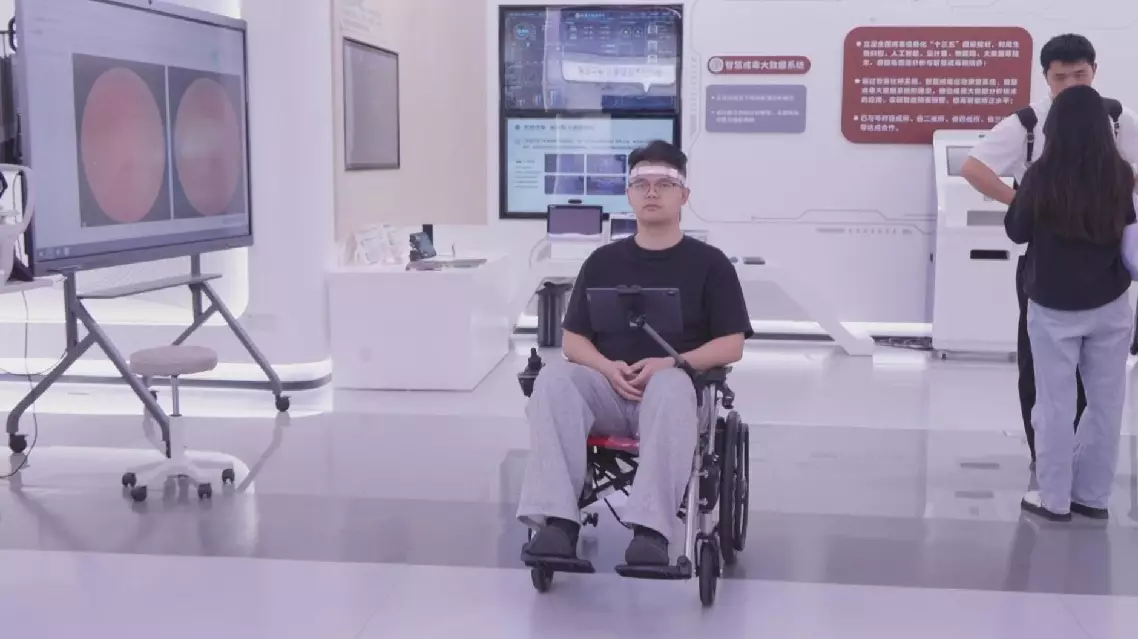
Another innovation available for athletes to try during the Games is a brain-computer-interface (BCI) wheelchair. Its accompanying headband collects electro-encephalography (EEG), electro-oculography (EOG), and head-motion signals, enabling hands-free control. Users can turn, accelerate or slow down the wheelchair through simple actions like eye blinking or head tilting.
"You can control the cursor with head movements (to select the options) and issue a 'confirm' command with a blink. The wheelchair will then move forward automatically. To turn, just tilt your head in the desired direction," said Cai Honghua, researcher at the BCI Intelligence Research Center of Pazhou Lab.
The wheelchair offers new autonomy for people with severe disabilities, according to Cai.
"As long as the user can move their head and blink normally, they can fully operate the wheelchair without using their hands. The system also monitors the user's attention and filters out unintentional blinks," Cai added.
In addition, the Games are also applying six-legged guide robots, smart barrier-free systems and other high-tech assistive solutions to provide improving accessibility for Games' participants.
Running from Dec. 8 to 15, China's 12th National Games for Persons with Disabilities and 9th National Special Olympic Games features a total of 46 major events with a record number of participants.
Assistive technology empowers disabled at National Games for Persons with Disabilities