China's economy operated smoothly overall with steady progress in 2025 amid a complex international situation, with new achievements made in innovation and high-quality development.
In 2025, the Chinese economy faced unprecedented difficulties and challenges. The shadow of tariffs looms over global trade, and multiple international institutions including the International Monetary Fund and the World Bank have lowered their global economic growth forecasts.
This year, China's economy has achieved effective qualitative improvement and reasonable quantitative growth. In the first three quarters, GDP grew by 5.2 percent year on year. The total economic output for the year is expected to reach around 140 trillion yuan (about 19.8 trillion U.S. dollars). China's contribution to global economic growth reached around 30 percent in the year, injecting new momentum into the struggling global economic recovery.
The Organization for Economic Cooperation and Development (OECD) raised its forecast for China's economic growth in 2025 from 4.9 percent to 5 percent in its latest Economic Outlook report in December.
Tamas Hajba, representative in China of the OECD, described China's economic performance with the key words: "resilience" and "transformation".
"I would definitely start with 'resilience'. Regardless of the external environment, the tariffs and the pressure in foreign trade, China's economy performed well. It achieved 5.2-percent growth in the first three quarters of the year. The second keyword that I would use when talking about the Chinese economy this year, this would be 'transformation,' as China is in a transformation when it comes to the green and digital transformation. But China is also transforming its industry and restructuring industry," he said.
As the 14th Five-Year Plan draws to a successful conclusion, China continues to mark new milestones on the timeline. Cutting-edge technologies such as artificial intelligence and digital twins are transforming Chinese manufacturing; currently, state-of-the-art smart factories cover more than 80 percent of the major manufacturing sectors.
Along the Pearl River in the Guangdong-Hong Kong-Macao Greater Bay Area, more than 10 large-scale scientific facilities are attracting global innovation resources rapidly. This year, the Shenzhen-Hong Kong-Guangzhou innovation cluster has become the world's largest of its kind for the first time.
The Hainan Free Trade Port is set to launch island-wide special customs operations starting Dec 18, marking accelerated construction of an important gateway for opening up to the outside world in the new era.
In 2025, China’s precise macroeconomic control measures have made the overall economy more stable. Fiscal policy shifted from "proactive" to "more proactive" with the issuance of 1.3 trillion yuan (about 183.8 billion U.S. dollars) in ultra-long-term special treasury bonds; and monetary policy was adjusted from "prudent" to "moderately loose". A series of more proactive and effective macroeconomic policies were implemented, laying a solid foundation for achieving the annual economic goals.
A bumper grain harvest is expected in 2025, driving a steady advance in rural revitalization, and the income gap between urban and rural residents has been further narrowed.
Energy supply capacity improved steadily. During the peak summer season, China's electrical power supply capacity withstood challenges of four historical high figures, ensuring energy security for more than 1.4 billion people.
Foreign trade has shown greater resilience. In the first 11 months, imports and exports of goods increased by 3.6 percent year on year, and China's position as the world's largest trading nation in goods remains solid.
"Export growth this year has far exceeded expectations. Exports continue to contribute 1.5 percentage points to GDP growth, demonstrating an endogenous driving force and resilience in China's economic growth," said Xu Qiyuan, a researcher with the Chinese Academy of Social Sciences.
China’s reform and opening up continue to deepen in 2025. The Law on Promoting the Private Economy was promulgated, and the negative list for market access was reduced to 106 items. During the period, China reached unilateral visa-free or full visa-free agreements with 76 countries.
The construction of a modern industrial system has accelerated along with the steady development of new quality productive forces. In the first three quarters, energy consumption per unit of GDP and energy consumption per unit of added value of industrial enterprises above designated size (those each with an annual main business turnover of at least 20 million yuan or 2.8 million U.S. dollars) continued to decline year on year. The proportion of non-fossil energy consumption increased by 1.7 percentage points year on year of the total.
The trend towards "new" is now more pronounced. In 2025, China's innovation index ranked among the top 10 globally for the first time, and new quality productive forces are continuously transformed into economic momentum. In the first 10 months, the added value of China's high-tech manufacturing industry above designated size increased by 9.3 percent year on year, and the added value of digital industry manufacturing companies above designated size increased by 9.5 percent year on year.
In 2025, consumption continues to play a leading role in driving economic growth in China. In the first three quarters of this year, final consumption expenditure contributed 53.5 percent to economic growth, an increase of 9 percentage points compared with the whole of last year. In the first 11 months, the trade-in program for consumer goods boosted sales of related products by over 2.5 trillion yuan (353.5 billion U.S. dollars); new cultural and tourism scenarios continued to emerge, along with continued upgrade in service consumption.
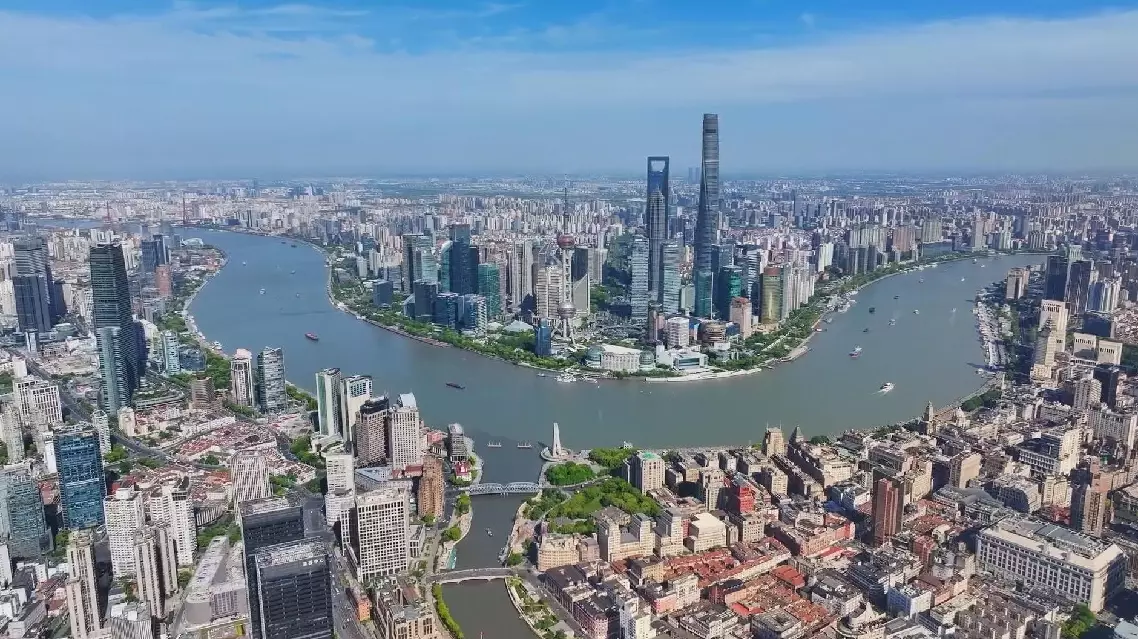
China's economy maintains steady progress in 2025
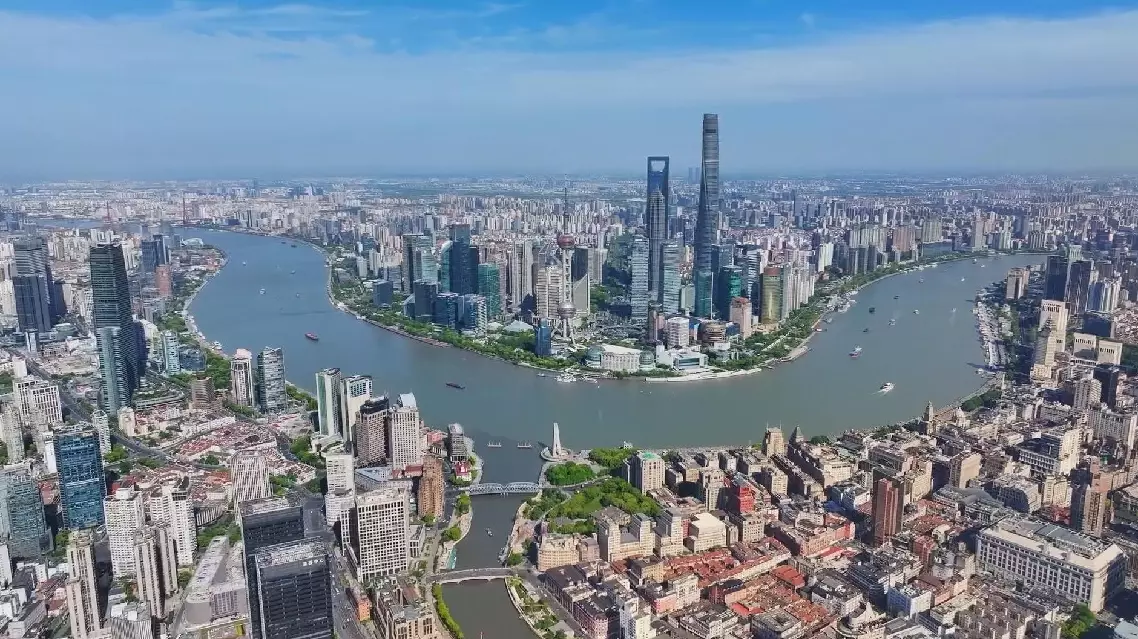
China's economy maintains steady progress in 2025