China launched its first remote-sensing satellite in the power industry specifically designed to monitor and maintain its power grid on Wednesday, a move expected to enhance the safety and efficiency of electricity transmission across the country.
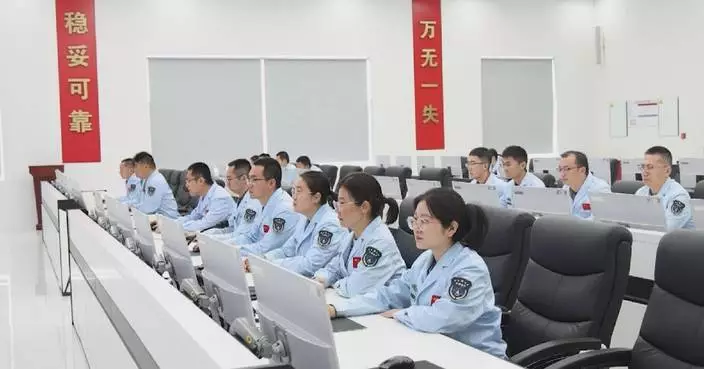
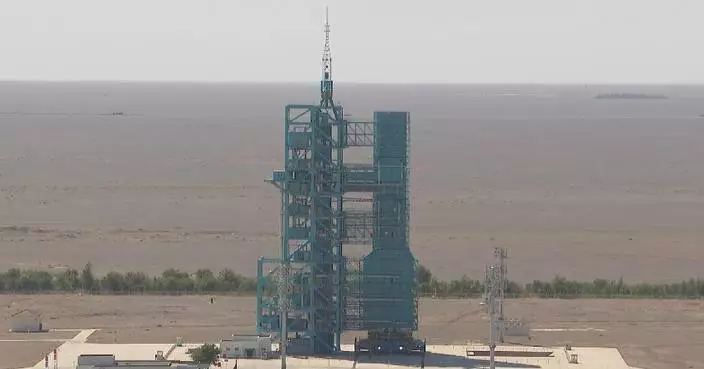
The satellite, coded Jixing High-Resolution 07D01, was sent into orbit by a carrier rocket which blasted off at 12:03 local time from the Dongfeng commercial space innovation pilot zone near the Jiuquan Satellite Launch Center in northwest China.
With a spatial resolution better than 0.5 meters, this satellite enables precise monitoring of the structural conditions of power grid equipment, such as transmission lines and pylons.
The satellite supports diverse applications, from managing ultra-high voltage (UHV) projects and assessing environmental impacts in transmission networks, to inspecting critical power corridors, issuing disaster warnings and evaluating post-disaster damage.
"Once the satellite is operational, it can be applied to 19 categories of scenarios in the future, supporting the construction of major ultra-high-voltage projects such as those transmitting hydropower from southwest China, environmental and water conservation monitoring, survey and design evaluation, as well as intelligent inspection throughout the entire lifecycle of transmission lines, along with disaster prevention and mitigation," said Yang Zhi, director of the power engineering satellite application center of the institute.
The satellite can perform continuous east-west strip observations, covering over 200 kilometers of transmission corridor in a single pass, according to the State Grid Electric Power Engineering Research Institute, one of its designers.
"This satellite improves the precision of transmission line surveys and inspections by approximately fivefold. For corridor monitoring and disaster prediction and warning, it can be seven times more efficient. Particularly for east-west oriented corridors, which this satellite is designed to monitor, it will significantly elevate the grid's emergency response capabilities and survey-and-design proficiency," said Liu Qianwei, president of the institute.
Looking ahead, China plans to launch 15 to 20 more power grid monitoring satellites during the 2026–2030 period, building a comprehensive system that leverages satellite technology to modernize and secure the country's electricity infrastructure.

China launches first remote-sensing satellite monitoring power grid