PAPIRI, Nigeria (AP) — Several parents welcomed the return late Tuesday night of their children, who were abducted last month when gunmen stormed their school.
“It has not been easy for me... But today, in fact, I have a little bit of joy, especially because there is still one abducted. But I am now happy with this one that I have gotten," Luka Illaya, one of the parents in the hall, told The Associated Press. One of his sons was released, while another remains with the abductors.
Click to Gallery
A freed student of St. Mary's Catholic School is reunited with his parents in Papiri community, Nigeria, Tuesday, Dec. 9, 2025. (AP Photo/Afolabi Sotunde)
Freed students of St. Mary's Catholic School wait to be reunited with their parents in Papiri community, Nigeria, Tuesday, Dec. 9, 2025. (AP Photo/Afolabi Sotunde)
People react after seeing recently freed students of St. Mary's Catholic School in Papiri community, Nigeria, Tuesday, Dec. 9, 2025. (AP Photo/Afolabi Sotunde)
Freed students of St. Mary's Catholic School are reunited with their parents in Papiri community, Nigeria, Tuesday, Dec. 9, 2025. (AP Photo/Afolabi Sotunde)
People react after seeing recently freed students of St. Mary's Catholic School in Papiri community, Nigeria, Tuesday, Dec. 9, 2025. (AP Photo/Afolabi Sotunde)
His son, who hugged him tightly, is one of the 100 students released over the weekend after they were abducted from a Nigerian Catholic school on Nov. 21.
The Papiri school abductions, where more than 300 students and staff were taken, was the latest in a string of mass abductions that have rocked Nigeria in the past decade. Days earlier, 25 students were also abducted in nearby Kebbi state.
The government did not release any details about the released Papiri students and the fate of at least 150 other children and staff who remain in captivity. Fifty of the students escaped in the hours following the abductions.
“We thank all the security agencies that helped in the rescue of our children. We are pleading that God should give them more strength to be able to rescue the remaining children,” Reverend Sister Felicia Gyang, the principal of the school, said.
No group has claimed responsibility for the abductions.
Analysts say school children are a target for armed groups seeking a high ransom from the government and communities. Such abductions have often commanded national and international attention, with the pope last month calling for the release of the Papiri students in a Sunday address from the Vatican.
Since 2014, when Boko Haram kidnapped 276 girls from Chibok, there have been at least a dozen mass school abductions with at least 1,799 students kidnapped, according to an AP tally.
Nigerian President Bola Tinubu on X earlier this week called on security agencies and governors to do more to protect children from falling into the hands of abductors, saying students “should no longer be sitting ducks.”

A freed student of St. Mary's Catholic School is reunited with his parents in Papiri community, Nigeria, Tuesday, Dec. 9, 2025. (AP Photo/Afolabi Sotunde)

Freed students of St. Mary's Catholic School wait to be reunited with their parents in Papiri community, Nigeria, Tuesday, Dec. 9, 2025. (AP Photo/Afolabi Sotunde)

People react after seeing recently freed students of St. Mary's Catholic School in Papiri community, Nigeria, Tuesday, Dec. 9, 2025. (AP Photo/Afolabi Sotunde)

Freed students of St. Mary's Catholic School are reunited with their parents in Papiri community, Nigeria, Tuesday, Dec. 9, 2025. (AP Photo/Afolabi Sotunde)

People react after seeing recently freed students of St. Mary's Catholic School in Papiri community, Nigeria, Tuesday, Dec. 9, 2025. (AP Photo/Afolabi Sotunde)
DUBAI, United Arab Emirates (AP) — U.S. President Donald Trump said Monday that the war against Iran could be short-lived, but he left open the possibility of an escalation in fighting if global oil supplies are disrupted by the Islamic Republic, which chose a new hard-line supreme leader.
Oil prices briefly shot to their highest level since 2022 a day after Iran selected Ayatollah Mojtaba Khamenei to succeed his late father as Iran’s supreme leader. Investors saw it as a signal that Iran was digging in 10 days into the war launched by the United States and Israel.
But prices later fell and U.S. stocks rose on hopes that the war with Iran may not last much longer.
“We took a little excursion” to the Middle East “to get rid of some evil. And, I think you’ll see it’s going to be a short-term excursion,” Trump told Republican lawmakers at his golf club near Miami.
Hours later, Trump posted on social media: “If Iran does anything that stops the flow of Oil within the Strait of Hormuz, they will be hit by the United States of America TWENTY TIMES HARDER than they have been hit thus far."
The war has choked off major supplies of oil and gas to world markets and sent fuel prices rising across the U.S. The fighting has also led foreigners to flee from business hubs and prompted millions to seek shelter as bombs hit military bases, government buildings, oil and water installations, hotels and at least one school.
Trump also had a call Monday with Russian President Vladimir Putin to discuss the war and other issues. Putin’s foreign affairs adviser, Yuri Ushakov, said Putin “voiced a few ideas regarding a quick political and diplomatic settlement” of the conflict following his conversations with Gulf leaders and Iranian President Masoud Pezeshkian.
Khamenei, a secretive 56-year-old cleric, is only the third supreme leader in the history of the Islamic Republic. He has close ties to the paramilitary Revolutionary Guard, which has been firing missiles and drones at Israel and Gulf Arab states since his father, Ayatollah Ali Khamenei, who had ruled since 1989, was killed during the war’s opening salvo.
Dozens of explosions were heard in Tehran in what was considered the heaviest air raid on the capital since the war started Feb. 28. Iranian media did not report on damages and casualties.
Israel said Monday that it was carrying out “a wide-scale wave of strikes” on the Iranian city of Isfahan, as well as Tehran and in southern Iran. The Israeli military said it hit dozens of infrastructure sites, including the drone headquarters of the Revolutionary Guard.
Meanwhile, Israel’s military alerted the population throughout the day about incoming missiles from Iran. From Lebanon, Iran-backed Hezbollah also fired rockets into Israel on Monday.
Trump said the United States was nearing its goal to eliminate Iran’s ballistic missile stockpile and its ability to produce and launch them. The administration has offered shifting rationales and timelines since the start of the conflict.
He also talked about "building a new country,” a comment that seemed to suggest the U.S. might be engaged in the building of a new Iran.
Thousands poured into a central square in the capital, Tehran, and other locations in a show of allegiance to the new supreme leader, waving flags and shouting phrases like “Death to America” and “Death to Israel.”
The younger Khamenei, who has not been seen in public since the war started, was long considered a potential successor — even before the killing of his 86-year-old father.
Trump told reporters that he was “disappointed” that Mojtaba Khamenei was picked and that he liked “the idea” of a leader drawn from an “internal” group of candidates, saying that worked well with Venezuela.
The younger Khamenei is seen as even less compromising than his late father. As supreme leader, he has the final say on all major policies, including Tehran’s disputed nuclear program.
Though Iran’s key nuclear sites are in tatters after the U.S. bombed them during the 12-day Israel-Iran war in June, it still has highly enriched uranium that’s a technical step away from weapons-grade levels. Khamenei could choose to do what his father never did — build a nuclear bomb.
Trump told reporters the war with Iran started because that country was working on a new site for developing material for nuclear weapons to replace one bombed last year by the U.S.
Israel has already described Khamenei as a potential target. Trump said Monday it “would be inappropriate” to say whether he would be targeted.
The U.S. stock market careened through a manic Monday, going from a steep early loss to a solid gain as worries turned into hope that the war with Iran may not last that long. Oil prices whipped from nearly $120 per barrel, the highest since 2022, back toward $90.
Iran’s attacks in the Strait of Hormuz have all but stopped tankers from using the shipping lane through which a fifth of the world’s oil is carried, and Iranian drones and missiles have targeted oil and gas infrastructure in major producers. Attacks on merchant ships near the strait have killed at least seven mariners, according to the International Maritime Organization.
Kamal Kharazi, foreign policy adviser to the office of the supreme leader, told CNN on Monday that Iran is prepared for a long war. He said he sees no “room for diplomacy anymore” unless economic pressure prompts other countries to intervene and stop the “aggression of Americans and Israelis against Iran.”
Turkey, meanwhile, said NATO defenses had intercepted a ballistic missile that entered the country’s airspace for the second time since the war started.
Saudi Arabia lashed out at Iran following the drone attack on its massive Shaybah oil field, saying Tehran would be the “biggest loser” if it continues to attack Arab states.
In the UAE, home to the futuristic city of Dubai, authorities said two people were wounded by shrapnel from the interception of Iranian missiles over the capital, Abu Dhabi. The Emirati Defense Ministry said 15 ballistic missiles and 18 drones were fired at the country on Monday.
Early Tuesday, the United Arab Emirates said a drone attack targeted its consulate in the Kurdish region of Iraq, causing damage but no injuries. The statement from the foreign affairs ministry did not blame the attack on anyone but decried it as “a dangerous escalation and a threat to regional security and stability.”
Iran also attacked Kuwait, Qatar and Bahrain, where the government said that a person was killed and others injured in an Iranian attack targeting a residential building in the capital, Manama.
Several U.S. diplomatic missions have ordered all but key staff to leave.
The war has killed at least 1,230 people in Iran, at least 397 in Lebanon and 11 in Israel, according to officials.
A total of seven U.S. service members have been killed.
Trump said Monday that family members of the soldiers told him during the transfer of their remains over the weekend in Dover, Delaware: “Make sure you win, sir."
Magdy reported from Cairo, and Weissert reported from Washington. Associated Press journalists around the world also contributed to this report.
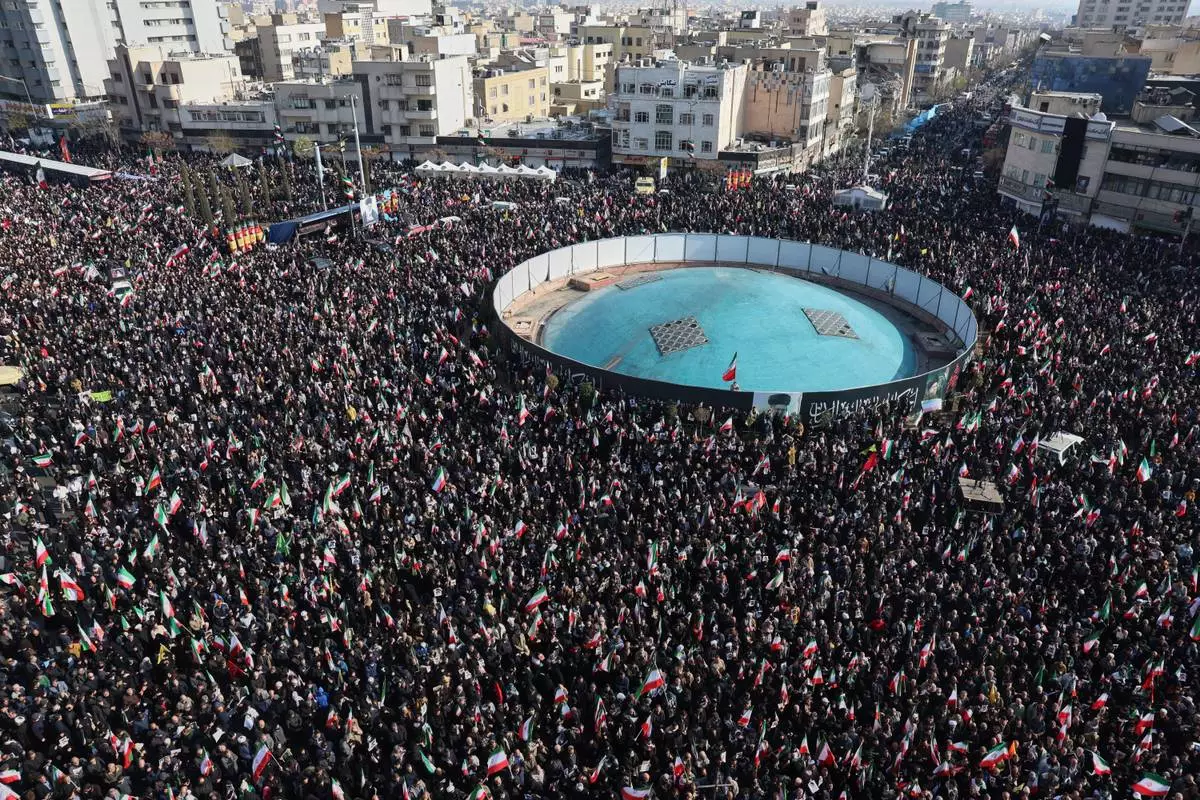
People gather in a rally to support Ayatollah Mojtaba Khamenei, the successor to his late father Ayatollah Ali Khamenei as supreme leader, in Tehran, Iran, Monday, March 9, 2026. (AP Photo/Vahid Salemi)
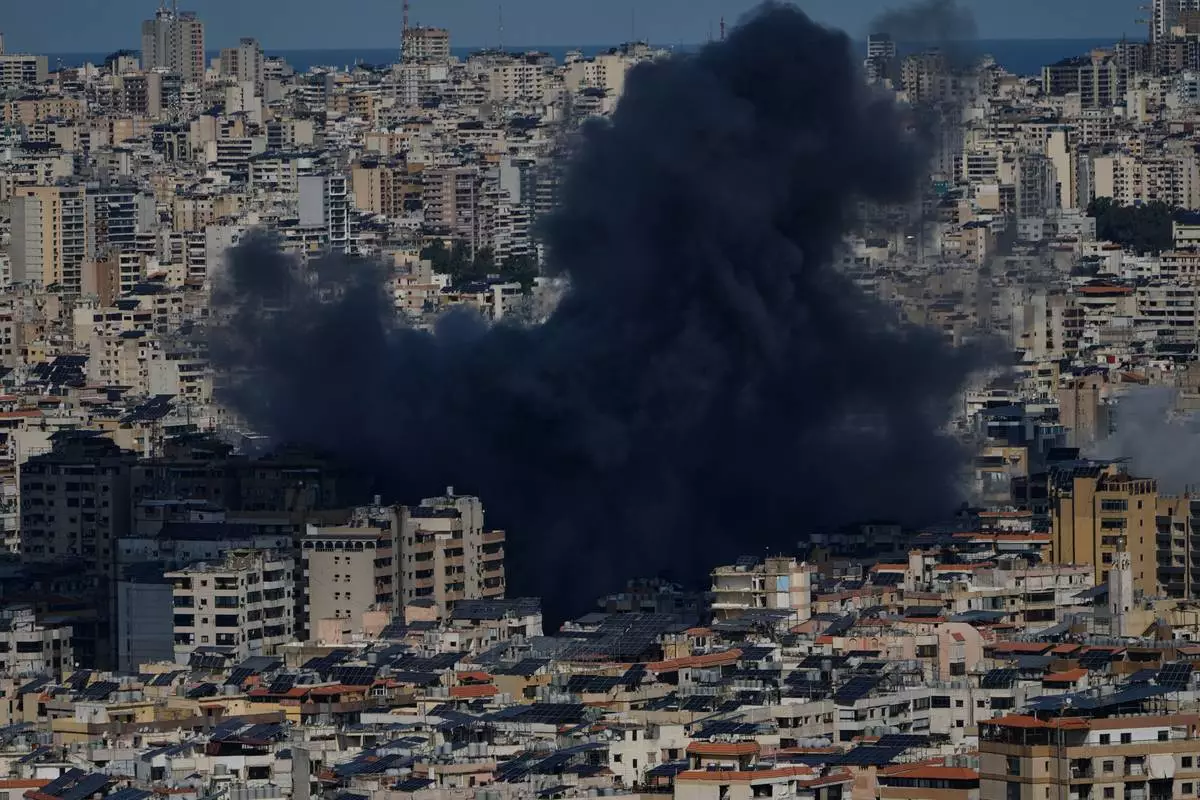
Smoke rises following an Israeli airstrike in Dahiyeh, Beirut's southern suburbs, Lebanon, Monday, March 9, 2026. (AP Photo/Bilal Hussein)
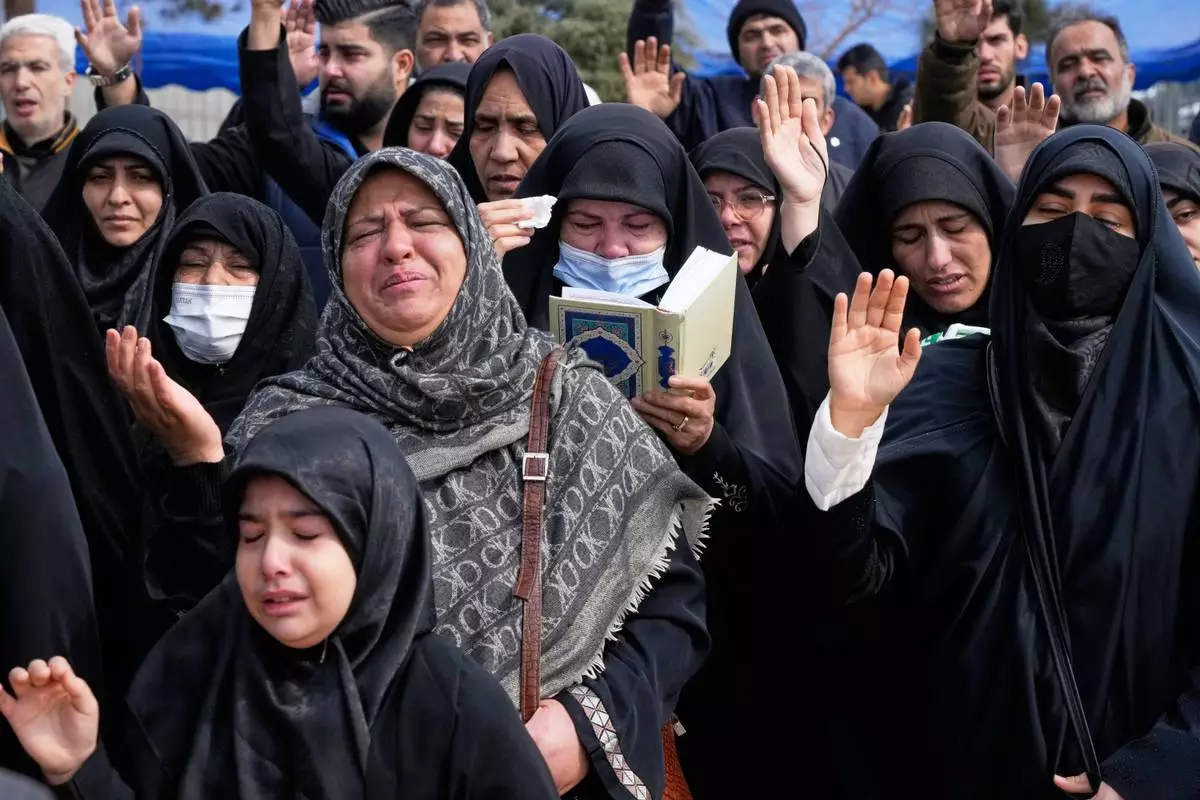
Mourners pray during the funeral of Mehdi Hosseini, a man killed in a U.S.-Israeli strike, at Behesht-e Zahra cemetery in Tehran, Iran, Monday, March 9, 2026. (AP Photo/Vahid Salemi)
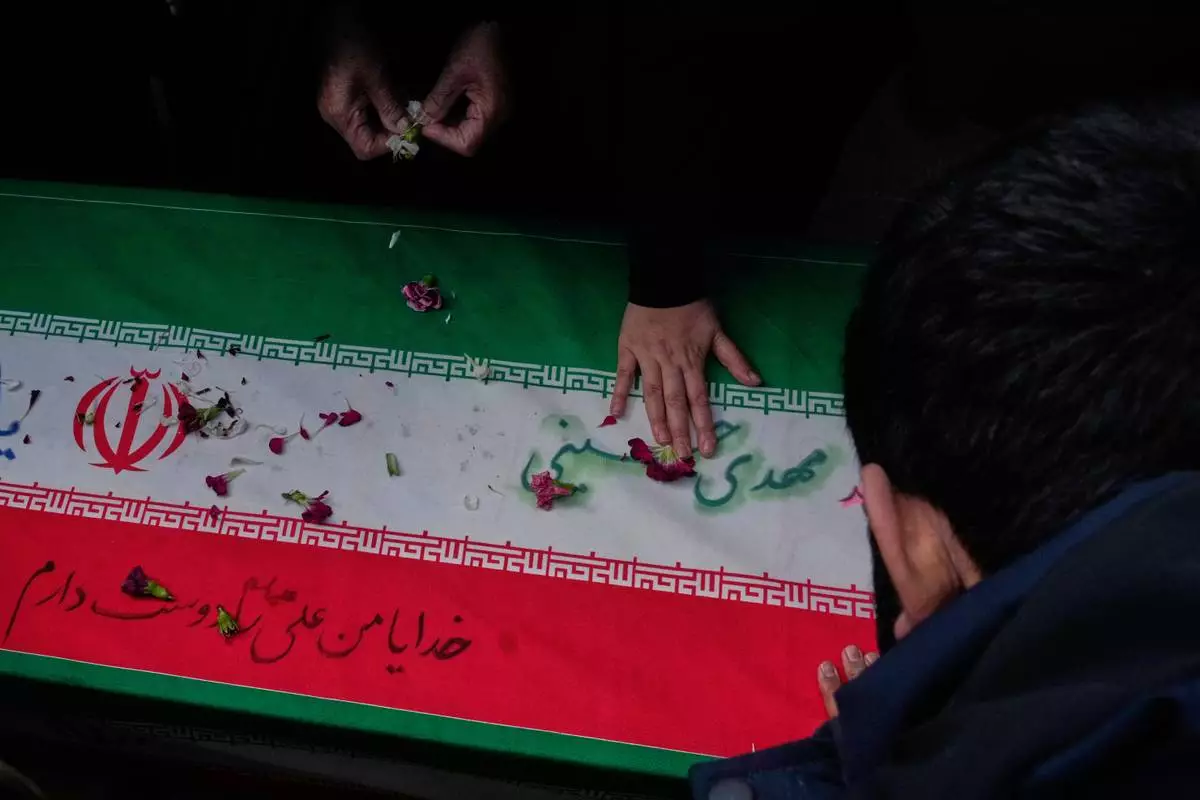
Relatives mourn over the flag draped coffin of Mehdi Hosseini who was killed in a U.S.-Israeli strike during his burial ceremony at Behesht-e Zahra cemetery in Tehran, Iran, Monday, March 9, 2026. (AP Photo/Vahid Salemi)
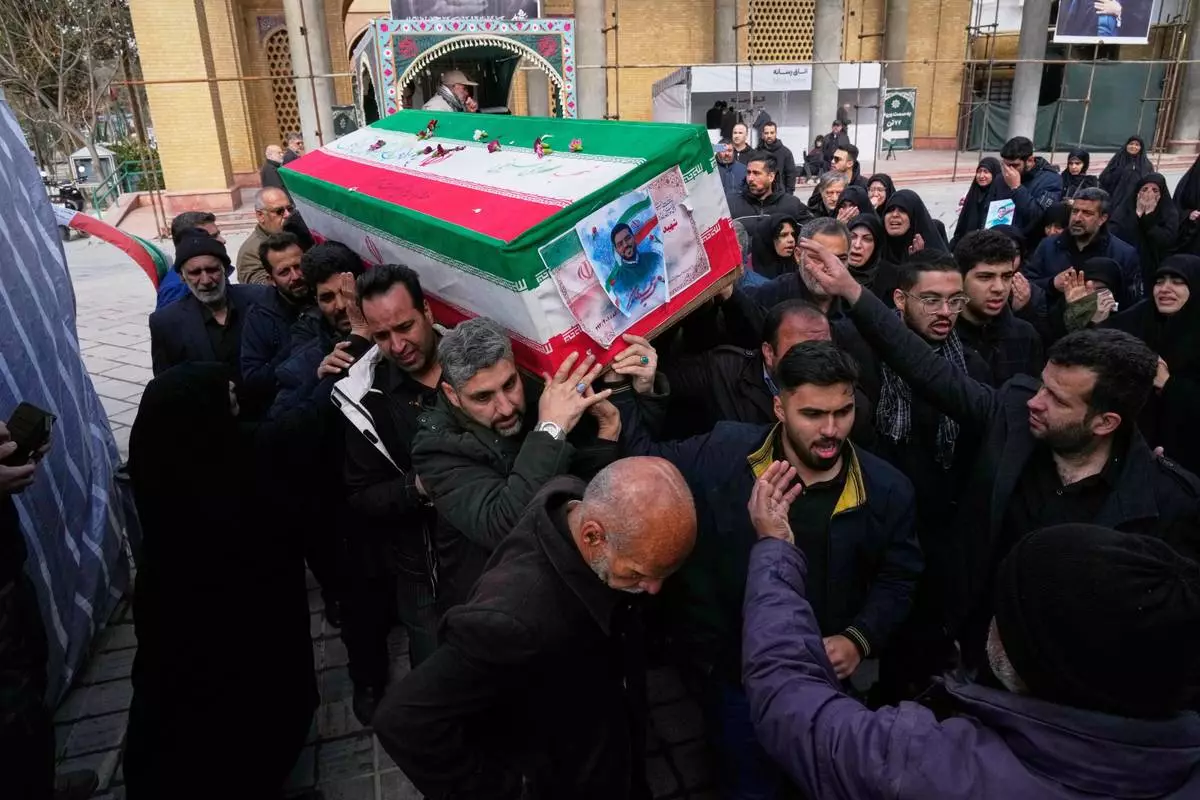
The coffin of Mehdi Hosseini, a man killed in a U.S.-Israeli strike, is carried for burial at Behesht-e Zahra cemetery in Tehran, Iran, Monday, March 9, 2026. (AP Photo/Vahid Salemi)
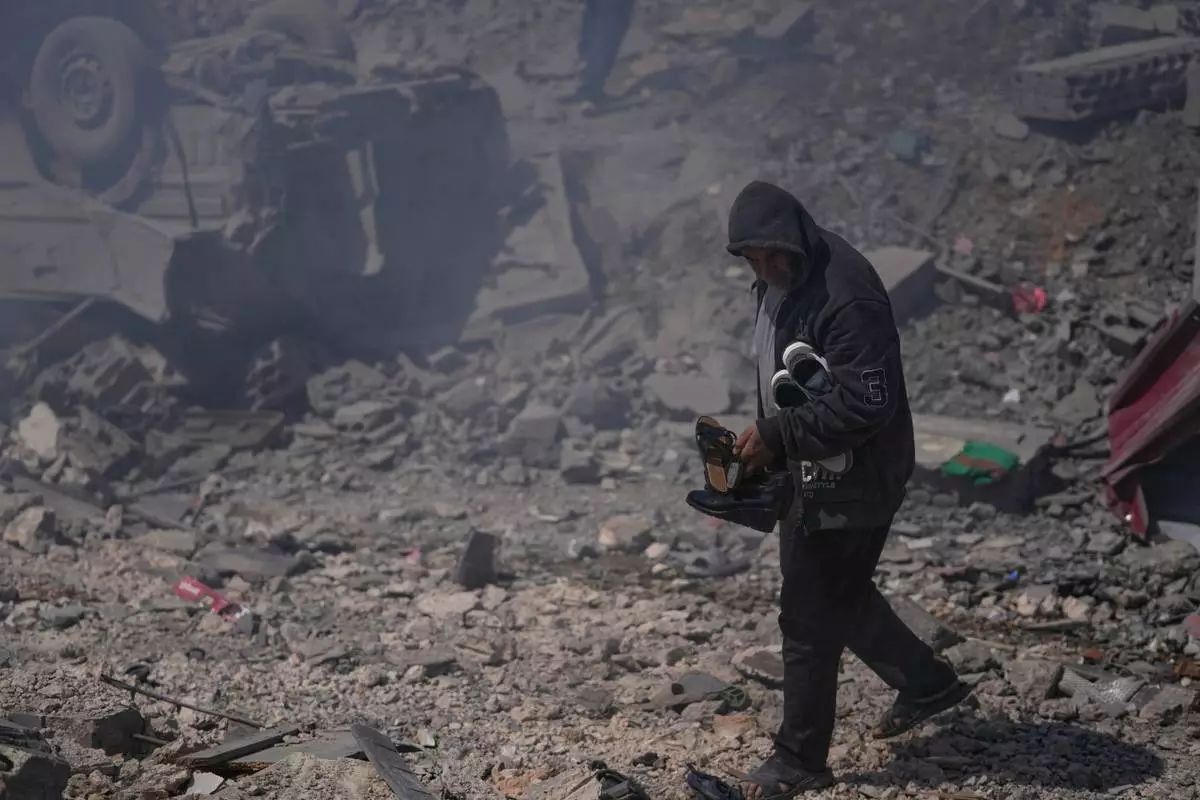
A man carries shoes from his destroyed house that was hit by Israeli airstrikes hit several houses in Sir al-Gharbiyeh village south Lebanon, Sunday, March, 8, 2026. (AP Photo/Mohammed Zaatari)
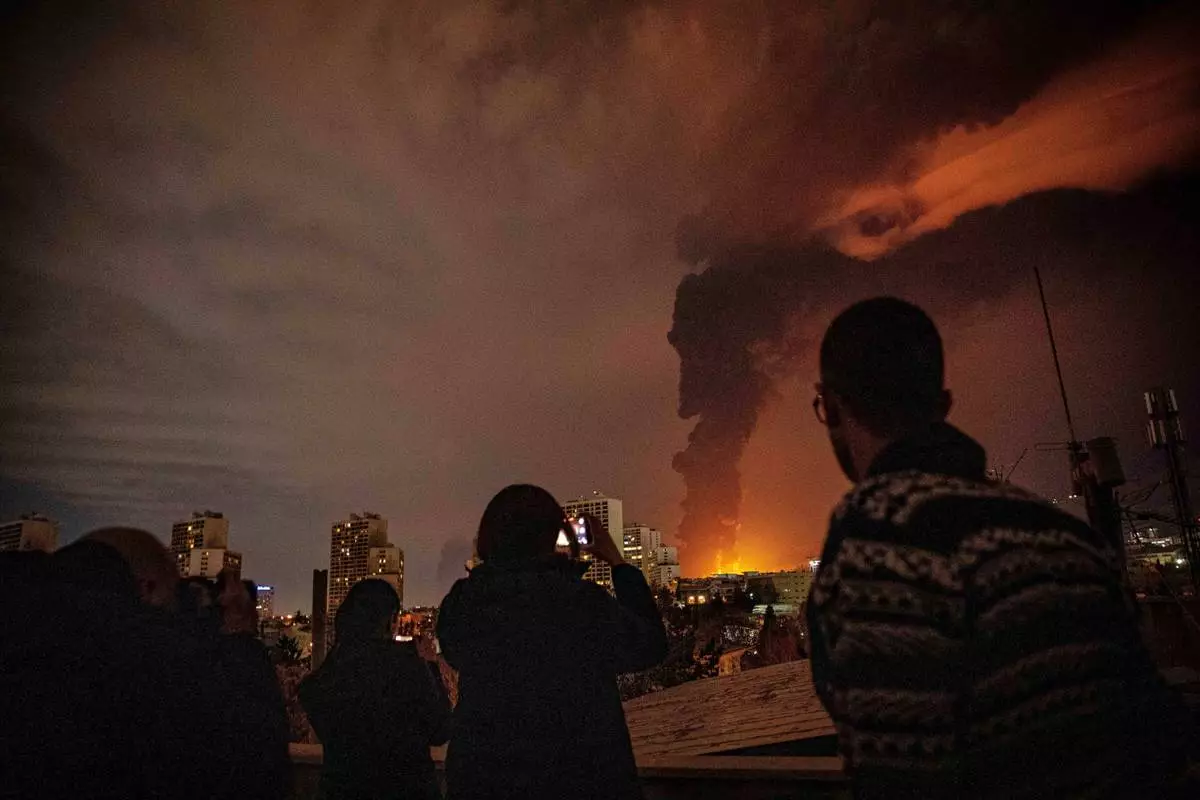
Residents look on and take pictures as flames and smoke rise from an oil storage facility struck as attacks hit the city during the U.S.–Israeli military campaign in Tehran, Iran, Saturday, March 7, 2026. (Alireza Sotakbar/ISNA via AP)
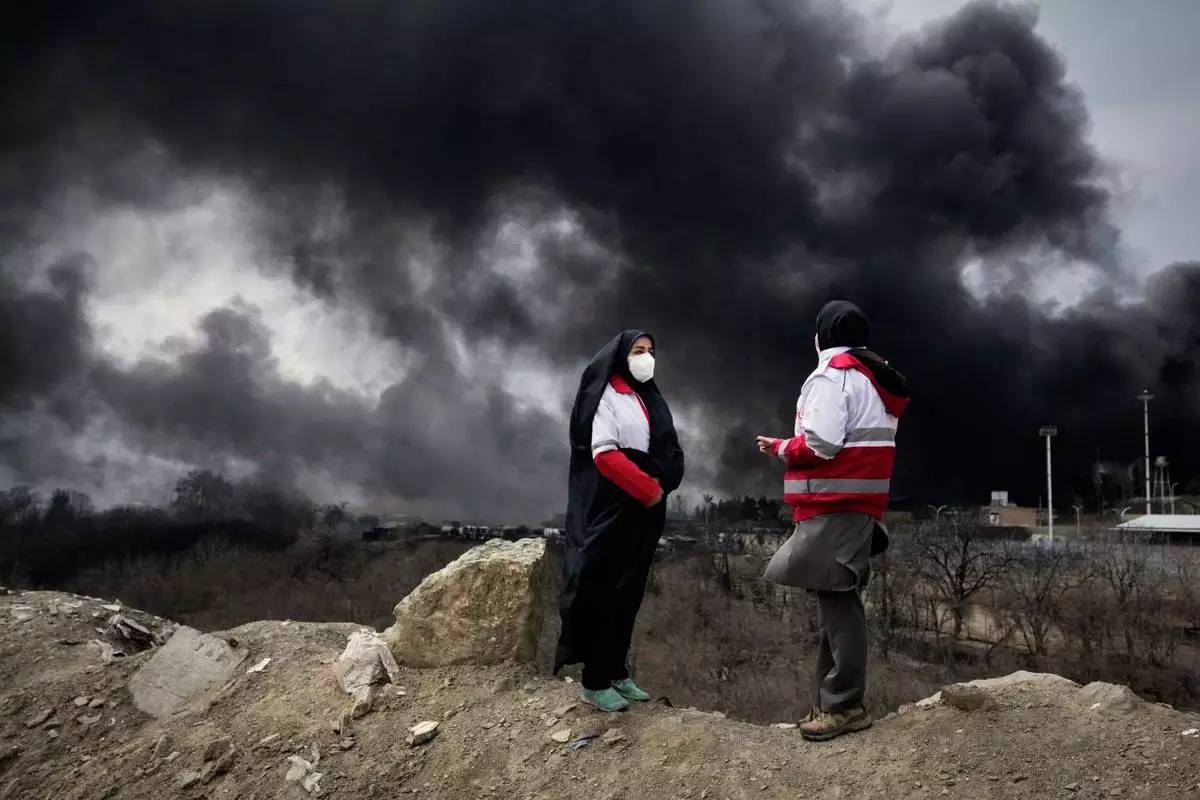
Two women from the Iranian Red Crescent Society stand as a thick plume of smoke from a U.S.-Israeli strike on an oil storage facility late Saturday rises in the sky in Tehran, Iran, Sunday, March 8, 2026. (AP Photo/Vahid Salemi)
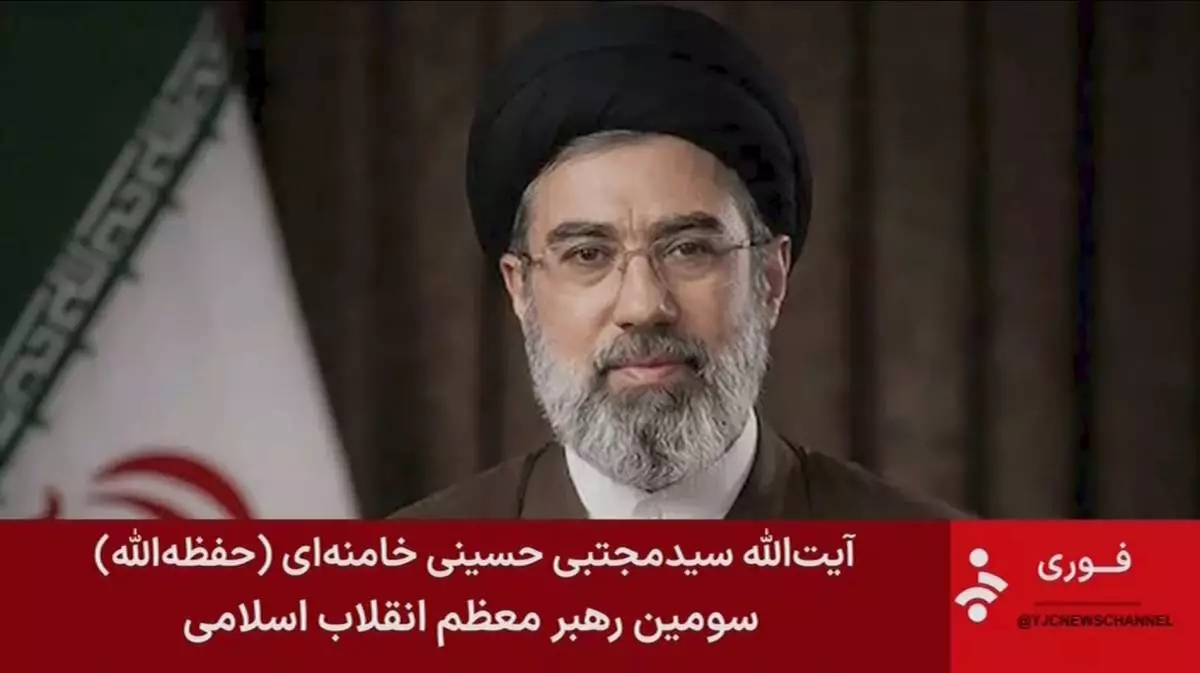
This image taken from video provided by Iran state TV shows Mojtaba Khamenei, a son of Iran's slain supreme leader, who has been named as the Islamic Republic's next ruler, authorities announced Monday, March 9, 2026. (Iran state TV via AP)