China has been expanding application scenarios in its fast-growing low-altitude economy with a raft of supportive policies keeping up its industrial momentum, creating new tourism experiences and even delivering key solutions to help the healthcare sector.
In its latest effort to boost high-quality development, China last month unveiled a guideline to accelerate the development of application scenarios for new technologies and products.
This policy has already translated into tangible progress for the low-altitude economy across the country, with new use cases taking flight in fields including tourism, logistics, and emergency services.
Referring to activities involving both manned and unmanned aircraft operating in airspace up to 3,000 meters above the ground, China has recognized the low-altitude economy as a key strategic emerging sector, and now efforts are being made to fully exploit its potential up and down the country.
One such example can be found in Jingdezhen City of east China's Jiangxi Province, where the Jiangxi Helicopter Science and Technology Museum has launched low-altitude sightseeing services.
This allows visitors to take helicopter rides overlooking famous landmarks in the city which is famous for its porcelain production, including the Taoyang Alley Historical and Cultural Tourism Area and the Jingdezhen China Ceramics Museum. The city now has four cultural-tourism air routes in operation, adding further value to its low-altitude economy.
"The feeling was amazing, really breathtaking. It was my first time taking a small sightseeing aircraft, and I was a bit nervous, but more than anything, I was impressed," said Zhan Yixin, a local resident who undertook one of the tours.
Beyond such aerial tours, Jingdezhen is leveraging its one civil airport, three general aviation airports, and over ten helicopter landing points, while also broadening its low-altitude applications into new areas including police patrols and emergency rescue operations.
This expansion has been supported by continuous improvements in local infrastructure and the adoption of a range of supportive policies which have streamlined processes and allowed business to hit new heights.
"By simplifying low-altitude flight approvals and building standardized take-off and landing facilities, we have cleared obstacles for opening up new scenarios. The aviation-based tourism alone has driven the development of more than 20 local supporting enterprises, forming a complete industrial chain -- from helicopter maintenance to aviation-themed cultural products," said Wang Lanming, deputy director of the administrative committee of the Jingdezhen Hi-tech Industrial Development Zone.
Similar developments are taking place in east China's Shandong Province, where various industries are benefiting from the convenience offered by drone delivery services, ensuring essential goods can make it to previously hard-to-reach areas in a timely fashion.
Shandong's provincial capital Jinan has launched its first regularly operated medical drone delivery route in the outlying Pingyin County, enabling the rapid transport of medical supplies from the rooftop of Pingyin People's Hospital to a maternal and child health care hospital located six kilometers away.
The new scenarios are steadily transforming the low-altitude economy from a niche sector into a broad-based market. Official data showed that 969 Chinese enterprises have registered in the civil unmanned aerial vehicle product information system, a platform established by China's Ministry of Industry and Information Technology, with 3,191 product models and over 4.78 million drones being registered.
In 2024, China's low-altitude economy reached a market size of over 670 billion yuan (about 95 billion U.S. dollars) and is expected to break the one-trillion-yuan mark this year. According to forecasts from China's civil aviation authority, the total scale of the country's low-altitude economy is expected to top 3.5 trillion yuan (almost 500 billion U.S. dollars) by 2035, highlighting its massive market potential.
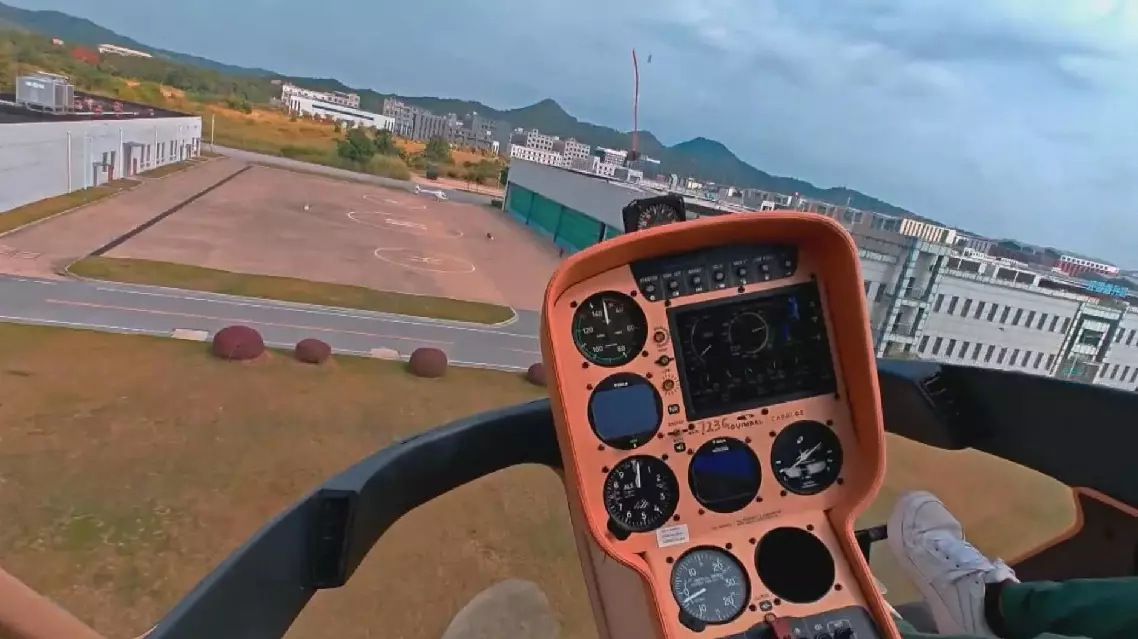
Emerging application scenarios fuel China's low-altitude economy