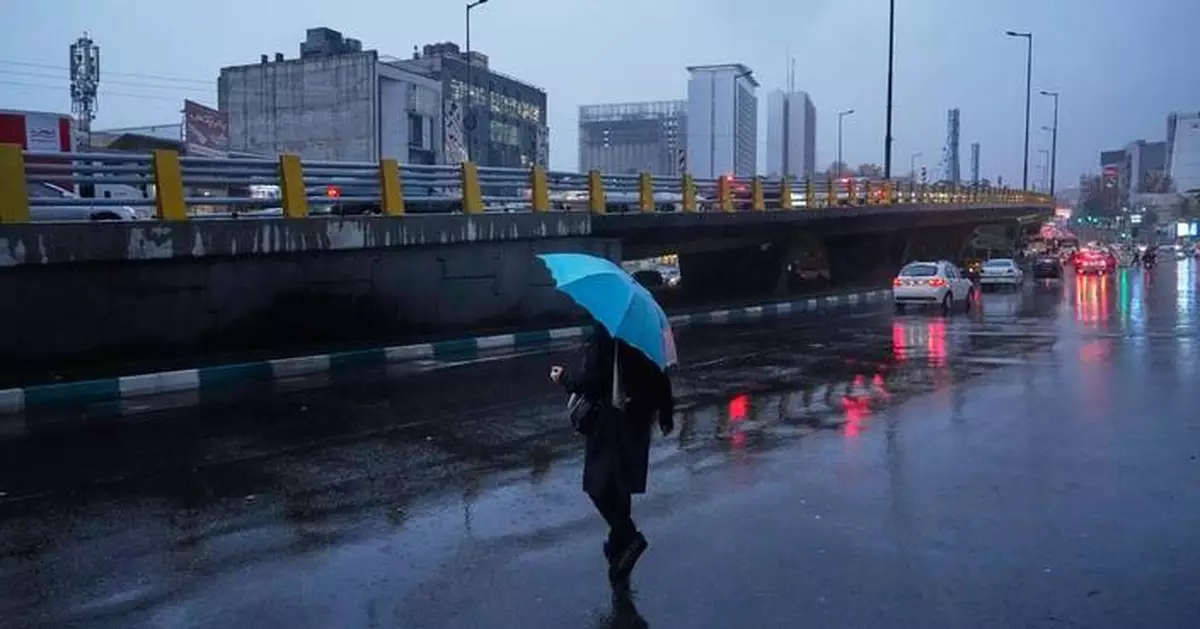
TEHRAN, Iran (AP) — Rain fell for the first time in months in Iran's capital Wednesday, providing a brief respite for the parched Islamic Republic as it suffers through the driest autumn in over a half century.
The drought gripping Iran has seen its president warn the country it may need to move its government out of Tehran by the end of December if there's not significant rainfall to recharge dams around the capital. Meteorologists have described this fall as the driest in over 50 years across the country — from even before its 1979 Islamic Revolution — further straining a system that expends vast amounts of water inefficiently on agriculture.
Click to Gallery
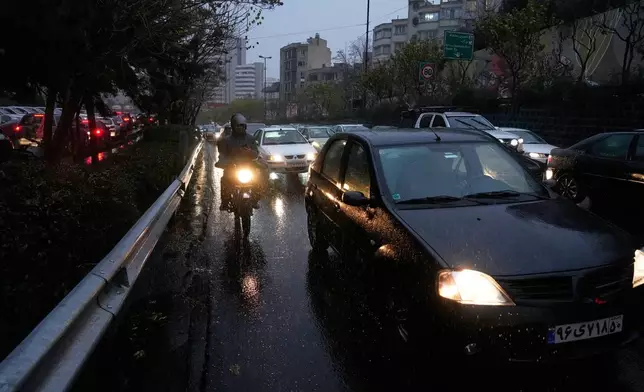
People drive on a highway on a rainy day in Tehran, Iran, Wednesday, Dec. 10, 2025. (AP Photo/Vahid Salemi)
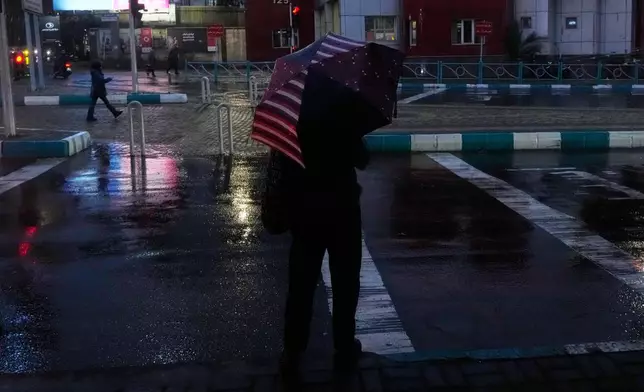
A man with an umbrella crosses a street in Tehran, Iran, Wednesday, Dec. 10, 2025. (AP Photo/Vahid Salemi)
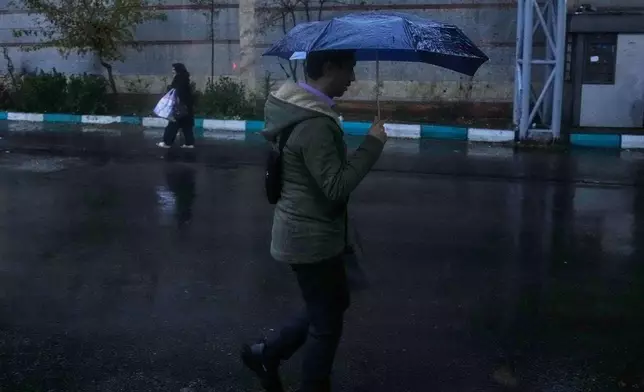
A man holds an umbrella while walking in bus station as rain falls in Tehran, Iran, Wednesday, Dec. 10, 2025. (AP Photo/Vahid Salemi)
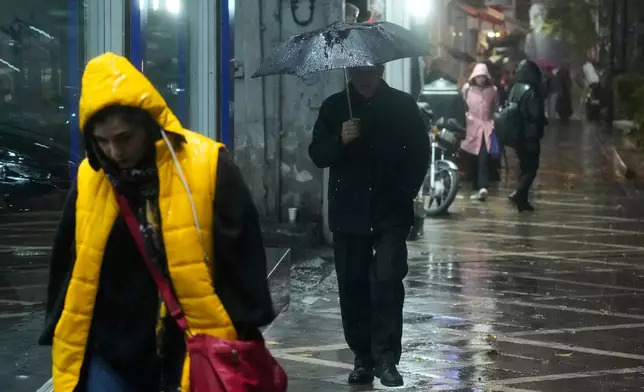
A man walks with an umbrella under a rain in Tehran, Iran, Wednesday, Dec. 10, 2025. (AP Photo/Vahid Salemi)
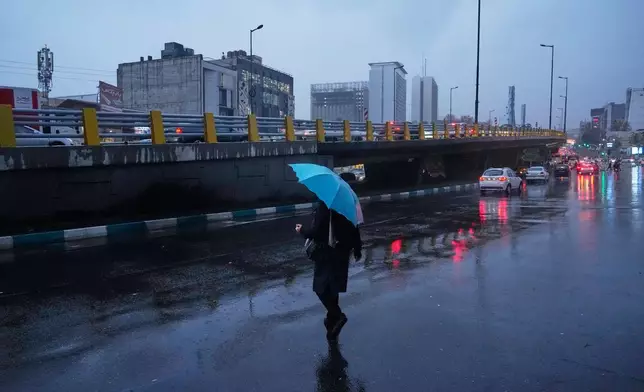
A woman holds an umbrella while crossing a street as rain falls in Tehran, Iran, Wednesday, Dec. 10, 2025. (AP Photo/Vahid Salemi)
The water crisis has even become a political issue in the country, particularly as Israeli Prime Minister Benjamin Netanyahu has repeatedly offered his country's help to Iran, a nation he launched a 12-day war against in June. Water shortages also have sparked localized protests in the past, something Iran has been trying to avoid as its economy struggles under the weight of international sanctions over its nuclear program.
“I am very grateful to my Lord, who opened the door of His mercy upon us, allowing us to witness this blessed, abundant rain," said Brian Shad Doust, a Tehran resident. "Last year, we really suffered from severe water shortages — it was extremely dry, we practically had no water at all. Seeing the rain for the first time this season, we thank God a thousand times.”
The drought has been a long subject of conversation across Tehran and wider Iran, from government officials openly discussing it with visiting journalists to people purchasing water tanks for their homes. In the capital, government-sponsored billboards call on the public not to use garden hoses outside to avoid waste. Water service reportedly goes out for hours in some neighborhoods of Tehran, home to 10 million people.
Snowpack on the surrounding Alborz Mountains remains low as well, particularly after a summer that saw temperatures rise near 50 degrees Celsius (122 degrees Fahrenheit) in some areas of the country, forcing government buildings to shut down.
Ahad Vazifeh, an official in the government's Iran Meteorological Organization office, called the drought “unprecedented” in an interview with the Fararu news outlet last week. Precipitation now stands at about 5% of what's considered a normal autumn, he added.
“Even if rain in the winter and spring will be normal, we will have 20% shortage,” Vazifeh warned.
Social media videos show people standing in some reservoirs, the water lines clearly visible. Satellite pictures analyzed by The Associated Press also show reservoirs noticeably depleted. That includes the Latyan Dam — one of five key reservoirs — which is now under 10% full as Tehran has entered its sixth consecutive year of drought.
The state-owned Tehran Times newspaper, often following the theocracy's line, was blunt about the scale of the challenge.
“Iran is facing an unprecedented water crisis that threatens not only its agricultural sector but also regional stability and global food markets," the newspaper said in a story this past weekend. The faithful have also offered prayers for rain at the country's mosques.
Iran, straddling the Mideast and Asia, long has been arid due to its geography. Its Alborz and Zagros mountain ranges cause a so-called “rain shadow” across much of the nation, blocking moisture coming from the Caspian Sea and the Persian Gulf.
But the drain on water supplies has been self-inflicted. Agriculture uses an estimated 90% of the country's water supplies. That hasn't been stopped even through these recent drought years. That's in part due to policies stemming from Iran's 1979 Islamic Revolution and then-Supreme Leader Ayatollah Ruhollah Khomeini, who pledged water would be free for all. The intervening years of the Iran-Iraq war saw the country push for self-sufficiency above all else, irrigating arid lands to grow water-intensive crops like wheat and rice, and over-drilling wells.
Experts have described Iran as facing “water bankruptcy” over its decisions. In the past, Iranian officials have blamed their neighbors in part for their water shortage, with hard-line former President Mahmoud Ahmadinejad at one point falsely suggesting that “the enemy destroys the clouds that are headed toward our country and this is a war Iran will win.”
But that's changed with the severity of the crisis leading to current President Masoud Pezeshkian warning the capital may need to be moved. However, such a decision would cost billions of dollars the country likely doesn't have as it struggles through a major economic crisis.
Meanwhile, climate change likely has accelerated the droughts plaguing Iraq, which has seen the driest year on record since 1933, as well as Syria and Iran, said World Weather Attribution, a group of international scientists who study global warming’s role in extreme weather.
With the climate warmed by 1.3 degrees Celsius (2.3 degrees Fahrenheit) due to fossil fuel burning, the severity of drought seen in Iran over the last year can be expected to return every 10 years, the group said. If the temperature hadn't risen by that much, it could be expected between every 50 to 100 years, it added.
“The current acute crisis is part of a longer-term water crisis in Iran and the wider region that results from a range of issues including frequent droughts with increasing evaporation rates, water-intensive agriculture and unsustainable groundwater extraction,” World Weather Attribution said in a recent report.
"These combined pressures contribute to chronic water stress in major urban centers including Tehran, reportedly at risk of severe water shortages and emergency rationing, while also straining agricultural productivity and heightening competition over scarce resources."
Gambrell reported from Dubai, United Arab Emirates.
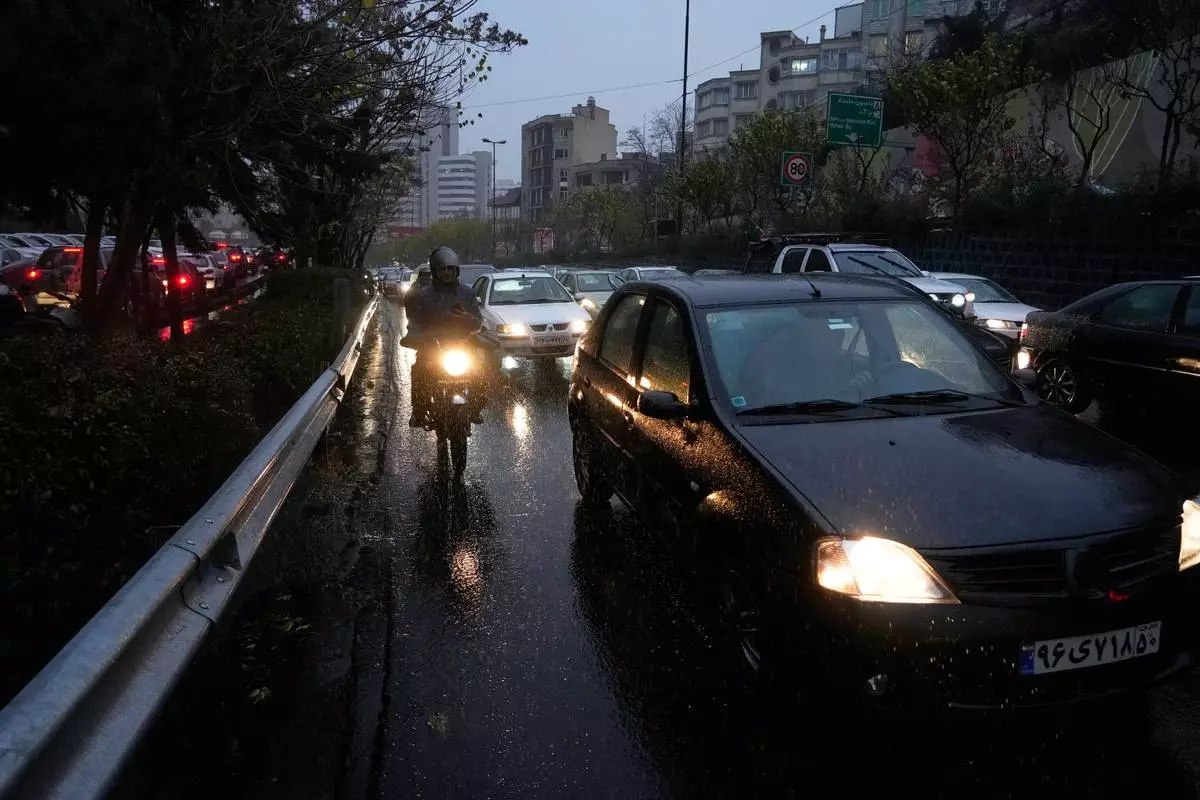
People drive on a highway on a rainy day in Tehran, Iran, Wednesday, Dec. 10, 2025. (AP Photo/Vahid Salemi)
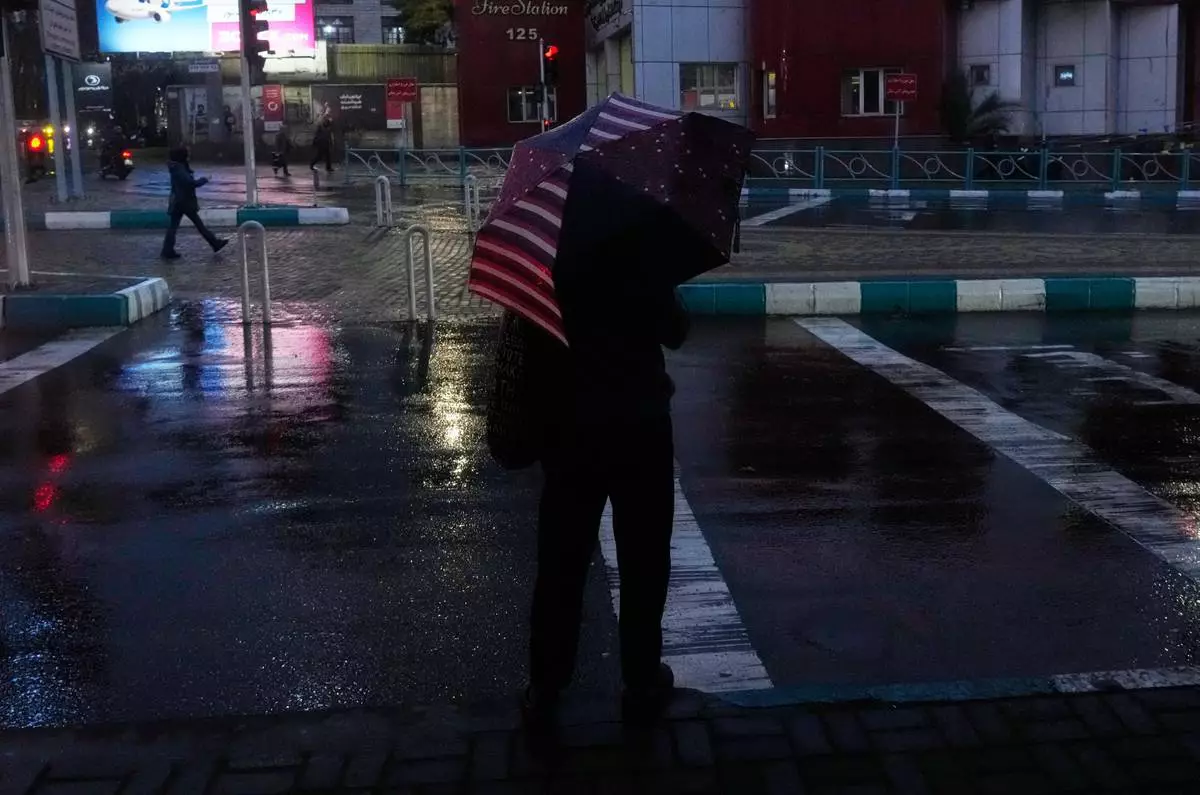
A man with an umbrella crosses a street in Tehran, Iran, Wednesday, Dec. 10, 2025. (AP Photo/Vahid Salemi)
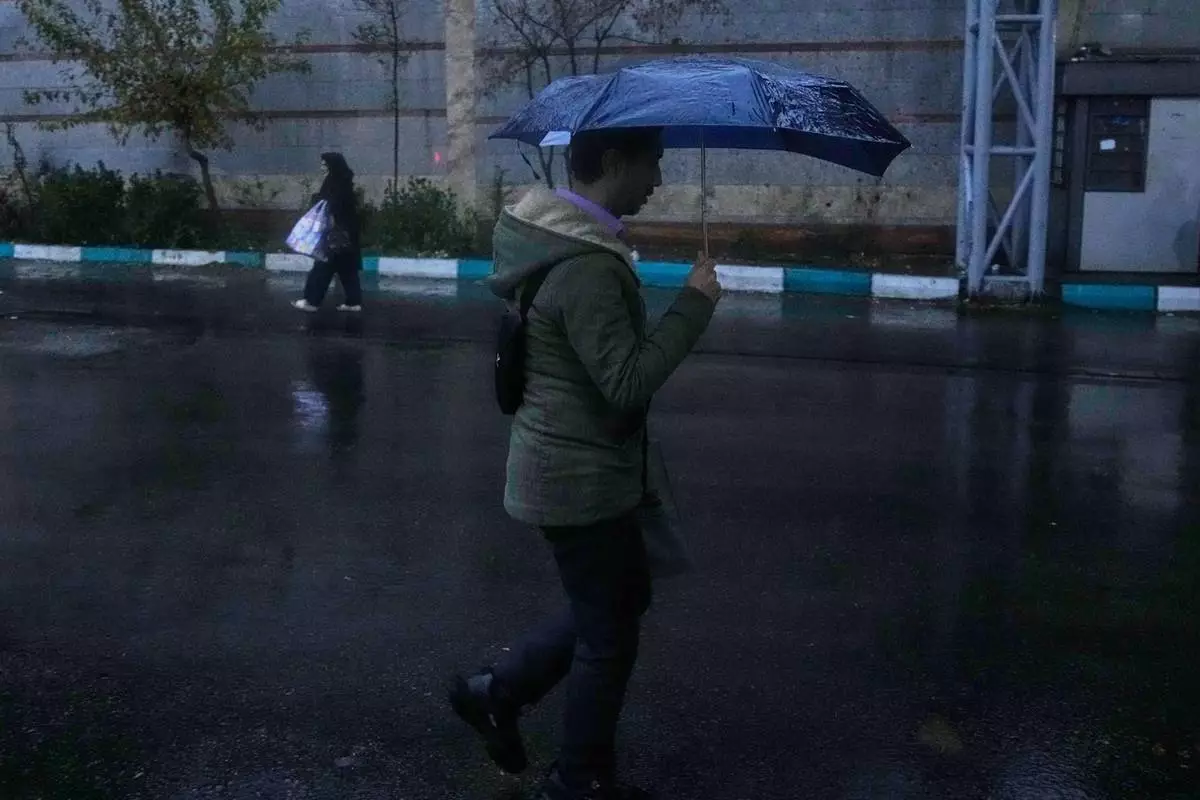
A man holds an umbrella while walking in bus station as rain falls in Tehran, Iran, Wednesday, Dec. 10, 2025. (AP Photo/Vahid Salemi)
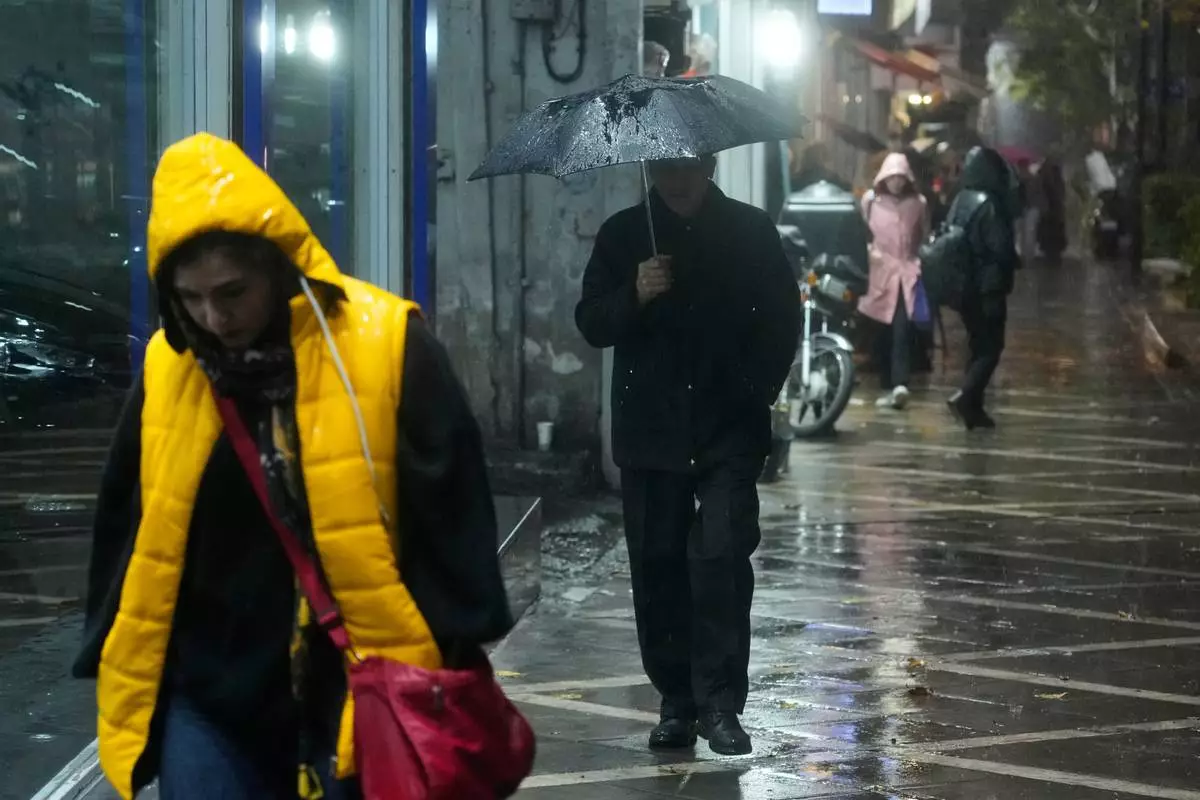
A man walks with an umbrella under a rain in Tehran, Iran, Wednesday, Dec. 10, 2025. (AP Photo/Vahid Salemi)
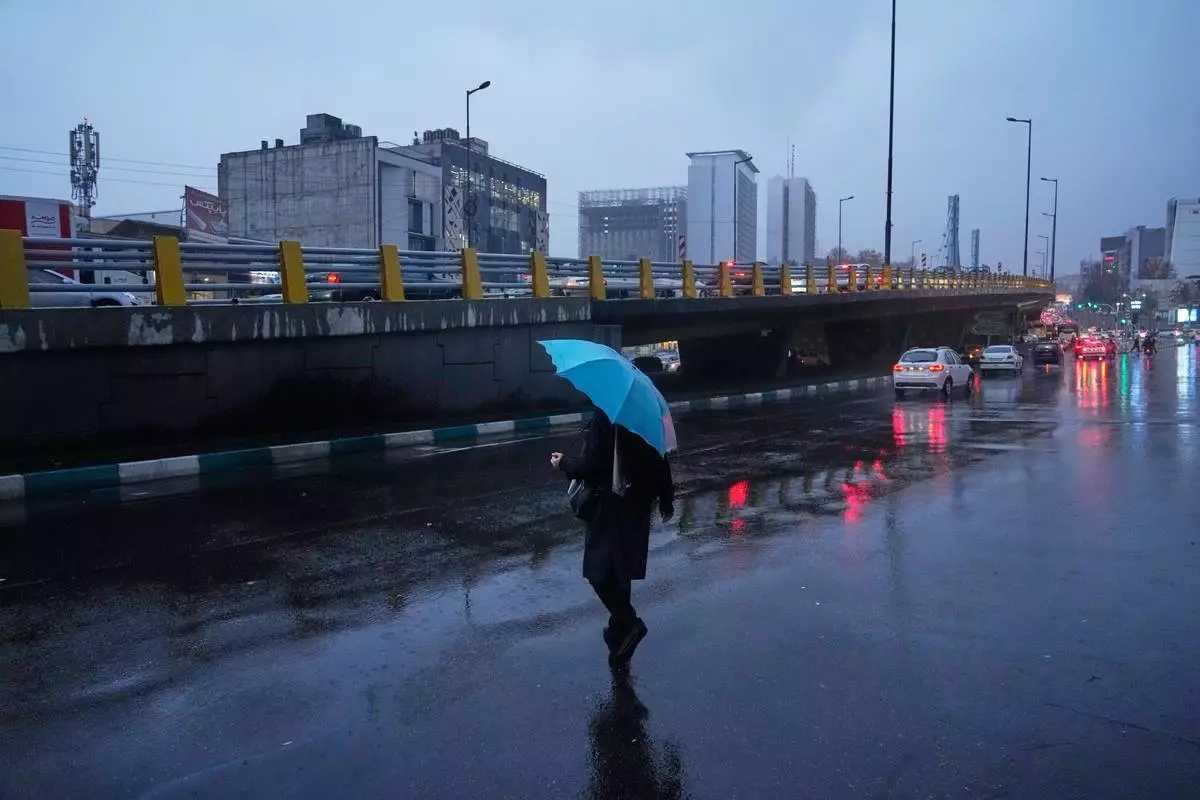
A woman holds an umbrella while crossing a street as rain falls in Tehran, Iran, Wednesday, Dec. 10, 2025. (AP Photo/Vahid Salemi)