Skip to Content Facebook Feature Image

What to know as trial nears for the Wisconsin judge accused of helping an immigrant dodge agents

News

What to know as trial nears for the Wisconsin judge accused of helping an immigrant dodge agents
News

News

What to know as trial nears for the Wisconsin judge accused of helping an immigrant dodge agents

2025-12-12 05:57 Last Updated At:06:00

MILWAUKEE (AP) — Defense attorneys and prosecutors selected the jury Thursday that will decide whether a Wisconsin judge accused of helping a Mexican immigrant dodge federal officers committed a crime.

Federal prosecutors charged Milwaukee County Circuit Judge Hannah Dugan this spring with obstruction and concealing an individual to prevent arrest. They allege she showed 31-year-old Eduardo Flores-Ruiz out of her courtroom through a back door when she learned federal authorities were in the courthouse looking to arrest him.

Dugan is set to stand trial beginning Monday in the latest show of force in the Trump administration's sweeping immigration crackdown. She faces up to six years in prison if convicted on both counts.

Here's what to know about the case, jury selection and the trial:

According to an FBI affidavit, Flores-Ruiz illegally reentered the United States from Mexico in 2013. Agents learned that he had been charged in state court with battery in March and was scheduled to appear in front of Dugan on April 18.

Agents traveled to the courthouse to arrest Flores-Ruiz after the hearing. A public defender noticed the agents in the corridor and told Dugan’s clerk about them. Dugan grew angry, according to the affidavit, declared the situation “absurd” and approached with another judge. Dugan argued with the agents over whether their warrant was valid and told them to speak to the chief judge.

Dugan returned to her courtroom, told Flores-Ruiz to come with her and led him and his attorney out a back jury door to the public corridor outside the courtroom, the affidavit says. Agents on their way back from the chief judge’s office spotted Flores-Ruiz, but he made it outside. He was eventually captured after a foot chase. The U.S. Department of Homeland Security announced in November that he had been deported.

Democrats insist President Donald Trump's administration is trying to make an example of Dugan to blunt judicial opposition to its immigration crackdown.

The administration, for its part, has been vilifying Dugan on social media. FBI Director Kash Patel posted a photo of her being led out of the courthouse in handcuffs and the Department of Homeland Security posted that Dugan has taken the term activist judge "to a whole new meaning.”

Dugan told police she found a threatening flyer from an anti-government group at her home and at her mother and sister's homes four days after Flores-Ruiz was captured.

Dugan's attorneys have said they're worried publicity about the case has tainted the jury pool. They sent a questionnaire to prospective jurors this fall in an effort to gauge their political involvement and leanings, asking whether they belong to political organizations, what radio shows and podcasts they follow, and what stickers, signs and patches they have on their cars, water bottles, backpacks and laptops.

Jury selection began Thursday morning in front of U.S. District Judge Lynn Adelman.

Bailiffs led several dozen people into the courtroom. Adelman began the process by reading off a list of potential witnesses and asking jurors if they knew any of them. The list included federal agents and immigration officials as well as a number of Milwaukee County judges. One prospective juror said one of the judges was his neighbor but that wouldn’t affect his ability to weigh the evidence fairly.

The judge and attorneys for both sides spent the rest of the day questioning jurors privately in Adelman’s chambers. The judge said he wanted to conduct the conversations in private because the questions were personal.

After an attorney for the Milwaukee Journal Sentinel objected, the judge allowed the afternoon sessions to be played live on loudspeakers for reporters in a room separate from the courtroom. The attorneys could be heard asking jurors about whether they support the government, would give more credence to law enforcement agents than civilian witnesses and their views on the government’s role in regulating immigration.

The attorneys eventually seated 12 jurors and two alternates from a pool of about 75 prospects.

Dugan’s defense team has argued that she’s immune from prosecution because she was acting in her official capacity as a judge and therefore had “no consciousness of wrongdoing, no wrongfulness, no deception,” according to their filings.

Her attorneys tried to persuade Adelman to dismiss the case in August on those grounds. The judge refused, saying that there’s no firmly established judicial immunity barring criminal prosecution.

Dugan also has argued that she was following protocols and did not intend to disrupt agents. According to her arguments, Milwaukee County Chief Judge Carl Ashley sent out a draft policy on immigration arrests in the courthouse about a week before Flores-Ruiz was arrested. The policy barred agents from executing administrative warrants in nonpublic courthouse areas and required court personnel to immediately refer any immigration agents to a supervisor, which Dugan did.

Dugan further contends that Ashley denied the agents permission to arrest Flores-Ruiz in the courtroom or the hallway. The agents then abandoned their plan to arrest him in the building and instead followed him outside so they could arrest him on the street, according to Dugan.

“(Dugan) was trying to ascertain, and follow, the rules,” her attorneys argued ahead of the trial.

Under federal guidance issued Jan. 21, immigration agents may carry out enforcement actions in or near courthouses if they believe someone they are trying to find will be there.

Immigration agents are generally required to let their internal legal office know ahead of time to make sure there are no legal restrictions, and are supposed to carry out arrests in nonpublic areas whenever possible, coordinate with court security and minimize impact on court operations.

The day of the week for the beginning of jury selection has been corrected to Thursday.
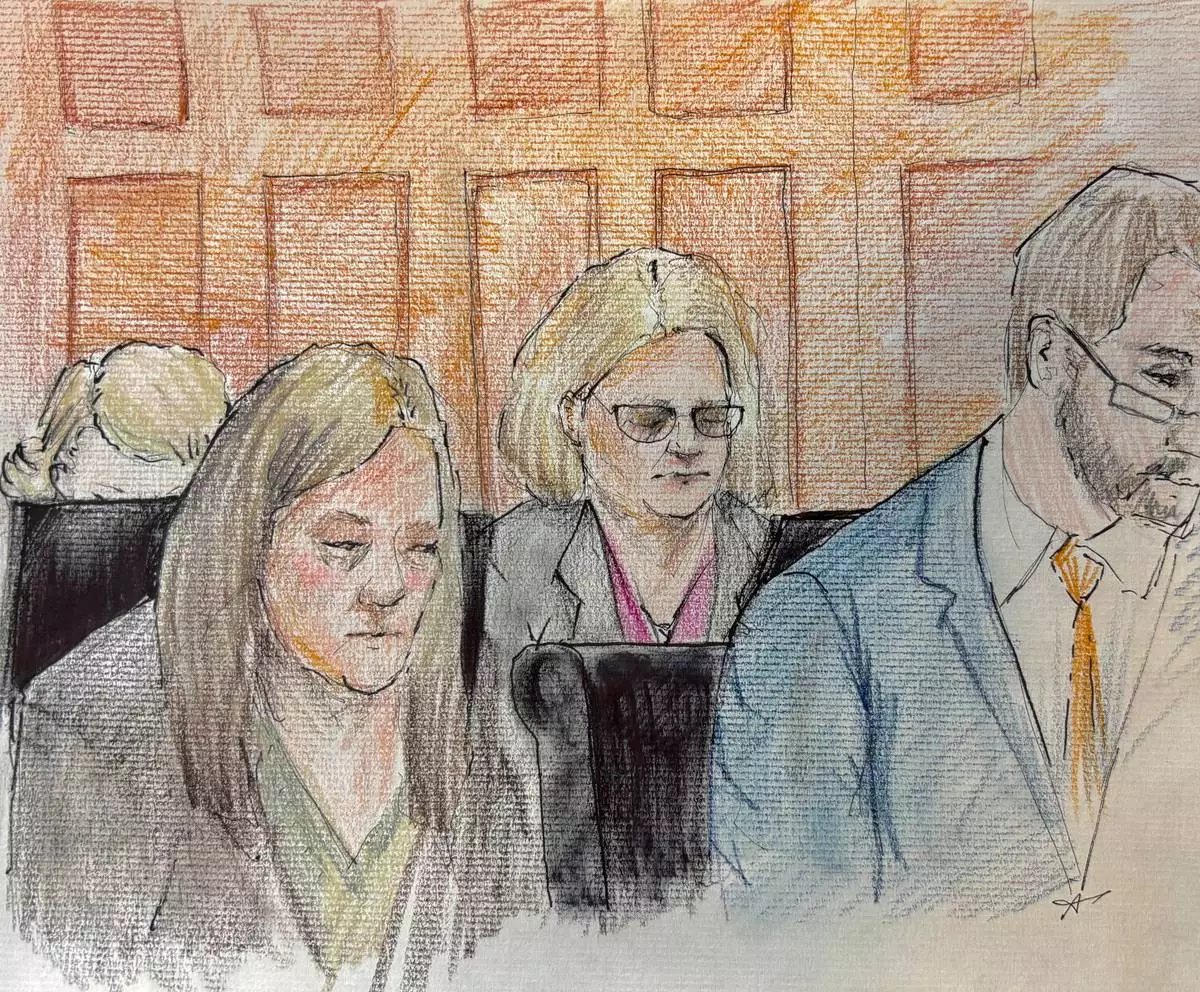
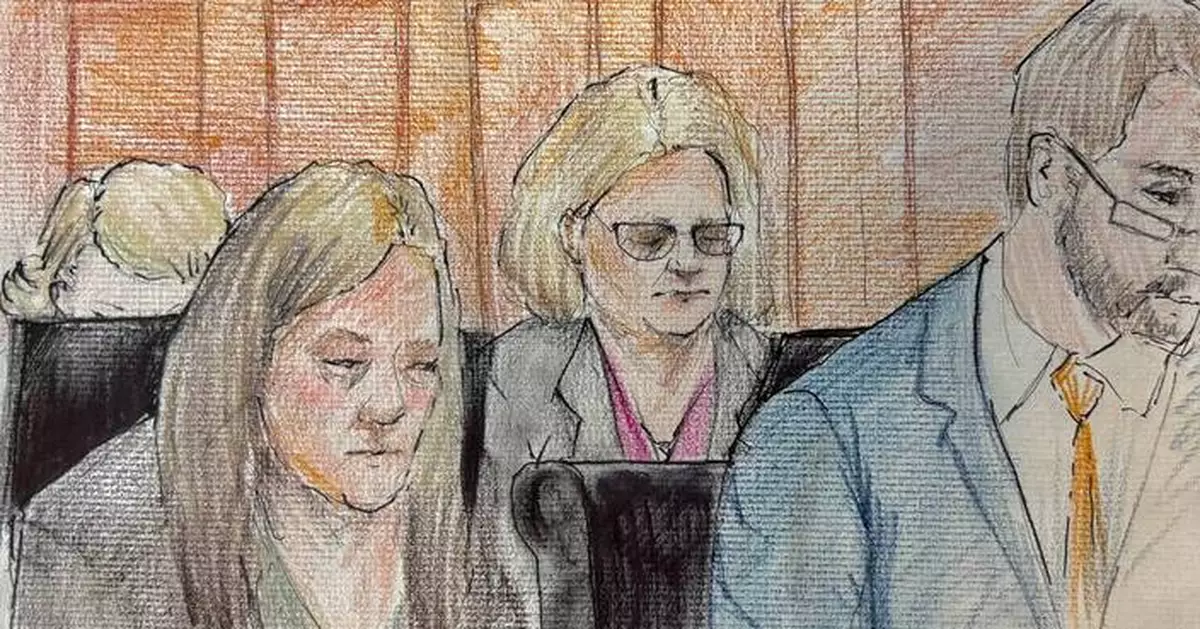
This courtroom sketch depicts Milwaukee County Circuit Judge Hannah Dugan in court as jury selection in her trial begins Thursday, Dec. 11, 2025 in Milwaukee, Wis. (Adele Tesnow via AP)
This courtroom sketch depicts Milwaukee County Circuit Judge Hannah Dugan in court as jury selection in her trial begins Thursday, Dec. 11, 2025 in Milwaukee, Wis. (Adele Tesnow via AP)

INDIANAPOLIS (AP) — Indiana's Republican-led senate voted against a redrawn congressional map Thursday that would have favored their party in the 2026 elections, despite months of pressure by President Donald Trump for a rare mid-cycle redistricting.

Twenty-one senators from the Republican supermajority and all 10 of the chamber’s Democrats voted down the redistricting proposal. Trump has urged GOP-led states to gerrymander their U.S. house districts ahead of the midterms to create more winnable seats for Republicans. It's an unusual move, since the district boundaries are usually adjusted based on the census every 10 year.

Ahead of the vote, Trump again criticized Indiana senators who resisted the plan, repeating his vow to back primary challengers against them.

“If Republicans will not do what is necessary to save our Country, they will eventually lose everything to the Democrats,” Trump wrote on social media. Some Indiana lawmakers have also received violent threats during the debate over the last month. Half of the state Senate is up for reelection in 2026.

Democratic state senators spoke against the redistricting legislation one by one during Thursday's session.

“Competition is healthy my friends,” said Sen. Fady Qaddoura. “Any political party on earth that cannot run and win based on the merits of its ideas is unworthy of governing.”

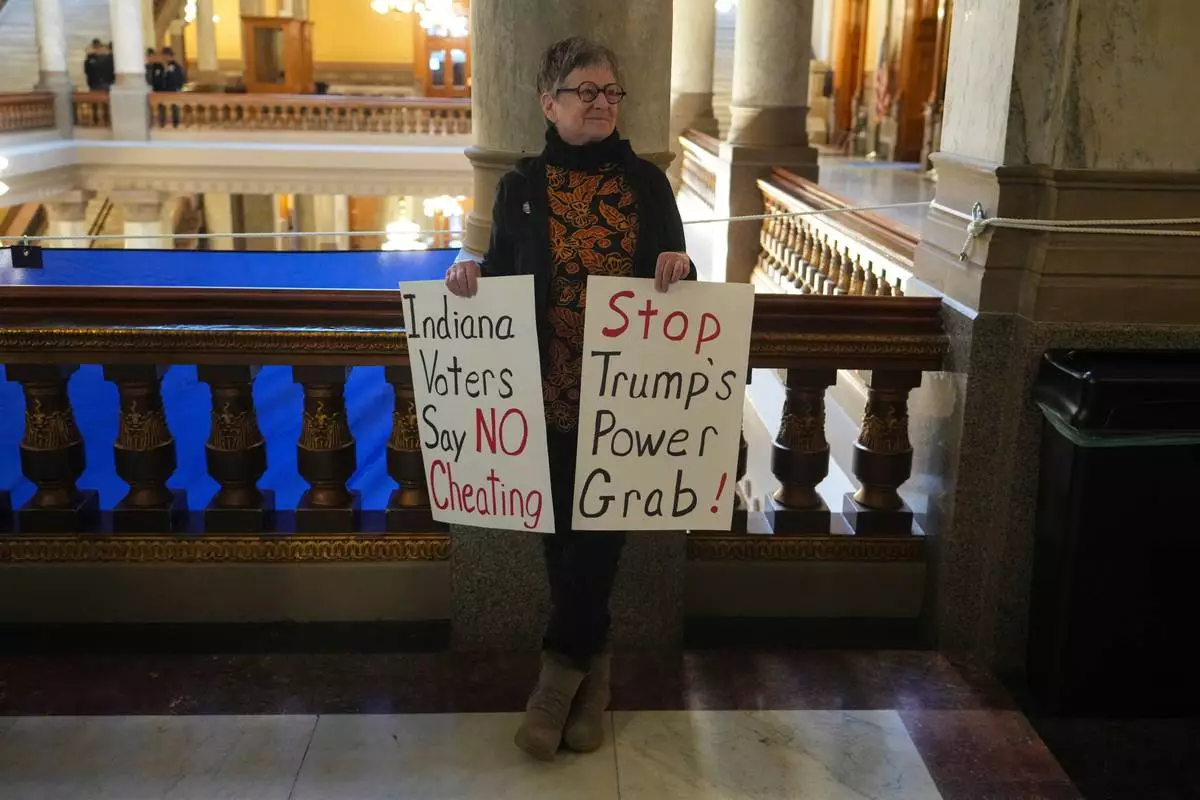
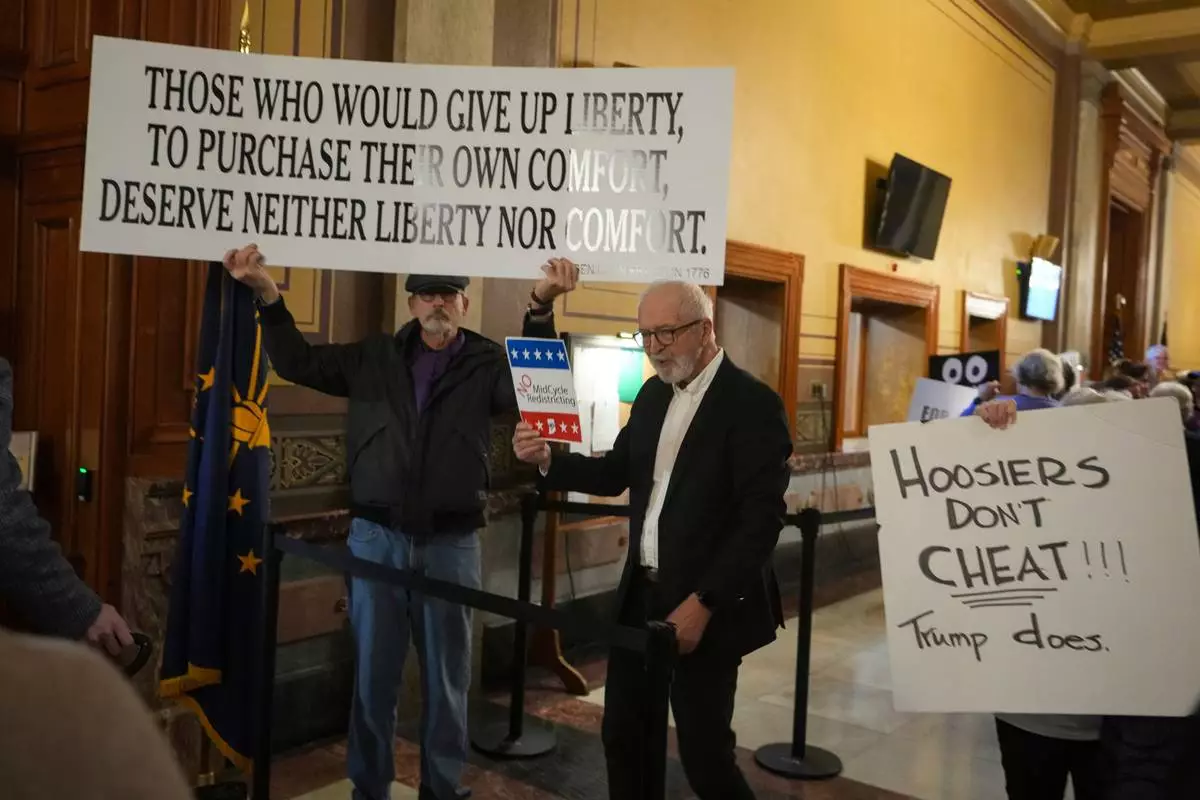
Outside the state Senate chamber, redistricting opponents chanted “Vote no!” and “Fair maps!” while holding signs with slogans like “Losers cheat.”

The proposed map was designed to give Republicans control of all nine of Indiana’s congressional seats, up from the seven they currently hold. It would effectively erase Indiana’s two Democrat-held districts by splitting Indianapolis into four districts that extend into rural areas, reshaping U.S. Rep. André Carson’s safe district in the city. It would also eliminate the northwest Indiana district held by U.S. Rep. Frank Mrvan.

Despite Trump’s push, support for gerrymandering in Indiana’s Senate was uncertain. A dozen of the 50 state senators had not publicly committed to a stance ahead of the vote.

Republican Sen. Greg Goode, previously undecided, signaled his displeasure with the redistricting plan. In firmly delivered remarks, he said some of his constituents objected to seeing their county split up or paired with Indianapolis. He expressed “love” for Trump but criticized what he called “over-the-top pressure” from inside and outside the state.

Sen. Michael Young, another Republican, said the stakes in Congress justify redistricting, as Democrats are only a few seats away from flipping control of the U.S. House in 2026. “I know this election is going to be very close,” he said.

Republican Sen. Mike Gaskill, the redistricting legislation's sponsor, showed Senators maps of congressional districts around the country, including several focused on Democratic-held seats in New England and Illinois. He argued other states gerrymander and Indiana Republicans should play by the same rules.

Nationally, mid-cycle redistricting so far has resulted in nine more congressional seats that Republicans believe they can win and six more congressional seats that Democrats think they can win. However, redistricting is being litigated in several states.

Texas, Missouri, Ohio and North Carolina quickly enacted new GOP-favorable maps, while California voters approved a new congressional map favorable to Democrats in response to Texas. In Utah, a judge imposed new districts that could allow Democrats to win a seat, saying Republican lawmakers violated voter-backed standards against gerrymandering.

The bill cleared its first hurdle Monday with a 6-3 Senate committee vote, although one Republican joined Democrats in opposing it and a few others signaled they might vote against the final version. The state House passed the proposal last week, with 12 Republicans siding with Democrats in opposition.

Among them was state Rep. Ed Clere, who said state troopers responded to a hoax message claiming a pipe bomb outside his home Wednesday evening. Indiana state police said “numerous others” received threats but wouldn't offer details about an ongoing investigation.

In an interview, Clere said these threats were the inevitable result of Trump’s pressure campaign and a “winner-take-all mentality.”

“Words have consequences,” Clere said.

The White House has mounted an aggressive lobbying push. Vice President JD Vance met twice with Indiana Senate GOP leaders, including the full caucus in October, and senators also visited him in Washington.

Trump joined a conference call with senators on Oct. 17 to make his own 15-minute pitch. State Sen. Andy Zay said White House political aides stayed in frequent contact for more than a month, even after he backed the bill, urging him to publicly support it and track developments among colleagues as part of a “full-court press.”

Volmert reported from Lansing, Michigan. Associated Press writer Tom Beaumont in Des Moines, Iowa, contributed.

Nancy Kohn, of Indianapolis, hold signs outside the Indiana Senate chamber before a vote to redistrict the state's congressional map at the Statehouse in Indianapolis, Thursday, Dec. 11, 2025. (AP Photo/Michael Conroy)

Nancy Kohn, of Indianapolis, hold signs outside the Indiana Senate chamber before a vote to redistrict the state's congressional map at the Statehouse in Indianapolis, Thursday, Dec. 11, 2025. (AP Photo/Michael Conroy)

Protestors hold signs outside the Indiana Senate chamber before a vote to redistrict the state's congressional map at the Statehouse in Indianapolis, Thursday, Dec. 11, 2025. (AP Photo/Michael Conroy)

Protestors hold signs outside the Indiana Senate chamber before a vote to redistrict the state's congressional map at the Statehouse in Indianapolis, Thursday, Dec. 11, 2025. (AP Photo/Michael Conroy)

Recommended Articles