NEW YORK (AP) — A Hollywood director was convicted Thursday on charges that he scammed Netflix out of $11 million for a show that never materialized, while he instead used the cash for lavish purchases that included several Rolls-Royces, a Ferrari and about $1 million in mattresses and luxury bedding.
Carl Erik Rinsch, best known for directing the film “47 Ronin," was convicted of wire fraud, money laundering and other charges, according to court records and a spokesperson for federal prosecutors in New York.
In a statement, Rinsch’s attorney, Benjamin Zeman, said he thought the verdict was wrong and “could set a dangerous precedent for artists who become embroiled in contractual and creative disputes with their benefactors, in this case one of the largest media companies in the world, finding themselves indicted by the federal government for fraud.”
Prosecutors said Netflix had initially paid Rinsch about $44 million for an unfinished sci-fi show called “White Horse,” and then sent over an another $11 million after he said he needed additional funding to wrap up the production.
But instead of putting the money toward the show, Rinsch steered the cash to a personal account where he made a series of failed investments, losing around half of the $11 million in a couple months, according to prosecutors.
He then put the remaining funds into the cryptocurrency market, netting some profit, though Rinsch then deposited the money into his own bank account.
Then came the lavish purchases, prosecutors said, with Rinsch buying five Rolls-Royces and one Ferrari, along with $652,000 on watches and clothes. He also bought two mattresses for about $638,000 and spent another $295,000 on luxury bedding and linens. In addition, he used some of the money to pay off about $1.8 million in credit card bills, prosecutors said.
Rinsch, 48, never finished the show. His sentencing date is set for April.
Netflix declined to comment.
U.S. Attorney Jay Clayton, in a statement, said Rinsch “took $11 million meant for a TV show and gambled it on speculative stock options and crypto transactions.”
“Today’s conviction shows that when someone steals from investors, we will follow the money and hold them accountable," Clayton said.

FILE - Director Carl Rinsch poses for photographers during a news conference to promote his 3-D film "47 RONIN" in Tokyo, Japan, Nov. 18, 2013. (AP Photo/Shuji Kajiyama, File)
KYIV, Ukraine (AP) — A combined missile and drone attack on the Kyiv region killed at least four people and wounded at least 15 overnight into Saturday, according to the head of the regional administration for the Ukrainian capital.
Three of the wounded were in critical condition, of whom two were undergoing surgery, Mykola Kalashnyk reported on Saturday. The attack hit four districts, damaging residential buildings, educational institutions, enterprises and critical infrastructure, Kalashnyk added in a social media post.
Ukrainian President Volodymyr Zelenskyy said the main target for the overnight strikes was "the energy infrastructure of the Kyiv region.” He said Russia launched around 430 drones of various types during the night, as well as 68 missiles.
Russia’s Defense Ministry on Saturday said the nighttime strikes targeted energy and industrial facilities serving Ukraine's armed forces, as well as military airfields.
The strikes came days after the U.S. postponed peace talks between Russia and Ukraine scheduled for this week, citing the war in the Middle East.
As U.S. and Israeli missiles and bombs rain on Iran, Russia has responded with words of indignation but no action to support its ally. Moscow’s failure to help another ally, after the 2024 ouster of former Syrian ruler Bashar Assad and January’s U.S. arrest of Venezuelan leader Nicolas Maduro, highlighted the limits of its influence — but the Kremlin expects to reap benefits from the Iran war.
Russia is already profiting from a surge in global energy prices, and could hope that the Mideast war will detract attention from Ukraine and deplete Western arsenals.
Zelenskyy on Saturday called on Kyiv's Western partners to pay “one hundred percent attention” to the need to boost the production of air defense missiles.
“Russia will try to exploit the war in the Middle East to cause even greater destruction here in Europe, in Ukraine," he said in a post on social media.
"We must be fully aware of the real level of the threat and prepare accordingly, namely: in Europe, we need to develop the production of air defense missiles — especially those capable of countering ballistic threats — as well as all other systems necessary to truly protect lives,” he said.
Kyiv is also awaiting White House approval for a major drone production agreement proposed by Ukraine last year, Zelenskyy said Thursday, as countries scramble to modernize their air defenses after the Iran war exposed shortcomings.
Also on Thursday, Zelenskyy criticized the 30-day U.S. waiver on Russian oil sanctions amid the war in the Middle East, saying it is “not the right decision” and won’t help bring a stop to Russia’s more than 4-year-old invasion of Ukraine.
“This easing alone by the United States could provide Russia with about $10 billion for the war,” Zelenskyy said. “This certainly does not help peace.”
Overnight into Saturday, Ukrainian drones hit an oil refinery and port in Russia’s southern Krasnodar region, local Russian officials reported.
Krasnodar authorities said three people were hurt in a strike on Port Kavkaz, a port opposite Crimea used to ship liquefied natural gas and grains. A service vessel and pier infrastructure were damaged, they said in a social media post. One person was hospitalized, they added in a separate post later.
Falling drone debris also sparked a fire at the region’s Afipsky oil refinery, authorities said in a separate Telegram post. They said no one was hurt, but did not immediately comment on damage.
Earlier this week, Russian and Ukrainian officials both claimed front-line progress, with Ukraine saying it pushed Moscow’s forces back across places on the front line and the Kremlin insisting Russia’s invasion of its neighbor is making progress.
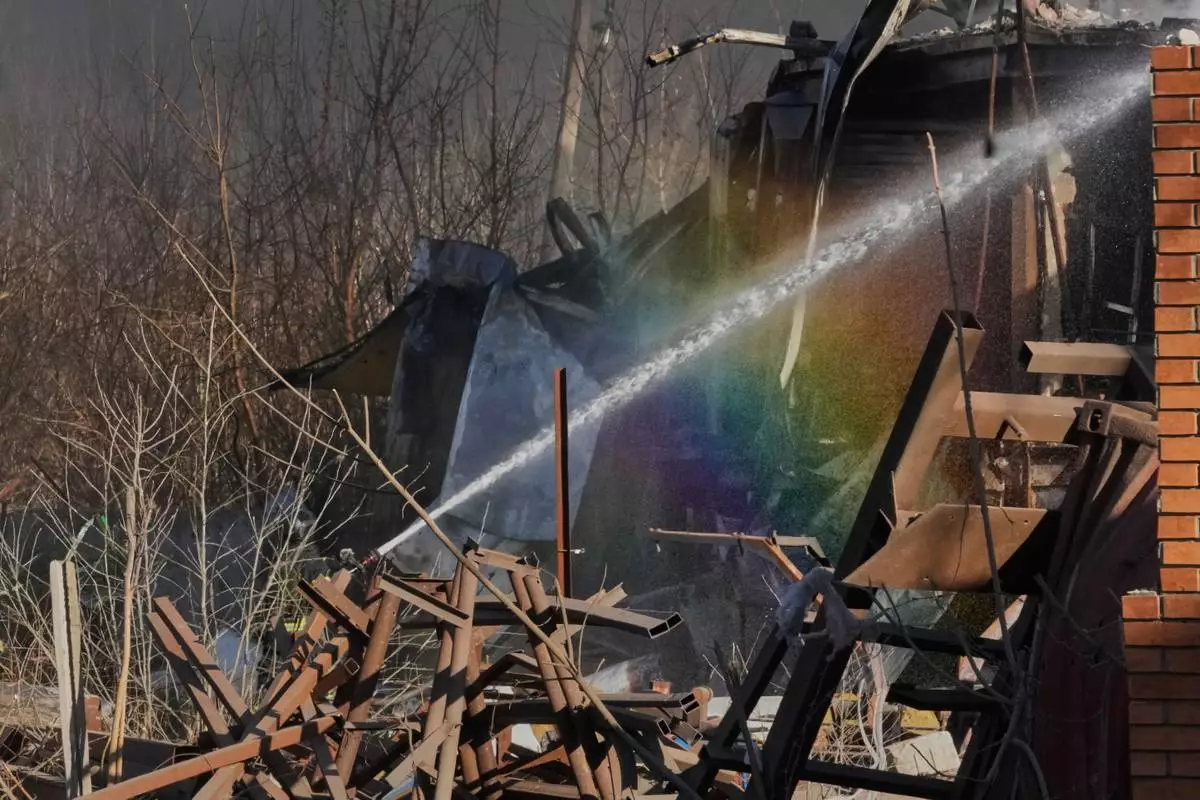
Firefighters put out the fire at railway workshops following a Russia missile and drone attack, in Brovary close to Kyiv, Ukraine, Saturday, March 14, 2026. (AP Photo/Efrem Lukatsky)
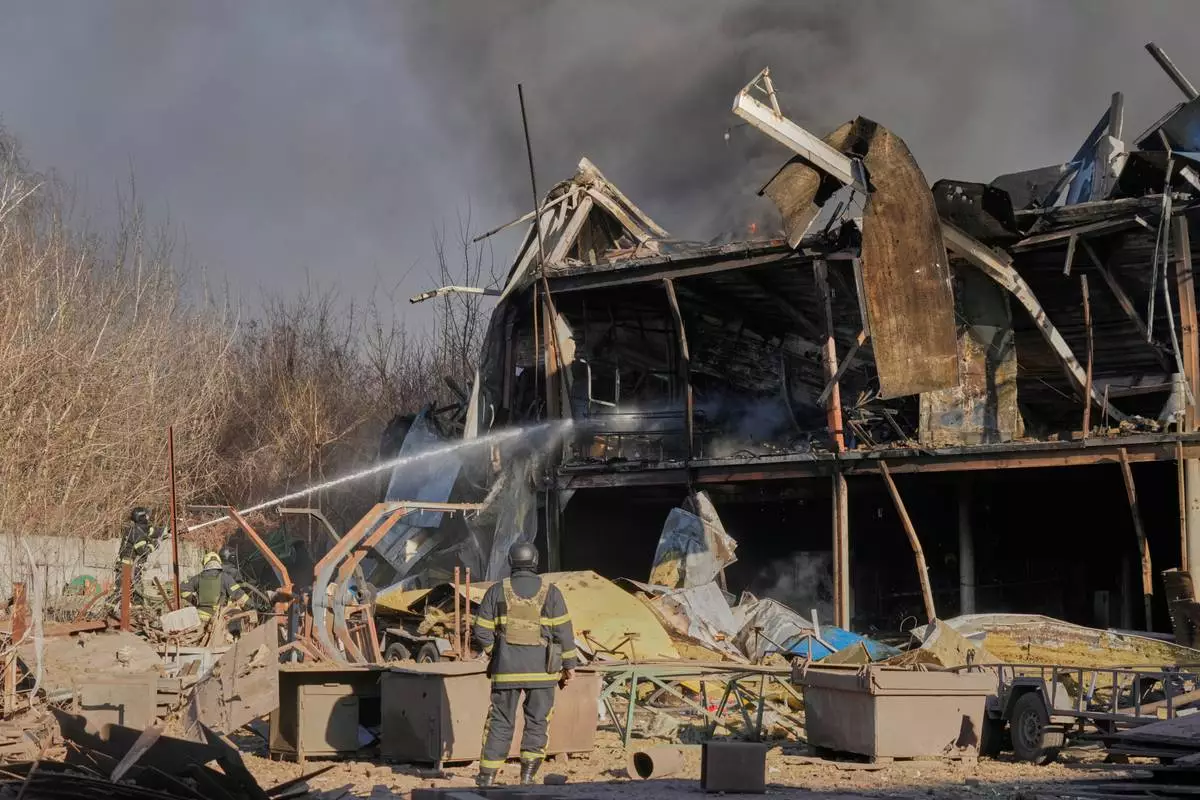
Firefighters put out the fire at railway workshops following a Russia missile and drone attack, in Brovary, close to Kyiv, Ukraine, Saturday, March 14, 2026. (AP Photo/Efrem Lukatsky)
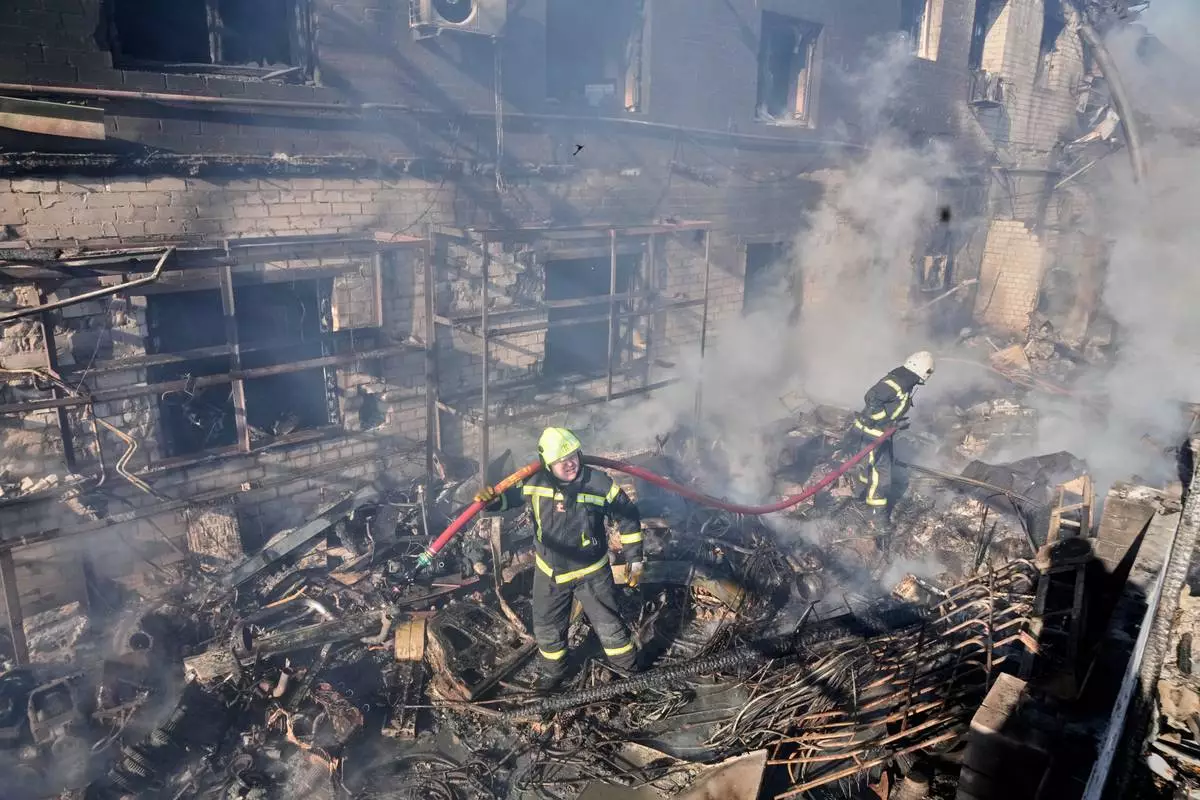
Firefighters put out the fire at a residential neighbourhood following a Russia missile and drone attack, in Brovary, close to Kyiv, Ukraine, Saturday, March 14, 2026. (AP Photo/Efrem Lukatsky)
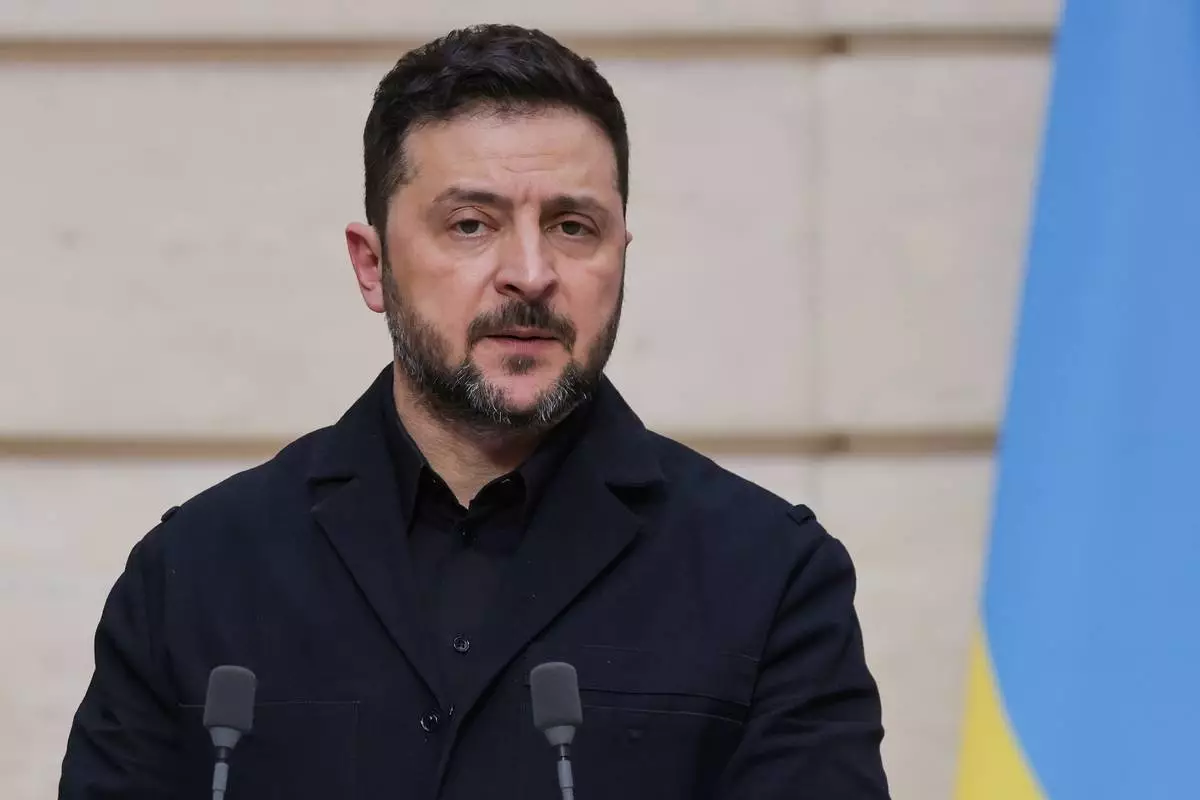
Ukraine's President Volodymyr Zelenskyy speaks during a joint presser with France's President Emmanuel Macron, not pictured, following a bilateral meeting at the Elysee Presidential Palace in Paris, Friday March 13, 2026. (Ludovic Marin/Pool Photo via AP)