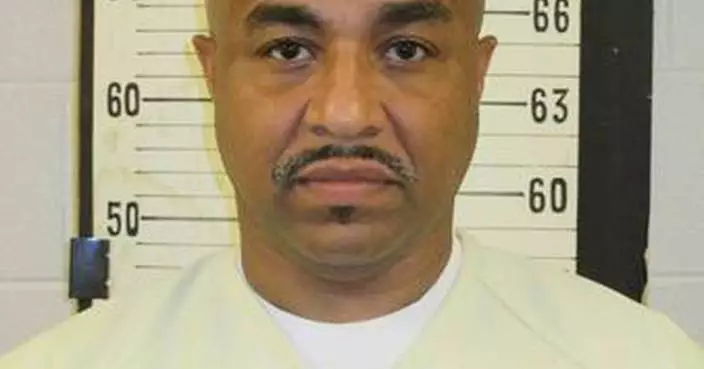
SEOUL, South Korea (AP) — South Korea’s former acting leader Choi Sang-mok was indicted Thursday on charges related to the brief imposition of martial law in December 2024 by then-President Yoon Suk Yeol, becoming the latest high-profile figure embroiled in legal troubles over the case.
Choi is one of three top Yoon administration officials who served as caretaker presidents during moments of a political crisis caused by Yoon's martial law declaration that led to his impeachment and eventually his removal from office.
Yoon is now in jail while facing a high-stakes criminal trial on rebellion charges. Dozens of high-level officials and military commanders of the Yoon administration have also been arrested, indicted or investigated over their roles in Yoon's martial law debacle and other allegations.
On Thursday, an investigation team led by independent counsel Cho Eun-suk charged Choi with dereliction of duty for not fully restoring the three vacant seats at the nine-member Constitutional Court, which was deliberating whether to unseat Yoon.
Reinstating the court to full strength was seen as a move that could increase prospects for Yoon's ouster because a court ruling to dismiss him needed support from at least six court justices. Choi, who was Yoon's deputy prime minister and finance minister, appointed two new justices but left a ninth justice seat vacant, citing a lack of bipartisan agreement when he became interim president.
In April, the court's eight justices unanimously ruled to throw Yoon out of office.
Cho's team also indicted another former acting leader, Han Duck-soo, on the same dereliction of duty charge, assistant special prosecutor Park Ji-young told a briefing. Han, who served as Yoon's prime minister, the No. 2 post, was already indicted in August on the graver charges of abetting Yoon's martial law imposition.
Cho's team accused Han of trying to push Yoon's martial law decree through a Cabinet Council meeting to give it procedural legitimacy. Han has maintained he told Yoon that he opposed his martial law plan.
Park said five other people including Yoon's justice minister were also indicted on Thursday on various charges related to the martial law crisis. She said Choi faces perjury charges as well for his comments made at Han's trial.
Investigations into Yoon's imposition of martial law was one of three independent counsel probes targeting Yoon, his wife and associates. Those probes were approved by new President Lee Jae Myung, who won an early election in June triggered by Yoon's ouster.
In August, Yoon's wife, Kim Keon Hee, was arrested and indicted for allegedly violating financial market and political funding laws and receiving bribes. The 82-year-old leader of the Unification Church, Hak Ja Han, was later arrested and indicted over allegations that she instructed church officials to bribe a senior lawmaker close to Yoon.
The Unification Church-involved scandal has roiled South Korea, with local media speculating some prominent politicians, including some at the Lee administration, might also have received money from the church.
On Thursday, Oceans Minister Chun Jae-soo denied any bribery allegations but offered to resign, suggesting he didn't want to burden the Lee administration. Lee accepted Chun's resignation offer later Thursday.
Earlier this week, Lee called for a thorough investigation into allegations involving politicians and a religious group, without citing the Unification by name.

South Korean Oceans Minister Chun Jae-soo answers questions from reporters at the Incheon International Airport in Incheon, South Korea, Thursday, Dec. 11, 2025. (Kim Joo-hyoung/Yonhap via AP)

FILE - South Korea's acting President Choi Sang-mok speaks during the National Security Council at the government complex building in Seoul, South Korea, on Dec. 27, 2024. (Hong Hae-in/Yonhap via AP, File)
MINNEAPOLIS (AP) — A judge on Thursday handed down an extraordinary prison sentence — nearly 42 years — to the former leader of a Minnesota nonprofit who was convicted in a staggering $250 million fraud case that helped ignite an immigration crackdown by the Trump administration.
Aimee Bock ran Feeding Our Future, which had claimed it helped provide millions of meals to needy children during the pandemic. The U.S. Justice Department, however, said she was atop the “single largest COVID-19 fraud scheme in the country.”
“I understand I failed. I failed the public, my family, everyone,” Bock said in federal court.
After the hearing, authorities held a news conference to announce charges against 15 more people accused of fraud in receiving federal payments for a variety of social services administered through Minnesota's state government. The FBI said one man jumped from a fourth-floor balcony to avoid arrest.
“We will claw back every dollar you have stolen from the American people,” Assistant Attorney General Colin McDonald said, noting that the government sent more prosecutors and agents to Minnesota this year.
President Donald Trump used the fraud cases against Bock and many others to initially justify a massive surge of federal officers to the Minneapolis-St. Paul area last winter to target immigrants, leading to pushback from residents and the deaths of two people.
Bock's nonprofit was at the center of a fraud network that included a web of partner organizations, phony distribution sites, kickbacks and fake lists of children supposedly being fed, prosecutors say. She had long proclaimed her innocence but was convicted last year of conspiracy, fraud and bribery.
Bock and co-conspirators enriched themselves with international travel, real estate purchases, luxury vehicles and other lavish spending, the government said.
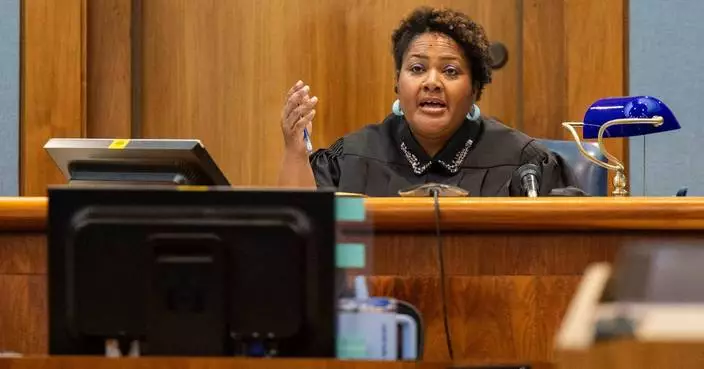
“This was a vortex of fraud and you were at the epicenter,” U.S. District Judge Nancy Brasel told Bock.
State auditors found that the Minnesota Department of Education received numerous complaints about Feeding Our Future, but often told the group to police itself. In January, Democratic Gov. Tim Walz said he would not run for reelection after being pounded by Trump about theft in programs that rely on federal cash.
Dozens of people, many from the state’s large Somali community, have been convicted in a series of overlapping food fraud cases that have spent years in the courts.
“This case has changed our state forever,” Joe Thompson, formerly the lead prosecutor in the case, said outside the courtroom. “Aimee Bock did everything she could to earn this long sentence.”
Bock’s lawyer, Kenneth Udoibok, argued for no more than three years in prison, saying she had provided key information to investigators. He argued that Bock had been unfairly painted as the mastermind and insisted that two co-defendants were responsible for running the scams.
In a fresh batch of criminal cases filed this week in Minnesota, the government said the alleged fraud involved $90 million across seven state-managed Medicaid programs.
The defendants include Fahima Mahamud, who was CEO of Future Leaders Early Learning Center, a childcare center in Minneapolis. Over three years, Mahamud’s organization was reimbursed approximately $4.6 million for services on behalf of people who didn’t make a required copayment, prosecutors allege.
A message seeking comment from her lawyer was not immediately returned Thursday. Mahamud earlier this year pleaded not guilty to fraud related to meals.
Two other people were charged with conspiring to get $975,000 in Medicaid subsidies for housing services that were not provided. They’re expected to plead guilty in June, according to a court filing.
Two additional people were accused of receiving $21.1 million by billing Medicaid for autism therapy that was either unnecessary or not provided. Investigators said the two paid families as much as $1,500 per child per month to add their names to the program and get reimbursement.
Trump, who has long derided Somalis, last year blasted Minnesota as “a hub of fraudulent money laundering activity.”
“Somali gangs are terrorizing the people of that great State, and BILLIONS of Dollars are missing. Send them back to where they came from,” Trump wrote on social media.
Bock is white and the U.S. Attorney’s Office says the overwhelming majority of defendants in the cases are of Somali descent. Most are U.S. citizens.
Trump's immigration enforcement surge led to repeated protests and confrontations between residents and federal officers and resulted in the killings of Renee Good and Alex Pretti.
AP reporters Scott Bauer in Madison, Wisconsin, and Ed White in Detroit contributed.
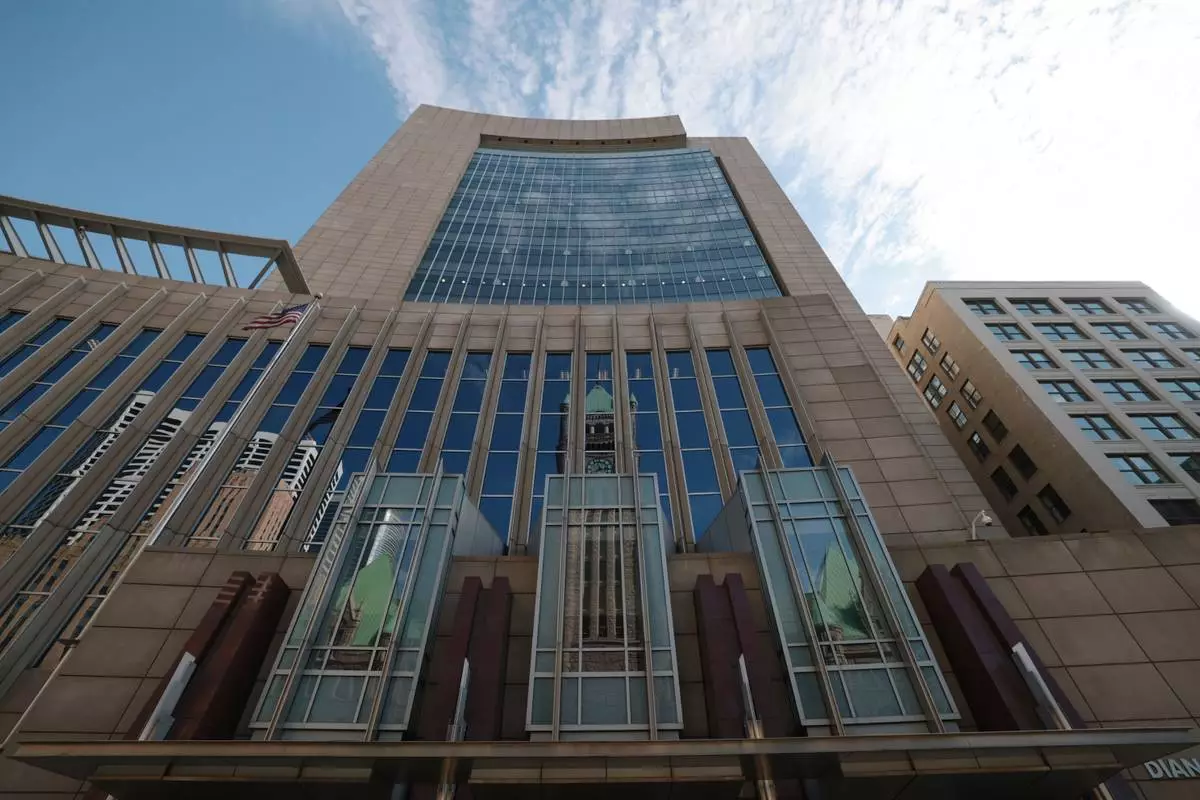
The exterior of Minneapolis federal courthouse on Thursday, May 21, 2026 in Minneapolis, Minn. Feeding our Future founder Aimee Bock is sentenced at the United States District Court in Minneapolis. (Carlos Gonzalez/Minnesota Star Tribune via AP)
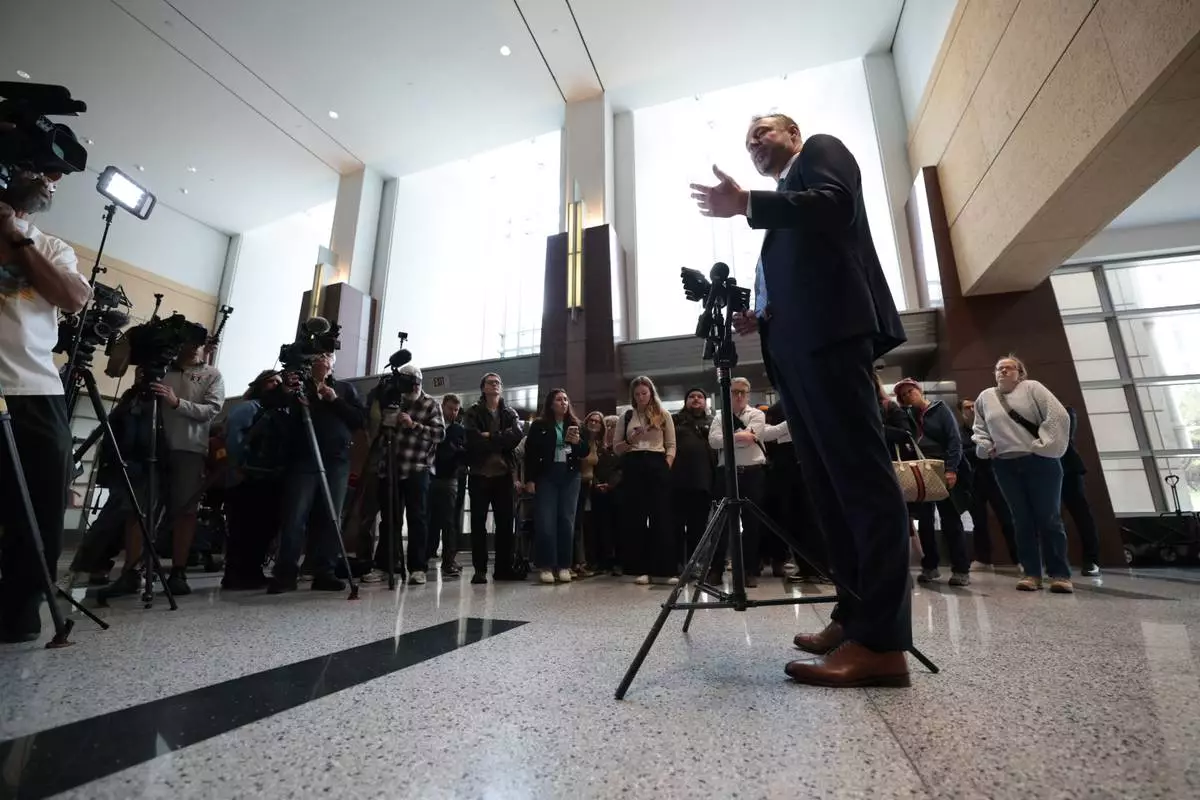
Acting U.S. Attorney for Minnesota Joe Thompson addresses the media following the sentencing of Feeding Our Future founder Aimee Bock on Thursday, May 21, 2026 at at the United States District Court in Minneapolis. (Carlos Gonzalez/Minnesota Star Tribune via AP)
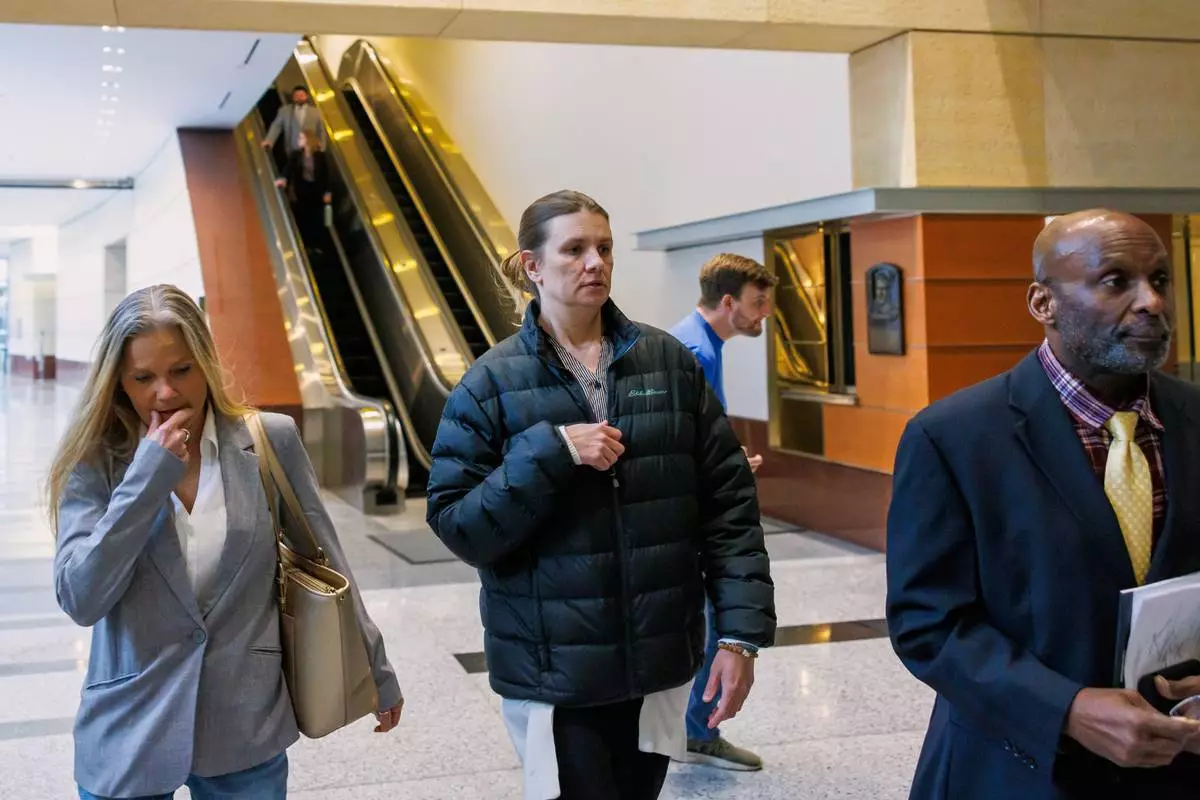
FILE - Aimee Bock, founder and executive director of the nonprofit organization Feeding Our Future, arrives at the Minneapolis federal courthouse with her attorney, Ken Udoibok, right, on March 19, 2025, in Minneapolis. (Kerem Yücel/Minnesota Public Radio via AP, File)