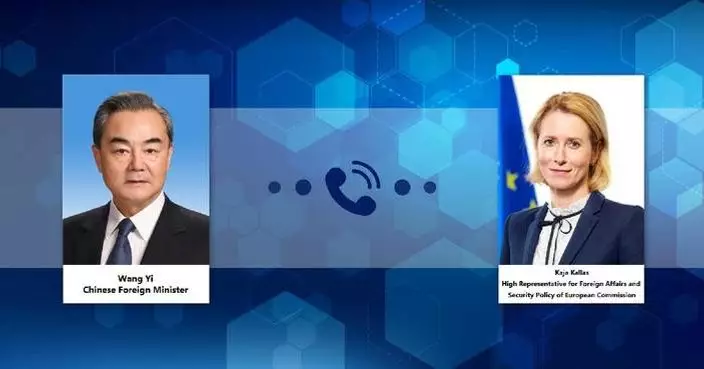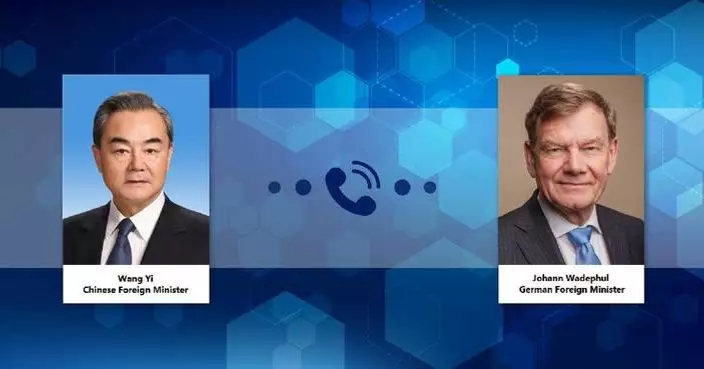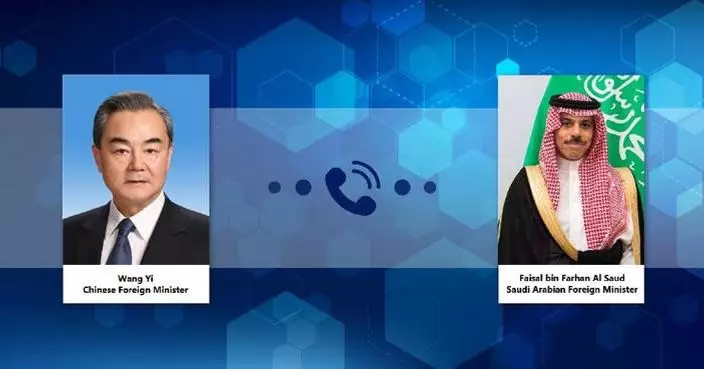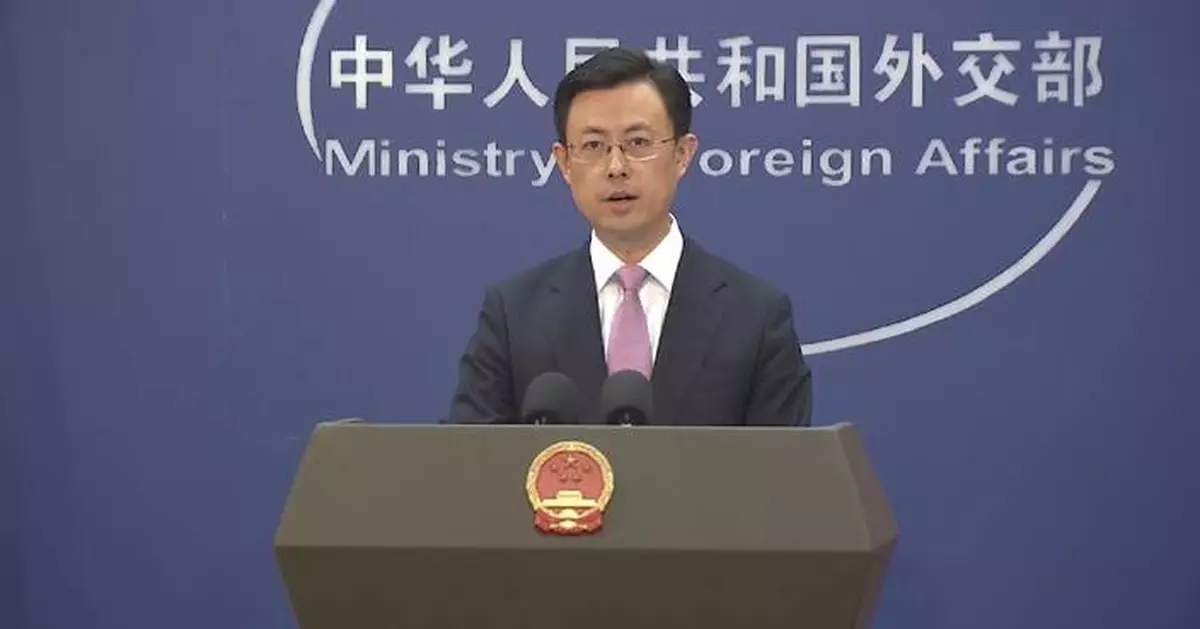
The upcoming visits by Chinese Foreign Minister Wang Yi to the United Arab Emirates (UAE), Saudi Arabia and Jordan will further consolidate political mutual trust between China and the three Middle Eastern countries, Foreign Ministry spokesman Guo Jiakun said at a press briefing in Beijing on Thursday.
Guo made the remarks while responding to a media query on Wang's visits to the three countries from Dec. 12 to 16.
"China enjoys traditional friendship with the UAE, Saudi Arabia and Jordan, and has always advanced its relations with the three countries from a strategic and long-term perspective. Under the strategic guidance of President Xi Jinping and the leaders of the three countries, exchanges and cooperation between China and the three countries in various fields have yielded fruitful results, bringing tangible benefits to the peoples of China and the three countries and making important contributions to peace and development in the Middle East and the world at large," said Guo.
"To implement the important common understandings reached between the heads of state, Wang Yi, a member of the Political Bureau of the Communist Party of China Central Committee and China's foreign minister, will visit the three countries. He will hold talks with his counterparts to exchange views on bilateral relations, the situation in the Middle East, and major issues of mutual concerns. China looks forward to using this visit to further consolidate political mutual trust with the three countries, deepen the alignment of development strategies, expand exchanges and cooperation in various fields and strengthen multilateral coordination, so as to elevate China's relations with the three countries to a higher level. The UAE, Saudi Arabia and Jordan are all important members of the Arab League. China will host the second China-Arab States Summit next year. During the visit, Foreign Minister Wang Yi will also engage in communication and coordination with his counterparts of the three countries on preparations for the summit," the spokesman added.
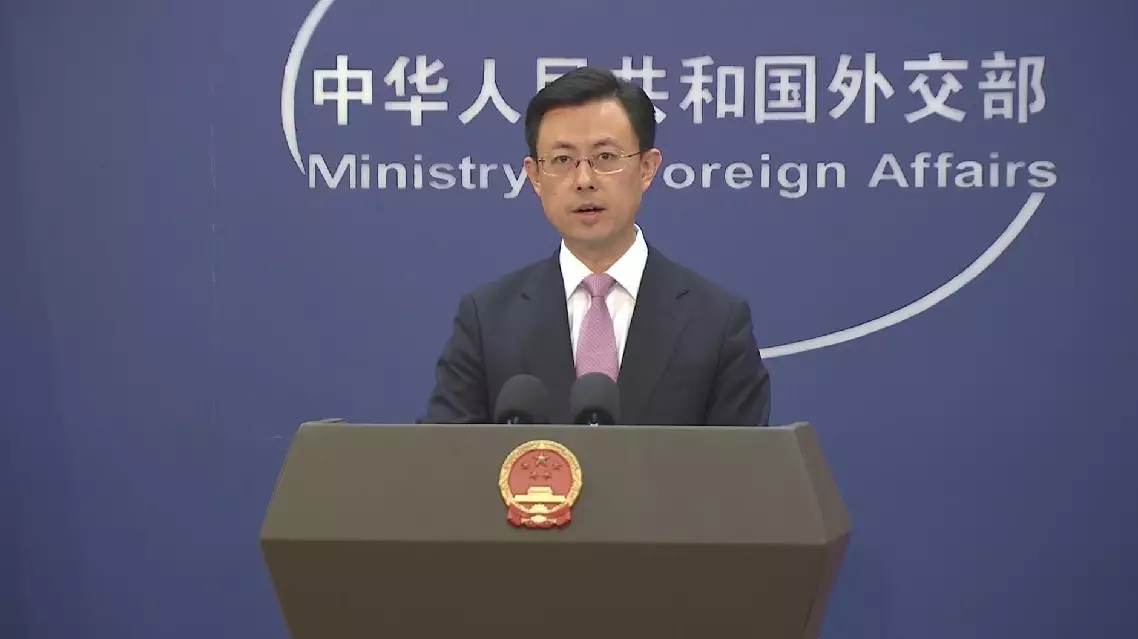
Chinese FM's upcoming visit to further consolidate political mutual trust with UAE, Saudi Arabia, Jordan: spokesman
Representatives from Asia-Pacific Economic Cooperation (APEC) member states, along with stakeholders from the business and academic communities, convened in Shenzhen City of south China's Guangdong Province on Thursday for a series of discussions centered on shaping the theme and priorities for APEC cooperation in 2026.
The symposium, held ahead of the APEC Informal Senior Officials' Meeting which will open Friday, is a longstanding tradition of the organization and not only provides valuable input for cooperation in the coming year but also aims to inject vitality into long-term collaboration across the Asia-Pacific region.
Participants exchanged views on topics focusing on building an Asia-Pacific community which sets out a new vision, new opportunities, new prospects while achieving win-win cooperation grounded in openness, innovation, and collaborative development.
"The theme for APEC 2026, 'Building an Asia-Pacific community to prosper together: openness, innovation and cooperation', promises to build on the work we have undertaken over the past five years in the pursuit of the Putrajaya Vision. The global trading system faces significant challenges, transformative technologies such as AI and demographic shifts despite, or because of these circumstances, APEC relevance is more important than ever," said Eduardo Pedrosa, executive director of the Asia-Pacific Economic Cooperation Secretariat.
Attendees said that as the most important economic cooperation mechanism in the Asia-Pacific, APEC has made significant contributions to advancing trade and investment liberalization and facilitation, as well as promoting regional economic integration, serving as a model among various regional cooperation frameworks worldwide.
China is set to host the 2026 APEC Economic Leaders' Meeting, marking the third time it will have hosted the gathering.
Participants in Thursday's seminar also expressed their anticipation for more practical cooperation in areas such as advancing the Free Trade Area of the Asia-Pacific, enhancing connectivity, developing the digital economy and promoting artificial intelligence.
"From the perspective of openness, a crucial aspect is the construction of the Asia-Pacific free trade area to achieve regional economic integration. In terms of innovation, many new technologies present both opportunities and challenges. How to leverage these effectively to provide greater momentum for economic development in the Asia-Pacific region is a key priority, while also working to mitigate potential risks," said Zhan Yongxin, chair of the China National Committee for Pacific Economic Cooperation, in an interview following the event.
APEC symposium in Shenzhen seeks to shape future of regional cooperation for 2026