Disney is investing $1 billion in OpenAI and will bring characters such as Mickey Mouse, Cinderella and Luke Skywalker to the AI company's Sora video generation tool, in a licensing deal that the two companies announced on Thursday.
At the same time, Disney went after Google, demanding the tech company stop exploiting its copyrighted characters to train its AI systems.
The OpenAI agreement makes the Walt Disney Co. the first major content licensing partner for Sora, which uses generative artificial intelligence to create short videos.
Under the three-year licensing deal, fans will be able to use Sora to generate and share videos based on more than 200 Disney, Marvel, Pixar and Star Wars characters.
AI video generators like Sora have wowed with their ability to quickly create realistic clips based merely on text prompts. But a flood of such videos on social media, including clips depicting celebrities and deceased public figures, has raised worries about “AI slop” crowding out human-created work alongside concerns about misinformation, deepfakes and copyright.
Disney and OpenAI said they are committed to responsible use of AI that protects the safety of users and the rights of creators.
“This agreement shows how AI companies and creative leaders can work together responsibly to promote innovation that benefits society, respect the importance of creativity, and help works reach vast new audiences,” OpenAI CEO Sam Altman said.
Disney CEO Robert Iger said the deal will “extend the reach of our storytelling through generative AI, while respecting and protecting creators and their works.”
As part of the deal, some user-generated Sora videos will be made available on the Disney+ streaming service.
Disney will also become a “major customer” of OpenAI and use its technology to build new products, tools, and services. It will also roll out ChatGPT for employees.
Children's advocates, however criticized the move. Josh Golin, executive director of Fairplay, said Disney's decision to partner with OpenAI “is a betrayal of countless children around the world who adore Mickey Mouse, Frozen, and Toy Story. OpenAI claims children are prohibited from using Sora, yet here they are luring young kids to their platform using some of their favorite characters.” Disney, he added, is "aiding and abetting OpenAI’s efforts to addict young children to its unsafe platform and products.”
Also Thursday, Disney sent Google a cease and desist letter, demanding that the tech company stop using Disney content without permission to feed and train its AI models, including its Veo video generator and Imagen and Nano Banana image generators.
It has previously issued similar cease and desist letters to Meta and Character.AI and has filed litigation with NBCUniversal and Warner Bros. Discovery against AI image generator Midjourney and AI company Minimax.
“Well, we have been aggressive at protecting our IP, and we have gone after other companies that have not honored our IP, not respected our IP, not valued it. And this is another example of us doing just that," Iger said in an interview on CNBC’s “Squawk on the Street. "We have been in conversation with Google, basically expressing our concerns about this. And, ultimately, because we didn’t really make any progress, the conversations didn’t bear fruit, we felt we had no choice but to send them a cease-and-desist.”
Disney accused Google of “infringing Disney’s copyrights on a massive scale,” according to a copy of the letter dated Dec. 10 seen by The Associated Press. The letter included examples that it says Google's AI systems easily generated, such as characters from Star Wars, The Simpsons, Deadpool and The Lion King.
Google has also been “intentionally amplifying” the problem by making the infringing content available across its many channels including YouTube, Disney said.
Disney said Google hasn't taken any measures to mitigate the problem even though it has been raising the concerns for months. “Google’s mass infringement of Disney’s copyrighted works must stop,” the letter said.
Google did not respond immediately to a request for comment.
FILE - The Disney logo is seen on their store along the Champs Elysees Avenue in Paris on Sept. 20, 2017. (AP Photo/Francois Mori, File)
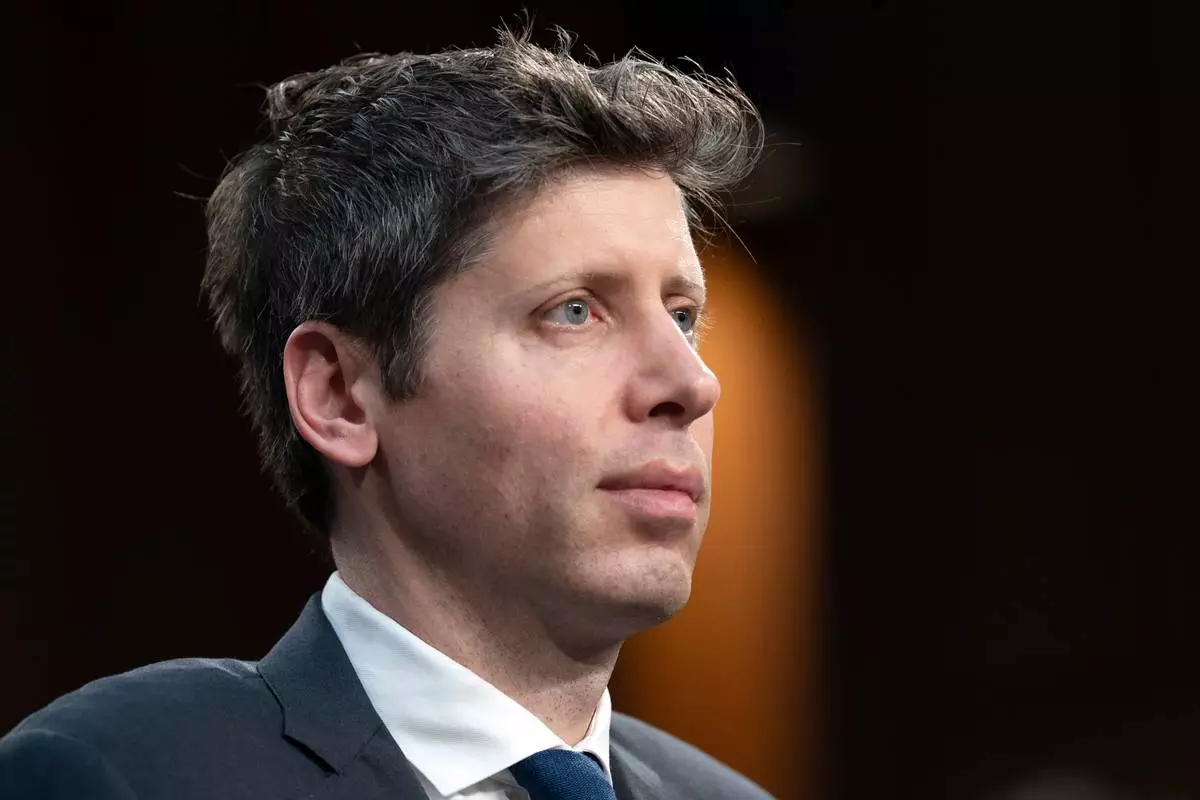
FILE - Sam Altman, co-founder and CEO of OpenAI, testifies before a Senate committee hearing on Capitol Hill in Washington on May 8, 2025. (AP Photo/Jose Luis Magana, File)

FILE - The OpenAI logo is seen displayed on a cell phone in front of an image on a computer screen generated by ChatGPT's Dall-E text-to-image model, Friday, Dec. 8, 2023, in Boston. (AP Photo/Michael Dwyer, file)

MILWAUKEE (AP) — Defense attorneys and prosecutors on Thursday started picking the jurors who will decide whether a Wisconsin judge accused of helping a Mexican immigrant dodge federal officers committed a crime.
Federal prosecutors charged Milwaukee County Circuit Judge Hannah Dugan this spring with obstruction and concealing an individual to prevent arrest. They allege she showed 31-year-old Eduardo Flores-Ruiz out of her courtroom through a back door when she learned federal authorities were in the courthouse looking to arrest him.
Dugan is set to stand trial beginning Monday in the latest show of force in the Trump administration's sweeping immigration crackdown. She faces up to six years in prison if convicted on both counts.
Here's what to know about the case, jury selection and the trial:
According to an FBI affidavit, Flores-Ruiz illegally reentered the United States from Mexico in 2013. Agents learned that he had been charged in state court with battery in March and was scheduled to appear in front of Dugan on April 18.
Agents traveled to the courthouse to arrest Flores-Ruiz after the hearing. A public defender noticed the agents in the corridor and told Dugan’s clerk about them. Dugan grew angry, according to the affidavit, declared the situation “absurd” and approached with another judge. Dugan argued with the agents over whether their warrant was valid and told them to speak to the chief judge.
Dugan returned to her courtroom, told Flores-Ruiz to come with her and led him and his attorney out a back jury door to the public corridor outside the courtroom, the affidavit says. Agents on their way back from the chief judge’s office spotted Flores-Ruiz, but he made it outside. He was eventually captured after a foot chase. The U.S. Department of Homeland Security announced in November that he had been deported.
Democrats insist President Donald Trump's administration is trying to make an example of Dugan to blunt judicial opposition to its immigration crackdown.
The administration, for its part, has been vilifying Dugan on social media. FBI Director Kash Patel posted a photo of her being led out of the courthouse in handcuffs and the Department of Homeland Security posted that Dugan has taken the term activist judge "to a whole new meaning.”
Dugan told police she found a threatening flyer from an anti-government group at her home and at her mother and sister's homes four days after Flores-Ruiz was captured.
Dugan's attorneys have said they're worried publicity about the case has tainted the jury pool. They sent a questionnaire to prospective jurors this fall in an effort to gauge their political involvement and leanings, asking whether they belong to political organizations, what radio shows and podcasts they follow, and what stickers, signs and patches they have on their cars, water bottles, backpacks and laptops.
Jury selection began Monday morning in front of U.S. District Judge Lynn Adelman in the federal courthouse in Milwaukee. Bailiffs led several dozen people into the courtroom. Adelman began the process by reading off a list of potential witnesses and asking jurors if they knew any of them.
The list included federal agents and immigration officials as well as a number of Milwaukee County judges. One prospective juror said one of the judges was his neighbor but that wouldn't affect his ability to weigh the evidence fairly.
Dugan’s defense team has argued that she’s immune from prosecution because she was acting in her official capacity as a judge and therefore had “no consciousness of wrongdoing, no wrongfulness, no deception,” according to their filings.
Her attorneys tried to persuade presiding Judge Lynn Adelman to dismiss the case in August on those grounds. The judge refused, saying that there’s no firmly established judicial immunity barring criminal prosecution.
Dugan also has argued that she was following protocols and did not intend to disrupt agents. According to her arguments, Milwaukee County Chief Judge Carl Ashley sent out a draft policy on immigration arrests in the courthouse about a week before Flores-Ruiz was arrested. The policy barred agents from executing administrative warrants in nonpublic courthouse areas and required court personnel to immediately refer any immigration agents to a supervisor, which Dugan did.
Dugan further contends that Ashley denied the agents permission to arrest Flores-Ruiz in the courtroom or the hallway. The agents then abandoned their plan to arrest him in the building and instead followed him outside so they could arrest him on the street, according to Dugan.
“(Dugan) was trying to ascertain, and follow, the rules,” her attorneys argued ahead of the trial.
Under federal guidance issued Jan. 21, immigration agents may carry out enforcement actions in or near courthouses if they believe someone they are trying to find will be there.
Immigration agents are generally required to let their internal legal office know ahead of time to make sure there are no legal restrictions, and are supposed to carry out arrests in nonpublic areas whenever possible, coordinate with court security and minimize impact on court operations.
Then-President Bill Clinton, a Democrat, appointed Adelman to the federal bench in 1997. A Wisconsin native, he served as a state senator for 20 years. He also worked as an attorney for the Legal Aid Society of Wisconsin and as a Columbia University Law School researcher. He's now 86 years old.
He struck down Wisconsin’s voter photo identification law in 2014, calling it an unfair burden on poor and minority voters. The 7th U.S. Circuit Court of Appeals reinstated the law later that year, however.
Adelman also wrote an article in 2020 accusing the U.S. Supreme Court under Chief Justice John Roberts of eroding democracy.
The day of the week for the beginning of jury selection has been corrected to Thursday.
This courtroom sketch depicts Milwaukee County Circuit Judge Hannah Dugan in court as jury selection in her trial begins Thursday, Dec. 11, 2025 in Milwaukee, Wis. (Adele Tesnow via AP)