NEW YORK (AP) — Accompanying Time's annual person of the year selection Thursday is a magazine cover that resembles the “Lunch Atop a Skyscraper” photograph from the 1930s showing eight of the “ Architects of AI ” sitting on the beam.
“This was the year when artificial intelligence’s full potential roared into view, and when it became clear that there will be no turning back or opting out,” Time editor-in-chief Sam Jacobs wrote in an explanation of the choice.
The magazine was deliberate in selecting people — the “individuals who imagined, designed, and built AI” — rather than the technology itself. But who are these individuals that digital painter Jason Seiler used to grace his rendition of the famous photograph? Here's a look:
Zuckerberg has been pushing to revive AI efforts at Meta as the company faces tough competition from rivals such as Google and OpenAI, maker of ChatGPT. In June, Meta made a $14.3 billion investment in AI data company Scale and recruited its CEO Alexandr Wang to help lead a team developing “superintelligence” at the tech giant.
Zuckerberg’s increasing focus on the abstract idea of “superintelligence” — which rival companies call artificial general intelligence, or AGI — is the latest pivot for a tech leader who in 2021 went all-in on the idea of the metaverse, changing the company’s name and investing billions into advancing virtual reality and related technology.
Since Su took over as president and CEO at Advanced Micro Devices in 2014, its stock has risen from around $3 to about $221. The semiconductor company recently revealed a new artificial intelligence chip in its race to compete with rival chipmaker Nvidia in supplying the foundation for a boom in AI-fueled business tools, and has struck a multibillion dollar computing deal with OpenAI.
AMD joins a growing list of technology companies trying to take advantage of a broader interest from businesses looking for new AI tools that can analyze data, help make decisions and potentially replace some tasks currently performed by human workers.
Elon Musk’s artificial intelligence company produces the Grok AI chatbot. Built using huge amounts of computing power at a Tennessee data center, Grok is Musk’s attempt to outdo rivals such as OpenAI’s ChatGPT and Google’s Gemini in building an AI assistant that shows its reasoning before answering a question.
Musk’s deliberate efforts to mold Grok into a challenger of what he considers the tech industry’s “woke” orthodoxy on race, gender and politics has repeatedly got the chatbot into trouble.
Musk is also head of a number of tech-related companies such as Tesla and SpaceX.
Nvidia carved out an early lead in tailoring its chipsets known as graphics processing units, or GPUs, from use in powering video games to helping to train powerful AI systems, like the technology behind ChatGPT and image generators. Demand skyrocketed as more people began using AI chatbots. Tech companies scrambled for more chips to build and run them.
The ravenous appetite for Nvidia’s chips is the main reason that the company became the first $5 trillion company in October, just three months after the Silicon Valley chipmaker was first to break through the $4 trillion barrier. But fears of an AI bubble linger.
OpenAI recently marked the three year anniversary from when it first released ChatGPT, sparking global fascination and a commercial boom in generative AI technology and giving the San Francisco startup an early lead. But the company faces increased competition with rivals.
Altman said this fall that ChatGPT now has more than 800 million weekly users. But the company, valued at $500 billion, doesn’t make a profit, amplifying concerns about an AI bubble if the generative AI products made by OpenAI and its competitors don’t meet the expectations of investors pouring billions of dollars into research and development.
The AI scientist and 2024 Nobel laureate established London's DeepMind research lab in 2010 before Google acquired it four years later. DeepMind is responsible for Google's Gemni AI platform, which helped level the playing field against tech rivals who had initially pulled ahead in the AI race.
He most recently shared the 2024 Nobel Prize in chemistry for developing AI systems that accurately predict protein folding — a breakthrough for medicine and drug discovery.
Google's recent move to implant Gemni into the search experience have been mostly successful, with AI Overviews now being used by more than 2 billion people every month, according to the company. The Gemini app, by comparison, has about 650 million monthly users.
Anthropic, founded by ex-OpenAI leaders in 2021, is privately held, but recently put its value at $183 billion. Its AI assistant Claude competes with OpenAI’s ChatGPT and others in appealing to business customers using it to assist with coding and other tasks.
Anthropic said it expects to make $5 billion in sales this year, but, like OpenAI and many other AI startups, it has never reported making a profit, relying instead on investors to back the high costs of developing AI technology for a potential payoff in the future.
Widely known as the “ godmother of AI," Stanford computer science professor Fei-Fei Li curated the dataset that accelerated the computer vision branch of AI in the 2010s.
Li launched her own startup, World Labs, in 2024 to pursue what she calls the next frontier in AI technology: spatial intelligence. World Labs recently released Marble, its first commercial generative world model, which allows users to generate and edit 3D environments from text prompts, photos, videos, or 3D layouts.
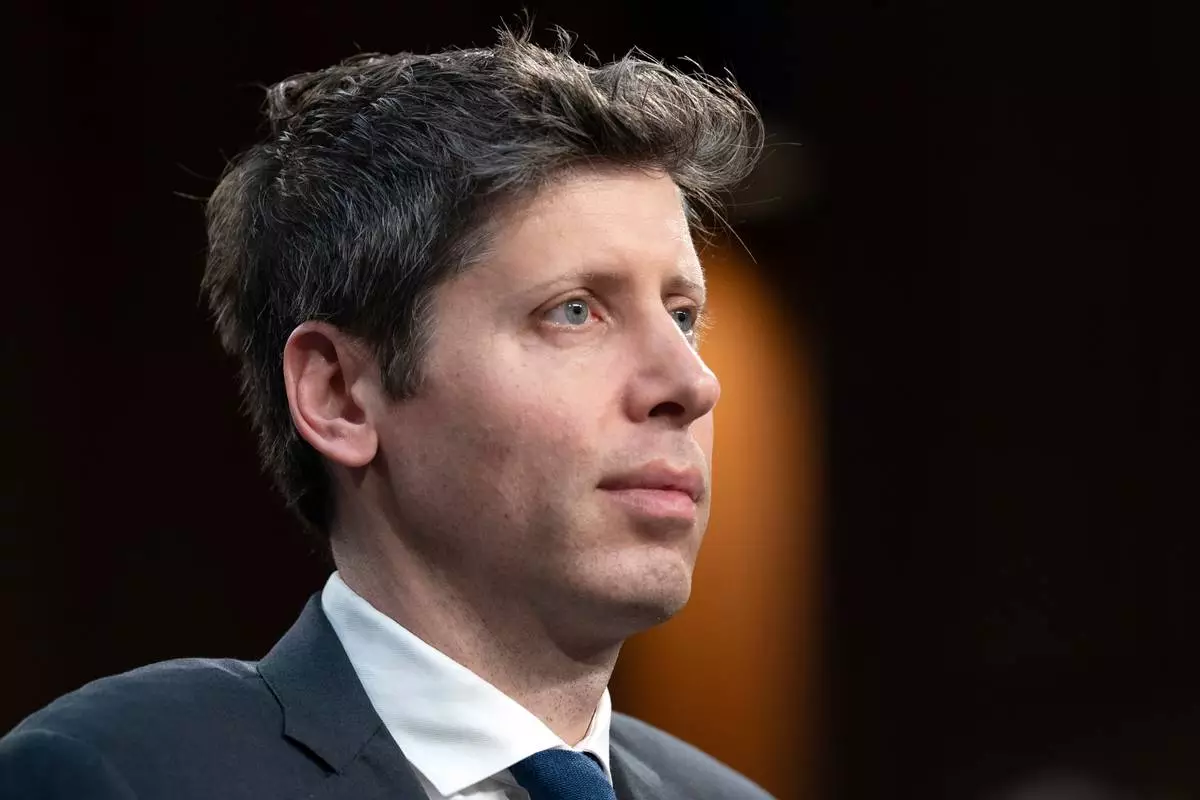
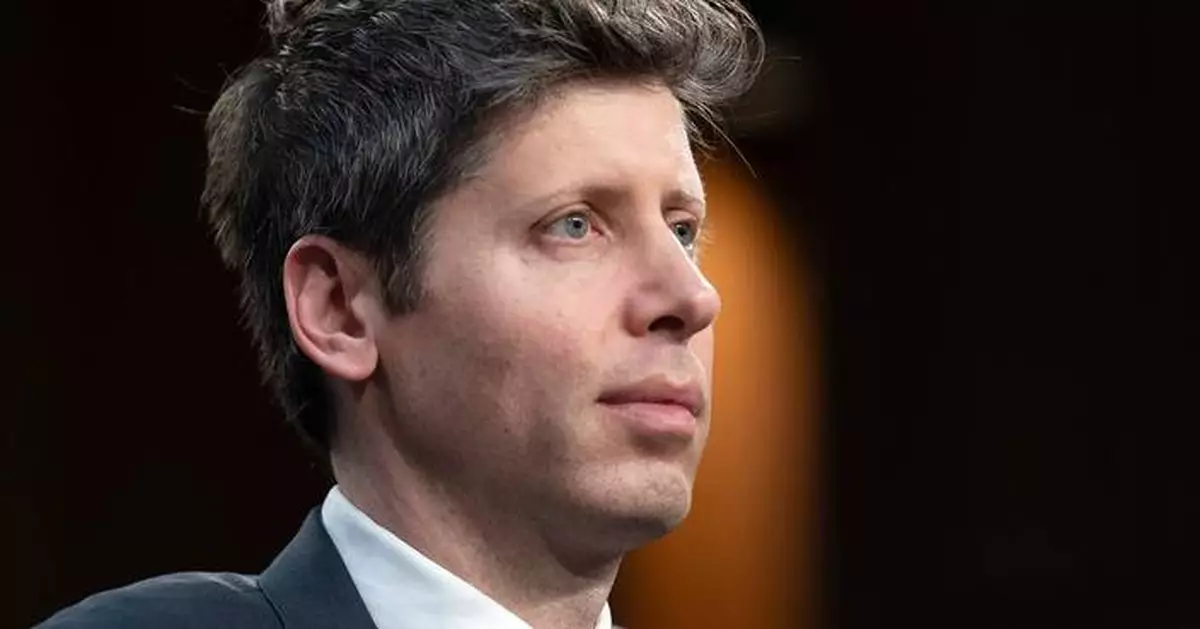
FILE - Sam Altman, co-founder and CEO of OpenAI, testifies before a Senate committee hearing on Capitol Hill in Washington on May 8, 2025. (AP Photo/Jose Luis Magana, File)