China, the world's largest electric vehicle (EV) market, has made significant strides in building its battery recycling industry over the past five years, as the country's increasing EV adoption has led to a surge in end-of-life batteries, necessitating efficient recycling strategies to mitigate environmental risks and recover critical materials.
Since putting more EVs on the roads and renewable energy in the grids requires more minerals such as lithium, nickel, and cobalt to power the batteries they rely on, the Chinese government has identified repurposing used EV batteries for second or third-life applications as an imperative.
During the country's 14th Five-Year Plan (2021-2025) period, a circular EV battery economy has rapidly taken shape in China, in a paradigm shift essential for a sustainable and greener future in both the EV and energy storage sectors.
For decades, phosphate rocks extracted from a local mine located in the city of Yichang of central China's Hubei Province, has been used to make fertilizers. But with the rise of EVs, these rocks now serve a very different purpose.
Not far from the mine stands a massive facility which is part of Brunp Recycling, a subsidiary of CATL -- the world's largest EV battery manufacturer. Phosphorus transported here is now being refined into cathode materials, the core power source driving millions of vehicles on the road today.
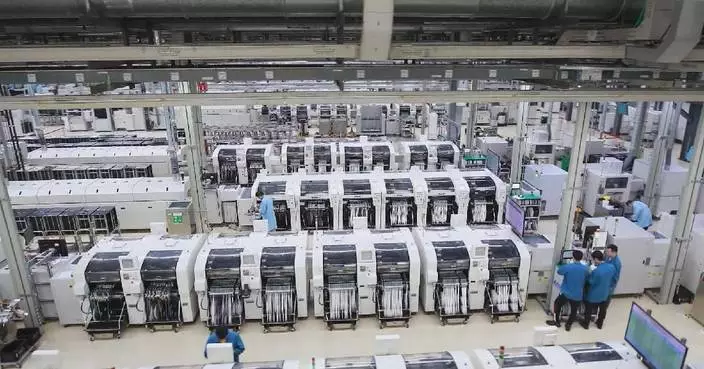
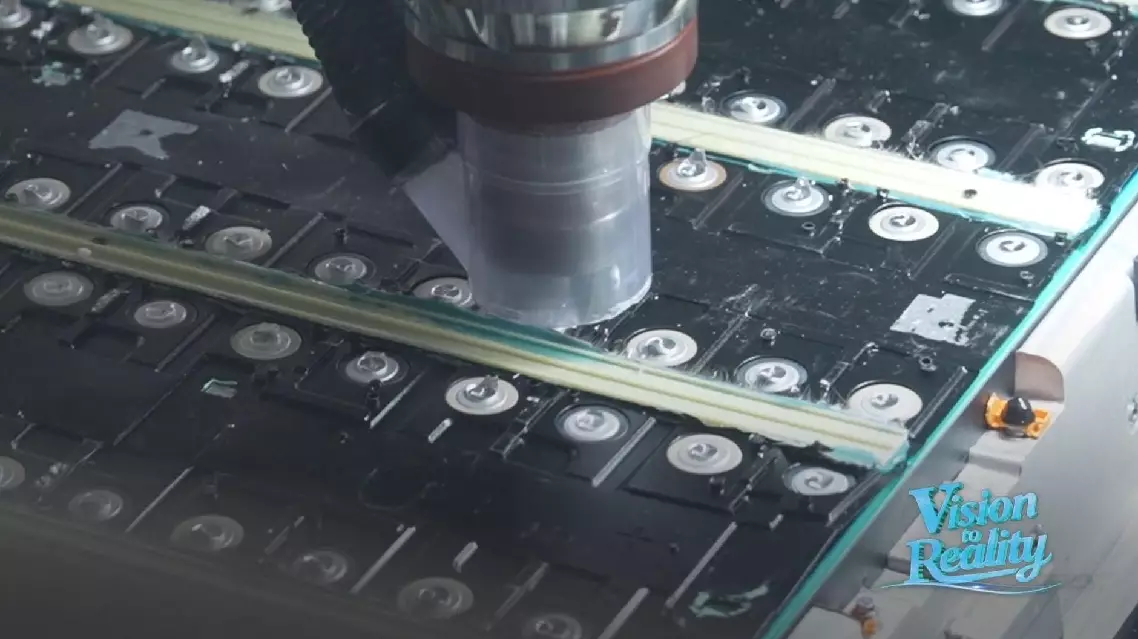
Brunp Recycling adopts a new recycling process to recover critical minerals from used EV batteries. At its workshops in Yichang, discarded batteries are being brought back to life through the combined expertise of skilled technicians and automated systems.
"The two most commonly used types today are lithium iron phosphate and ternary lithium batteries. After we recycle them and process the materials, we return them to battery manufacturers like CATL to make new batteries," Yu Haijun, vice president of Brunp Recycling, told the China Global Television Network (CGTN).
"Now, with mechanical automation, a single production line can process hundreds of tons of batteries every day. In the long term, however, this technological approach still needs further optimization," he added.
Another major industry player is Chinese battery recycler Green-Eco-Manufacture (GEM) which employs a flexible intelligent system for dismantling battery packs, a key process in the recycling of EV batteries. GEM's recycling innovations include high- and low-temperature catalytic activation and ultra-precise lithium extraction, achieving over 90 percent lithium recovery.
The company has also built a digital lifecycle management system to track batteries from recycling to utilization, supporting its dual-track business model.
Zhang Yuping, GEM's deputy general manager, said his company had made further achievements in improving its battery dismantling system since 2023.
"Before, it would take a whole day to manually open just two packs. Now, with continuous development, a single line can process up to 40 packs a day -- and in the next phase, potentially over 100 packs. With strong support for technological innovation from all levels of government, we have ample motivation and resources to drive our R and D forward," he told CGTN in a recent interview.
Today, China has reached a nearly 97-percent recycling rate for nickel, cobalt, and manganese and a 96-percent rate for lithium.
Over the last five years, more than 300,000 tons of retired EV batteries were recycled, cutting the need for raw mining and imports by an estimated 4.5 million tons.
Meanwhile, China has been working to set national standards for batteries to make them easier to dismantle. Leading companies like Brunp Recycling said it now also gets involved in the designs of EV batteries.
"We now get involved during the design of new batteries, integrating the concept of green design from the start. We help battery manufacturers develop eco-friendly designs, so that by the time a new battery pack hits the market, our recycling plan is already ready. In the near future, using retired batteries as raw materials to replace virgin minerals will become the mainstream trend. Used batteries are, in fact, 'mobile mines'," said Yu.
As China's share of the global EV market continues to grow, its battery recycling companies are also expanding their international reach to meet local environmental regulations.
CATL plans to establish battery recycling operations in Europe, with the completion of its Hungarian re-manufacturing plant slated for 2026, while GEM has established seven power battery recycling centers including those in the Republic of Korea and Indonesia.
China's booming circular EV battery economy powers green transition