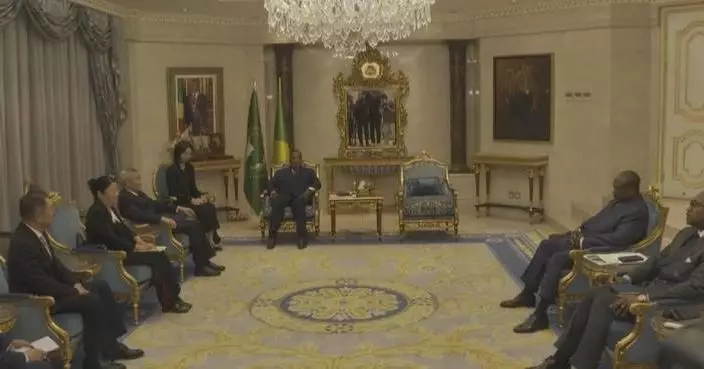
Expanding China's domestic demand helps offset the impacts from an uncertain external environment, said an analyst.
China highlighted domestic demand at its annual Central Economic Work Conference held in Beijing on Wednesday and Thursday.
The conference laid out eight major tasks of the next year's economic work, with domestic demand remaining as a focus in building a robust domestic market.
Noting that there are still long-standing and new challenges in China's economic development, and the impact of changes in the external environment has deepened while risks and hidden dangers persist in some key areas, the meeting said that these issues can be resolved through efforts, and the underlying conditions and fundamental trends sustaining China's long-term economic growth remain unchanged.
"We see that China is pursuing development amid a complex and ever-changing external environment. Against this backdrop, expanding domestic demand is, in fact, a very crucial aspect that can help us develop more actively and more resiliently," said Zou Yunhan, deputy director at the macroeconomic research office of the State Information Center.
The meeting said special initiatives should be advanced to boost consumption, and the supply of high-quality consumer goods and services should be expanded. Unreasonable restrictions in the consumption sector should be removed, and the potential of service consumption should be unlocked.
"To better strengthen the foundation of consumption capacity, we should increase the income of both urban and rural residents, which can actually solve the key and deep-seated constraint on consumption. Another critical aspect is to continuously improve the quality of supply, whether of goods or services, and the focus should shift from increasing availability to enhancing quality. Besides, continuous improvements should be made in the overall consumption environment to help customers shop more conveniently, efficiently, and with fewer restrictions," she said.
In terms of investment, the meeting said there will be appropriate increases in the investment from the central government budget, and efforts will be made to better manage the use of local government special-purpose bonds.
"The investment from the central government budget should play a more significant role. For example, how we can better use the local government special-purpose bonds, and regarding that, there may be more measures to be rolled out," said Zou.

Expanding China's domestic demand helps offset external risks: analyst
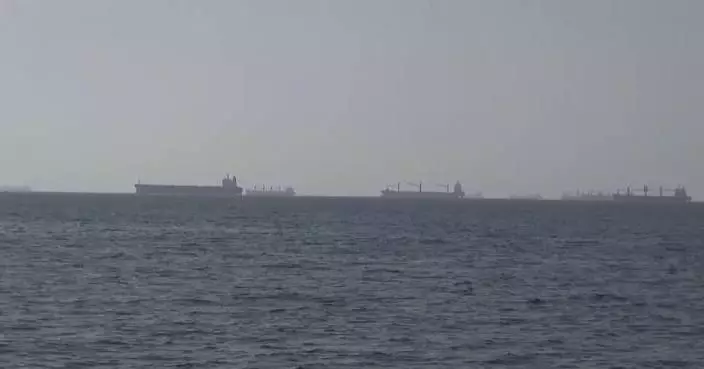
The Navy of Iran's Islamic Revolution Guards Corps (IRGC) said that the Strait of Hormuz has been blocked since Saturday evening and will not reopen until the United States lifts its naval blockade on the waterway.
In a statement carried by its official news outlet Sepah News, the IGRC said that the move came after the United States violated its commitments under the two-week ceasefire, which took effect on April 8, and failed to end its naval blockade against Iranian vessels and ports.
The IRGC Navy called on all vessels and their owners to follow official updates via its channel and VHF Channel 16, the international maritime distress, safety, and calling frequency. The statements by U.S. President Donald Trump hold no credibility in the strait and the Gulf, it added.
The IRGC warned that no vessel should move from its anchorage in the Gulf or the Gulf of Oman, and any approach to the strait would be deemed "cooperation with the enemy" and targeted accordingly.
Tehran's political leadership echoed the IRGC's firm position. Parliament Speaker Mohammad Bagher Ghalibaf asserted that the Strait of Hormuz is under Iran's control, revealing that during previous negotiations, Iran had firmly countered U.S. attempts to carry out minesweeping operations, which Tehran viewed as a ceasefire violation.
He said the situation had come close to conflict, but the U.S. had eventually backed off.
Calling the U.S. maritime blockade "reckless and ignorant," Ghalibaf warned that passage through the strait would certainly be restricted if Washington does not lift the blockade.
Underpinning these public announcements, Iran's Supreme National Security Council on Saturday affirmed the country's resolve to exercise control and supervision over traffic through the Strait of Hormuz until the war is definitively ended and lasting peace is achieved in the region.
For its part, the United States pressed ahead with its own military measures.
The U.S. Central Command (CENTCOM) said in a statement on Saturday that the U.S. military is imposing a maritime blockade on ships entering and exiting Iranian ports and nearby coastal areas. Since the blockade began on April 13, 23 ships have complied with U.S. directions to turn around.
Meanwhile, the U.S. military is preparing in the coming days to board Iran-linked oil tankers and seize commercial ships in international waters, The Wall Street Journal reported on Saturday, citing U.S. officials.
The move will enable the U.S. to take control of Iran-linked vessels around the world, including ships carrying Iranian oil that are already sailing outside the Persian Gulf and those carrying arms that could support Tehran, the report said.
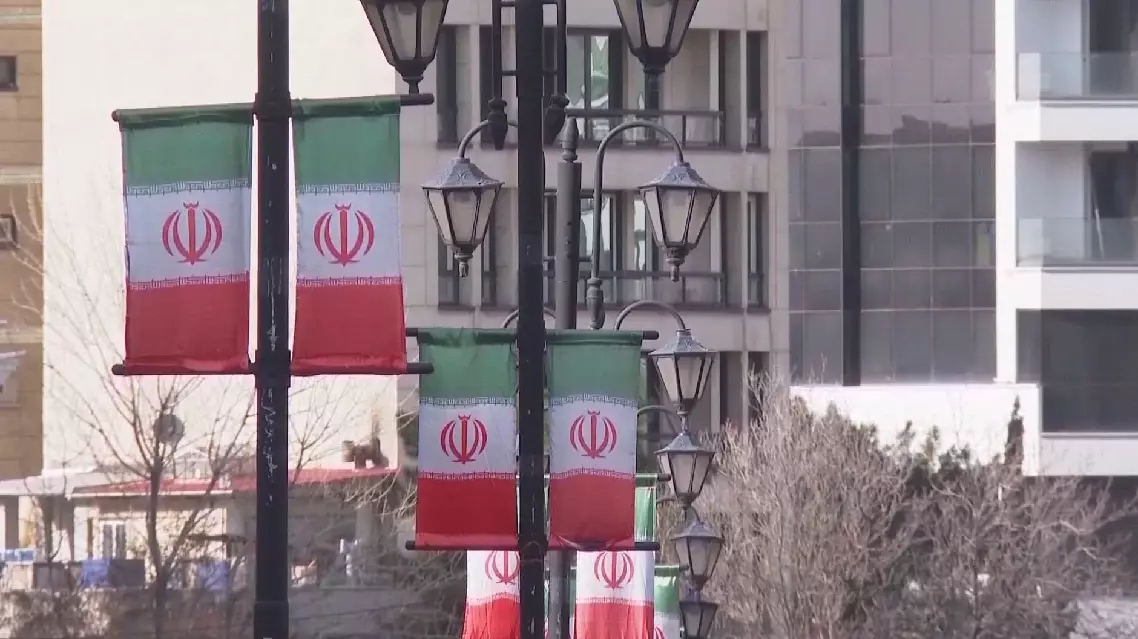
Iran's IRGC says Strait of Hormuz blocked, demands end to US naval blockade