Experts say that achieving China's newly emphasized goal of "improving quality and boosting efficiency" in next year's economic work will require stronger inter-agency coordination and more sophisticated regulatory measures.
The two-day Central Economic Work Conference was held in Beijing from Wednesday to Thursday as Chinese leaders outlined priorities for the economic work in 2026.
The meeting explicitly called for adhering to the principle of "seeking progress while maintaining stability" ,while prioritizing "quality and efficiency enhancement" in next year's economic work.
"This conference emphasized 'improving quality and boosting efficiency'. Compared with previous meetings, phrases such as 'effective enhancement of quality' and 'improving quality and boosting efficiency' highlight higher demands on the quality and efficacy of development while maintaining reasonable economic growth. As the opening year of the 15th Five-Year Plan period (2026-2030), 2026 is expected to feature more forward-looking macroeconomic policies aimed at laying a solid foundation for high-quality development over the next five years," said Dong Ximiao, chief researcher of Merchants Union Consumer Finance.
Zhang Wenlang, chief macroeconomist at China International Capital Corporation Limited, explained the operational implications.
"In terms of policy direction, the conference proposed 'improving quality and boosting efficiency'. We believe the essence of this requirement entails coordinated deployment of fiscal, monetary, and industrial policies; integration of traditional and innovative tools; and combination of cyclical measures with reform-oriented policies, thereby promoting high-quality economic growth across the board," he said.
The conference also stressed the need to leverage the integrated effects of existing and new policies to strengthen consistency and effectiveness in macroeconomic policy orientation.
Experts noted that counter-cyclical adjustments focus on stabilizing the economy through measures like interest rate cuts and expanded fiscal spending, while cross-cyclical adjustments emphasize policy continuity and sustainability.
The call for integrating existing and incremental policies indicates that future measures across departments, regions, and sectors will need to be better coordinated to form a cohesive force.
Regarding implementation mechanisms, Dong provided specific details.
"The conference explicitly stated that next year China will continue to implement a 'more proactive fiscal policy' and a 'moderately loose monetary policy', while emphasizing policy synergy and coordination. It stressed the need to intensify counter-cyclical adjustments, maintain cross-cyclical balance, and better secure the stable development of employment, businesses, markets and expectations," said Dong.
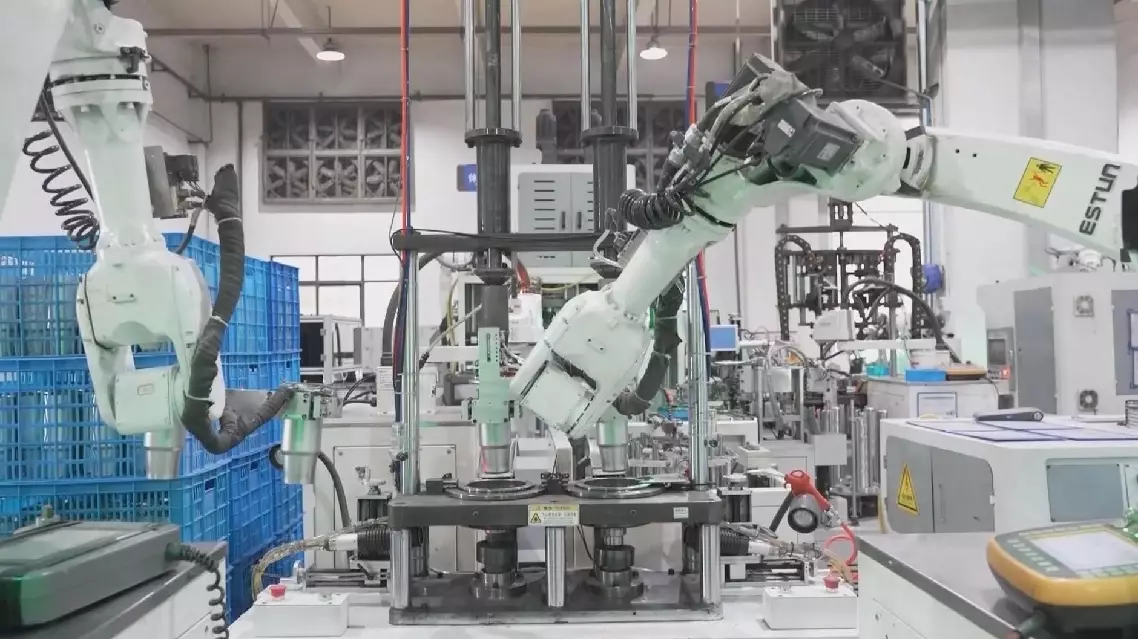
Experts highlight policy coordination as key to China's quality-first economic strategy for 2026