The heartbreaking story of 96-year-old Peng Zhuying, one of the last living survivors from the Japanese military's "comfort women" system in the Chinese mainland, has been shared in a moving documentary produced by the China Global Television Network (CGTN).
Peng remains one of only seven registered survivors in the Chinese mainland of the Japanese military's "comfort women" system, a brutal state-enforced regime of sexual slavery during World War II, victimizing over 400,000 women across Asia.
She is also the only living survivor who is officially documented as a victim of both sexual slavery and of Japan's chemical warfare during the Japanese militarists' war of aggression against China.
Eight decades on, Peng has bravely shared the story of her horrifying experiences in the CGTN original documentary "Last Daughters," which reveals the deep scars left by war and captures the quiet strength and warmth that endured, even in the darkest depths of human suffering.
Blinded by mustard gas at age nine and mutilated at 14 before being forced into a military brothel during the war, Peng was able to survive despite facing these unimaginable hardships in her young life.
Nowadays, Peng lives in a narrow alleyway, a humble dwelling with one room and one kitchen in central China's Hunan Province. Her door opens directly in front of a refurbished public toilet.
Born by the Yangtze River, Peng lost her eyesight as a child when Japanese mustard gas bombs fell on her hometown.
"I lost my eyesight when I was nine. The Japanese army struck Yueyang with bombs carrying poison. After I inhaled the mustard gas, I developed a fever, and then lost my eyesight," said Peng.
In the summer of 1938, Peng's mother and infant brother died from the killer gas. Her 13-year-old sister, Peng Renshou, was betrayed to Japanese soldiers while fleeing.
Before she passed away, Peng Renshou said the Japanese soldiers threatened to burn down a house with 50 people inside unless she surrendered. She had no choice. Brutally gang-raped until left unconscious, she survived but became infertile.
Three years later, the then 14-year-old Peng Zhuying suffered the same fate.
"It began with my sister's suffering. She was only 13. When my time came, I was 14, maybe 15. When they came for me, I resisted and refused to go. The Japanese broke two of my toes with sticks. After my toes were broken, I was dragged to the 'comfort women station' in Guozhen Town. I was violated there," said Peng.
After her release, with the help of villagers, when troops marched on Changsha, Peng bled relentlessly from her severe injuries.
"After I returned, I began having gynecological issues. I had persistent bleeding and none of the treatments helped. I was filled with hatred. I thought to myself, I've gotten this illness and it won't get better, so I would rather die. Later on, I received treatment from a doctor named Liu from the Red Cross. The doctor gave me pills and injections, and eventually my bleeding stopped," she said.
A CT scan taken last year revealed a calcified fetus in her womb, which had remained inside Peng Zhuying's body for 80 years.
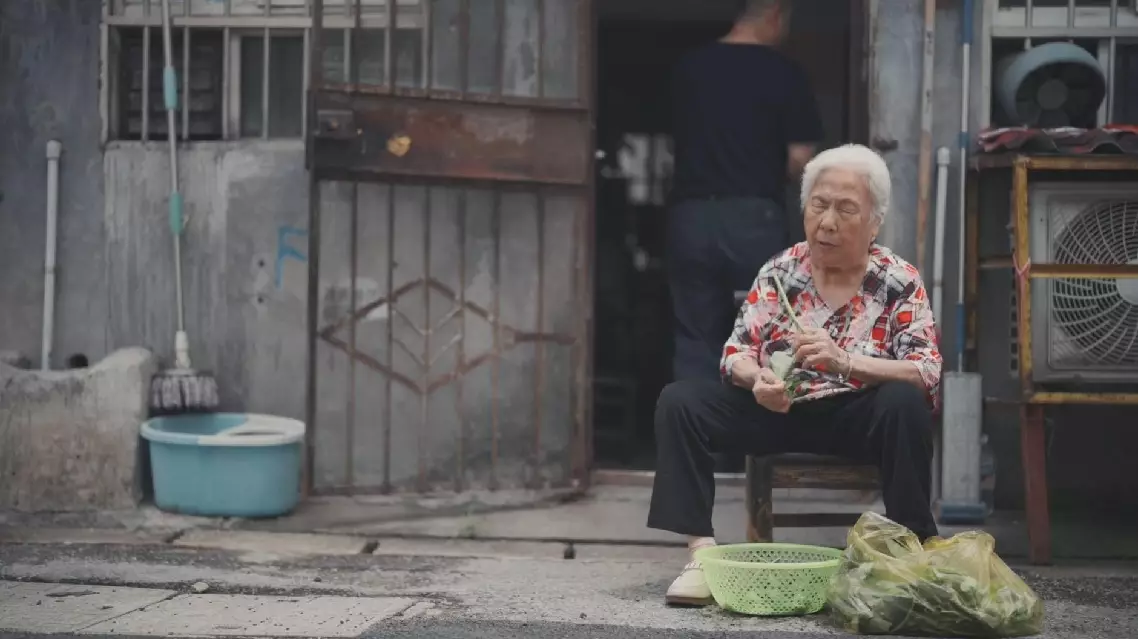
Survivor of Japan's wartime sexual slavery, chemical attacks bravely shares story in CGTN documentary
"Last Daughters", a documentary produced by the China Global Television Network (CGTN), traces the destinies of "comfort women" in the Philippines during World War II and charts the struggles of their descendants in the decades that have followed.
The Japanese military's "comfort women" system was a state-enforced regime of sexual slavery during World War II, victimizing over 400,000 women across Asia.
Treated as consumable "supplies" alongside weapons, countless girls - many underage - were brutally assaulted, left infertile, and later forced into silence under post-war stigma.
Among them in the Philippines was survivor Estelita Dy, who passed away last year at 94. Abducted at 14 from a sugarcane field, she endured repeated assaults by soldiers. After decades of silence, she came forward in the 1990s with the support of Lila Pilipina, an organization that helps Filipina survivors of Japanese wartime sexual slavery demand accountability from Japan.
The victims' stories are fading as the number of survivors dwindles, but Estelita's daughter Elizabeth Atillo vowed to keep fighting at her mother's grave.
"My mother, Estelita Dy, is buried here. She was 94 years old when she passed away [on November 24, 2024]. We didn't even know why she kept running out back then. We didn't know she was a 'comfort woman.' We found out when we saw her rallying. We saw her on TV. 'Nanay was a comfort woman? What?' I said. I couldn't believe it. My mother, a 'comfort woman'? She said, 'Believe it. That's how it was during the Japanese time.' Then she told me, 'I was raped,'" said the daughter.
The abduction and brutal violation by the Japanese traumatized Estelita severely and changed the course of her life.
"After that, every day when she remembered what had happened, my grandmother would say, 'Go back to school.' She tried to study, but she couldn't continue. She was still in elementary school then. She wasn't able to finish her studies, and eventually, she went to Manila and just started working. She got up as early as 5:00 every morning. She went to the church to sell rice cakes and stayed until evening. She wouldn't quit until every last rice cake was sold. If she had to, she would even stay up until dawn, so we could have more money. My mother would stop at nothing to provide us with food and clothing. She worked desperately because our father had abandoned us. There were six of us kids, so she worked hard to support us all," said Atillo.
She said her mother was later encouraged by Maria Rosa Luna Henson, the first "comfort woman" victim in the Philippines, to publicly share her war-time tragedy.
"Before, yes, my mother was ashamed. Because of what happened to her, my mother didn't even want to get married. She never told my father that she was raped during the Japanese occupation. She didn't even want to come forward. But then she saw others come forward, especially Grandmother Rosa, right? She was the first one to speak up. Eventually the news about the 'comfort women' came out. That's when my mom started joining Lila Pilipina," she said.
Sharon Cabusao-Silva, executive director of the Lila Pilipina organization, explained in the documentary how difficult it was for the victims to speak up at that time.
"There's this whole stigma about being a rape victim. It's even more difficult to say that I have been gang-raped by so many Japanese soldiers. Immediately after the war, the Filipinos were enraged against the Japanese. So, it was very hard to say that you were with the Japanese. You could be seen as a traitor. You were hiding two things. One, that you were a victim of gang rape; and two, that you could be accused of being a traitor to your country. That's why it was so hard to say it, and so hard to say, 'I was raped in turns by the Japanese,'" she said.
"One time, she [Estelita Dy] told me, 'I actually don't believe that I will achieve justice in my lifetime, but what I only want is that the young people do not experience what we experienced.' I admire her personal qualities, you know, quiet, humble, and also discerning, but at the same time, very, very committed to the struggle for justice. Until her deathbed, actually, she always wanted to join activities," she added.
Atillo said the whole family joined her mother to rally for the rights of the "comfort women", and has repeatedly called for a formal and sincere apology from the Japanese side.
"I supported my mother by joining the rallies. We'd support her. We'd go with her. If she said, 'We have a rally,' we would join. Sometimes I'd even bring my grandchildren. They're grown up now. What we really want is for them to issue an official apology for what they did and to include the 'comfort women system' in historical records, and to ask for forgiveness from the women they abused during the Japanese occupation," she said.
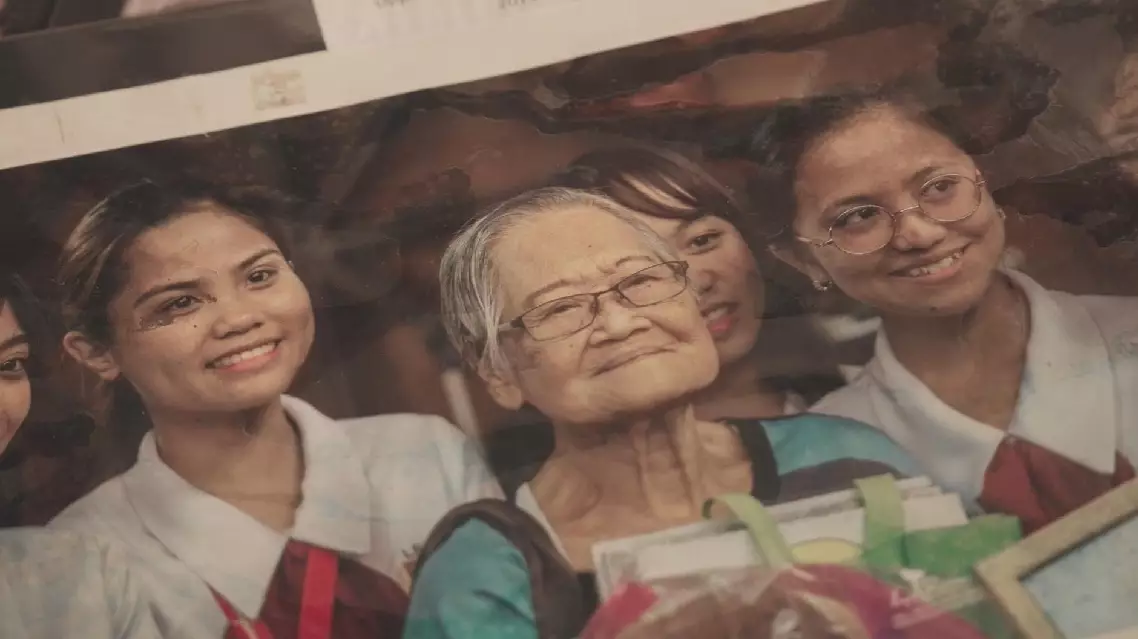
CGTN documentary reveals tragedies of Philippine "comfort women"