BERLIN (AP) — Union Berlin beat high-flying Red Bull Leipzig 3-1 in the Bundesliga on Monday after a flurry of goals early in the second half.
Oliver Burke put Berlin ahead after 57 minutes with his first goal in nine games. But Tidiam Gomis, who had replaced Janik Haberer only a minute earlier, hammered home an equalizer on the hour mark for Leipzig.
The pendulum swung back Berlin’s way almost immediately, when Christopher Trimmel found himself unmarked in the Leipzig box and crossed to Ilyas Ansah to head home.
Then Tim Skarke made sure of all three points with a third in stoppage time.
It was Berlin’s first win after a string of three consecutive defeats in the league and cup and lifts it four places into eighth spot.
It has not lost a Friday night Bundesliga match since its first such fixture in 2019, a streak of 11 games.
For second-placed Leipzig, the defeat was a missed chance to close an eight-point gap on league leader Bayern Munich.
It will drop to third if Borussia Dortmund, which is one point behind, beats Freiburg on Sunday.
AP soccer: https://apnews.com/hub/soccer

Union Berlin's Ilyas Ansa celebrates after scoring a goal during the Bundesliga soccer match between FC Union Berlin and RB Leipzig, in Berlin, Germany, Friday, Dec. 12, 2025. (Soeren Stache/dpa via AP)

Leipzig's Conrad Harder, left, and Union Berin's Leopold Querfeld battle for the ball during the Bundesliga soccer match between FC Union Berlin and RB Leipzig, in Berlin, Germany, Friday, Dec. 12, 2025. (Soeren Stache/dpa via AP)

Berlin's Aljoscha Kemlein, left, fights for the ball with Leipzig's Kevin Kampl during the Bundesliga soccer match between FC Union Berlin and RB Leipzig, in Berlin, Germany, Friday, Dec. 12, 2025. (Soeren Stache/dpa via AP)
LJUBLJANA, Slovenia (AP) — Slovenia’s parliament on Friday appointed right-wing populist politician Janez Jansa as the new prime minister, in a shift for the small European Union country that was previously run by a liberal government.
Lawmakers backed Jansa in a 51-36 vote in the 90-member assembly. The new prime minister will need to come back to Parliament within the next 15 days for another vote to confirm his future Cabinet.
Jansa's appointment concludes a postelection stalemate in Slovenia after a parliamentary ballot two months ago ended practically in a tie. Former liberal Prime Minister Robert Golob's Freedom Movement won by a thin margin but he was unable to muster a parliamentary majority.
Jansa and his populist Slovenian Democratic Party signed a coalition agreement this week with several right-wing groups. The new government also has the backing of a nonestablishment Truth party that first emerged as an anti-vaccination movement during the COVID-19 pandemic.
The new term in office will be the fourth for the veteran Slovenian politician. Jansa, 67, is an admirer of U.S. President Donald Trump and was a close ally of former populist Hungarian Prime Minister Viktor Orbán, who was defeated in a landslide election last month.
Jansa in a speech listed the economy, fight against corruption and red tape, and decentralization as key goals of the future government. He has promised to lower taxes for the rich and support private education and healthcare.
Critical of the previous government's alleged “inefficiency," Jansa said the new government will turn Slovenia into “a country of opportunity, prosperity and justice, where each responsible citizen will feel safe and accepted."
Like Orban, Jansa was staunchly anti-immigrant during the huge migration wave to Europe in 2015. Also like Orban, Jansa has faced accusations of clamping down on democratic institutions and press freedoms during a previous term in 2020-2022. This led to protests at the time, and scrutiny from the European Union.
Golob in his speech described Jansa as “the greatest threat to Slovenia’s sovereignty and democracy."
Alleging that Jansa had threatened to arrest him, Golob said Jansa's "idea of democracy is that anyone who dares speak a word against you deserves only the worst.”
Jansa, a supporter of Israel, also has been a stern critic of the Golob government's 2024 recognition of a Palestinian state.
The vote on March 22 was marred by allegations of foreign influence and corruption. The around 2 million people in the Alpine nation are deeply divided between liberals and conservatives.
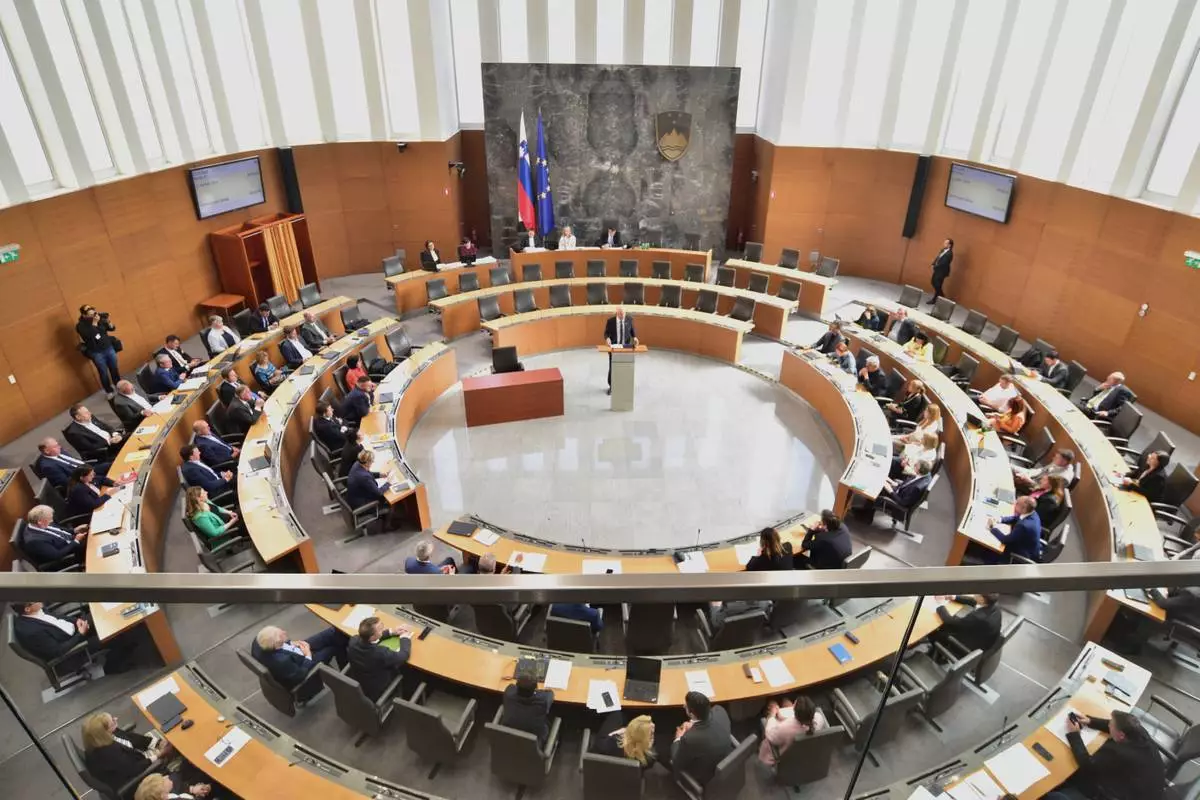
Janez Jansa, center, addresses the Slovenian Parliament during a session in Ljubljana, Slovenia, Friday, May 22, 2026, before appointing him as prime minister, ending a political deadlock after tight elections in March. (AP Photo/Igor Kupljenik)
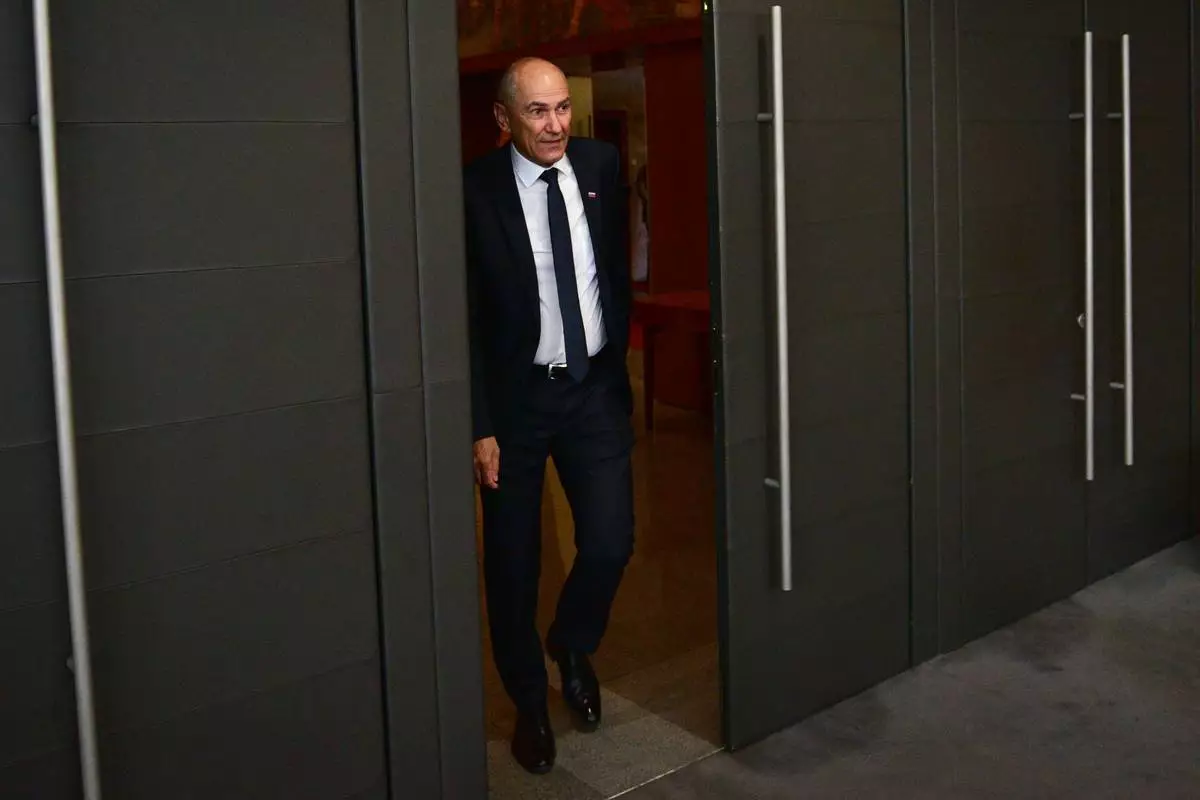
Janez Jansa arrives for a session of the Slovenian Parliament in Ljubljana, Slovenia, Friday, May 22, 2026, before appointing him as prime minister, ending a political deadlock after tight elections in March. (AP Photo/Igor Kupljenik)
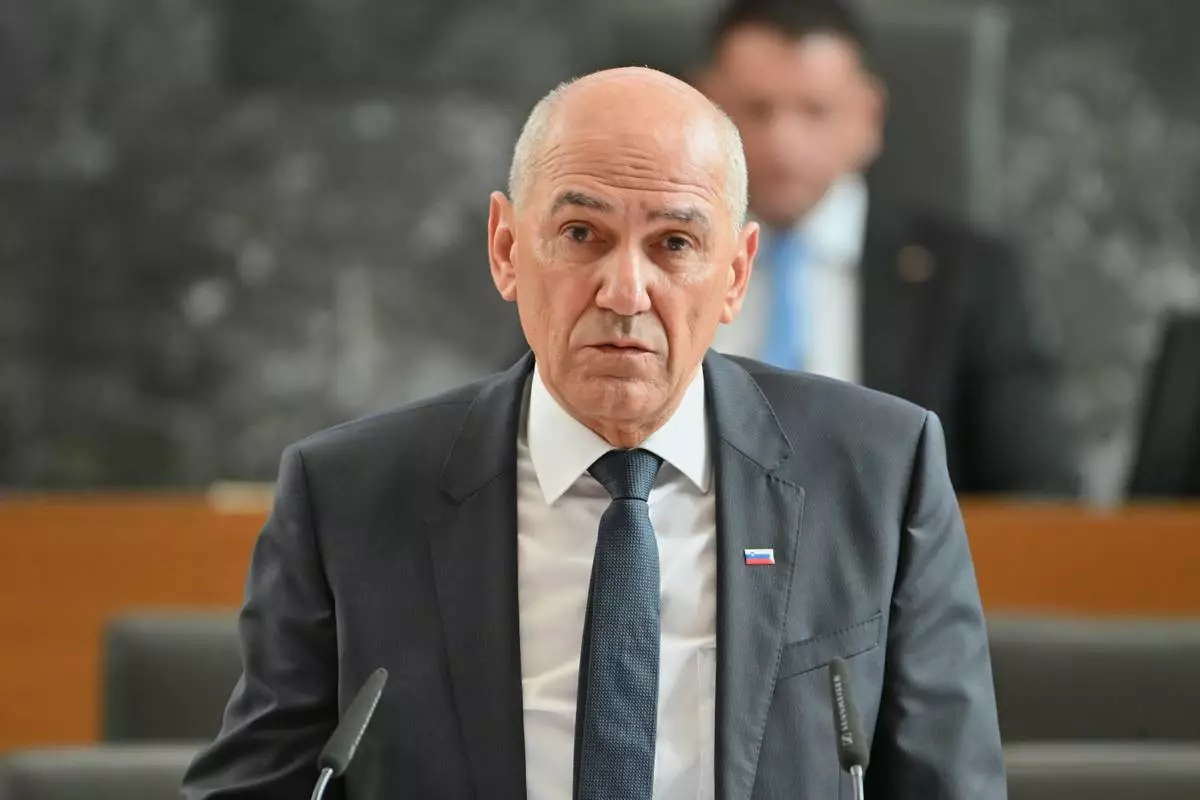
Janez Jansa addresses the Slovenian Parliament during a session in Ljubljana, Slovenia, Friday, May 22, 2026, before appointing him as prime minister, ending a political deadlock after tight elections in March. (AP Photo/Igor Kupljenik)