U.S. President Donald Trump's barrage of attacks on the European Union (EU), from migration to regulation, and with a new national security strategy, codify a seismic shift in transatlantic relations, a European expert said Friday.
Released last week, the U.S. policy document claims Europe faces "civilisational erasure" within the next two decades and criticized Europe's crackdown on far-right forces as political "censorship." It says the U.S. will "cultivate resistance" in the bloc to "correct its current trajectory."
In an interview with Politico published Tuesday, Trump has once again provoked outrage among his European allies, describing them as "weak" and leading a "decaying" group of nations, criticizing the region's response to immigration and the war in Ukraine.
The United States also signaled its support for far-right forces in Europe, which shocked Europe even more. Trump said that he would continue to support European politicians whom he sees as more capable.
In response, European Commission President Ursula von der Leyen said the U.S. president should not interfere into democratic processes in the EU member countries.
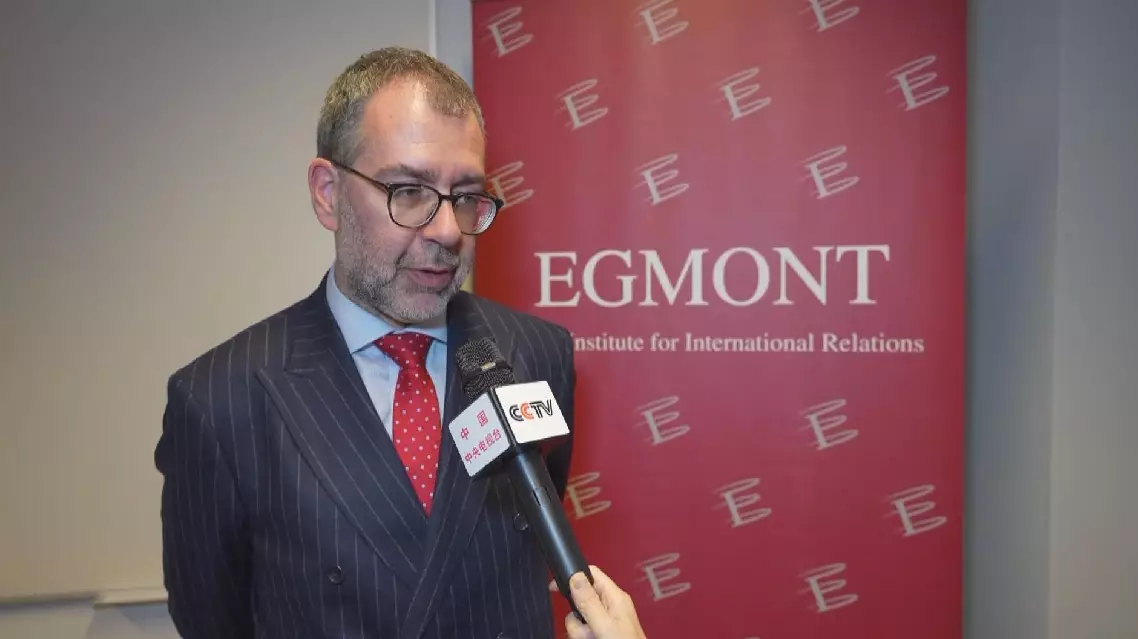
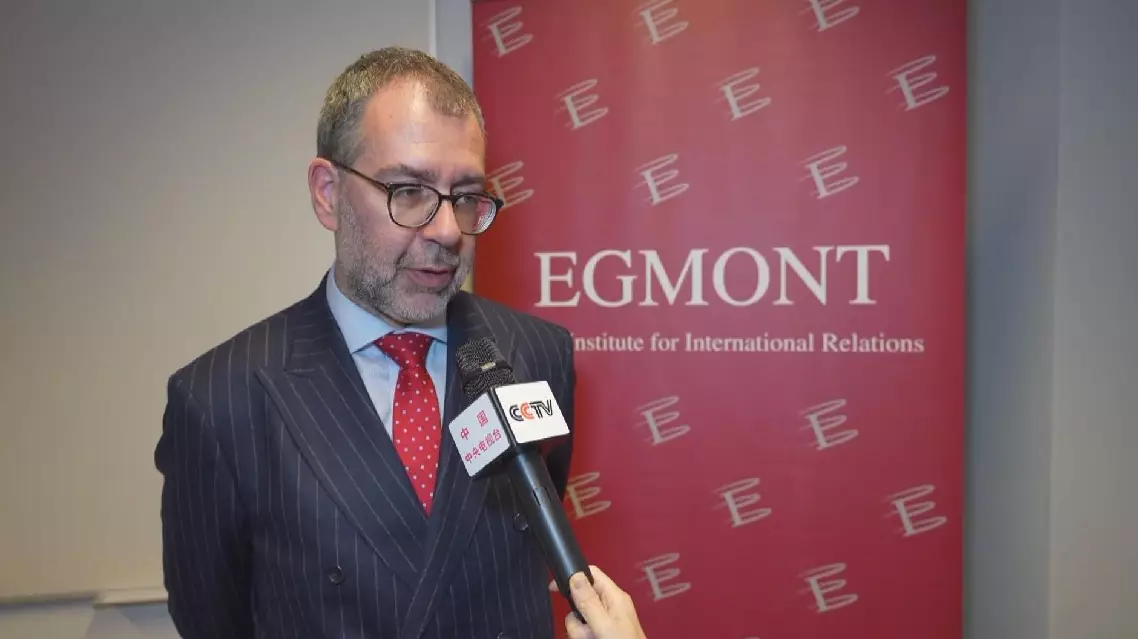
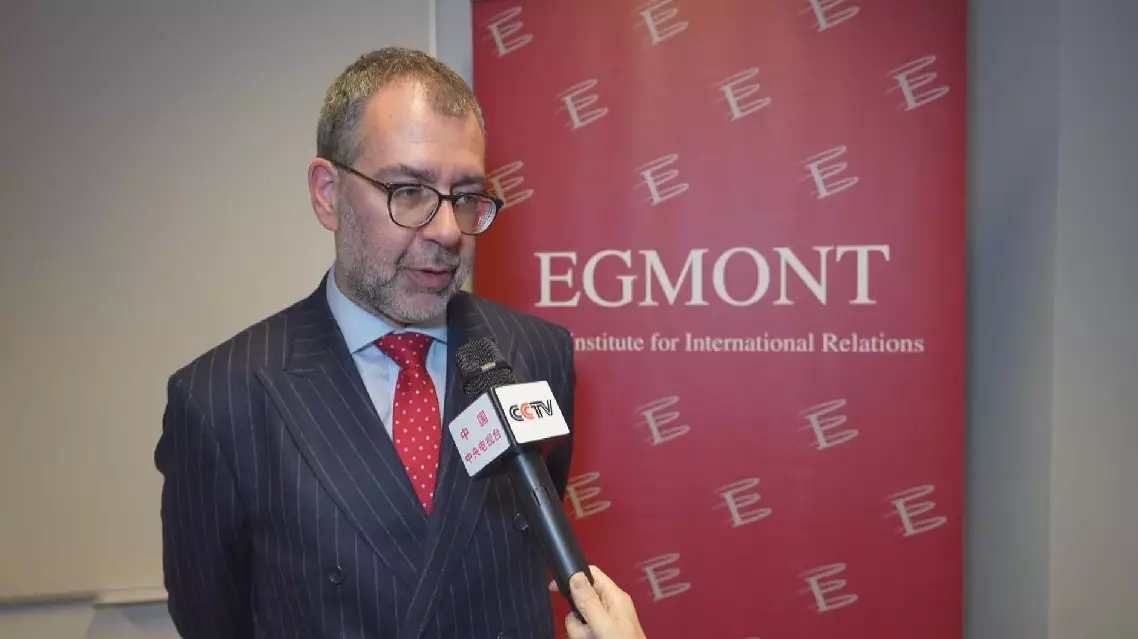
Sven Biscop, acting director-general of the Royal Institute for International Relations, a government-dependent and non-profit Brussels-based think tank, expressed his concern about U.S. interference in the internal affairs of European countries in an interview with CGTN.
"I think what upsets Europeans most is the very explicit promise in the national security strategy of the U.S. that the Americans will intervene in our domestic policies to cultivate resistance, they say, basically against the European Union. And that kind of intervention or domestic politics cannot be tolerated," Biscop said.
Biscop believes the United States' repeated criticisms and contemptuous remarks towards Europe indicate a structural shift in its strategic positioning of Europe, suggesting a potential decisive rift in U.S.-EU relations and a weakening or even collapse of their alliance.
"But it will never be the alliance as we knew it during the Cold War. That will not come back. It's no longer the case that whatever happens, the U.S. and the EU will always agree, or will always be on the same side. That's a really big structural change," he said.
New U.S. national security strategy represents shift in transatlantic relations: expert
New U.S. national security strategy represents shift in transatlantic relations: expert
New U.S. national security strategy represents shift in transatlantic relations: expert
Global observers have welcomed the recent summit between Chinese President Xi Jinping and U.S. President Donald Trump, emphasizing that a stable, healthy relationship between the world's two largest economies is essential for global peace and development.
Xi concluded a three-day state visit to the United States on Friday, where he and Trump reaffirmed their commitment to a constructive, strategically stable relationship guided by fairness, reciprocity, and mutual respect.
Ko Ko, chair of the Myanmar Narrative Think Tank, expressed optimism that the two major powers can work together to foster global development and steer the international community toward a stable, prosperous, and peaceful future.
"The world today faces many destabilizing factors and conflicts. If China and the United States, as two major powers, join hands to promote world peace and development, they can help move the world toward greater stability, prosperity, and peace. The two countries should avoid conflict and pursue cooperation, especially in economic and trade fields, thereby contributing to global development," said Ko Ko.
"President Xi uses 'giant ship' to describe China-U.S. relations. I think it's a very appropriate metaphor as giant ship signifies stability and long-term vision, as well as a journey toward a broader future," said Omar Tahboub, editor-in-chief of Olives Green Times (OGT).
Experts also emphasized that as the world's two largest economies, China and the United States carry a collective responsibility to address pressing global challenges through sustained cooperation.
"In my view, I would argue that this strategic new vision, it's very important in the context of U.S.-China relations. And this is because the vision emphasizes the need for cooperation. In terms of cooperation, given the fact that both countries are the largest economies globally, both countries are the most influential countries globally. It is important for them to cooperate and it's also in the realization of the fact that despite their differences, there are areas of mutual interest," said Dr. Oluwaseun Tella, director of the Future of Diplomacy at the University of Johannesburg's Institute for the Future of Knowledge.
"There's that kind of understanding, it seems between the Chinese leadership and the American leadership that conflict between the two countries ought to be avoided. That there are benefits to cooperation; that there needs to be a positive atmosphere; that there has to be an enhancement of trust and so one can hope that both parties are working assiduously to address those very major issues," said Aurel Braun, professor of International Relations and Political Science of University of Toronto.
"When we talk about China and the US. These are obviously two world powers that do influence a lot of the economic shifts that happen country or worldwide. So, it's important that obviously there is cooperation [and] coordination," said Natalie Kaunda, an economist and development expert in Zambia.
Beyond economic and diplomatic frameworks, former Greek Foreign Minister Georgios Katrougalos emphasized the role of people-to-people exchanges in building lasting bilateral stability.
"I was very much impressed by the idea and proposal of President Xi that 100,000 young Americans would visit China. Exactly because if we want to build stable bilateral relations, there is now stable ground that people know other people, especially young ones," said Katrougalos.
Global observers welcome Xi-Trump summit, calling stable US-China ties essential for world peace