China on Saturday released footage of aerial views of its Huangyan Dao and surrounding areas, recorded by fighter jets conducting patrol missions.
The Chinese military on Saturday conducted combat readiness patrols in the territorial waters and airspace of China's Huangyan Dao and the surrounding maritime and aerial areas.
The People's Liberation Army Southern Theater Command said in a statement that since the beginning of January, it has organized naval and air forces to step up patrols and vigilance in the waters and airspace surrounding the territorial waters of Huangyan Dao, and resolutely countered infringement and provocative actions by certain countries in the region.
The move is aimed at resolutely safeguarding China's sovereignty and security, and upholding peace and stability in the South China Sea region, the command said.
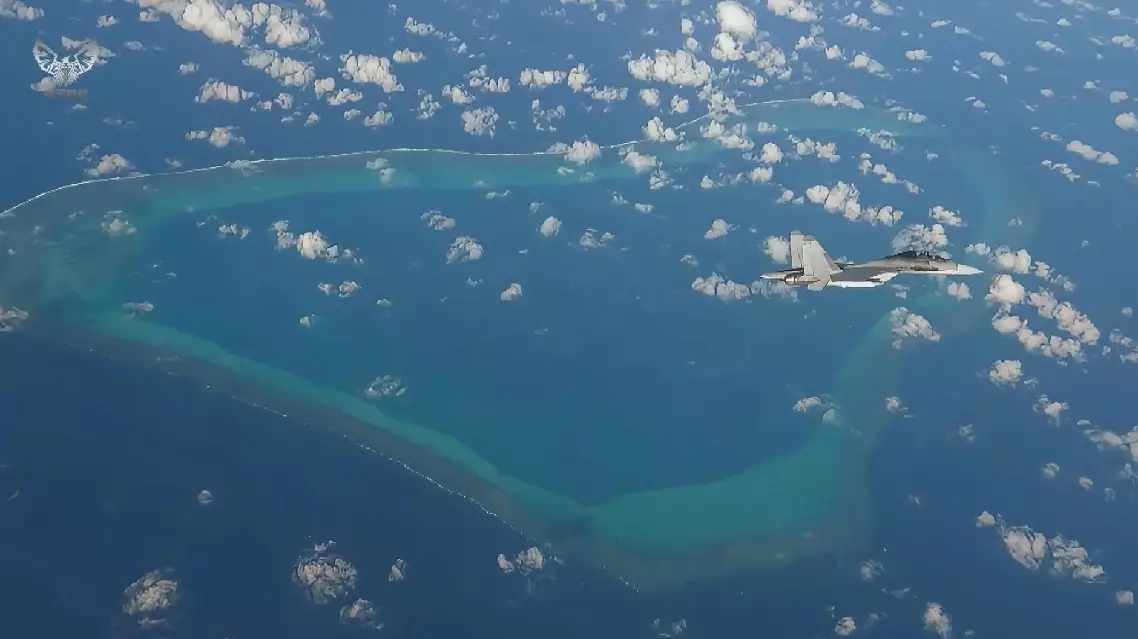
China releases Huangyan Dao view from patrolling fighter jets
Pascal Soriot, CEO of British-Swedish pharmaceutical giant AstraZeneca, has reaffirmed his company's long-term commitment to China, not only as a key market, but as a global hub for biopharmaceutical innovation and advanced manufacturing.
Soriot made the remarks in an interview with China Global Television Network in Beijing on Friday, a day after the firm pledged to invest 15 billion U.S. dollars in China through 2030 to expand medicines manufacturing and research and development facilities.
He noted that China's evolving scientific achievements, optimizing opening-up policies and steadfast support for international collaboration have fueled the firm's continued confidence and investment in the country's economy.
"We have been committed to China for many, many years. And in the last five to six years in our industry, China has emerged as a fundamental part of the innovation ecosystem in bio-pharmaceuticals. So, we actually are very proud to announce this investment of 100 billion yuan (about 15 billion U.S. dollars) that will go into R and D in manufacturing. And that is really a reflection of two things: One is, of course, China is growing, and there are lots of people in this country who need our medicines, but also China is a source of innovation. So invest for patients in China, but you also invest for innovation, manufacturing, and export of these medicines to the rest of the world," said Soriot.
The investment will significantly expand the company's footprint in China, with new facilities to be established, focusing on two cutting-edge therapeutic modalities: cell therapy and radioligand therapy -- precision treatments viewed as pivotal to the future of oncology and other complex diseases.
"Basically, what we're going to do over the next few years is continue to invest in R and D, in our R and D centers in Beijing and in Shanghai. We're going to collaborate with even more bio-tech companies in this country. We are building our manufacturing network, we already have sites in Wuxi, in Qingdao, in Beijing. We're going to add new sites -- one for cell therapy manufacturing, one for radioligands. Those are two of the critical modalities for the future of medicine. And we'll have even more investment. All of these will help patients, but in our industry, cycles are long. The time when we can cure some cancers, it's actually not so far, not that far. And all this collaboration and investment in innovation will help us address that," said Soriot.
Soriot was a member of the delegation of British Prime Minister Keir Starmer's official visit to China from Wednesday to Saturday, the first trip by a UK prime minister in eight years.
AstraZeneca CEO reaffirms commitment to China as biopharma innovation hub