British Prime Minister Keir Starmer's landmark visit to China has created renewed momentum for bilateral cooperation across science, technology, and green industries, according to Pascal Soriot, CEO of British pharmaceutical giant AstraZeneca.
Starmer arrived in Beijing on Wednesday to begin a four-day official visit to China -- the first trip by a British prime minister in eight years.
Speaking in an interview with China Global Television Network (CGTN) in Beijing on Friday, Soriot hailed the significance of the visit for the bilateral relations between China and UK.
"[The visit is] very important. I think the last visit of a UK prime minister to China was eight years ago. Actually, I was part of the delegation at the time. And those two countries are great potential collaborators. And the UK places life sciences as a priority. Same for China -- focus on science, focus on innovation. Beyond my sector, there is also potential for collaboration in AI, potential for collaboration in green energy, green transition. I think Prime Minister Starmer's visit has been very successful, and hopefully [it will] set the stage for increased collaboration in the future," said the CEO.
Addressing concerns about China's rising industrial competitiveness, Soriot offered a refreshingly optimistic perspective. Rather than viewing Chinese competition as a threat, he framed it as a catalyst for global progress.
"I'm a believer that competition is good. You have to focus on science, and then you have to compete. So, I tell my team we have to collaborate, that's key. But we also have to learn to compete. If you don't compete well, then basically you're not going to do well and you're going to disappear. So in many ways, this competition coming out of China is an incentive for us to do even better. If we all do better, then society will benefit. There will be more medicines, more innovation. So, I see this (competition from China) as a positive factor," he said.
AstraZeneca recently pledged to invest 15 billion U.S. dollars in China through 2030 to expand its medicines manufacturing and research and development infrastructure, a commitment underscoring the company's strategic bet on China as a hub for scientific advancement.
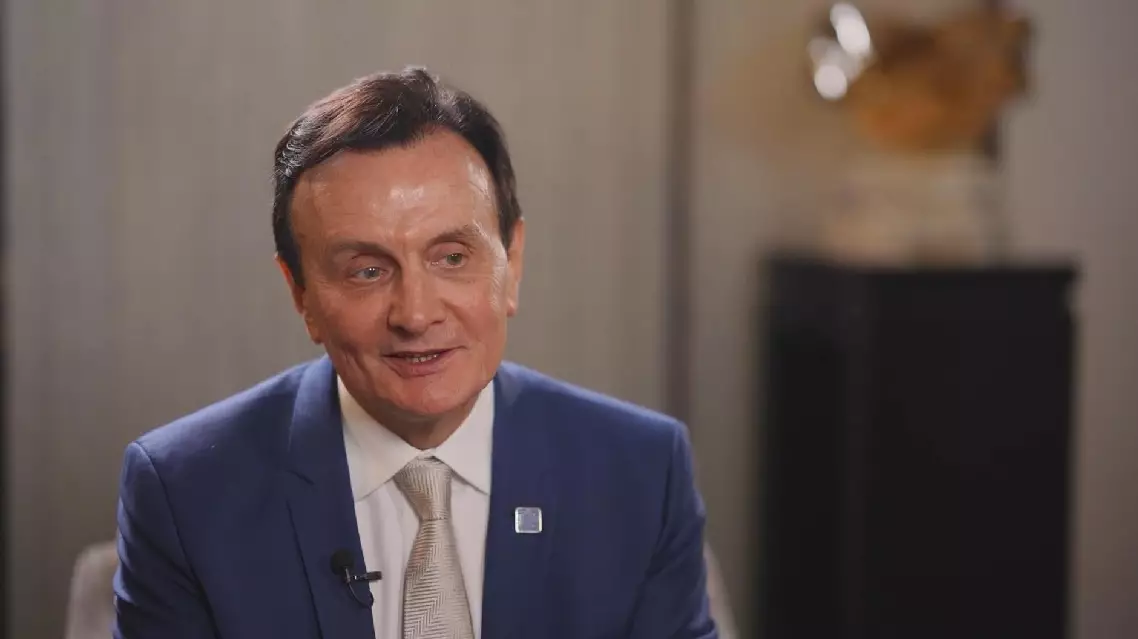
Starmer's visit sets stage for deeper China-UK collaboration: AstraZeneca CEO