The historical facts of the 1937 Nanjing Massacre committed by Japanese army during the invasion of China cannot be distorted or denied, veteran journalist Yoichi Jomaru said in an interview with China Media Group (CMG) on Saturday.
Jomaru, a former journalist with Asahi Shimbun, spent three and a half years reviewing approximately 80 Japanese newspapers and related materials published across Japan of that time to search for wartime and postwar coverage of the Nanjing Massacre.
He found that while Japanese media at the time recorded part of the facts of the massacre, they remained silent on many atrocities.
Jomaru said that Japanese reporters at the time intentionally hid the truth of the massacre and other atrocities committed by the Japanese army in China, and his findings were published in his book.
"Even if it is a cruel and shameful history, the Nanjing Massacre cannot be denied. History cannot be denied. I was a journalist, a news reporter. Covering up the truth of the history is wrong," said Jomaru.
Jomaru said that Japan must face its history of aggression and honestly face its wartime responsibility to build genuine trust and understanding with its Asian neighbors.
"I think one of Japan's major failures after the war was not forming a broad social consensus on the nature of its aggression. To make sure that people have books to read when they want to access the truth, there must be someone to write about it. As an author, I will continue to write and publish," said Jomaru.
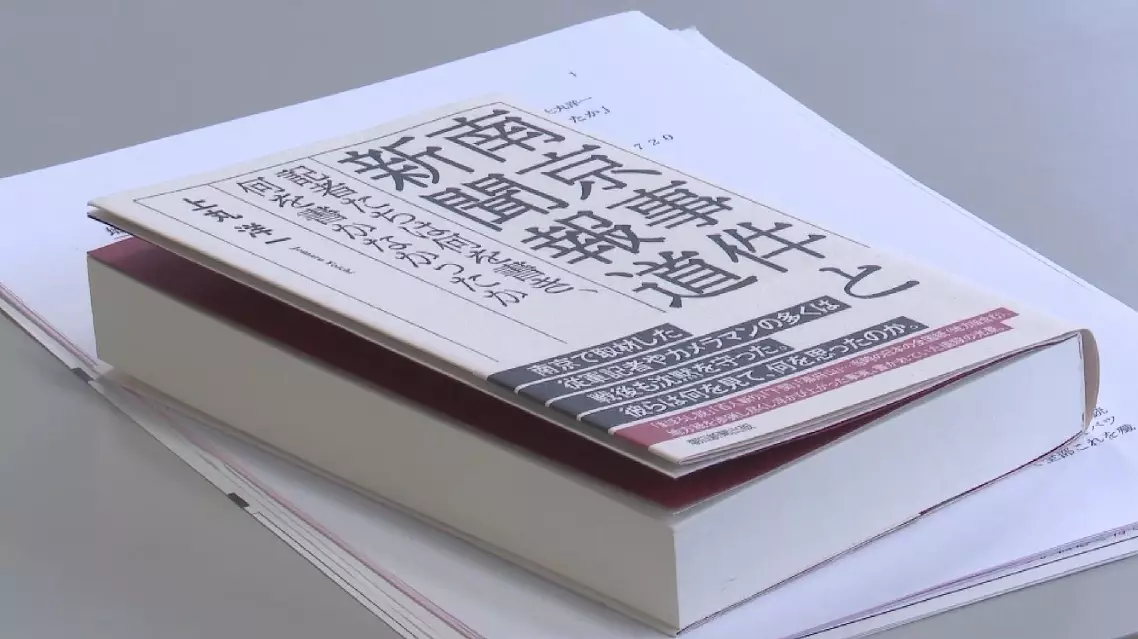
Facts of Nanjing Massacre cannot be denied: Japanese journalist
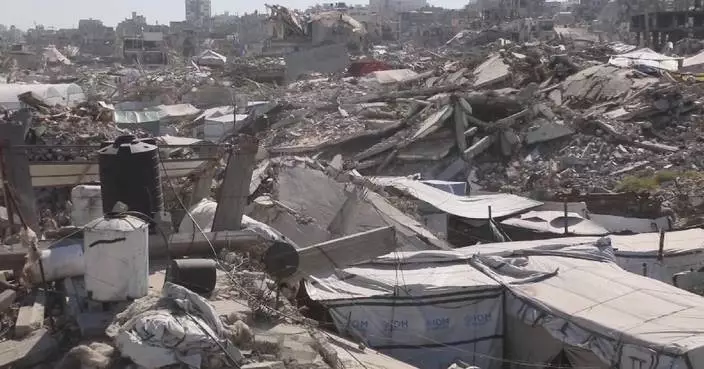
Displaced Palestinians in the Gaza Strip are manually removing rubble using basic tools, in the absence of heavy machinery and international reconstruction assistance.
Seven months into a fragile ceasefire, large-scale reconstruction remains largely stalled in Gaza, with Israeli restrictions on construction materials and unresolved political disputes deemed as key obstacles.
Many families in the enclave say they can no longer wait for rebuilding plans to begin.
Mohammad Adel, who lost his seven-story home in Khan Younis during the war, has been living with his family under difficult displacement conditions in the crowded tents of Al Mawasi for more than two years.
Unable to wait any longer, Adel decided to begin clearing the rubble of his home by hand.
"We see that there will be no reconstruction for Gaza and the closure is very strict on us. Waiting for reconstruction will take a very long time, so we started working and removing the rubble with our own hands. As you can see, this will cost us money, but we are trying to prepare the place so we can live in it," he said.
For some unemployed workers, clearing debris has become a temporary source of income amid the economic collapse caused by the war.
"Today, financial means have become nonexistent. Before the war, I had a chicken farm, but my work stopped because of the war. So I searched for another job that could provide me with an income, and I have no choice except this extremely exhausting work," said Abdullah Al Bayouk, a worker.
Palestinian officials warn that the continued delay in reconstruction is forcing thousands of displaced families to remain inside tents or unsafe damaged buildings, under worsening humanitarian conditions.
"Over 400,000 residential buildings have been either totally destroyed or rendered uninhabitable, along with more than 60 million tons of rubble. And 3,000 more housing units are at risk of collapse, yet people are still living inside them," said Mohannad Abboud, director of reconstruction of the Palestinian Ministry of Public Works.
A recent UN report showed that rebuilding Gaza and clearing the debris will require more than 71 billion U.S. dollars over the next decade. The rubble is estimated to cover around 78 percent of buildings across the strip.
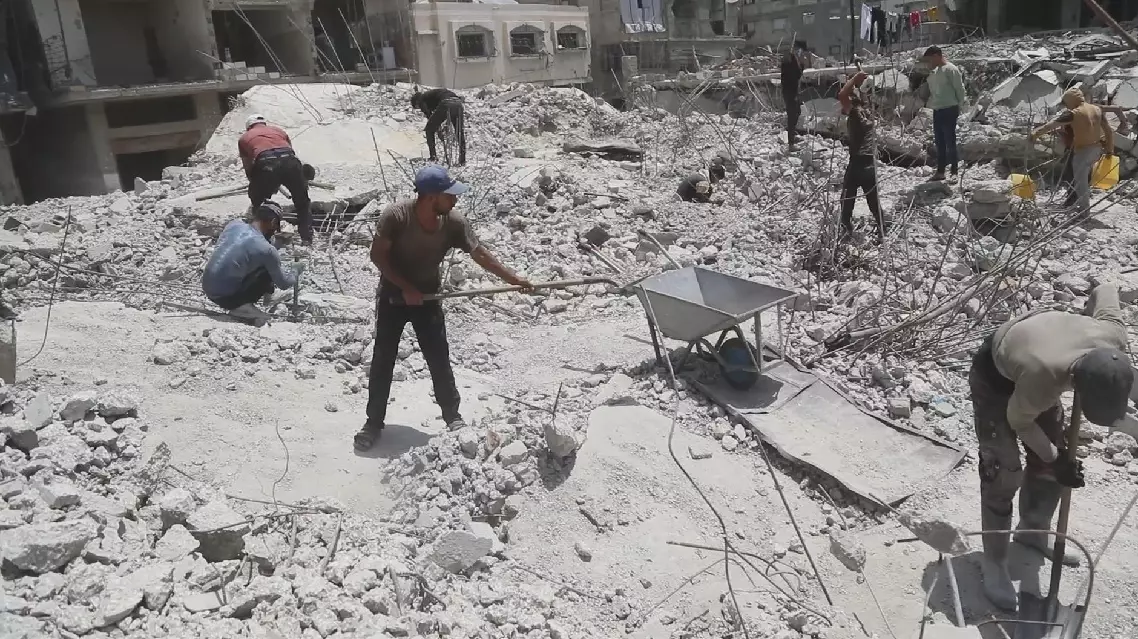
Gaza residents clear rubble by hand as large-scale reconstruction stalls
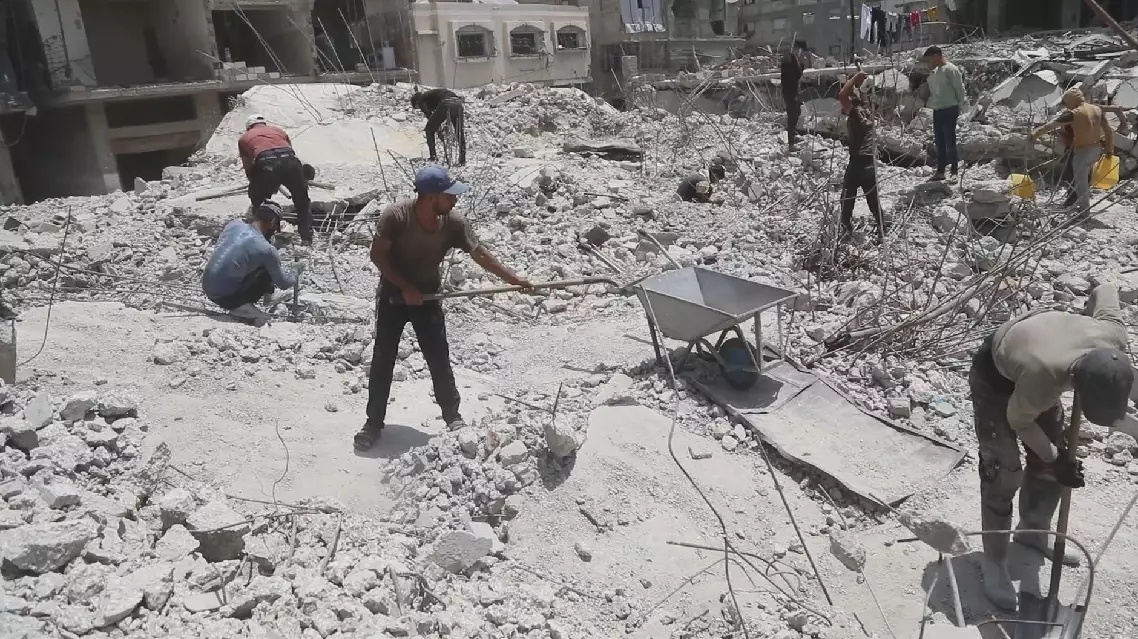
Gaza residents clear rubble by hand as large-scale reconstruction stalls