Multiple grain storage pits dating back more than 4,000 years were discovered in northwest China's Shaanxi Province, which offer fresh evidence for the study of early civilization in that area, according to archaeologists.
The pits were found at the Luojiahe cultural relic site in Chunhua County, Xianyang City, where archaeologists from the Xianyang Cultural Heritage Institute conducted excavations between March 2022 and Sept 2025.
By analyzing the features of the unearthed relics and artifacts with scientific methods, the team concluded that the site likely dates back approximately 4,800 to 4,200 years.
Preliminary surveys and explorations confirmed that the site covers a total area of 50,000 square meters, with the excavation area, located at the site's central zone, spanning approximately 14,200 square meters.
A total of 17 grain storage pits were unearthed at the site, all circular or oval and bag-shaped. Four of the pits contained carbonized grains of millet and other crops, along with preserved plant stems, indicating that they were once used for grain storage.
"We have collected over 1,000 samples and obtained over 800 carbonized plant samples, mainly millet and glutinous millet, in addition to rice and soybeans. The storage methods used are storing with ears intact, storing after threshing, and storing after husking," said Xie Gaowen, a research fellow from the Xianyang Cultural Heritage Institute.
There are remnants of woven crop straw in some pits, with the weaving technique closely resembling the patterns used in grain bundling.
"This is something we haven't discovered before when excavating sites from this period. It proves that this was a method for storing ears of grain at that time, using straw to make something akin to rope to tie up the crops," said Xie.
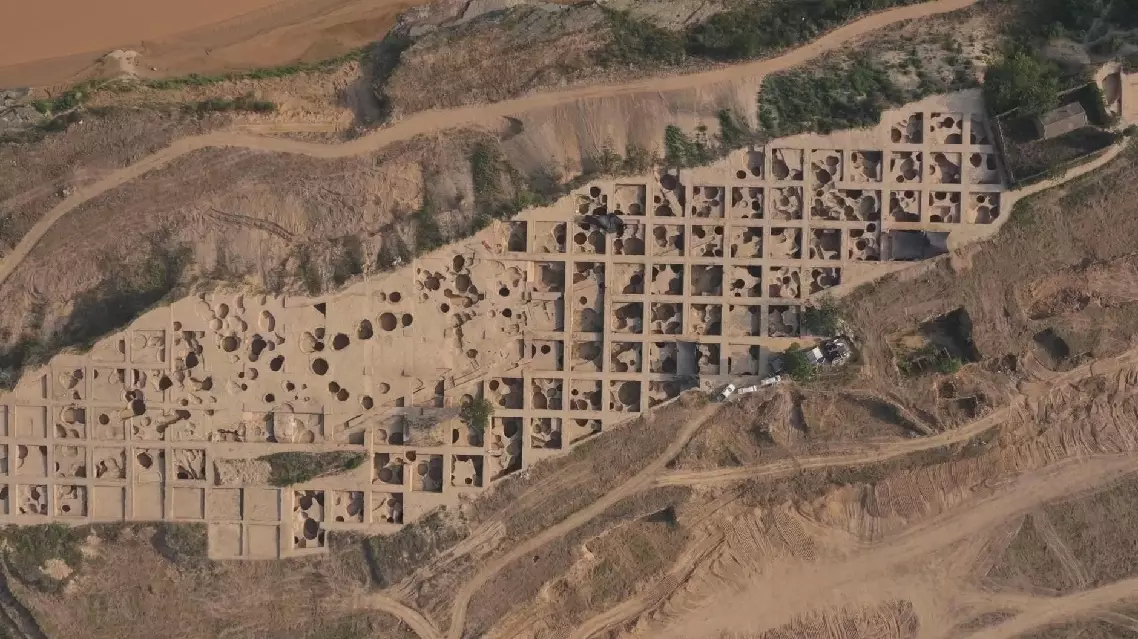
Prehistoric grain storage pits discovered in northwest China
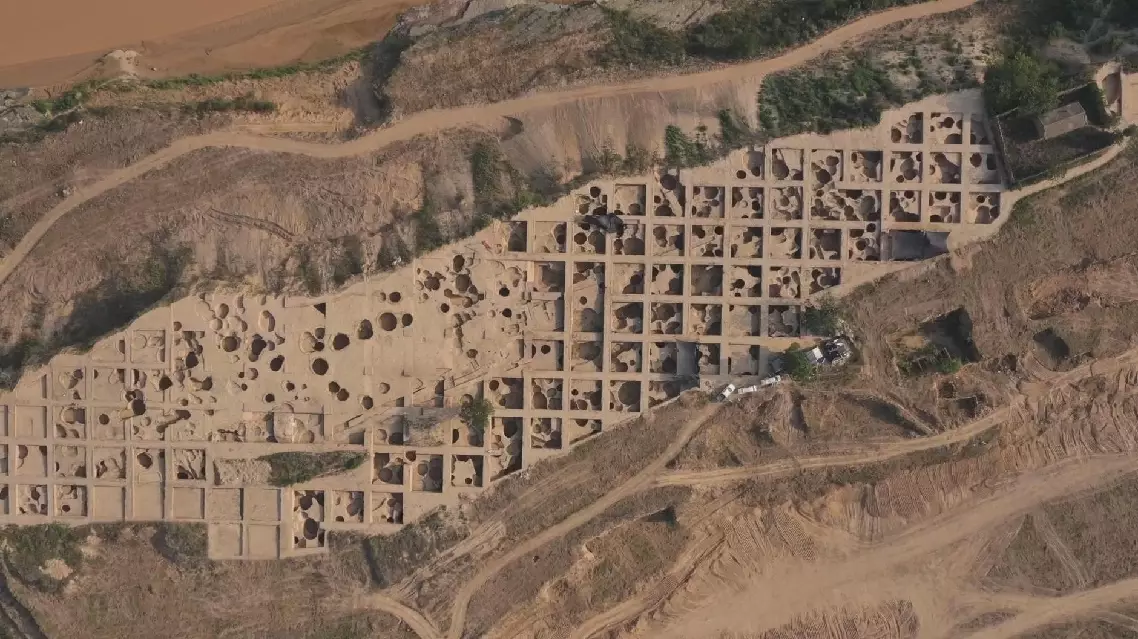
Prehistoric grain storage pits discovered in northwest China