An official with the European Union (EU) Chamber of Commerce has highlighted Hainan's development potential and European enterprises' interest in investing in the broader region as the tropical island is set to launch its special customs operations on December 18, turning the once laid-back holiday paradise into a world-class free trade port.
The island-wide special customs operations aim to eliminate barriers with a two-tiered customs system, described as "freer access at the first line, regulated access at the second line and free flow within the island."
The "first line" comprises eight ports of entry and refers to Hainan's connection with overseas markets. This will allow overseas goods to enter the island more conveniently, with most products benefiting from zero tariffs and expedited clearance processes.
The "second line," consisting of 10 ports, defines the customs boundary between Hainan and the mainland, where goods will undergo standard customs oversight to ensure fairness and prevent smuggling.
Fabian Blake, chairman of the EU Chamber of Commerce's South China Chapter, sees the new system as a key move to boost trade and attract global business, offering high development potential.
"There is a lot of willingness, of course, to develop the province and there is a lot of work being done by the government. We see some similarities between what Hainan has on offer and what the Greater Bay Area has on offer. And as such, there is an undeniable potential for the province, but of course it needs to be harnessed, it needs to be basically coming through sets of policies," he said.
The Greater Bay Area is a sprawling city cluster consisting of the two special administrative regions of Hong Kong and Macao and nine cities in Guangdong Province in south China.
Currently, many locally produced goods are able to enter the Chinese mainland from Hong Kong and Macao tariff-free. With the implementation of Hainan's new policies, similar benefits are expected to boost foreign investment in the island.
Specifically, the proportion of tariff lines with zero-tariff products in the Hainan Free Trade Port will increase from 21 percent to 74 percent and imported products that undergo at least 30 percent value-added processing in Hainan can enter the mainland tariff-free. Certain goods currently banned or restricted nationwide will enjoy open policies in Hainan.
The number of duty-free items in Hainan will increase from about 1,900 to around 6,600, marking a significant boost in openness.
The scope of eligible beneficiaries will be significantly expanded to include enterprises, public institutions, and private non-enterprise entities in the FTP with actual import needs.
"I think we can have, let's say, similar expectations to what our member companies are having in south China in that sense, like a great willingness from our member companies to reinvest in south China, regardless of the area. If Hainan has something which is on offer, that would be duly considered," Blake said.
He also emphasized that the EU Chamber of Commerce members hope for stronger synergy between Hainan and the Greater Bay Area and maintain high expectations for the region as a whole.
"I think we can refer maybe to the results of our business confidence survey that was published earlier this year. What we had noticed is that the ease of doing business in south China is a little bit higher than the national average. I think it's an encouraging sign to see that south China has really something attractive on offer," he said.
According to feedback from the chamber's members, EU businesses hope that in the future, the region will facilitate easier business relocation, cross-border money flows, and financing for small and medium enterprises.
Founded in 2000, the EU Chamber of Commerce in China now has more than 1,600 members in seven chapters operating in nine Chinese cities.
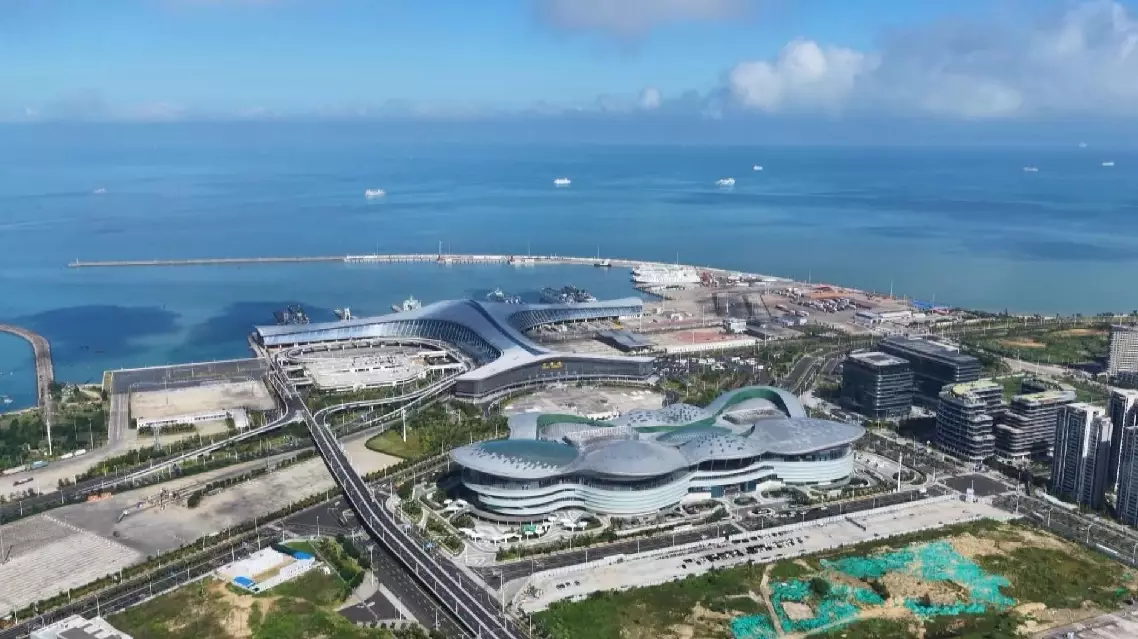
EU Chamber of Commerce sees renewed potential in Hainan after special customs operation