Chinese automaker Geely has officially launched the world's largest vehicle safety test facility in Ningbo City, east China's Zhejiang Province, providing the global automotive industry with efficient and reliable testing using groundbreaking technologies and the most comprehensive range of motor vehicle driving scenarios.
The Geely Safety Center features the world's longest indoor track for car crash test, which is nearly 300 meters long and which is capable of fully replicating real-world traffic collision scenarios. At the end of the track is a pioneering four-way rotating wall that enables efficient testing of various types of collision, including 100-percent and 50-percent frontal impacts, as well as small-overlap crashes.
"Previously, it usually took two days to prepare for a high-speed collision test. With this rotating and fixed collision wall, the time can be shortened to half a day, greatly improving the test efficiency," said Zhou Dayong, chief safety technology officer of Geely Auto.
The center also boasts a leading-edge system that can stimulate 264 weather scenarios such as rain, snow and fog, primarily for testing vehicles' active safety performance. The Indoor Environment Simulation Lab integrates meteorological and road data from over 50 countries,enabling researchers to conduct all-weather automotive testing just inside the center.
The center is also equipped with the world's largest wind tunnel for vehicle testing certified by Guinness World Records, capable of simulating real-road natural environments including extreme temperatures and high altitudes.
Geely has created a family of 60 test dummies, backed by an investment exceeding 200 million yuan (about 28.35 million U.S. dollars), covering all genders and age groups. They are used to collect data such as acceleration, displacement and force at the moment of collision, allowing high-precision acquisition of crash data and protection effects.
The THOR dummy, valued at approximately 12 million yuan each, represents the world's most advanced technology in this field. It features higher biological simulation with over 180 full-body sensors.
"It is currently the most expensive crash test dummy in the industry. The spatial displacement of each rib can be measured, so that data on the overall rib deformation can be obtained. The dummy incorporates highly advanced technology," said Wang Pengxiang, director of the Safety Technology Development Department at the Geely Research Institute.
In addition, given the growing concerns over the safety of intelligent new energy vehicles, Geely's vehicle cybersecurity test lab provides security tests on a vast amount of information across eight dimensions including network security, vulnerability mining, and AI security.
"Automobiles are global commodities that must meet the market access requirements worldwide. The Geely Safety Center has 27 types of testing functions, enabling it to conduct regulatory certifications for major global markets, including China, Europe, and the United States. Additionally, it provides comprehensive, forward-looking research and development verification for all core safety evaluation systems simultaneously. This is just like creating a 'global examination room' for every car model we produce for the world," said Li Chuanhai, vice president of Geely Auto and head of the Geely Research Institute.
According to Geely Auto's report on revenue in the first half of the year 2025, the company sold 1.409 million vehicles from January to June this year, a year-on-year increase of 47 percent. Among those sales, the number of electrical and other new energy ones exceeded 725,000 units, an increase of 126 percent year on year.
The brand has steadily expanded its overseas presence over recent years. The export says that sales exceeded 180,000 units in the first half of this year, with dealers and outlets spanning over 80 countries and regions.
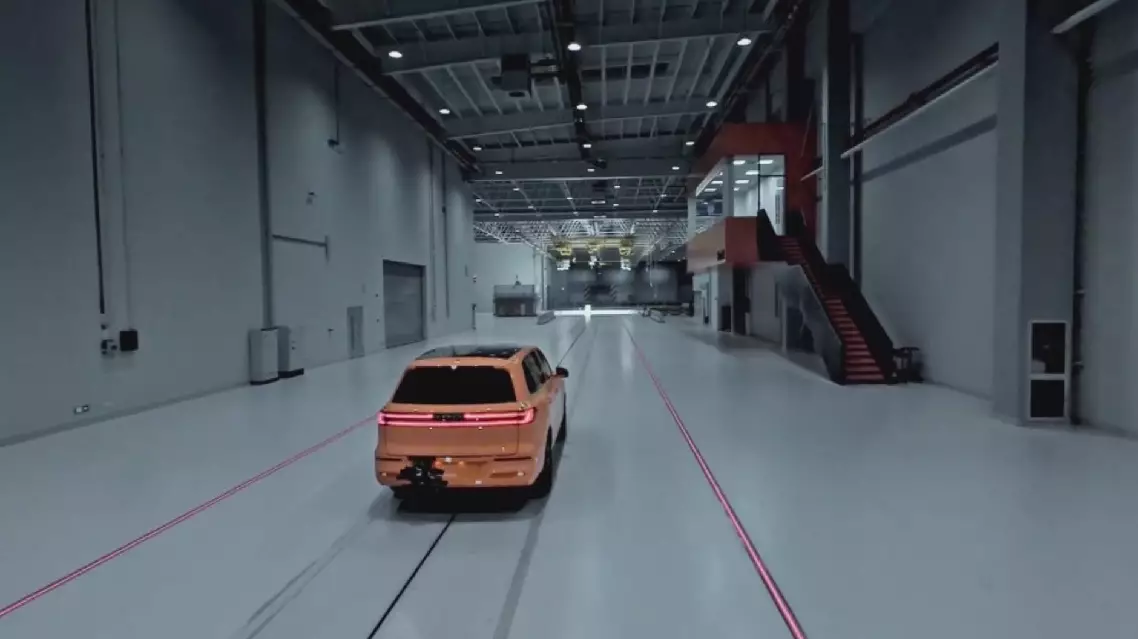
Chinese automaker Geely launches world's largest car safety test center