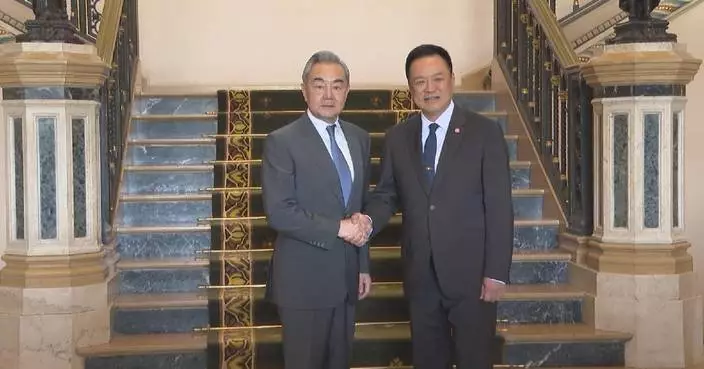
China's artificial intelligence (AI) industry has shown rapid growth so far this year, with that of the core AI industry expected to top a record one trillion yuan (about 141.75 billion U.S. dollars) by the end of 2025, according to China Academy of Information and Communications Technology (CAICT). Data from CAICT indicate that there has been a significant increase in the application of large AI models in the manufacturing sector since the beginning of this year, with the proportion of use cases rising from 19.9 percent last year to 25.9 percent this year, which drives a rapid growth in the AI industry as a whole. "In 2024, the scale of China's core AI industry exceeded 900 billion yuan, with the annual growth rate reaching 24 percent. In 2025, this figure is expected to exceed 1.2 trillion yuan with further acceleration in growth," said Wei Kai, head of the AI research institute at CAICT. To promote the application of AI in specific sectors, China has introduced its first high-performance training and inference service standards in the industry. "Currently, training and reasoning represent major scenarios for the AI industry, especially when the technology is used in a coordinated manner. These standards aim to enhance professional governance and raise the efficiency of resources utilization," said Chen Zhifeng, director of the cloud computing research department at China Electronics Standardization Institute. On the consumer front, the smart economy has been fostering new consumption scenarios and upgrading consumption structures. According to big data, in the first ten months of the year, the sales of AI-driven products such as smart glasses and smartwatches grew by 23.1 percent, playing a significant role in boosting consumption and stimulating economic growth. "Establishing a public service platform for large AI models can effectively promote the open sharing of model data algorithms. The value added of China's 'Three New' Economy -- a collection of economic activities with new industries, new business formats, and new business models -- has surpassed 24 trillion yuan," said Zhang Yunming, Chinese Vice Minister of Industry and Information Technology.
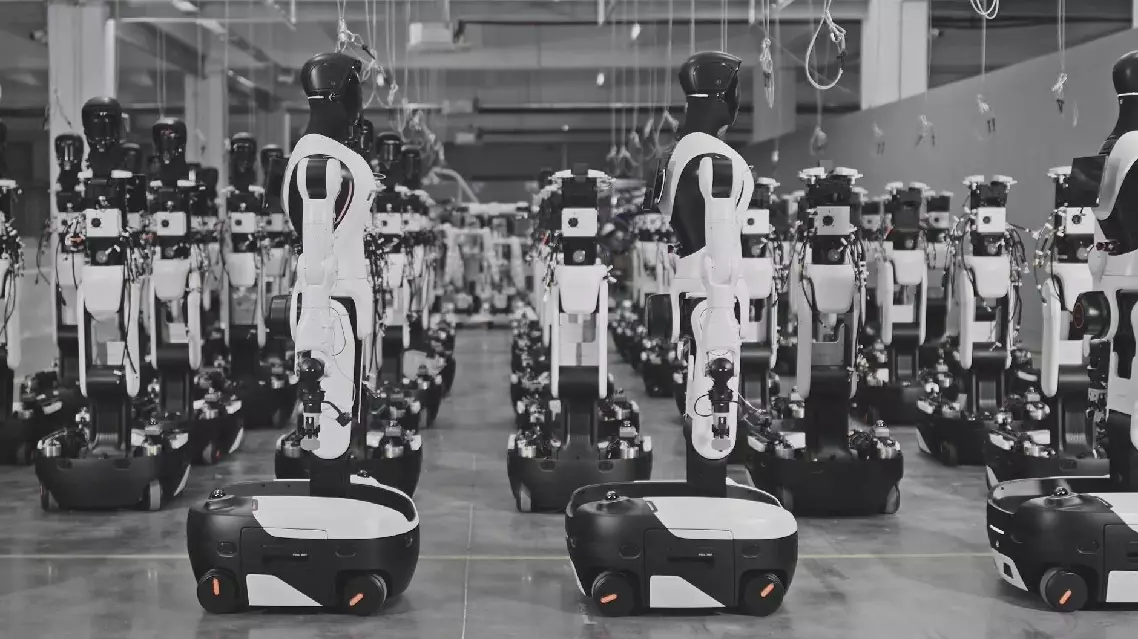
China's AI industry scale set to hit 1 trln yuan in 2025
China stands ready to strengthen strategic communication with the Gulf Cooperation Council (GCC), safeguard common interests, and jointly respond to a turbulent and changing international landscape, so as to make new contributions to the collective self-reliance of the Global South, Chinese Foreign Minister Wang Yi said in Riyadh, Saudi Arabia, on Sunday.
During a meeting with Secretary General of the GCC Jasem Mohamed Albudaiwi, Wang, also a member of the Political Bureau of the Communist Party of China Central Committee, said that the GCC is an important sub-regional organization in the Middle East which, over the years, has effectively promoted unity and cooperation among Gulf countries and pursued common development, with its international influence steadily increasing.
He noted that China established contacts with the GCC at an early stage after the organization's founding, and the development of China-GCC relations has largely kept pace with China's reform and opening up. The two sides have become companions on the path to development and revitalization, as well as good partners for win-win cooperation.
At the end of 2022, Chinese President Xi Jinping and leaders of GCC countries gathered in Riyadh for the first China-GCC Summit, which elevated China-GCC relations to a new level and opened up new prospects and drew a new blueprint for their future development, he said.
Wang added that China supports the GCC in enhancing strategic autonomy, strengthening unity and cooperation, practicing multilateralism, and advancing GCC integration. He expressed the hope that both sides will continue to firmly support each other on issues involving their respective core interests.
China is willing to work with GCC countries to advance building the Belt and Road Initiative, deepen mutually beneficial cooperation in areas such as trade and investment, strengthen people-to-people exchanges and cultural interactions, and consolidate the public support for China-GCC friendship, he said.
Wang noted that China is also ready to strengthen multilateral coordination with GCC countries to implement the four major global initiatives proposed by President Xi, promote common development of the Global South, and jointly build a community with a shared future for mankind. As a responsible major country and a permanent member of the UN Security Council, China will continue to play a constructive role in promoting the resolution of regional hotspot issues and safeguarding peace and stability in the Middle East.
He pointed out that negotiations on the China-GCC Free Trade Agreement have lasted for more than 20 years and that conditions are now basically ripe, making it time to take the final decisive step. At a time when protectionism is on the rise, unilateralism is prevalent, and free trade is under strain, the conclusion of a China-GCC free trade agreement would send a strong signal in defense of multilateralism.
For his part, Albudaiwi said that GCC countries enjoy a profound friendship with China, which has always been a trusted and reliable strategic partner, and that GCC-China relations have been operating at a high level.
He stressed that the successful convening of the first China-GCC Summit in Saudi Arabia in 2022, attended by President Xi and GCC leaders, was of landmark significance.
The GCC is willing to work with China to actively implement the important consensus reached by leaders of both sides, consolidate political mutual trust, strengthen exchanges and dialogue, deepen cooperation in energy, innovation and other fields under the framework of jointly building the Belt and Road Initiative, and enhance people-to-people and cultural exchanges to achieve mutual benefit and win-win outcomes, he said.
Albudaiwi added that the GCC looks forward to the early conclusion of the China-GCC Free Trade Agreement and has high expectations for the second China-Arab States Summit and the second China-GCC Summit to be held in China next year. The GCC stands ready to strengthen communication with China to ensure more outcomes from the summits.
He also said that the GCC speaks highly of China's just position on regional issues such as the Palestinian question and its positive efforts to ease regional tensions, including promoting reconciliation between Saudi Arabia and Iran, adding that the GCC will continue to strengthen coordination with China on international and regional affairs to effectively safeguard common interests.
China to strengthen strategic communication with GCC, safeguard common interests: FM