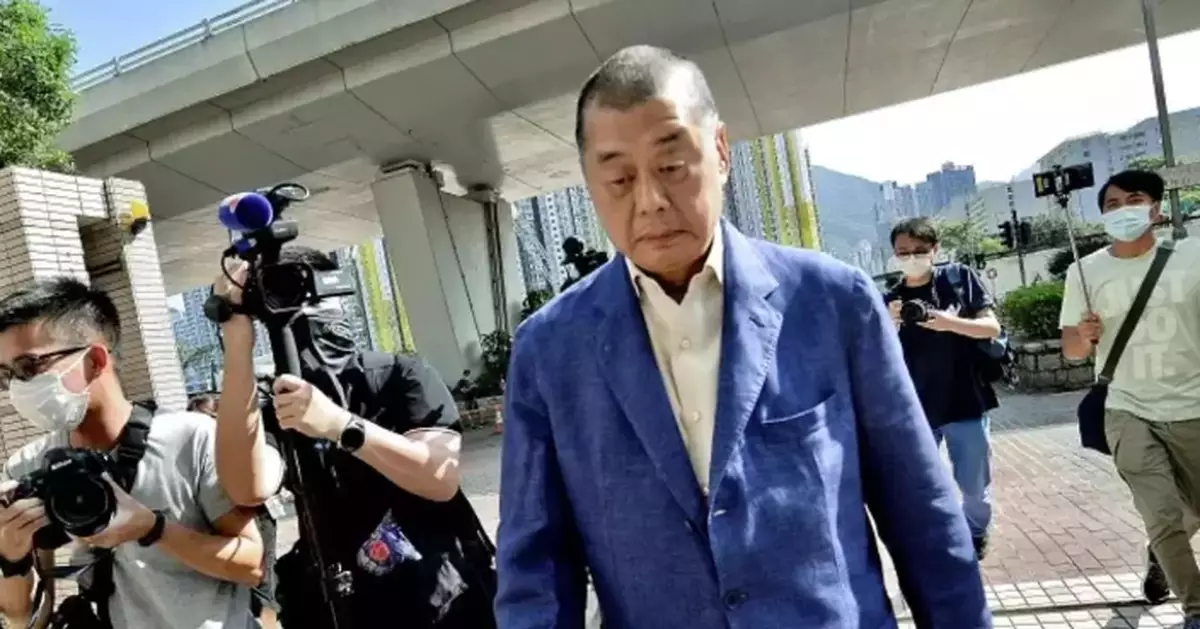
Court of First Instance finds Lai Chee-ying guilty of "conspiracy to collude with foreign country or with external elements to endanger national security" and "conspiracy to publish seditious publications"
The Court of First Instance of the High Court today (December 15) delivered the verdict in the case of Lai Chee-ying and three companies relating to Apple Daily involving three charges of offences endangering national security. The charges included "conspiracy to collude with a foreign country or with external elements to endanger national security" (contrary to Article 29 of the Hong Kong National Security Law (HKNSL) and sections 159A and 159C of the Crimes Ordinance), and "conspiracy to print, publish, sell, offer for sale, distribute, display and/or reproduce seditious publications" (contrary to sections 10, 159A and 159C of the Crimes Ordinance). The court convicted Lai Chee-ying and the three defendant companies of all charges. The Hong Kong Special Administrative Region (HKSAR) Government welcomes the court's conviction.
The court adjourned the case of Lai Chee-ying and the three defendant companies, as well as the related cases of eight people who previously pleaded guilty, to January 12, 2026, for mitigation, and the date for sentencing will be announced afterwards.
The Chief Executive, Mr John Lee, stated, "The court found Lai Chee-ying and the three companies relating to Apple Daily guilty, confirming that Lai Chee-ying has indeed used Apple Daily to collude with foreign or external forces to endanger national security.
"Lai Chee-ying has long been using his media outlet, Apple Daily, to wantonly create social conflicts, incite social antagonism, incite hatred, glorify violence and openly beg for foreign sanctions against China and the HKSAR, attracting external interference. He has harmed the fundamental interests of the country and the well-being of the people of Hong Kong; his actions are shameful and his intentions malicious. His wanton crimes were committed in full view of the public, and the evidence is compelling. The court's conviction demonstrates that righteousness is upheld by the law and the core values of Hong Kong are safeguarded. The law never allows anyone, regardless of profession or background, to harm their country and compatriots under the guise of human rights, democracy, and freedom. The HKSAR has a responsibility to safeguard national security and will resolutely combat acts and activities endangering national security. Hong Kong is underpinned by the rule of law, and the HKSAR Government is committed to ensuring that laws are observed and strictly enforced to bring offenders to account. We will do our utmost to prevent, suppress and impose punishment for acts and activities endangering national security to fulfil this perfectly justified responsibility."
Mr Lee emphasised, "The HKSAR Government's stance is unequivocal. The Judiciary acts confidently, undaunted by any threats. We will resolutely fulfil the responsibility of safeguarding national security."
Fair and impartial adjudication by the court
A spokesman for the HKSAR Government said, "The court's reasons for verdict in this case are 855 pages long, fully open for public inspection, and meticulously explain the court's analysis of the relevant legal principles and evidence, as well as the reasons for convicting Lai Chee-ying and the three defendant companies. The court clearly pointed out in the reasons for verdict that Lai Chee-ying was not on trial for his political views or beliefs. The court's verdict of guilty is reasoned and well founded, and fully demonstrates that the court arrived at the verdict in strict accordance with the laws and evidence, free from any interference, and entirely devoid of political considerations."
The court clearly pointed out in its reasons for verdict that Lai Chee-ying had harboured his resentment and hatred of the People's Republic of China (PRC) for many years. Long before the enactment of the HKNSL, Lai Chee-ying had already been applying his mind to what leverage the United States (US) could use against the PRC. When the protests in 2019 metamorphosed into a resistance movement, Lai Chee-ying and Apple Daily were among those in the forefront. Ample documentary evidence in the case supported the prosecution witnesses' testimony as credible and reliable, including Lai Chee-ying's messages on an instant messaging application, which proved that Mark Simon worked hard for him to arrange meetings with senior US government officials, congress members and politicians, where Lai Chee-ying expressed requests to impose sanctions or blockade or to engage in other hostile activities against the PRC and the HKSAR. Lai Chee-ying also instructed the senior management of Apple Daily to initiate a one-person-one-letter campaign to solicit the US to impose sanctions on the PRC.
The court pointed out that after the enactment of the HKNSL, although Lai Chee-ying's conduct in requesting sanctions was carried out in a less explicit way, his only intent, whether pre- or post-HKNSL, was to seek the downfall of the Communist Party of China, even though the ultimate cost was the sacrifice of the interests of the people of the PRC and the HKSAR. The court found that Lai Chee-ying's evidence when testifying was at times contradictory, inconsistent, evasive and unreliable. The court rejected his evidence. Lai Chee-ying was the mastermind of the conspiracies charged in all three counts, and his actions show his deliberate intent to pursue these conspiracies, which constituted a threat and harm to the national security in the PRC and the HKSAR.
Slanders and attacks by external forces are doomed to failure
The spokesman said, "The HKSAR Government noted that throughout the enforcement, prosecution and trial stages of Lai Chee-ying's case, there were smears and attacks as well as interference and pressures from all sides, especially external forces led by the US and some Western countries. They continuously smeared the law enforcement actions and judicial procedures of the HKSAR. They also, through despicable political manipulations and lies, attempted to glorify the criminal acts of Lai Chee-ying and his syndicate, and sought to impose so-called 'sanctions' to intimidate judges, prosecutors, law enforcement officers and other officials of the HKSAR Government, in an attempt to interfere with the court to exercise judicial power in accordance with the law and engage in acts of perverting the course of justice and undermining the rule of law. Any reasonable person who can distinguish between right and wrong, upon carefully examining the reasons for verdict handed down by the court today, would agree that the court adjudicated the case fairly and impartially, and the despicable attempt of external forces is futile and doomed to failure."
The spokesman emphasised, "The HKSAR Government must refute strongly against malicious attacks by external forces. First, the court's trial is open, fair and just. The court conducted a total of 156 days of public hearings, having considered up to 2 220 exhibits, over 80 000 pages of documents, and evidence from 14 prosecution witnesses. Lai Chee-ying himself even testified in court for 52 days. These are the testaments to the fact that Lai Chee-ying and other defendants were found guilty only after a fair trial.
"Some individuals with ulterior motives have conflated the criminal acts in this case with freedom of the press, while external forces have even played up different cases to vilify the HKSAR. In spite of that, the fact remains that Hong Kong citizens enjoy freedom of the press and freedom of speech as protected under the Basic Law and the Hong Kong Bill of Rights. In fact, the HKNSL and the Safeguarding National Security Ordinance (SNSO) clearly stipulate that human rights shall be respected and protected in safeguarding national security. The rights and freedoms, including the freedoms of the press, of speech and of publication, enjoyed by Hong Kong people under the Basic Law and the provisions of the International Covenant on Civil and Political Rights (ICCPR) and the International Covenant on Economic, Social and Cultural Rights as applied to the HKSAR, are protected in accordance with the law. However, like all other places in the world, journalists, like everyone else, have an obligation to abide by all the laws. According to the principles established by Article 19 of the ICCPR, the European Convention on Human Rights and relevant jurisprudence, when the media and journalists publish opinions, information and articles, they must observe and discharge 'special duties and responsibilities', including the protection of national security and public order; journalists must, in accordance with the tenets of 'responsible journalism', act in good faith on an accurate factual basis and provide reliable and precise information, so as to be entitled to the protection of freedom of speech and press freedom.
"Besides, the open hearing of the case revealed that Lai Chee-ying repeatedly colluded with foreign forces to beg for sanctions or blockade, or engage in hostile activities against the Central Authorities and the HKSAR Government. Lai Chee-ying's case has absolutely nothing to do with press freedom. The defendants have merely used news reporting as a pretext for years to commit acts that harmed the country and Hong Kong."
Lai Chee-ying receives appropriate treatment and medical care during detention
"External forces have also consistently disregarded objective facts and wantonly smeared the Correctional Services Department (CSD), including repeatedly alleging that Lai Chee-ying did not receive appropriate medical care or religious services in prison and has consistently been subjected to so-called 'solitary confinement', attempting to use these fabricated accusations to influence the court. The HKSAR Government has refuted multiple times that the CSD is committed to ensuring that the custodial environment is secure, safe, humane, appropriate and healthy for the persons in custody (PICs), regardless of their identities. The CSD has also adopted the above-mentioned arrangements when handling matters related to Lai Chee-ying, which are no different from those applicable to other PICs.
"Regarding medical services, what Lai Chee-ying received in custody is adequate and comprehensive. The CSD provides PICs with medical services delivered by the Department of Health (DH) and the Hospital Authority (HA). In general, examination and treatment are conducted by medical staff stationed in the CSD facilities. Based on the needs of individual PICs, cases will be referred to specialist departments under the HA for further follow-up. Professional medical staff provide the most suitable healthcare services to patients, and all PICs are treated equally. Senior counsel representing Lai Chee-ying also clearly informed the court that the correctional institution arranged daily medical check-ups for Lai Chee-ying and that Lai Chee-ying had made no complaints about the medical services received while in custody. The court commended the CSD for its work.
"Regarding religious services, the CSD arranges dedicated chaplains to provide religious services, including the receipt of Holy Communion, to Lai Chee-ying in accordance with his wishes. Regarding the so-called solitary confinement, the Commissioner of Correctional Services is empowered to make arrangements under the Prison Rules that the prisoner should not associate with other prisoners. One of the purposes of such arrangements is to ensure the personal safety and well-being of the PICs. The arrangements for Lai Chee-ying have all along been made at his own request and approved by the CSD after considering all relevant factors in accordance with the law.
"The CSD has also put in place established mechanisms, including regular visits from Justices of the Peace who inspect the prisons, to ensure the rights of PICs are protected. PICs who feel aggrieved by any treatment they receive could lodge a complaint through various channels within and outside the CSD, including the Ombudsman."
Staying on guard against national security risks
"During the trial of Lai Chee-ying's case, external hostile forces had been using this case to smear and attack the HKSAR Government's performance of the important duty of safeguarding national security in accordance with the law, even going so far as to impose so-called 'sanctions' on officials of the Central Authorities and the HKSAR Government. Meanwhile, anti-China and destabilising elements who have absconded overseas, including specified absconders and wanted persons, continued to engage in acts and activities endangering national security and make clamour everywhere with the backing of external forces. Moreover, external forces and their agents continued to incite the public's hatred towards the Central Authorities and the HKSAR Government through their acts of 'soft resistance'. These reflect the HKSAR is still facing national security risks, and we must not let our guard down against such risks.
"Safeguarding national security is an ongoing and endless commitment. Today, geopolitical risks continue to escalate; external forces, as well as anti-China and destabilising forces, keep posing national security risks to the HKSAR. The HKSAR Government will steadfastly safeguard national sovereignty, security and development interests, and improve the relevant legal system and enforcement mechanisms under the robust protection of the HKNSL and the SNSO, so as to address the evolving national security risks and challenges more effectively, ensuring high-quality development with high-level security, and the steadfast and successful implementation of 'one country, two systems'."
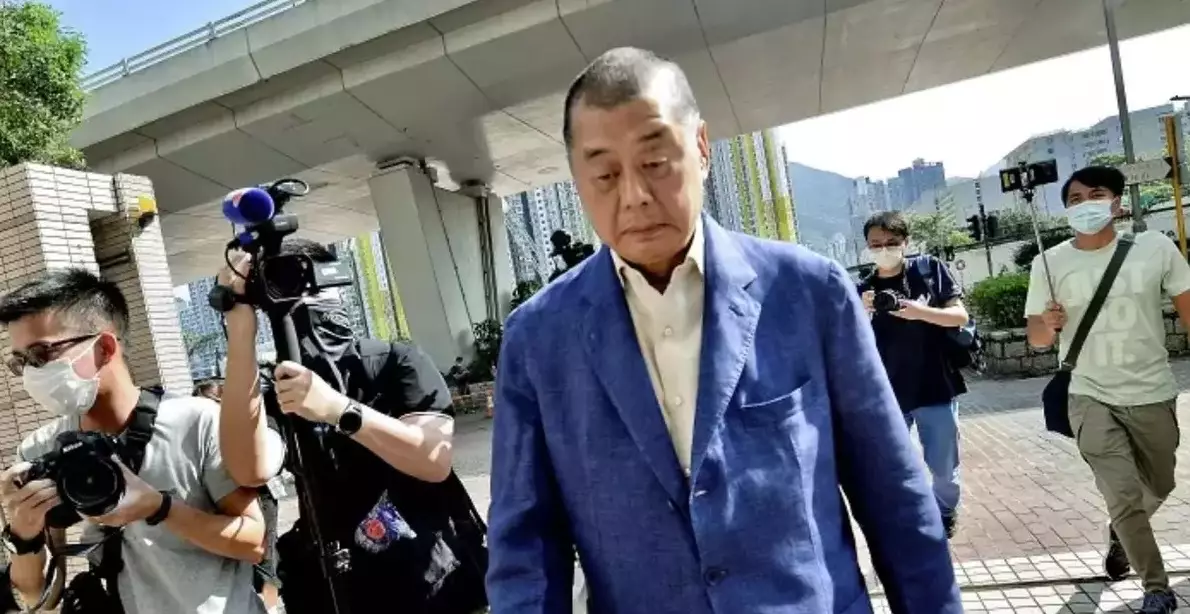
Lai Chee-ying, Photo source: Sing Tao Daily