NEW YORK (AP) — Leading Jewish groups in the United States are urging all Jewish organizations to ratchet up security measures at public events — including restrictions on access — following the deadly mass shooting that targeted a Hanukkah celebration on a popular Australian beach.
The groups — including three which specialize in security issues — said Jewish public events in the coming days should be open only to people who had been screened after preregistering.
“Provide details of location, time, and other information only upon confirmed registration,” the groups’ advisory said. “Have access control (locks and entrance procedures) to only allow known, confirmed registrants/attendees into the facility/event.”
Coinciding with this urgent appeal for increased precautions, some rabbis said their synagogues would proceed with large-scale celebrations, intended to demonstrate resilience. The mass shooting is the latest reminder of the Jewish community's longstanding reality of having to factor security into religious practice.
“This week, let us choose Jewish joy, communal strength, and courageous hope,” said a message posted by Temple Beth Sholom, one of the largest synagogues in the Miami area. "We invite every member of our family ... to join us this week as we celebrate Chanukah. Let us gather to share the warmth of the candles and reaffirm our unbreakable connection.”
Similar sentiments were expressed by Rabbi Jeffrey Myers of Pittsburgh’s Tree of Life Congregation, a survivor of the 2018 attack by an antisemitic gunman that killed 11 worshippers at the synagogue.
“Hanukkah is supposed to be a time of light, celebrating the resilience of our people,” Myers said. “In the face of antisemitism and violence, my prayer is that we don’t let the fear win but instead lean into our Jewishness and practice our tradition proudly.”
At least 15 people died in Sunday's attack, which fueled criticism that Australian authorities were not doing enough to combat a surge in antisemitic crimes. On Monday, Australia's leaders promised to overhaul already-tough gun control laws after the targeted attack on Sydney’s Bondi Beach
Among those killed was Eli Schlanger, assistant rabbi at Chabad of Bondi and an organizer of the Hanukkah event, according to Chabad, an Orthodox Jewish movement that runs outreach worldwide and is known for its public menorah lightings.
Just a year earlier, according to Chabad, Schlanger had urged his fellow Jews to be uncowed in the face of rising antisemitism, voicing this message, “Be more Jewish, act more Jewish and appear more Jewish.”
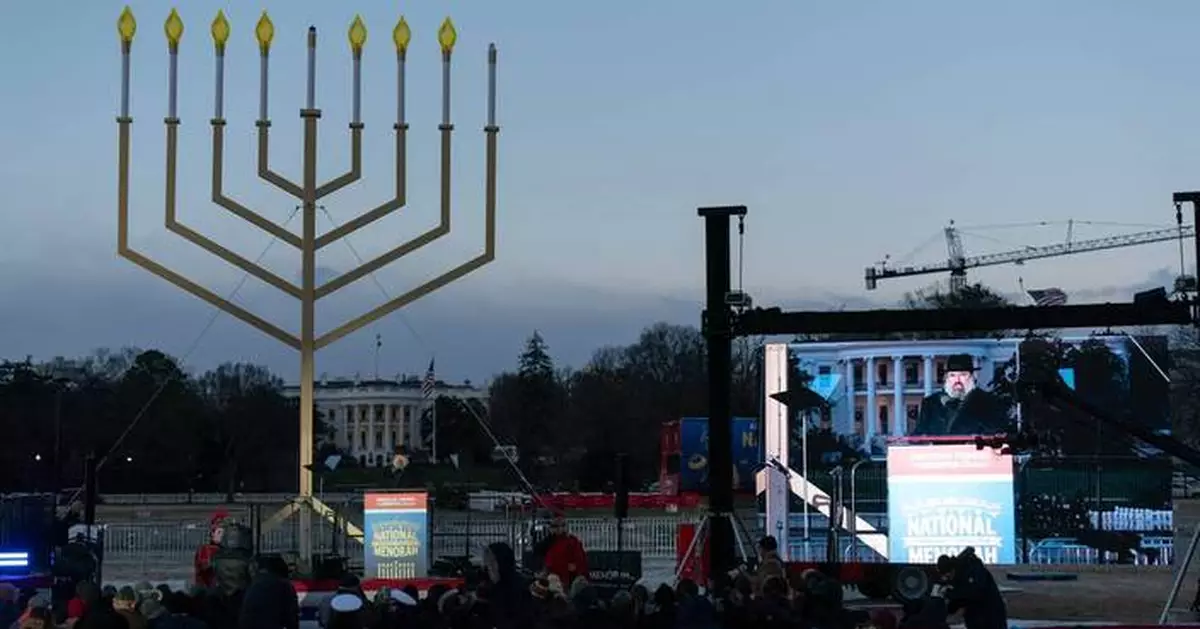
Chabad.org said Chabad centers worldwide are going ahead with thousands of planned public menorah lightings and community Hanukkah celebrations “while taking greater security precautions — calling on the Jewish community to drown out hate with greater light and goodness while mourning those lost and wounded in Sydney.”
The Sydney shooting reinforced the importance of these public celebrations, said Rabbi Chaim Landa with Chabad of Greater St. Louis. The organization proceeded with its planned Sunday night menorah lighting near the Gateway Arch but with a greater police presence. He believes it is what Schlanger would have wanted.
“There’s a couple pieces to this. There’s making sure that it’s safe, and there’s also making sure that people feel safe. And we want both,” said Landa, who estimates close to 300 people attended the outdoor event in below-freezing temperatures.
“People wanted to come out, and they wanted to be together. So it’s very important that people feel that they can do that, and that’s what we want to ensure."
On Monday night, at the spot earlier this year where a man hurled fiery Molotov cocktails at people demonstrating in support of Israeli hostages in Gaza, members of the Jewish community in Boulder, Colorado, were set to light a dramatic new menorah.
The theme of the ceremony is “flames of love” -- in response to the June 1 attack that killed an 82-year-old woman and injured 12 others.
Yitzchok Moully, a rabbi and artist, said he was inspired to create a 7-foot-tall (2-meter), stainless steel menorah for the community in Boulder following the firebombing.
“We are here and we’re standing strong and we’re not cowering in the darkness,” said Moully, who is originally from Melbourne, Australia.
In a speech delivered after the Australia attack, the president of the largest branch of Judaism in North America elaborated on the mix of dismay and determination being experienced through the Jewish community.
“We are thinking about security and how to live openly and safely as Jews — asking questions that are newer to us but would have been all too familiar to generations of our ancestors,” said Rabbi Rick Jacobs of the Union for Reform Judaism.
“We need to ask these hard questions. We need to be smart about security and protecting ourselves and our fellow Jews — whether within the synagogue walls, or when we walk down the street wearing a kippah,” he added. “But the spirit of the defiant Maccabees is also part of the Hanukkah story. Our Jewish community will not go into hiding. We are proud Jews and will remain so even as we make the security of our Jewish community a primary obligation.”
Jacobs referred to the Jewish tradition of placing the Hanukkah menorah in a window for others to see.
“But in the Babylonian Talmud we are taught that in a time of danger, we do not do that,” Jacobs said. “We have been living in a time of growing danger for several years now. And for too many Jews, putting a menorah in the window is too dangerous.”
Alon Shalev, a research fellow at the Shalom Hartman Institute in Jerusalem, argued that Jews — following th attack — should be bolder in boosting their public profile.
“When Jews are attacked for being visibly Jewish, the instinct to retreat is understandable — but it is precisely the wrong response," he told The Associated Press via email.
“Jewish safety in democratic societies depends on open, shared civic affirmation, supported by political and community leaders and by fellow citizens, not on retreat behind closed doors,” he added. "Stepping into the public square and normalizing Jewish presence is how we defend ourselves.”
AP religion news editor Holly Meyer in Nashville, Tennessee, and AP reporter Colleen Slevin in Denver contributed.
Associated Press religion coverage receives support through the AP’s collaboration with The Conversation US, with funding from Lilly Endowment Inc. The AP is solely responsible for this content.
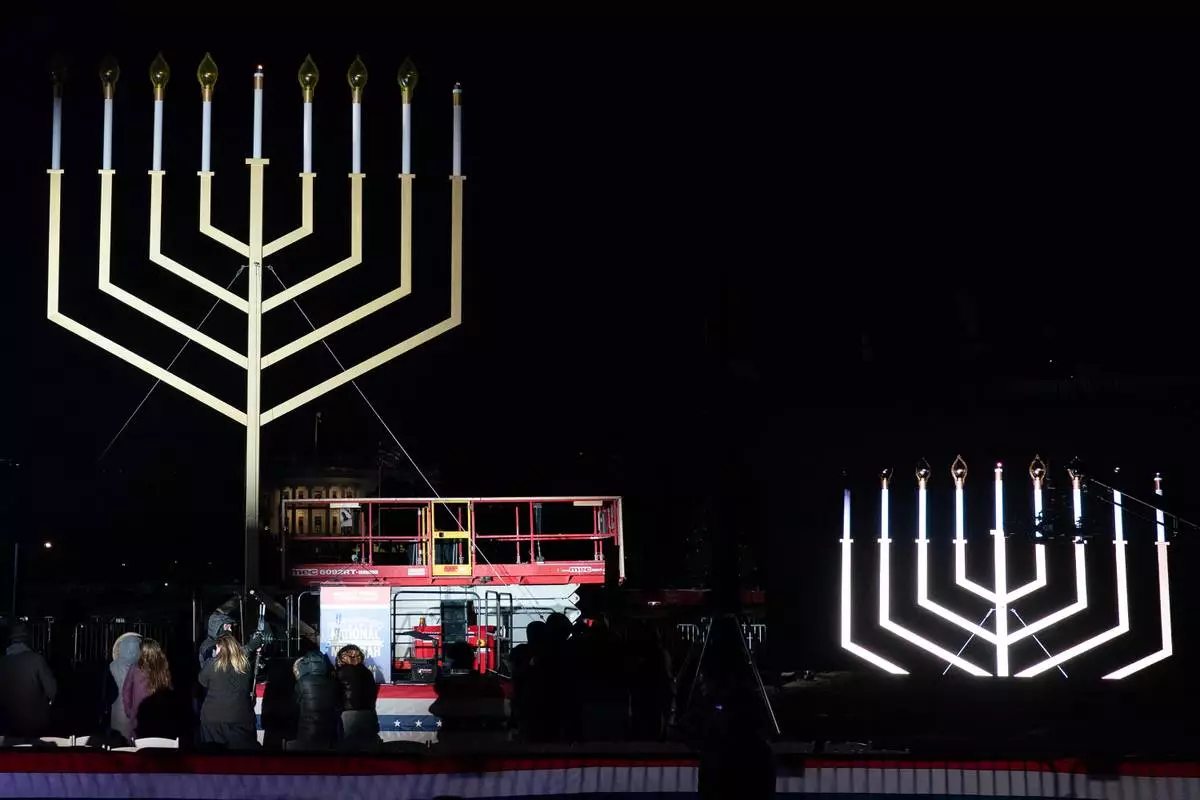
People look at the Menorah during the annual National Menorah Lighting in celebration of Hanukkah, on the Ellipse near the White House in Washington, Sunday, Dec. 14, 2025. (AP Photo/Jose Luis Magana)
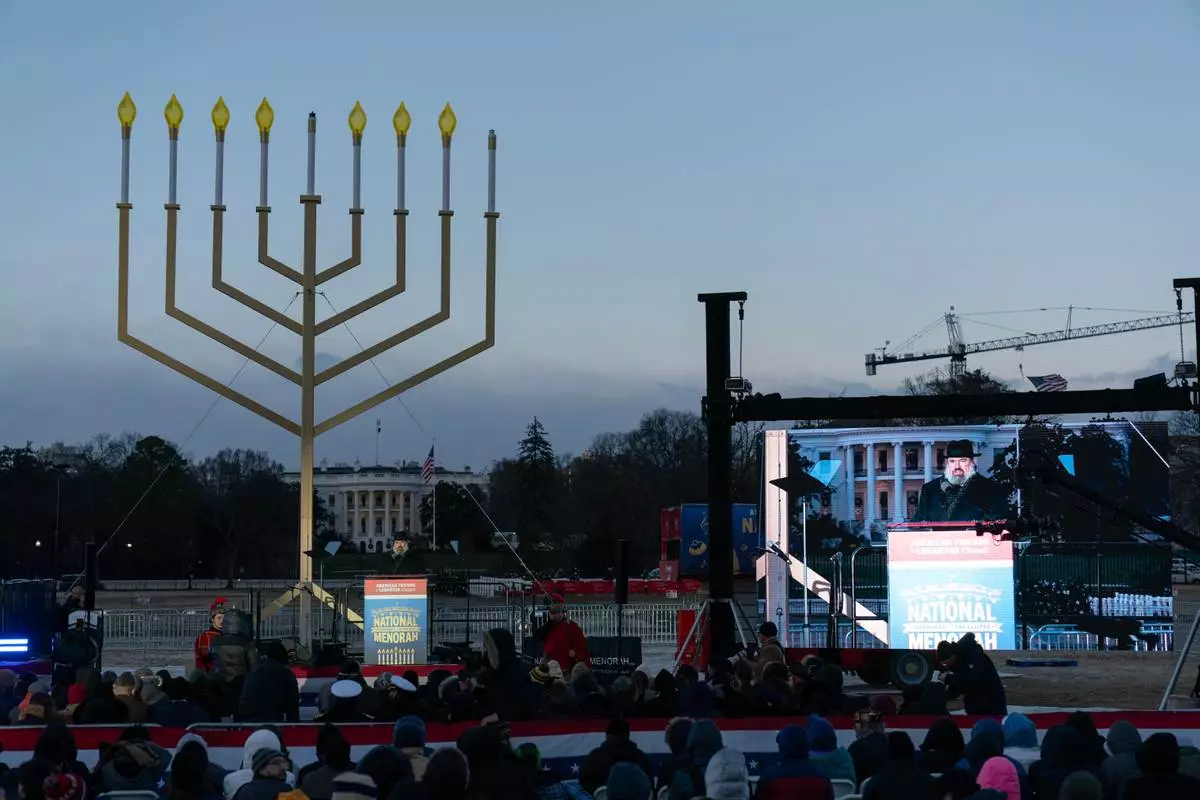
Rabbi Levi Shemtov speaks to the crowd before he lights the Menorah during the annual National Menorah Lighting in celebration of Hanukkah, on the Ellipse near the White House in Washington, Sunday, Dec. 14, 2025. (AP Photo/Jose Luis Magana)
The Virginia Supreme Court on Friday struck down a voter-approved Democratic congressional redistricting plan, delivering another major setback to the party in a nationwide battle against Republicans for an edge in this year's midterm elections.
The court ruled 4-3 that the state's Democratic-led legislature violated procedural requirements when it placed the constitutional amendment on the ballot to authorize the mid-decade redistricting. Voters narrowly approved the amendment April 21, but the court's ruling renders the results of that vote meaningless.
Writing for the majority, Justice D. Arthur Kelsey wrote that the legislature submitted the proposed constitutional amendment to voters “in an unprecedented manner.”
“This violation irreparably undermines the integrity of the resulting referendum vote and renders it null and void," he wrote.
Democrats had hoped to win as many as four additional U.S. House seats under Virginia's redrawn U.S. House map as part of an attempt to offset Republican redistricting done elsewhere at the urging of President Donald Trump. That ruling, combined with a recent U.S. Supreme Court decision severely weakening the Voting Rights Act, has supercharged the Republicans' congressional gerrymandering advantage heading into this year's midterm elections.
Richard Hudson, chairman of the National Republican Congressional Committee said the ruling was another sign of GOP momentum heading into the midterms.
"We’re on offense, and we’re going to win,” he said in a statement.
Don Scott, the Democratic speaker of the Virginia House of Delegates, said Democrats respect the court’s opinion but lamented that it overturned the will of the voters: “They voted YES because they wanted to fight back against the Trump power grab.”
Suzan DelBene, chairwoman of the Democratic Congressional Campaign Committee, criticized the court majority for what she said was a decision that “cast aside the will of the voters,” but she said the people will have the final say.
“In November, they will, and they’ll power Democrats to the House majority,” she said in a statement.
Legislative voting districts typically are redrawn once a decade after each census to account for population changes. But Trump started an unusual flurry of mid-decade redistricting last year when he encouraged Republican officials in Texas to redraw districts in a bid to win several additional U.S. House seats and hold on to their party's narrow majority in the midterm elections.
California responded with new voter-approved districts drawn to Democrats' advantage, and Utah's top court imposed a new congressional map that also helps Democrats. Meanwhile, Republicans stand to gain from new House districts passed in Florida, Missouri, North Carolina, Ohio and Tennessee. They could add even more after the U.S. Supreme Court's ruling in the Voting Rights Act case, which has prompted some other Republican states to consider redrawing their maps in time for this year’s elections.
Virginia currently is represented in the U.S. House by six Democrats and five Republicans who were elected from districts imposed by a court after a bipartisan redistricting commission failed to agree on a map after the 2020 census. The new districts could have given Democrats an improved chance to win all but one of the state's 11 congressional seats.
The Supreme Court's majority was critical of the state’s redrawing of the congressional maps to benefit one political party. Those justices noted that 47% of the state’s voters supported GOP congressional candidates in 2024 but the new map could result in Democrats making up 91% of the state’s House delegation.
Under the Democratic-drawn map, five districts would have been anchored in the Democratic stronghold of northern Virginia, including one stretching out like a lobster to consume Republican-leaning rural areas. Revisions to four other districts across Richmond, southern Virginia and Hampton Roads would have diluted the voting power of conservative blocs in those areas. And a reshaped district in parts of western Virginia would have lumped together three Democratic-leaning college towns to offset other Republican voters.
The state Supreme Court’s seven justices are appointed by the state legislature, which has toggled back and forth between Democratic, Republican and split control over recent years. Legal experts say the body doesn’t have a set ideological profile
The case before the court focused not on the shape of the new districts but rather on the process the General Assembly used to authorize them.
Because the state’s redistricting commission was established by a voter-approved constitutional amendment, lawmakers had to propose an amendment to redraw the districts. That required approval of a resolution in two separate legislative sessions, with a state election sandwiched in between, to place the amendment on the ballot.
The legislature’s initial approval of the amendment occurred last October — while early voting was underway but before it concluded on the day of the general election. The legislature’s second vote on the amendment occurred after a new legislative session began in January. Lawmakers also approved a separate bill in February laying out the new districts, subject to voter approval of the constitutional amendment.
Judicial arguments focused on whether the legislature’s initial approval of the amendment came too late, because early voting already had begun for the 2025 general election.
Attorney Matthew Seligman, who defended the legislature, argued that the “election” should be defined narrowly to mean the Tuesday of the general election. In that case, the legislature’s first vote on the redistricting amendment occurred before the election and was constitutional, he told judges.
But, the Supreme Court said in its ruling, “this view appears to be wholly unprecedented in Virginia’s history.”
An attorney for the plaintiffs, Thomas McCarthy, argued that an “election” should be interpreted to cover the entire period during which people can cast ballots, which lasts several weeks in Virginia. If that’s the case, he told justices, then the legislature’s initial endorsement of the redistricting amendment came too late to comply with the state constitution.
The Supreme Court agreed with that argument, writing: “The General Assembly passed the proposed constitutional amendment for the first time well after voters had begun casting ballots during the 2025 general election.”
By the time lawmakers initially endorsed the constitutional amendment, statewide voters already had cast more than 1.3 million ballots in the general election, about 40% of the total votes ultimately cast, the court said.
The Supreme Court’s ruling affirms a decision by a judge in rural Tazewell County, in southwestern Virginia. The court had placed a hold on that ruling and allowed the redistricting vote to proceed before hearing arguments on the case.
In the dissent to Friday's ruling, Chief Justice Cleo Powell said the election for the purpose of considering the amendment does not include the early voting period.
“The majority’s definition creates an infinite voting loop that appears to have no established beginning,” she wrote, “only a definitive end: Election Day.”
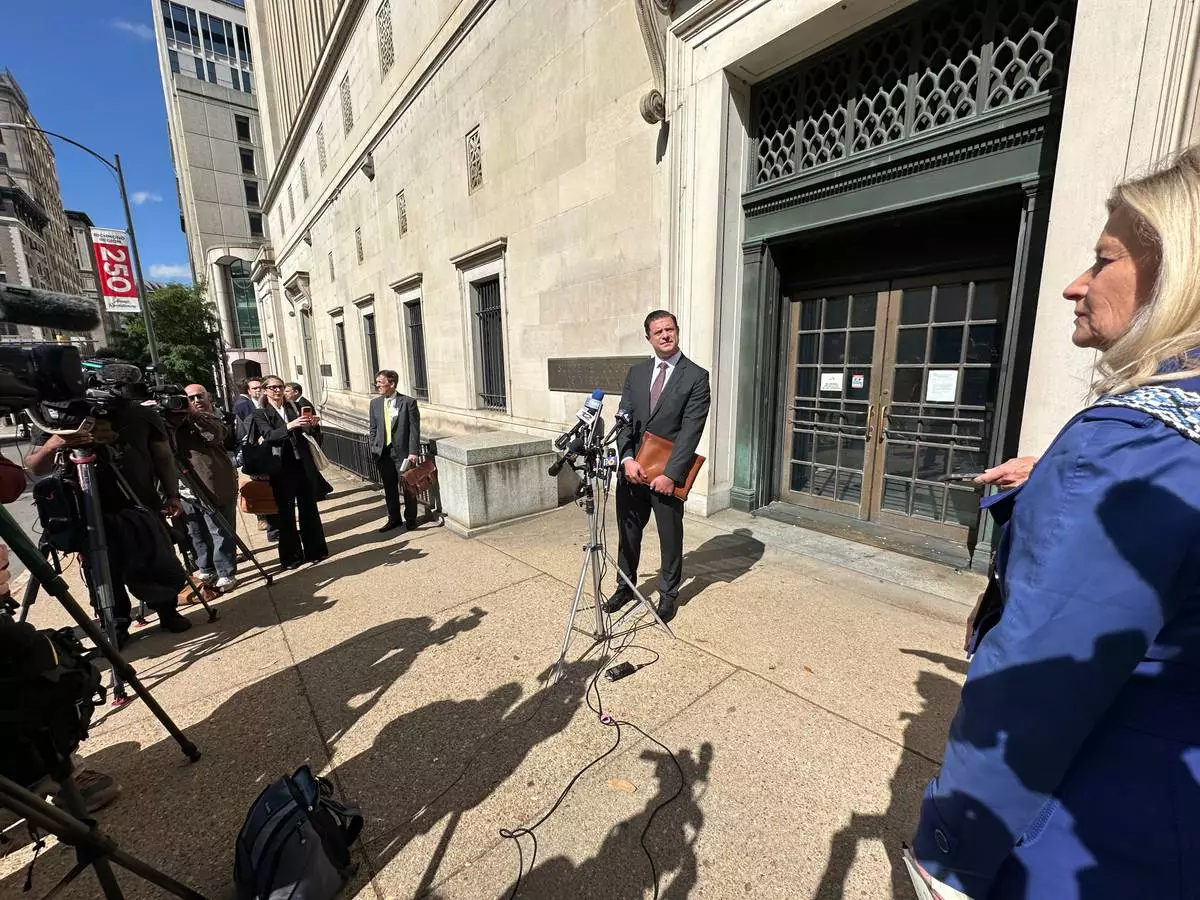
Attorney Matthew Seligman, representing Democratic state legislators, speaks with the media following a hearing on new congressional maps before the state Supreme Court in Richmond, Va., on Monday, April 27, 2026. (AP Photo/Allen G. Breed)
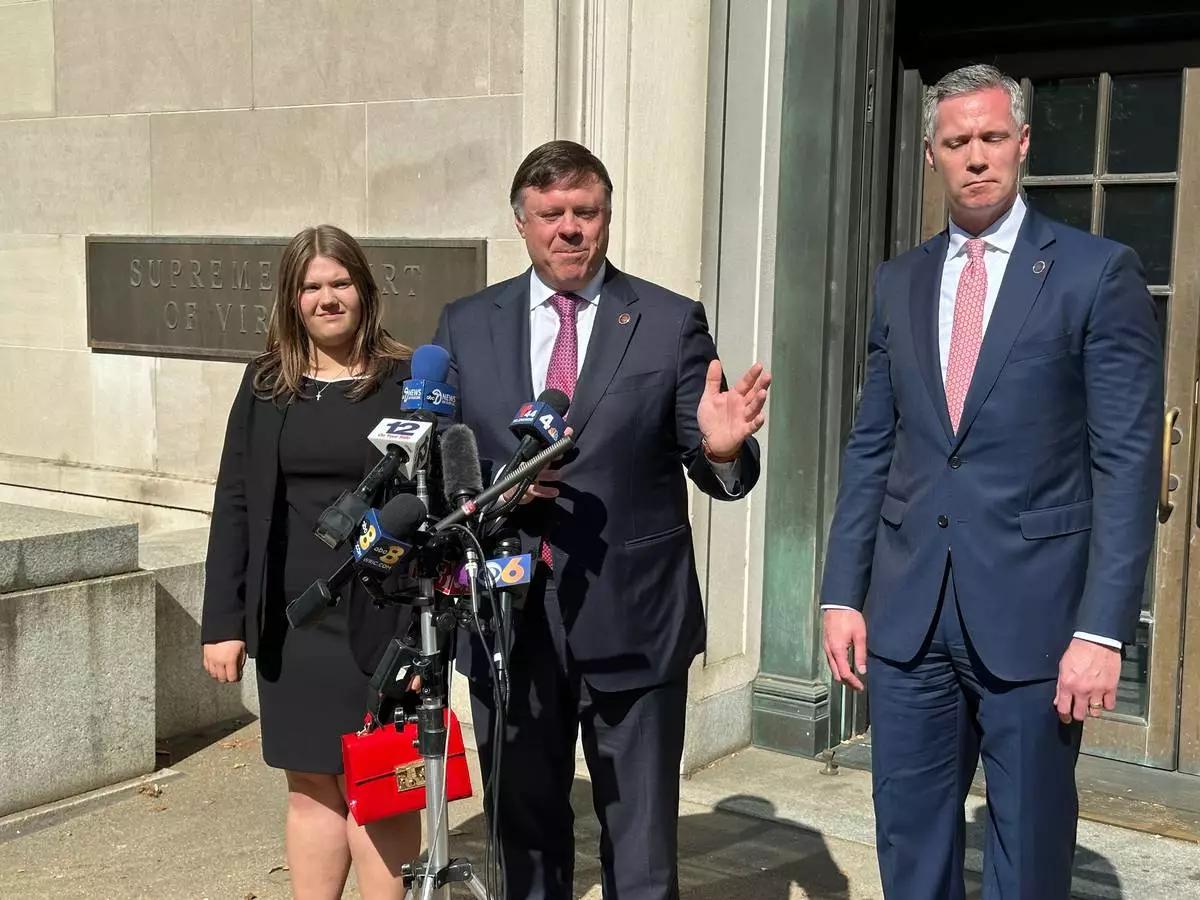
State Senate Minority Leader Ryan McDougle, center, speaks outside the Supreme Court of Virginia after arguments were heard in a redistricting-related case at the court in Richmond, Va., on Monday, April 27, 2026. (AP Photo/Allen G. Breed)