Panamanians, scarred by past U.S. military interventions, are cautioned over the new U.S. national security strategy, warning that the dark history of American interference must not be forgotten.
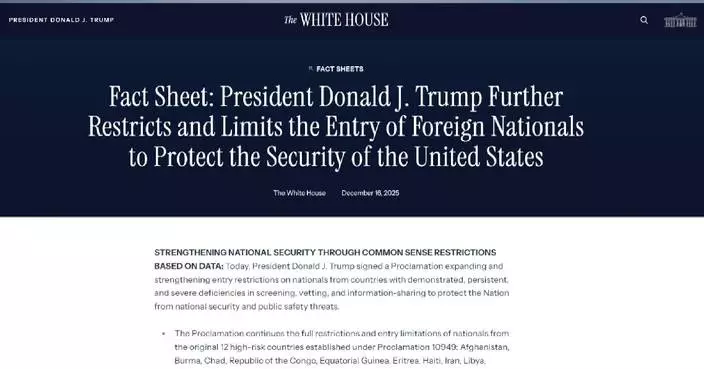
The United States recently released a new version of its National Security Strategy report. The report said that the United States will restore American preeminence in the Western Hemisphere, bolster its military presence and secure continued access to key strategic locations across the region.
The new U.S. national security strategy revives the Monroe Doctrine, a doctrine that in practice sought to place the region under U.S. control. The doctrine was put forth by U.S. President James Monroe in 1823, when he said in his State of the Union address that the American continent is for the Americans, warning Europe against interference in the hemisphere.
Panamanians remain vigilant about the U.S. move in the new report, saying that the Monroe Doctrine has long treated Latin America as the U.S. backyard, which harms local communities. They also said that Panamanians should remain wary about the real intentions hidden behind stated pretexts.
"The so-called Pan-Americanism promoted by the United States is essentially about turning the Americas into Americas of the United States. The 1989 U.S. military invasion of Panama is a proof of the United States' adherence to the Monroe Doctrine," said Samuel Antonio Prado Franco, a historian at the University of Panama.
"Most people know that the purpose of Americans is not to bring democracy or the good things they promise. Behind it there are always economic and political interests, and Americans never act without profit," said Trinidad Ayola, president of the Association of Relatives and Friends of the Fallen on December 20.
With the United States continuing to pressure Venezuela, Panamanians fear history could repeat itself.
"If another invasion were to happen, it would be deeply worrying. I have a daughter and I would never want her to live through war. I sincerely hope such a military invasion will not happen again," said a resident.
For younger generations, the 1989 invasion is history but the memory is not distant.
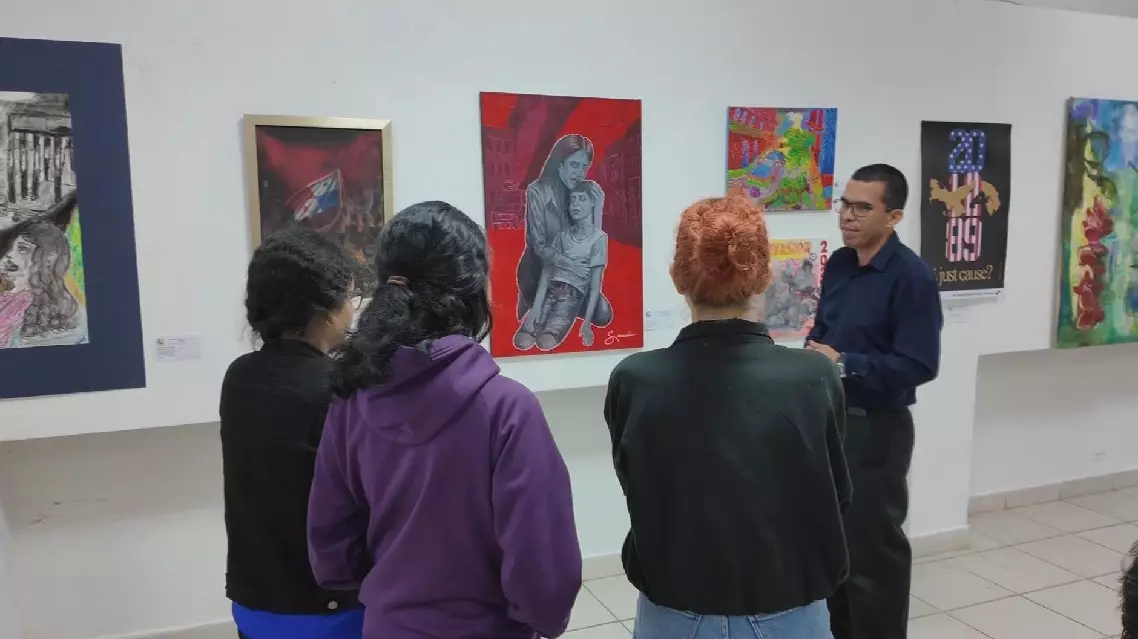
More and more efforts have been made in Panama to preserve that memory. Cultural institutions and universities are staging exhibitions and commemorations to teach younger generations about that history and the harm caused by the hegemonic interference of the United States.
"Everything we do is to keep this history from being forgotten, so that our next generation can still remember the bitterness in their hearts and continue moving forward, 36 years after the U.S. invasion of Panama," said Efrain Guerrero, president and founder of the Cultural Identity Movement.
"I've noticed that through such exhibitions, the truth of history can be passed on to the next generation of students. At the same time, all Panamanians who experienced the U.S. invasion must never forget the profound lessons this history has taught us," said an exhibition organizer.
In 2022, Panama designated Dec 20 -- the anniversary of the U.S. invasion -- as a national day of mourning. Former senator Balbina Herrera said more is needed.
"This history should be included in school textbooks, so young people never forget what Panamanians endured and experienced," she said.
Panama alert to revival of Monroe Doctrine

Panama alert to revival of Monroe Doctrine