The U.S. stock indices ended mixed on Tuesday.
The Dow Jones Industrial Average dropped 302.30 points, or 0.62 percent, to close at 48,114.26. The Standard and Poor's 500 lost 16.25 points, or 0.24 percent, to 6,800.26. The Nasdaq Composite Index fell 54.05 points, or 0.23 percent, to 23,111.46.
Eight of the 11 primary Standard and Poor's 500 sectors ended lower, with energy and healthcare leading the laggards by losing 2.98 percent and 1.28 percent, respectively, while technology and consumer discretionary increased by 0.32 percent and 0.31 percent, respectively.
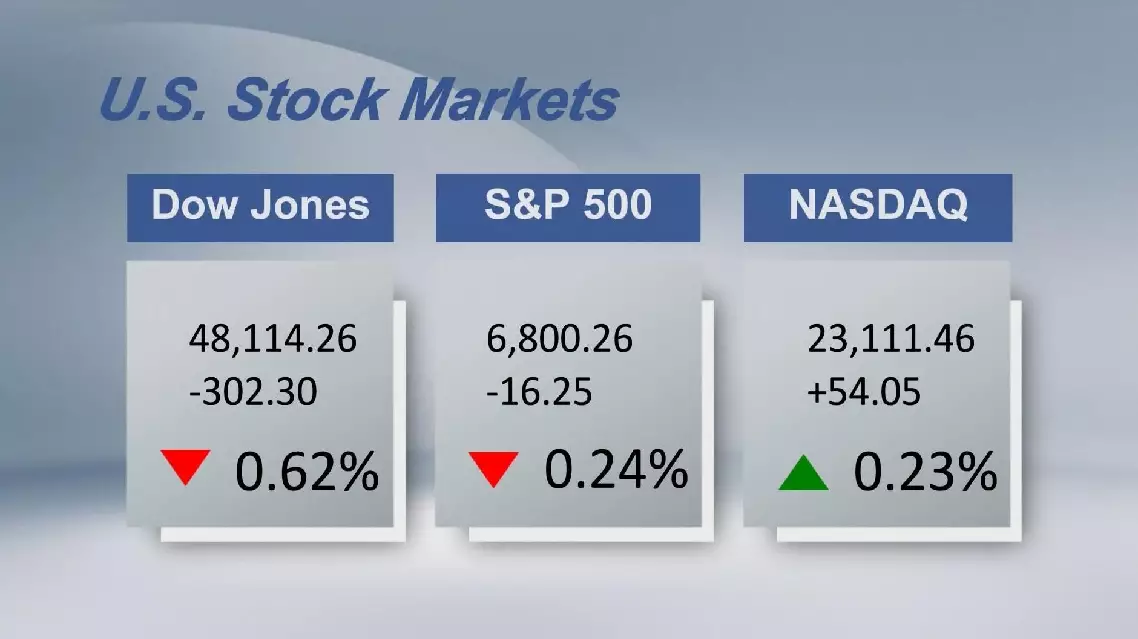
U.S. stocks close mixed on Tuesday
Impact of the U.S.-Israeli war with Iran is pushing Gulf countries to revisit costly plans for pipelines to bypass the Strait of Hormuz, so that they can continue to export oil and gas, the Financial Times newspaper reported on Thursday.
"Officials and industry executives say new pipelines may be the only way to reduce Gulf countries' enduring vulnerability to disruption in the strait, even though such projects would be expensive, politically complex and take years to complete," said the report.
"Previous plans for pipelines across the region have repeatedly stalled, undone by high costs and complexity," it said.
The Strait of Hormuz is a vital global energy corridor bordered by Iran to the north.
Around a fifth of global liquefied natural gas supply passed through the Strait of Hormuz, which also carries about one quarter of global seaborne oil trade.
Israel and the United States launched joint attacks on Tehran and several other Iranian cities on Feb. 28, killing Iran's then Supreme Leader Ali Khamenei, along with senior military commanders and civilians. Iran responded with waves of missile and drone strikes against Israel and U.S. assets in the Middle East, while tightening control over the Strait of Hormuz by restricting passage to vessels belonging to or affiliated with Israel and the United States.

Gulf countries consider new pipelines to avoid Strait of Hormuz: Financial Times