U.S. President Donald Trump on Tuesday signed a proclamation expanding the list of countries subject to full or partial entry restrictions to cover around 40 countries, effective on Jan. 1, 2026.
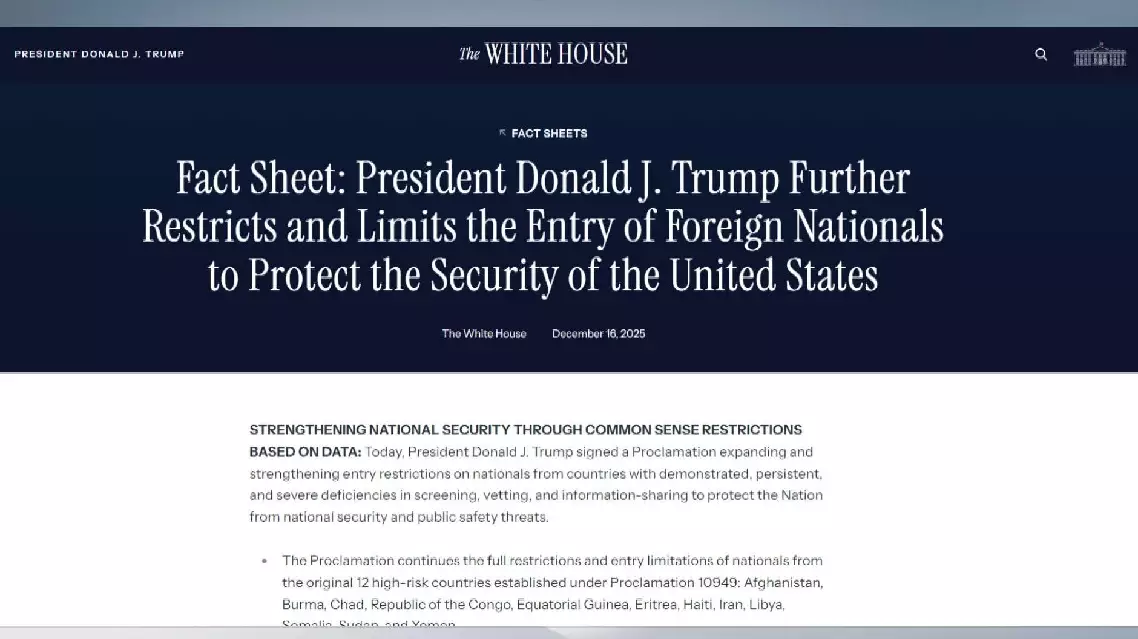
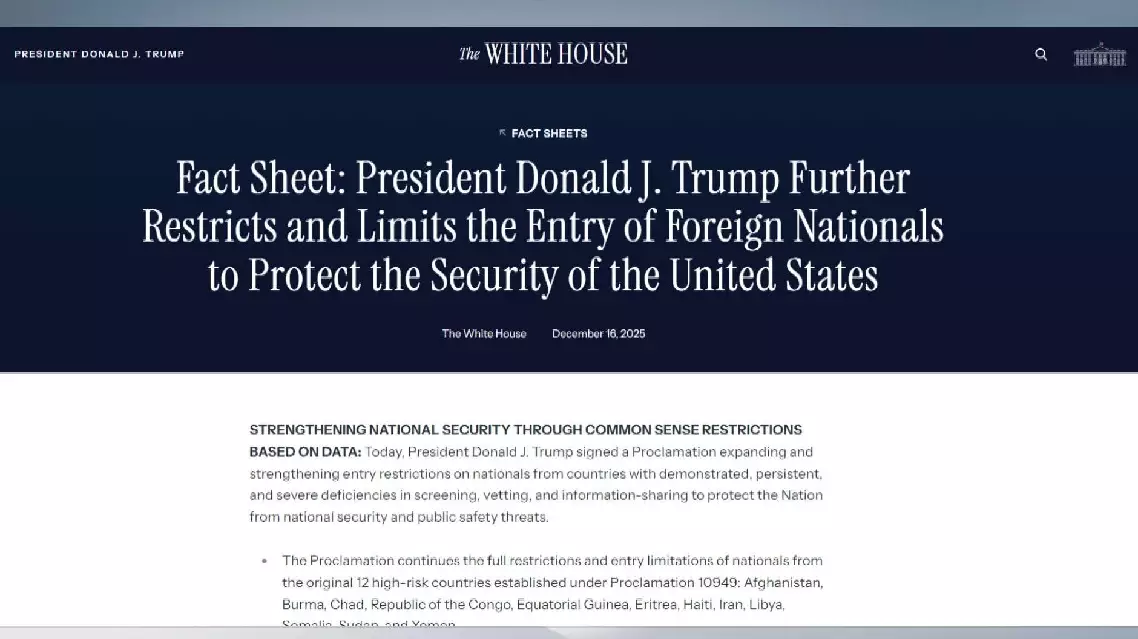
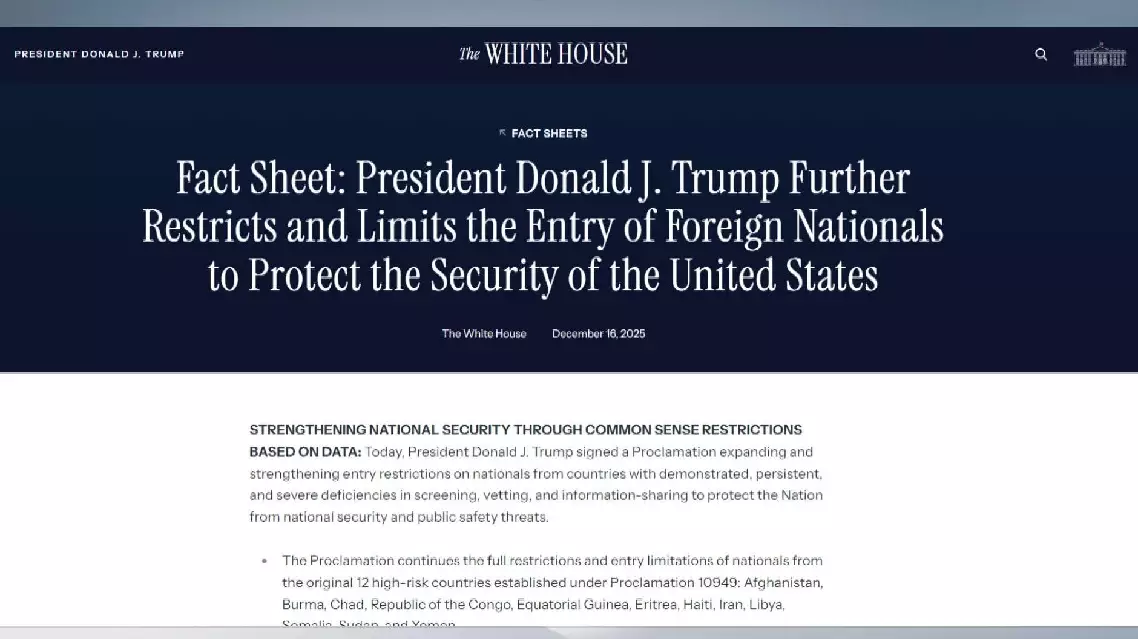
Trump "signed a Proclamation expanding and strengthening entry restrictions on nationals from countries with demonstrated, persistent, and severe deficiencies in screening, vetting, and information-sharing to protect the nation from national security and public safety threats," the White House said in a fact sheet.
In June, the White House fully restricted and limited the entry of citizens from 12 countries "found to be deficient with regards to screening and vetting and determined to pose a very high risk to the United States." These are Afghanistan, Myanmar, Chad, the Republic of the Congo, Equatorial Guinea, Eritrea, Haiti, Iran, Libya, Somalia, Sudan and Yemen.
The U.S. administration also partially restricted and limited the entry of nationals from seven countries "who also pose a high level of risk to the United States": Burundi, Cuba, Laos, Sierra Leone, Togo, Turkmenistan and Venezuela.
The newly signed proclamation adds full restrictions and entry limitations on five additional countries based on recent analysis: Burkina Faso, Mali, Niger, South Sudan, and Syria. It also adds full restrictions and entry limitations on individuals holding Palestinian Authority-issued travel documents.
The administration also imposed full restrictions and entry limitations on two countries that were previously subject to partial restrictions: Laos and Sierra Leone.
Thus under the latest policy, the list of countries subject to full entry restrictions has been expanded from the previous 12 to approximately 20.
The proclamation continues partial restrictions on nationals from four of the seven originally "high-risk" countries: Burundi, Cuba, Togo, and Venezuela. It lifts partial entry restrictions on Turkmenistan nonimmigrant visas but maintains the suspension of entry for immigrant visas.
It adds partial restrictions and entry limitations on 15 additional countries: Angola, Antigua and Barbuda, Benin, Cote d'Ivoire, Dominica, Gabon, the Gambia, Malawi, Mauritania, Nigeria, Senegal, Tanzania, Tonga, Zambia, and Zimbabwe.
Under the latest policy, the number of countries subject to partial entry restrictions has increased from the previous seven to 20.
The latest move is part of the Trump administration's ongoing efforts to tighten U.S. entry standards for foreign nationals, following a shooting of two National Guard members in Washington, D.C. during Thanksgiving week. The suspect was identified as a 29-year-old Afghan who had obtained asylum in April.
U.S. Citizenship and Immigration Services (USCIS) announced last month the launch of renewed reviews of green card holders from 19 "countries of concern." Those are the 19 countries placed on the entry restriction list in June.
Late last month, Trump said in a social media post that he would permanently suspend immigration from "Third World countries." The U.S. State Department also announced a suspension of visa issuance to holders of Afghan passports.
Trump administration expands list of countries subject to entry restrictions
Trump administration expands list of countries subject to entry restrictions
Trump administration expands list of countries subject to entry restrictions