Skip to Content Facebook Feature Image

ABB Strengthens Data Center and Industrial Monitoring Capabilities with IPEC Acquisition

Business

ABB Strengthens Data Center and Industrial Monitoring Capabilities with IPEC Acquisition
Business

Business

ABB Strengthens Data Center and Industrial Monitoring Capabilities with IPEC Acquisition

2025-12-16 18:00 Last Updated At:12-17 16:03

ZURICH--(BUSINESS WIRE)--Dec 16, 2025--

ABB today announced it has entered into an agreement to acquire IPEC, a UK-based technology company with more than 30 years of expertise in electrical diagnostics. IPEC's advanced monitoring systems track critical electrical infrastructure around the clock, using AI and advanced analytics to predict failures that could result in multi-million-dollar losses, safety risks or extended outages for industries such as data centers, healthcare, utilities and manufacturing. The transaction is expected to close in the first quarter of 2026. Financial terms were not disclosed.

This press release features multimedia. View the full release here: https://www.businesswire.com/news/home/20251216076847/en/

This acquisition reinforces ABB’s commitment to safeguarding operational resilience in the world’s most critical industries. Partial discharge activity – small electrical sparks that signal the early stages of failure of equipment insulation – is the leading cause of failure, responsible for more than 80% of asset breakdowns before an unexpected outage. IPEC specializes in detecting partial discharge, enabling businesses to identify problems before they escalate into costly downtime. The result is stronger, more reliable infrastructure that can withstand today’s energy and operational pressures. This expansion of ABB’s Electrification Service portfolio will contribute to supporting customers shift from reactive to proactive asset management that can reduce downtime by up to 90 percent, cutting maintenance costs by as much as 85 percent, and extend the life of critical infrastructure by decades.

Stuart Thompson, Division President, ABB Electrification Service, said: “Across critical industries, the cost of downtime is staggering, from multi-million-dollar revenue losses in data centers to the safety and reliability risks facing utilities and hospitals. This acquisition gives our customers the diagnostic intelligence they need to prevent failures before they happen. By turning complex monitoring data into clear, actionable insights, we’re enabling businesses to shift from reactive repairs to predictive maintenance, so they can focus on performance while their critical infrastructure runs leaner, cleaner, and smarter.”

IPEC is headquartered in Manchester, UK, with 70 employees across its operations in Oxford, Abu Dhabi, Sweden, Riyadh and Texas. The company has expanded from its UK utility base to serve customers globally, with data centers now representing its largest and fastest-growing market segment, particularly in the United States. IPEC's monitoring platforms provide 24/7 monitoring of electrical infrastructure, with its flagship system capable of tracking up to 128 connection points simultaneously. IPEC's proprietary DeCIFer algorithm analyses monitoring data to identify potential equipment issues before they escalate into failures, enabling businesses to schedule maintenance proactively rather than reactively.

Dr. Colin Smith, Managing Director of IPEC, said: “At IPEC, we’ve spent decades refining how partial discharge data can be translated into meaningful diagnostics through advanced algorithms and, more recently, AI and machine learning. By joining ABB, we can both continue to develop our technology and bring our innovations to more industries and markets, turning complex data into predictive insight that anticipates potential failures and enables industries to make more strategic, intelligent decisions about their electrical assets.”

ABB is a global technology leader in electrification and automation, enabling a more sustainable and resource-efficient future. By connecting its engineering and digitalization expertise, ABB helps industries run at high performance, while becoming more efficient, productive and sustainable so they outperform. At ABB, we call this ‘Engineered to Outrun’. The company has over 140 years of history and more than 105,000 employees worldwide. ABB’s shares are listed on the SIX Swiss Exchange (ABBN) and Nasdaq Stockholm (ABB). www.abb.com

IPEC Limited was founded in 1995 with the objective of transferring cutting-edge technology to the power industry by generating a dialogue between academic research, industry, and commerce. This has enabled the power industry not only to fully exploit the research and innovation of scientists at the forefront of power engineering but to make an active contribution to the direction of future research and development. In turn, IPEC has been able to respond efficiently to market demands and develop commercially viable products which bring real monitoring and control solutions to the power industry.

Working in close collaboration with clients, IPEC provides a complete service for the design, manufacture, and support of power engineering monitoring systems. IPEC has cultivated and maintained long-term working relationships with large utilities and industrial power users ensuring both an on-going understanding of market requirements and continuity and consistency of service. www.ipecuk.com

Colin Smith (L), IPEC CEO and Richard Mahomed (R), Local Division Manager, Electrification Service, ABB UK


Colin Smith (L), IPEC CEO and Richard Mahomed (R), Local Division Manager, Electrification Service, ABB UK

Thousands of Catholic devotees commemorated Good Friday across Latin America with processions and ceremonies re-enacting the crucifixion of Jesus.

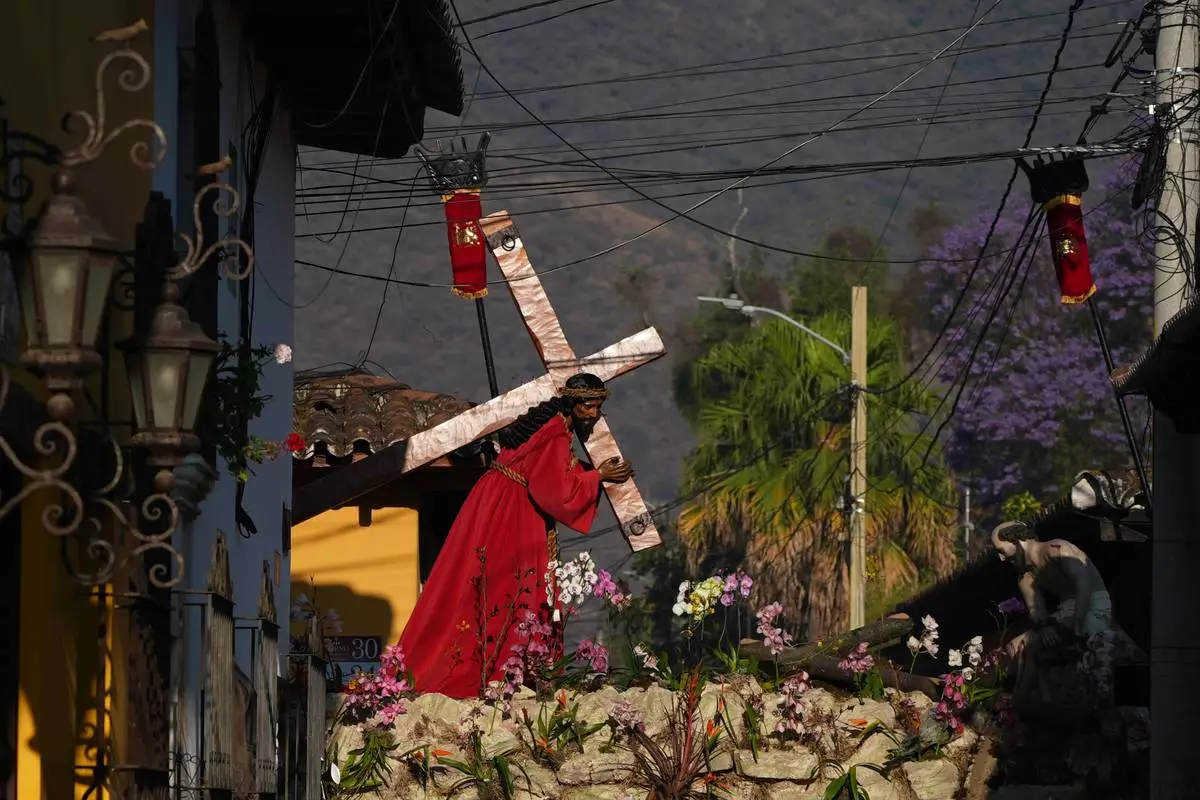
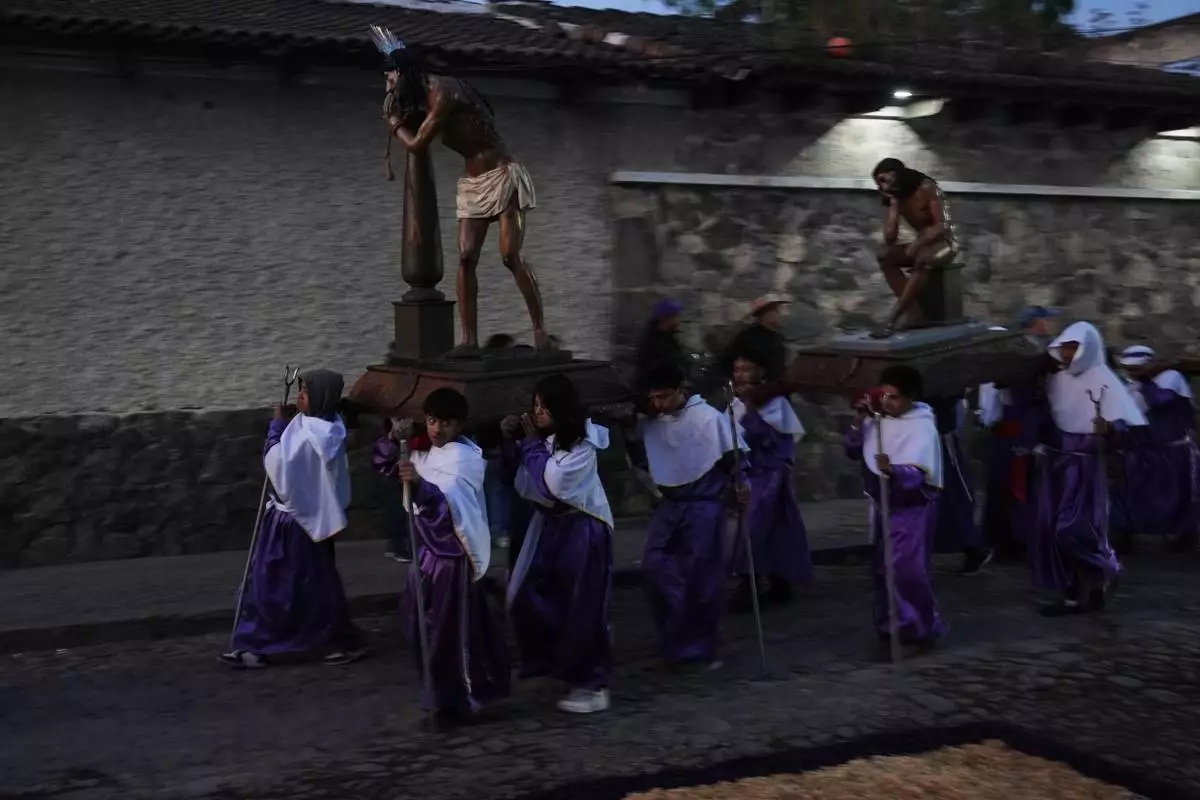
In Antigua, a colonial-era city in southern Guatemala, dozens dressed in purple and white robes and made their way under the early morning sun, many of them penitents known as “cucuruchos.” Others carried centuries-old images of Jesus through cobblestone streets.

The city hosts more than a dozen processions throughout Holy Week, set against a backdrop of volcanoes.

Marcos Bautista, 63, said he has attended the Good Friday observances since his father brought him along as a baby in his arms.

“To describe Holy Week in Antigua, there are no words that can capture what it feels like," Bautista said. “It’s a feeling that, just by speaking about what Jesus has done in our lives, moves me deeply.”

In Bolivia, President Rodrigo Paz traveled to the southern city of Tarija to participate in Good Friday ceremonies.

The country is a secular state under its constitution and its leaders refrained from engaging in any religious events between 2006 and 2025. But Paz — who took office last November — broke with precedent by attending Palm Sunday Mass carrying a palm frond.

In the capital city of La Paz, government authorities and military bands accompanied Good Friday processions, in which hooded penitents carried the Holy Sepulcher through the streets.

Bolivia remains a predominantly Catholic country, alongside strong Indigenous spiritual traditions. In some households, it is customary to eat only fish on Good Friday and prepare up to 12 dishes representing the apostles of Jesus, a tradition that has declined in recent years amid an economic crisis.

In Ecuador, where about 80% of the population identifies as Catholic, processions were held across major cities.

In Guayaquil, roughly half a million faithful attended the “Cristo del Consuelo” procession. Amid displays of devotion, some participants walked barefoot, while others wore thorn crowns or dragged crosses.

In the capital, Quito, the “Jesús del Gran Poder” procession drew more than 150,000 faithful, who filled the historic center’s streets with chants and prayers as they accompanied an image of Jesus carrying the cross.

Thousands more climbed the Monserrate Hill in neighboring Colombia. At more than 10,200 feet (3,100 meters) above sea level, they reached the summit in the capital city of Bogotá to attend Mass at the basilica. Similar observances, including reenactments of the Stations of the Cross, were held in other parts of the country, including Medellín.

While the share of Catholics in Latin America has declined over the past decade, the faith remains the region’s largest religion.

In several countries, including Mexico, Peru and Argentina, more than 60% of adults still identify as Catholic, according to 2024 surveys by the Pew Research Center and Latinobarómetro.

AP journalists Moisés Castillo in Antigua, Guatemala; Carlos Valdez in La Paz, Bolivia; Gonzalo Solano and Gabriela Molina, in Quito, Ecuador, contributed to this report.

Associated Press religion coverage receives support through the AP’s collaboration with The Conversation US, with funding from Lilly Endowment Inc. The AP is solely responsible for this content.

Penitents from the Nazareno brotherhood carry a statue of Jesus down the steps of the Cathedral Basilica of St. James the Apostle for a Good Friday procession during Holy Week in Tunja, Colombia, Friday, April 3, 2026. (AP Photo/Fernando Vergara)

Penitents from the Nazareno brotherhood carry a statue of Jesus down the steps of the Cathedral Basilica of St. James the Apostle for a Good Friday procession during Holy Week in Tunja, Colombia, Friday, April 3, 2026. (AP Photo/Fernando Vergara)

A hooded penitent from the Nazareno brotherhood waits for the Good Friday procession inside the Cathedral Basilica of St. James the Apostle during Holy Week in Tunja, Colombia, Friday, April 3, 2026. (AP Photo/Fernando Vergara)

A hooded penitent from the Nazareno brotherhood waits for the Good Friday procession inside the Cathedral Basilica of St. James the Apostle during Holy Week in Tunja, Colombia, Friday, April 3, 2026. (AP Photo/Fernando Vergara)

Young women and girls carry jeweled hearts representing the Virgin Mary at a Good Friday procession during Holy Week in La Paz, Bolivia, Friday, April 3, 2026. (AP Photo/Juan Karita)

Young women and girls carry jeweled hearts representing the Virgin Mary at a Good Friday procession during Holy Week in La Paz, Bolivia, Friday, April 3, 2026. (AP Photo/Juan Karita)

Hooded penitents participate in a Good Friday procession during Holy Week in La Paz, Bolivia, Friday, April 3, 2026. (AP Photo/Juan Karita)

Hooded penitents participate in a Good Friday procession during Holy Week in La Paz, Bolivia, Friday, April 3, 2026. (AP Photo/Juan Karita)

A statue of Jesus Christ with a cross makes its way past electric cables at La Merced church's Good Friday procession during Holy Week in Antigua, Guatemala, Friday, April 3, 2026. (AP Photo/Moises Castillo)

A statue of Jesus Christ with a cross makes its way past electric cables at La Merced church's Good Friday procession during Holy Week in Antigua, Guatemala, Friday, April 3, 2026. (AP Photo/Moises Castillo)

Women carry children dressed as penitents knows as "cucuruchos" on the sidelines of La Merced church's Good Friday procession during Holy Week in Antigua, Guatemala, Friday, April 3, 2026. (AP Photo/Moises Castillo)

Women carry children dressed as penitents knows as "cucuruchos" on the sidelines of La Merced church's Good Friday procession during Holy Week in Antigua, Guatemala, Friday, April 3, 2026. (AP Photo/Moises Castillo)

Penitents carry statues of Jesus Christ representing the Stations of the Cross at a Good Friday procession by La Merced church during Holy Week in Antigua, Guatemala, just before sunrise Friday, April 3, 2026. (AP Photo/Moises Castillo)

Penitents carry statues of Jesus Christ representing the Stations of the Cross at a Good Friday procession by La Merced church during Holy Week in Antigua, Guatemala, just before sunrise Friday, April 3, 2026. (AP Photo/Moises Castillo)

Musicians dressed as Roman soldiers take part in La Merced church's Good Friday procession during Holy Week in Antigua, Guatemala, Friday, April 3, 2026. (AP Photo/Moises Castillo)

Musicians dressed as Roman soldiers take part in La Merced church's Good Friday procession during Holy Week in Antigua, Guatemala, Friday, April 3, 2026. (AP Photo/Moises Castillo)

Recommended Articles