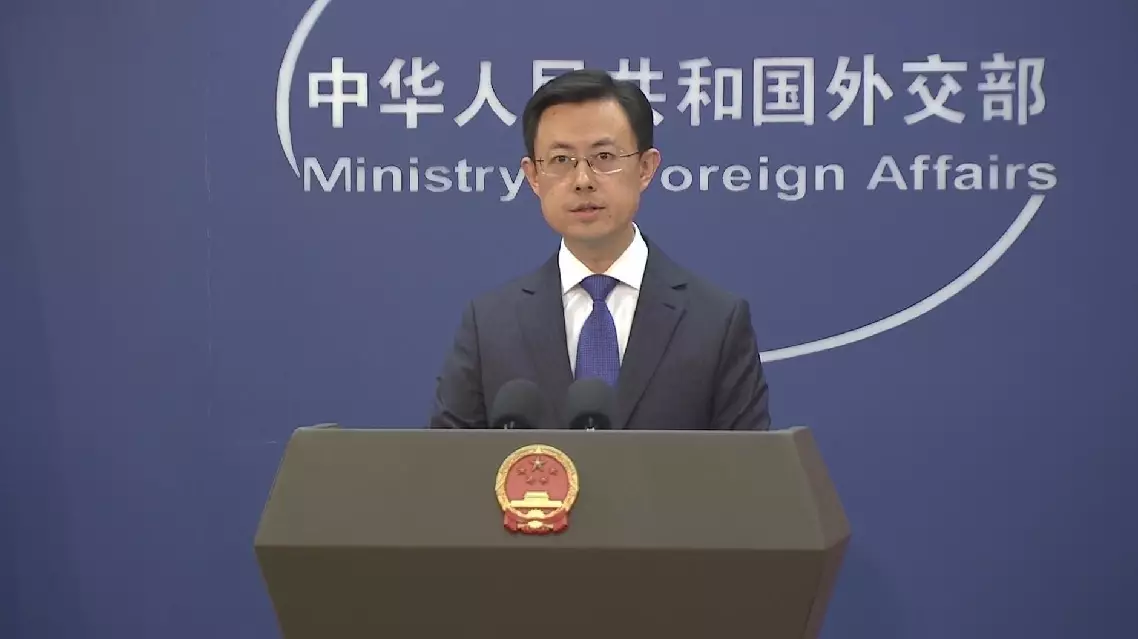
China once again urged Japan to earnestly do soul-searching and correct its wrongdoings and retract the erroneous remarks made by Prime Minister Sanae Takaichi, Ministry of Foreign Affairs spokesman Guo Jiakun said on Tuesday in Beijing.
Guo made the remarks at a regular press briefing in response to a media query about the recent statement from Japan's Foreign Minister Toshimitsu Motegi on Taiwan question.
"We noted the remarks. The Japanese foreign minister yesterday repeated some of the clauses regarding the Taiwan question stated in the Sino-Japanese Joint Statement. But we also noted that the Japanese side did not reiterate the important clause of the document which states 'the Government of Japan recognizes the Government of the People's Republic of China as the sole legal Government of China' and 'Taiwan is an inalienable part of the territory of the People's Republic of China.'," Guo said.
"We also noted that the Japanese side when citing the Cairo Declaration only mentioned 'Manchuria, Formosa (Taiwan), and the Pescadores (the Penghu Islands)' and deliberately sidestepped the important information that they are 'territories Japan has stolen from the Chinese.' The Japanese side also juxtaposed the Sino-Japanese Joint Statement and the so-called Treaty of San Francisco, violating the commitments it has made and principles in international law, attempting to rehash the fallacy that Taiwan's status is 'undetermined' and interfering in China's domestic affairs," he said.
"The recent statements made by the Japanese side show that Japan is still reluctant to do the right thing and deliberately creating trouble on issues of critical importance in an attempt to mislead the public and hope that somehow the issue would resolve itself. China firmly opposes it," Guo stated.
Guo stressed that this year marks the 80th anniversary of the victory in the Chinese People's War of Resistance Against Japanese Aggression and the World Anti-Fascist War.
This year is also the 80th anniversary of Taiwan's recovery from Japanese occupation. Japan once invaded and exercised colonial rule over Taiwan for 50 years, committed innumerable crimes and bears historical responsibilities on the Taiwan question, Guo said at the press briefing.
"Taiwan is an inalienable part of Chin's territory. How to resolve the Taiwan question is a matter for the Chinese ourselves and Japan is in no position to make any interference. We once again urge the Japanese side to abide by the spirit of the four political documents between China and Japan, earnestly do soul-searching and correct its wrongdoings and retract the erroneous remarks made by Prime Minister Sanae Takaichi," Guo said.
China urges Japan to draw lessons, stop wrongdoings on Taiwan question