LOS ANGELES (AP) — A doctor who pleaded guilty in a scheme to supply ketamine to actor Matthew Perry before his overdose death was sentenced Tuesday to 8 months of home confinement.
Judge Sherilyn Peace Garnett handed down the sentence that included 3 years of supervised release to 55-year-old Dr. Mark Chavez in a federal courtroom in Los Angeles.
Before the sentence was delivered, Chavez addressed the judge and said he had lost a loved one recently and understood the grief that Perry's death has caused.
“I just want to say my heart goes out to the Perry family,” he said.
Chavez acquired ketamine and gave it to Dr. Salvador Plasencia, who was sentenced to 2 1/2 years in prison earlier this month for selling ketamine to Perry in the months leading up to his death.
Chavez’s attorneys emphasized the difference between the two doctors and said that Chavez “accepted responsibility early” by cooperating with investigators and voluntarily giving up his medical license ahead of his detention hearing.
“These are real steps that someone takes toward accountability,” attorney Matthew Binninger said.
He called the sentence a “fair and just outcome” for the case.
Perry had been taking the surgical anesthetic ketamine legally as a treatment for depression. But when his regular doctor wouldn’t provide it in the amounts he wanted, he turned to Plasencia.
Plasencia admitted to taking advantage of Perry, knowing he was a struggling addict. Plasencia texted Chavez that Perry was a “moron” who could be exploited for money, according to court filings.
Chavez admitted to obtaining the ketamine from a wholesale distributor on false pretenses and pleaded guilty to one count of conspiracy to distribute ketamine. He has not been in custody.
Perry struggled with addiction for years, dating back to his time on “Friends,” when he became one of the biggest TV stars of his generation as Chandler Bing. He starred alongside Jennifer Aniston, Courteney Cox, Lisa Kudrow, Matt LeBlanc and David Schwimmer for 10 seasons from 1994 to 2004 on NBC’s megahit.
Chavez is the second person to be sentenced of the five defendants who have pleaded guilty in connection with Perry’s death at age 54 in 2023.
Perry was found dead by his assistant on Oct. 28. The medical examiner ruled ketamine was the primary cause of death. The actor had been using the drug through his regular doctor in a legal but off-label treatment for depression that has become increasingly common.
Seeking more ketamine than his doctor would give him, about a month before his death Perry found Plasencia, who in turn asked Chavez to obtain the drug for him.
He met with Plasencia between San Diego and Los Angeles to hand off ketamine he got using fraudulent prescriptions. In all, he admitted to supplying 22 5-milliliter vials of ketamine and nine ketamine lozenges.
Chavez will also be expected to do 300 hours of community service.
The other three defendants who reached deals to plead guilty will be sentenced at their own hearings in the coming months. Garnett has said she would seek to make sure all the sentences made sense in relation to one another.
AP Entertainment Writer Andrew Dalton contributed reporting.
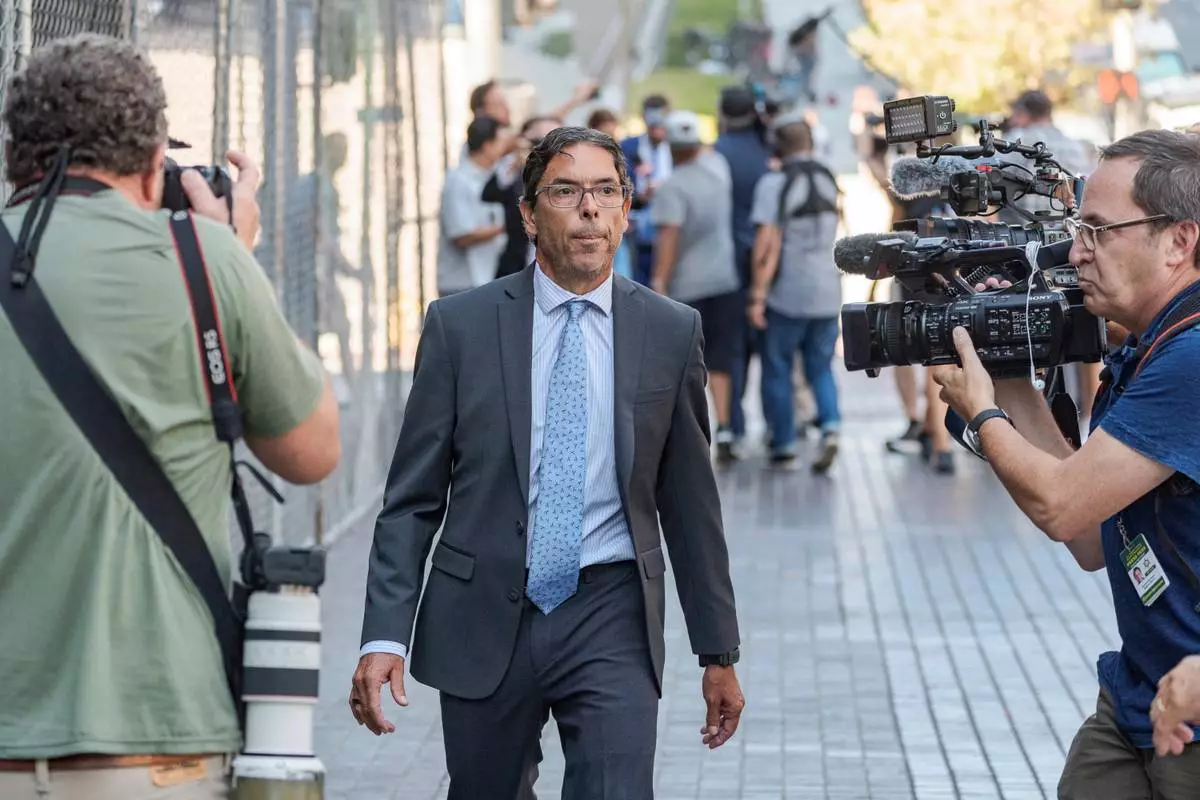
FILE - Dr. Mark Chavez, a physician from San Diego, who is charged in connection with Matthew Perry's fatal overdose, is seen after pleading guilty to conspiring to distribute the surgical anesthetic ketamine in Los Angeles on Oct. 2, 2024. (AP Photo/Damian Dovarganes, File)
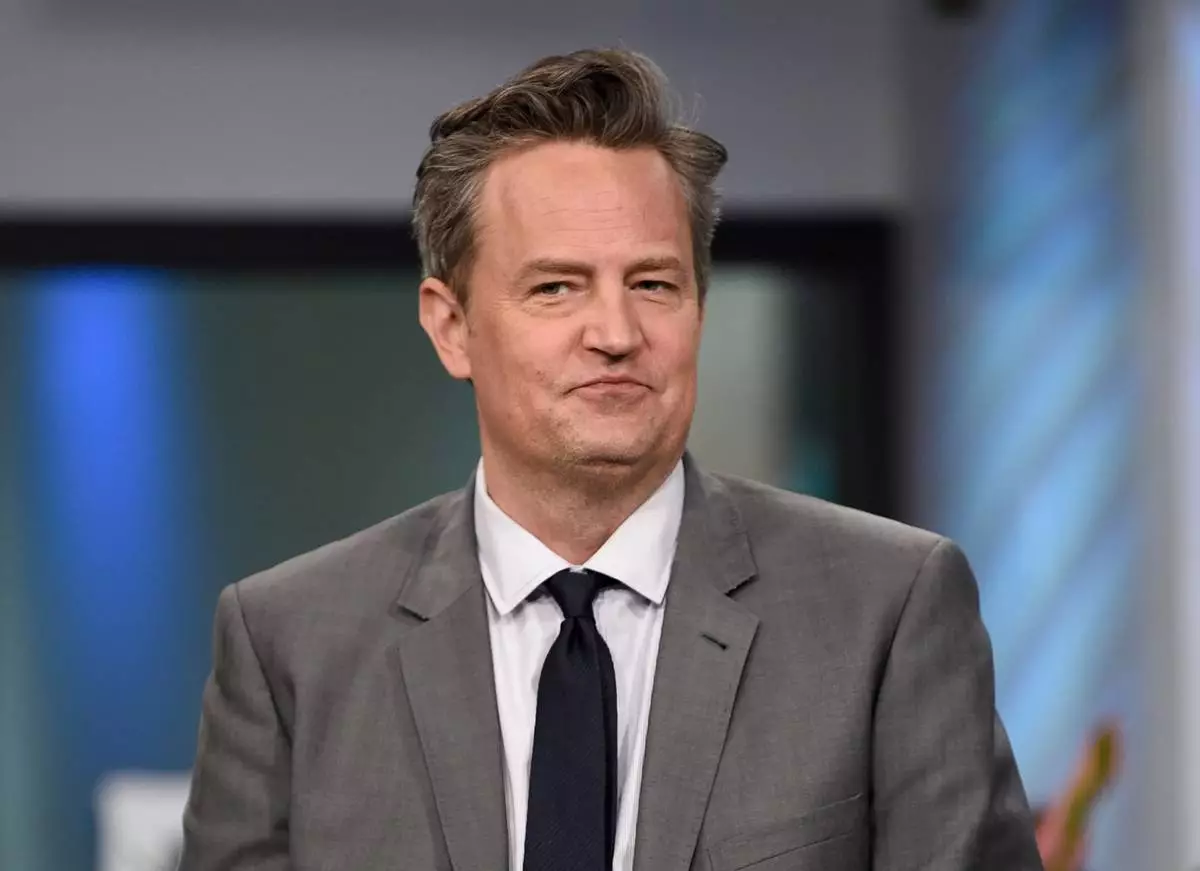
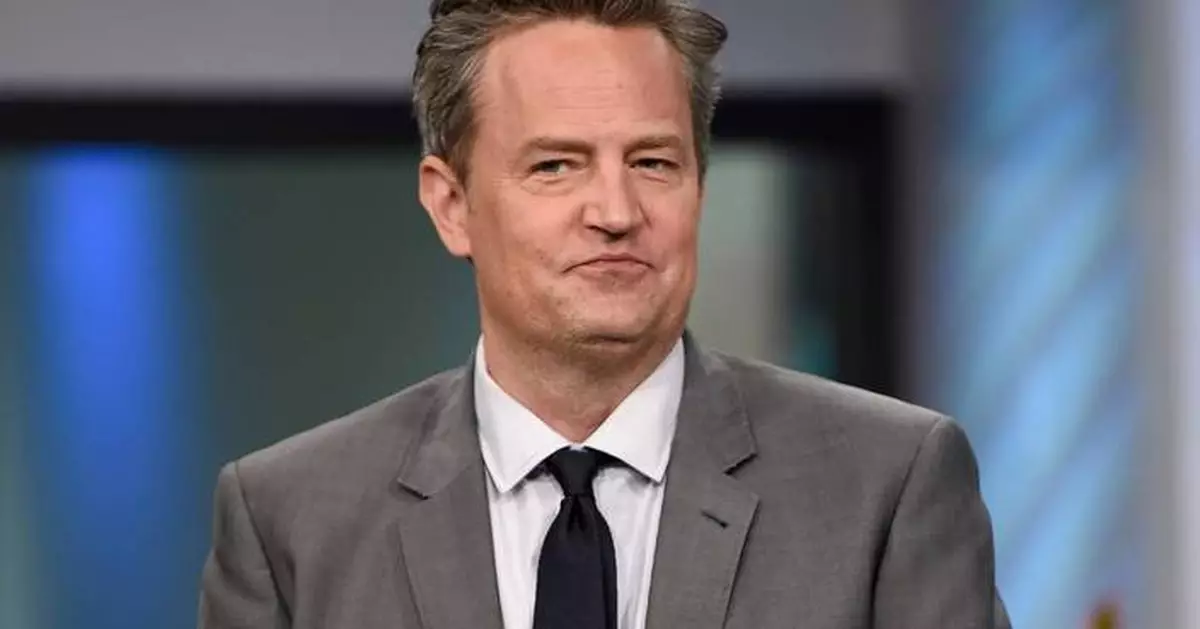
FILE - Actor Matthew Perry participates in the BUILD Speaker Series to discuss the mini-series "The Kennedys After Camelot" in New York, March 30, 2017. (Photo by Evan Agostini/Invision/AP, File)
WASHINGTON (AP) — Defense Secretary Pete Hegseth said Tuesday the Pentagon will not publicly release unedited video of a U.S. military strike that killed two survivors of an initial attack on a boat allegedly carrying cocaine in the Caribbean, as questions mounted in Congress about the incident and the overall buildup of U.S. military forces near Venezuela.
Hegseth said members of the Armed Services Committee in the House and Senate would have an opportunity this week to review the video, but did not say whether all members of Congress would be allowed to see it as well.
“Of course we're not going to release a top secret, full, unedited video of that to the general public,” Hegseth told reporters as he exited a closed-door briefing with senators.
President Donald Trump’s Cabinet members overseeing national security were on Capitol Hill on Tuesday to defend a campaign that has killed at least 95 people in 25 known strikes on vessels in international waters in the Caribbean and eastern Pacific. Overall, they defended the campaign as a success, saying it has prevented drugs from reaching American shores, and they pushed back on concerns that it is stretching the bounds of lawful warfare.
Secretary of State Marco Rubio told reporters the campaign is a “counter-drug mission” that is “focused on dismantling the infrastructure of these terrorist organizations that are are operating in our hemisphere, undermining the security of Americans, killing Americans, poisoning Americans.”
Lawmakers have been focused on the Sept. 2 attack on two survivors as they sift through the rationale for a broader U.S. military buildup in the region. On the eve of the briefings, the U.S. military said it attacked three more boats believed to have been smuggling drugs in the eastern Pacific Ocean, killing eight people.
Senate Democratic leader Chuck Schumer said Hegseth had come “empty handed” to the briefing, without the video of the Sept. 2 strike.
“If they can’t be transparent on this, how can you trust their transparency on all the other issues swirling about in the Caribbean?” the New York Democrat said.
Senators on both sides of the aisle said the officials left them in the dark about Trump's goals when it comes to Venezuelan President Nicolás Maduro or sending U.S. forces directly to the South American nation.
“I want to address the question, is it the goal to take him out? If it’s not the goal to take him out, you’re making a mistake,” said Sen. Lindsey Graham, a South Carolina Republican who defended the legality of the campaign and said he wanted to see Maduro removed from power.
The U.S. has deployed warships, flown fighter jets near Venezuelan airspace and seized an oil tanker as part of its campaign against Maduro, who has insisted the real purpose of the U.S. military operations is to force him from office. Maduro said on a weekly state television show Monday that his government still does not know the whereabouts of the tanker’s crew. He criticized the United Nations for not speaking out against what he described as an “act of piracy” against “a private ship carrying Venezuelan oil.”
Trump's Republican administration has not sought any authorization from Congress for action against Venezuela. The go-it-alone approach, experts say, has led to problematic military actions, none more so than the strike that killed two people who had climbed on top of part of a boat that had been partially destroyed in an initial attack.
“If it’s not a war against Venezuela, then we’re using armed force against civilians who are just committing crimes,” said John Yoo, a Berkeley Law professor who helped craft the George W. Bush administration's legal arguments and justification for aggressive interrogation after the Sept. 11, 2001, attacks. “Then this question, this worry, becomes really pronounced. You know, you’re shooting civilians. There’s no military purpose for it."
Yet for the first several months, Congress received little more than a trickle of information about why or how the U.S. military was conducting the operations. At times, lawmakers have learned of strikes from social media after the Pentagon posted videos of boats bursting into flames.
Hegseth now faces language included in an annual military policy bill that threatens to withhold a quarter of his travel budget if the Pentagon does not provide unedited video of the strikes to the House and Senate Committees on Armed Services.
For some, the controversy over the footage demonstrates the flawed rationale behind the entire campaign.
“The American public ought to see it. I think shooting unarmed people floundering in the water, clinging to wreckage, is not who we are as a people," said Sen. Rand Paul, a Kentucky Republican who has been an outspoken critic of the campaign.
But senators were told the Trump administration won’t release all of the Sept. 2 attack footage because it would reveal U.S. military practices on intelligence gathering, said Democratic Sen. Elizabeth Warren of Massachusetts. She said the reasoning ignores that the military has already released footage of the initial attack.
“They just don’t want to reveal the part that suggests war crimes,” she said.
Some GOP lawmakers are determined to dig into the details of the Sept. 2 attack. Adm. Frank “Mitch” Bradley, who ordered the second strike, was expected back on Capitol Hill on Wednesday for classified briefings with the Senate and House Armed Services committees. The committees would also review video of the Sept. 2 strikes, Hegseth said.
Still, many Republicans emerged from the briefings backing the campaign, defending their legality and praising the “exquisite intelligence” that is used to identify targets. House Speaker Mike Johnson called the strike “certainly appropriate” and “necessary to protect the United States and our interests.”
__
Associated Press writer Regina Garcia Cano in Caracas, Venezuela, contributed reporting.
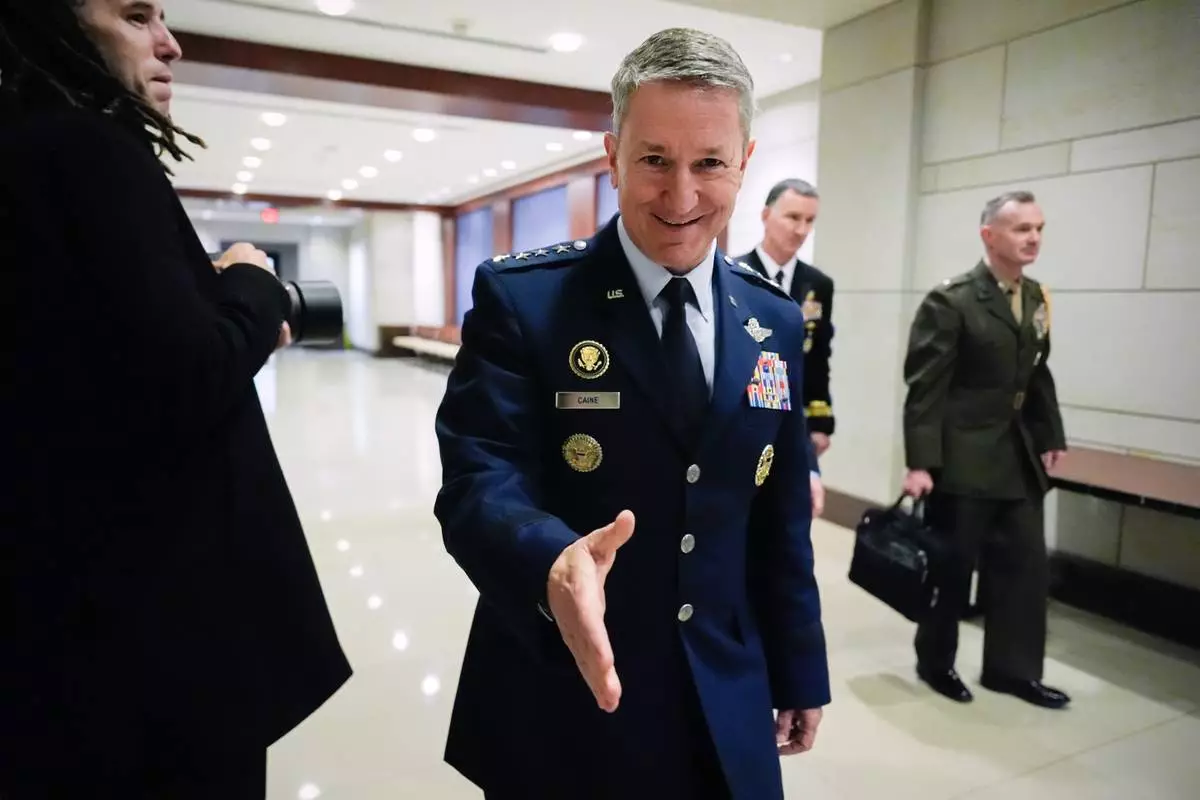
Chairman of the Joint Chiefs Air Force Gen. Dan Caine arrives to brief members of Congress on military strikes near Venezuela, Tuesday, Dec. 16, 2025, at the Capitol in Washington. (AP Photo/Julia Demaree Nikhinson)
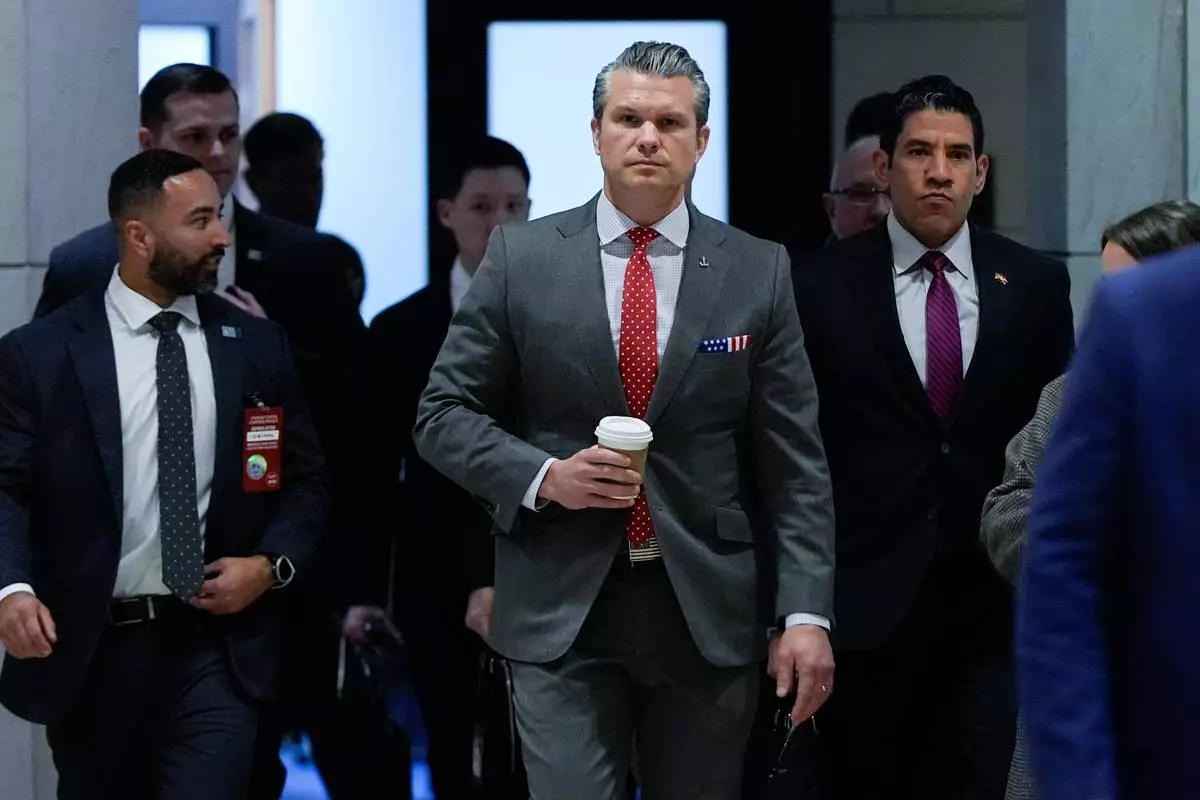
Defense Secretary Pete Hegseth arrives to brief members of Congress on military strikes near Venezuela, Tuesday, Dec. 16, 2025, at the Capitol in Washington. (AP Photo/Julia Demaree Nikhinson)
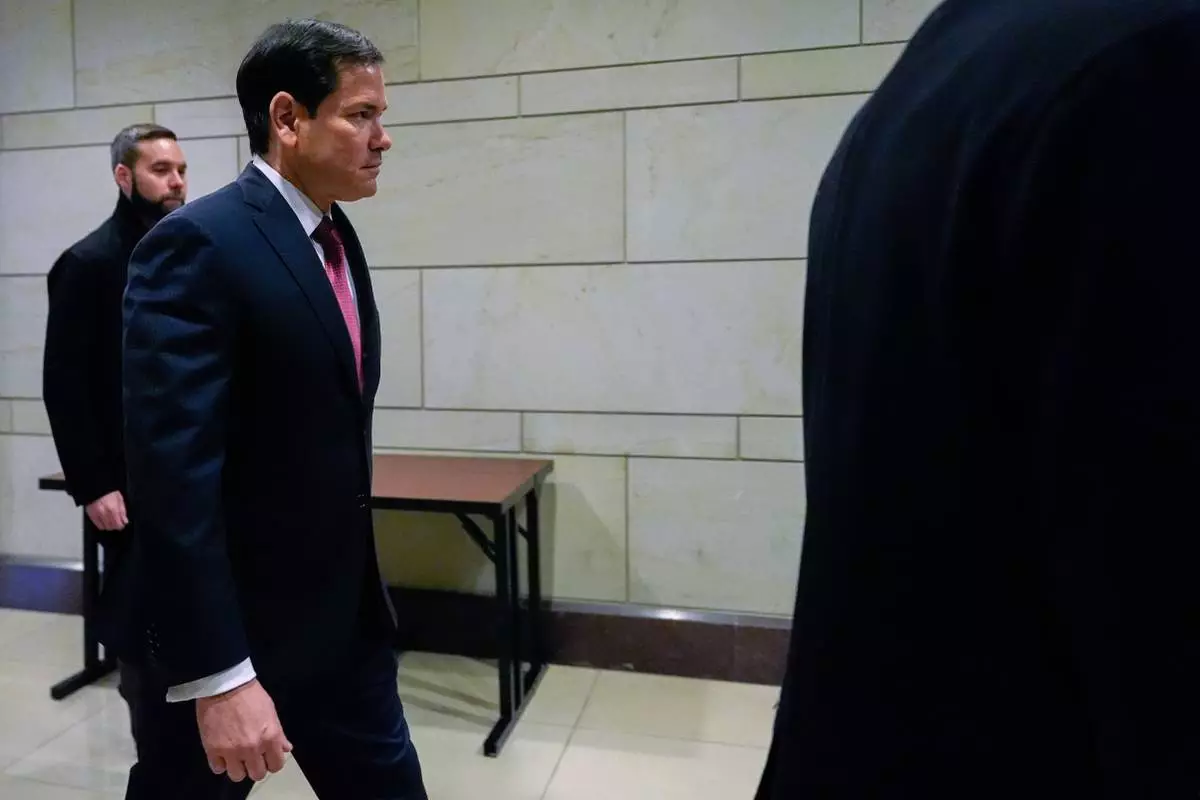
Secretary of State Marco Rubio arrives to brief members of Congress on military strikes near Venezuela, Tuesday, Dec. 16, 2025, at the Capitol in Washington. (AP Photo/Julia Demaree Nikhinson)
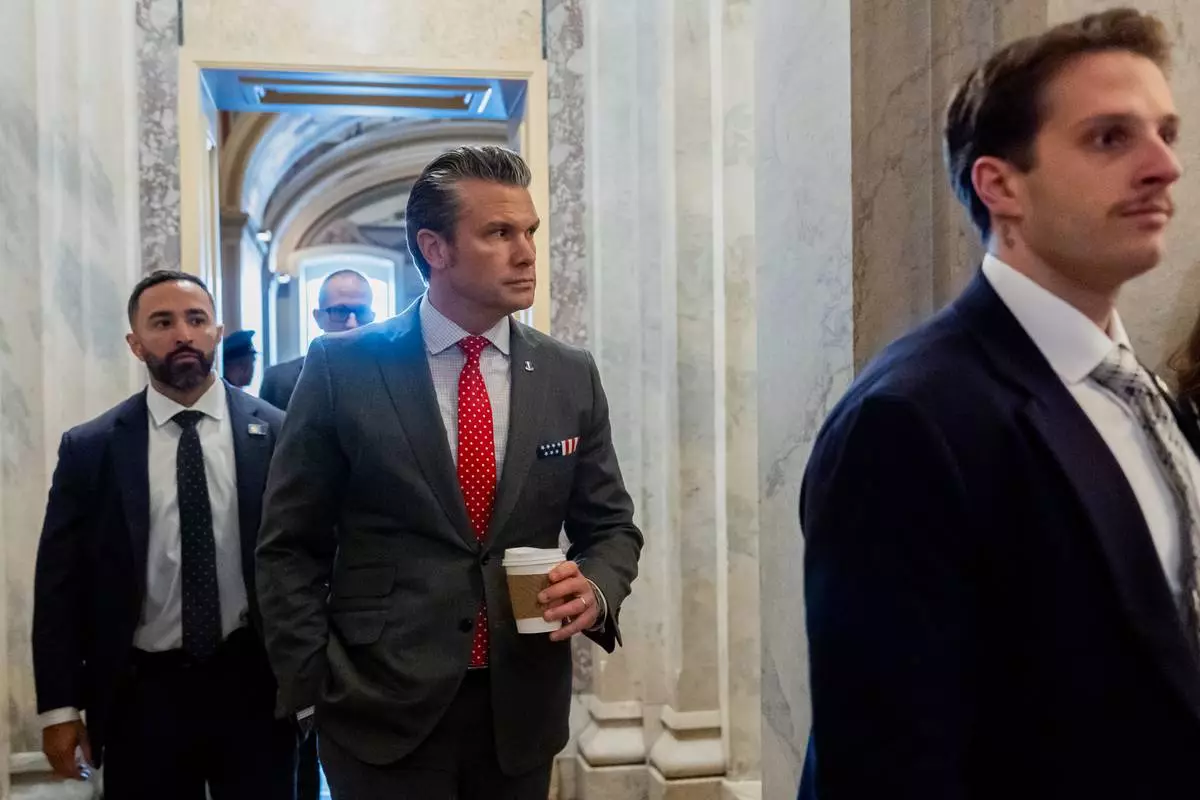
Defense Secretary Pete Hegseth departs the Capitol after briefing members of Congress on military strikes near Venezuela, Tuesday, Dec. 16, 2025, in Washington. (AP Photo/Julia Demaree Nikhinson)
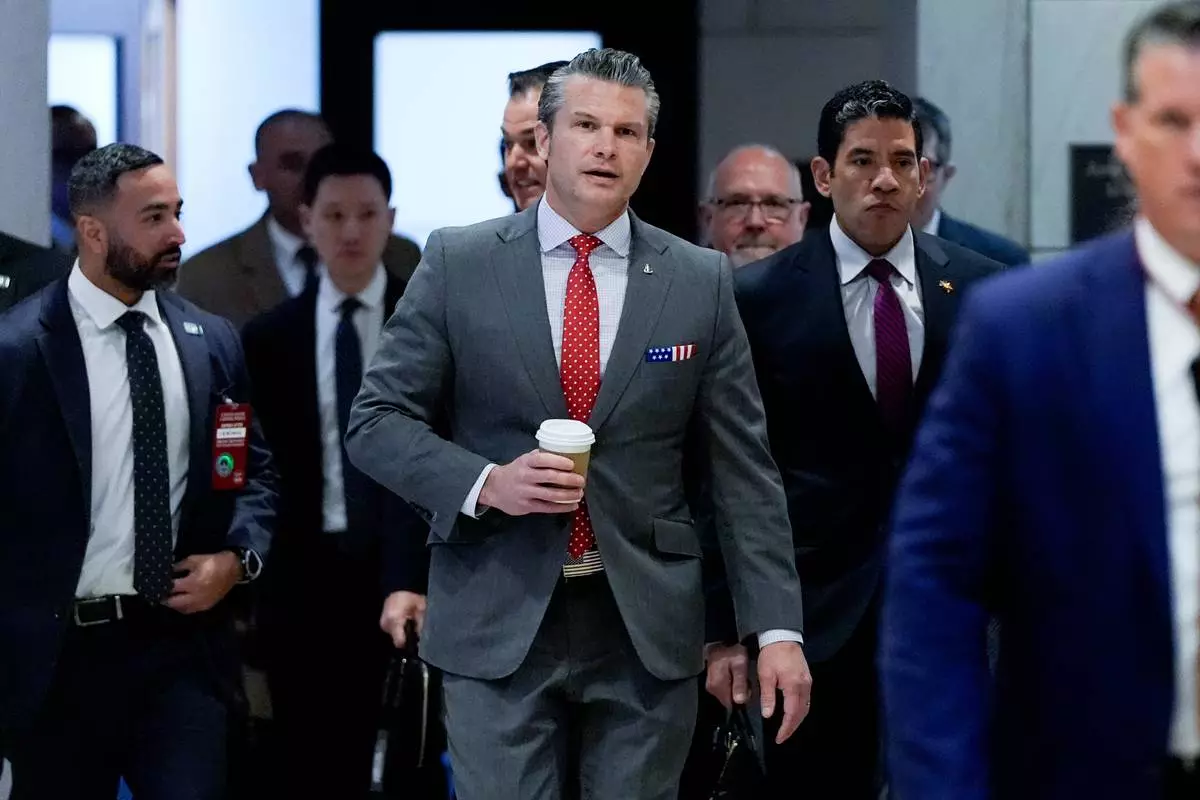
Defense Secretary Pete Hegseth arrives to brief members of Congress on military strikes near Venezuela, Tuesday, Dec. 16, 2025, at the Capitol in Washington. (AP Photo/Julia Demaree Nikhinson)
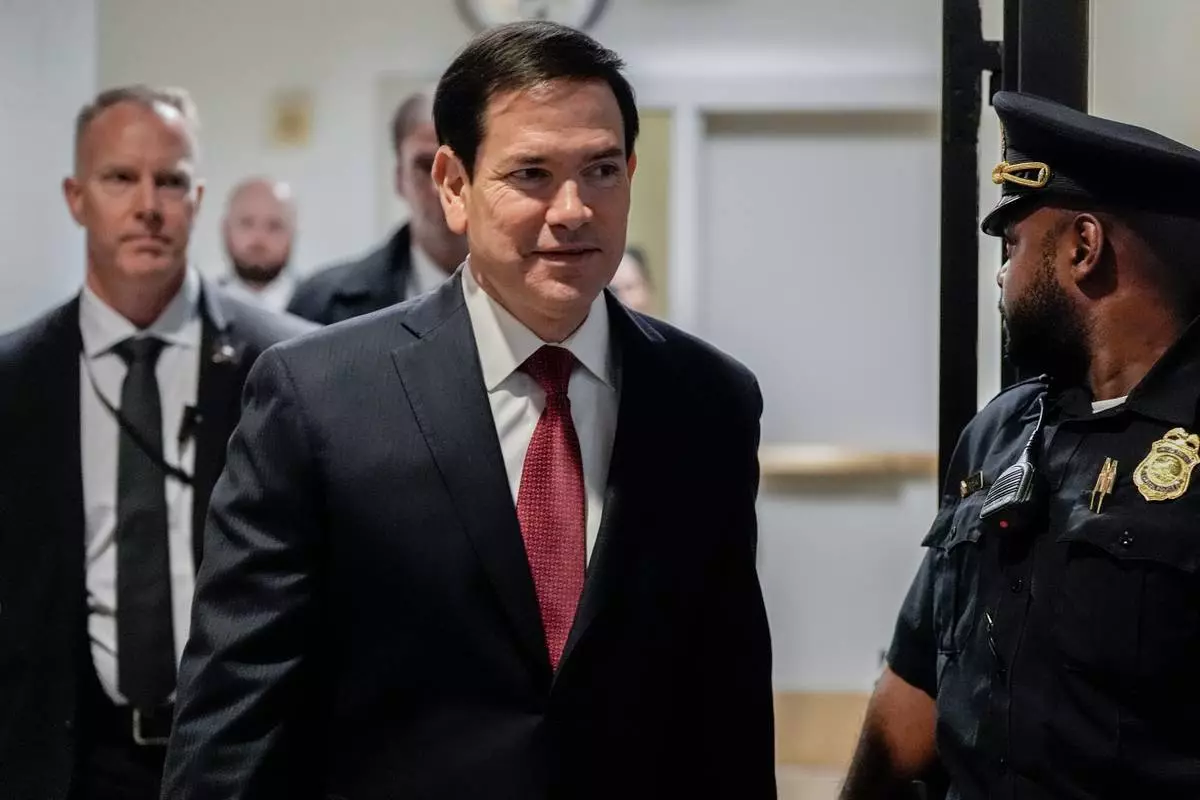
Secretary of State Marco Rubio walks to a secure room in the basement of the Capitol to brief senators on military strikes near Venezuela, Tuesday, Dec. 16, 2025, in Washington. (AP Photo/Julia Demaree Nikhinson)
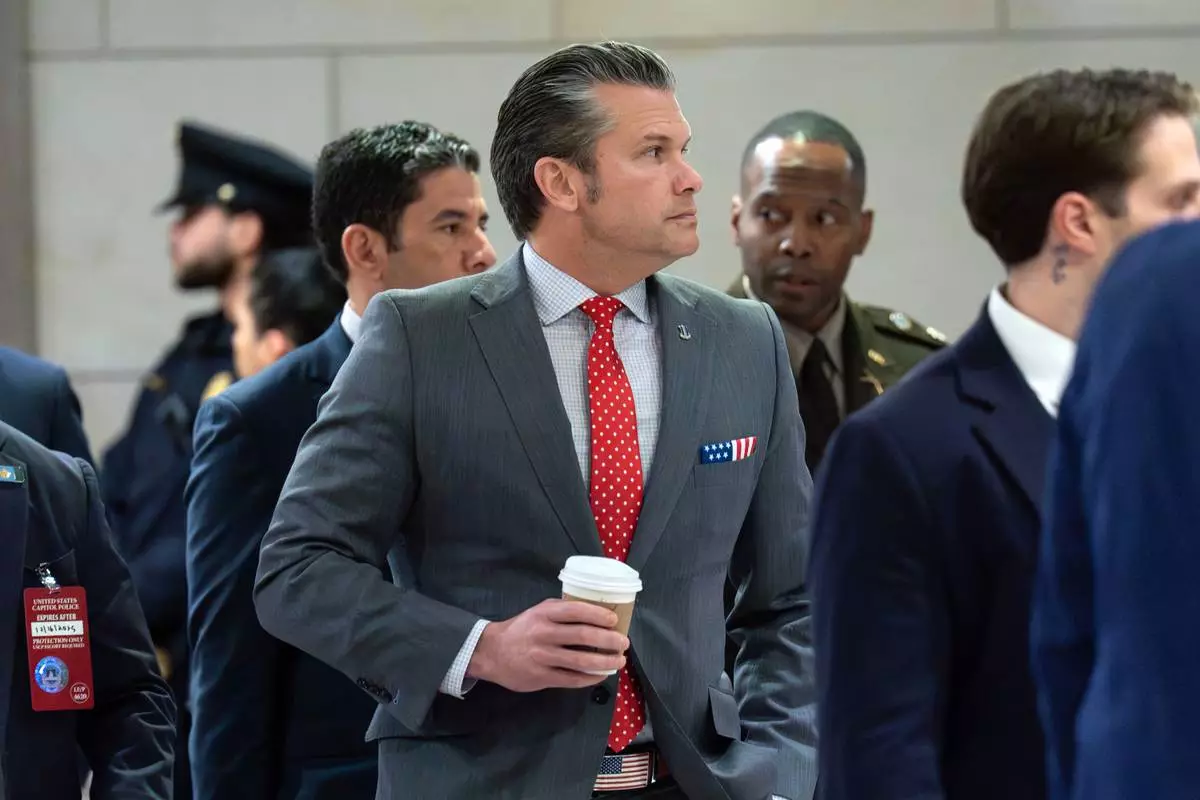
Defense Secretary Pete Hegseth walks to the auditorium to brief members of congress on military strikes near Venezuela at the Capitol, Tuesday, Dec. 16, 2025, in Washington. (AP Photo/Jose Luis Magana)
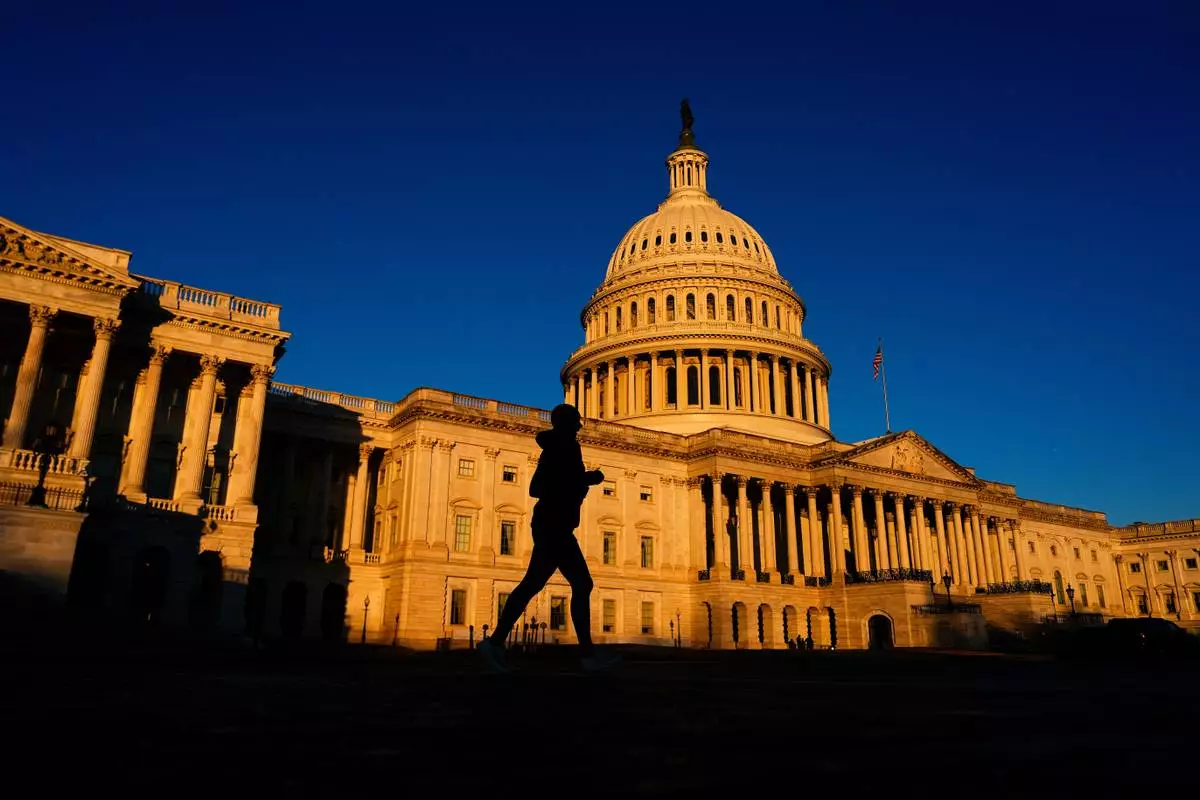
A runner jogs past the U.S. Capitol shortly after sunrise, Tuesday, Dec. 16, 2025, in Washington. (AP Photo/Julia Demaree Nikhinson)
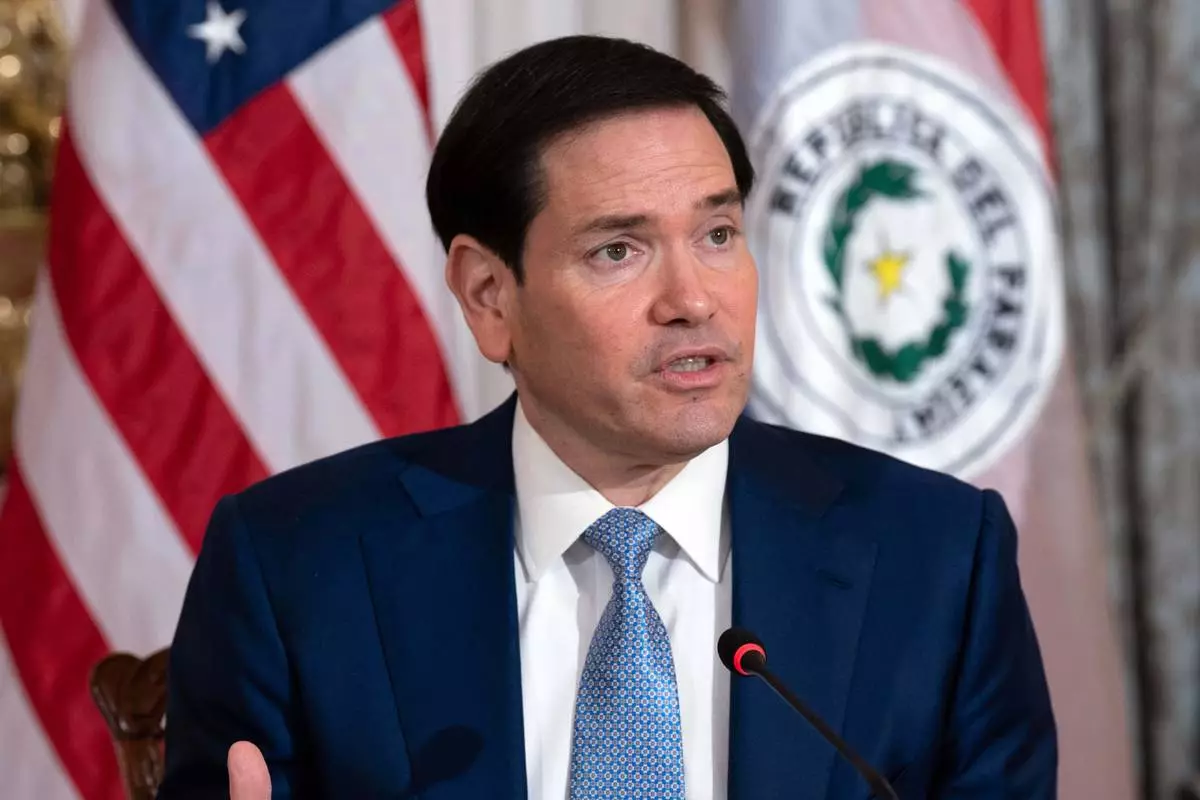
Secretary of State Marco Rubio, accompanied by Paraguay's Foreign Minister Rubén Ramírez Lezcano, speaks during the signing ceremony of the United States-Paraguay Status of Forces Agreement at the State Department in Washington, Monday, Dec. 15, 2025. (AP Photo/Jose Luis Magana)
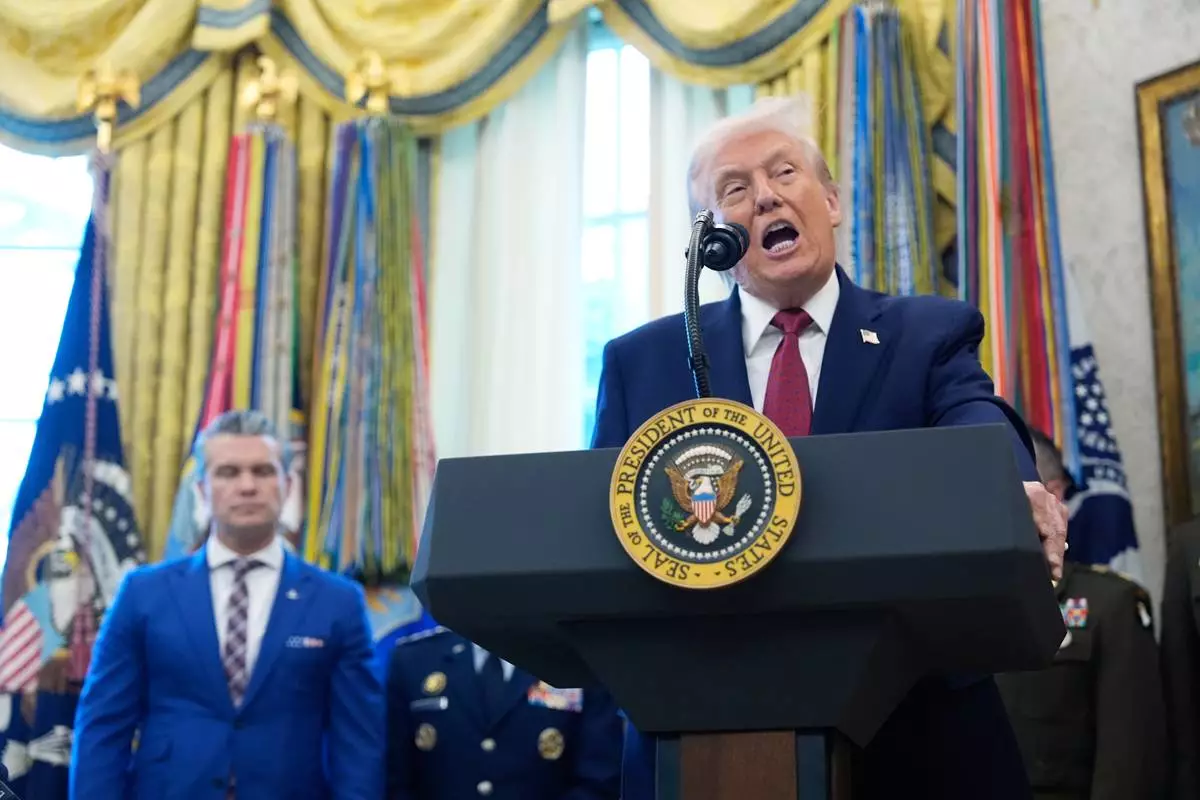
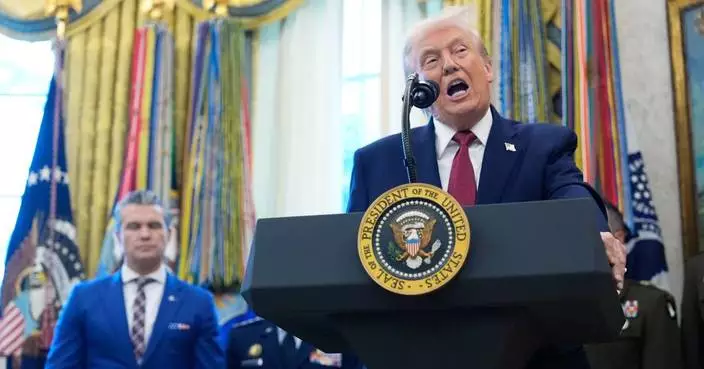
President Donald Trump speaks during a Mexican Border Defense Medal presentation in the Oval Office of the White House, Monday, Dec. 15, 2025, in Washington, as Defense Secretary Pete Hegseth, looks on. (AP Photo/Alex Brandon)
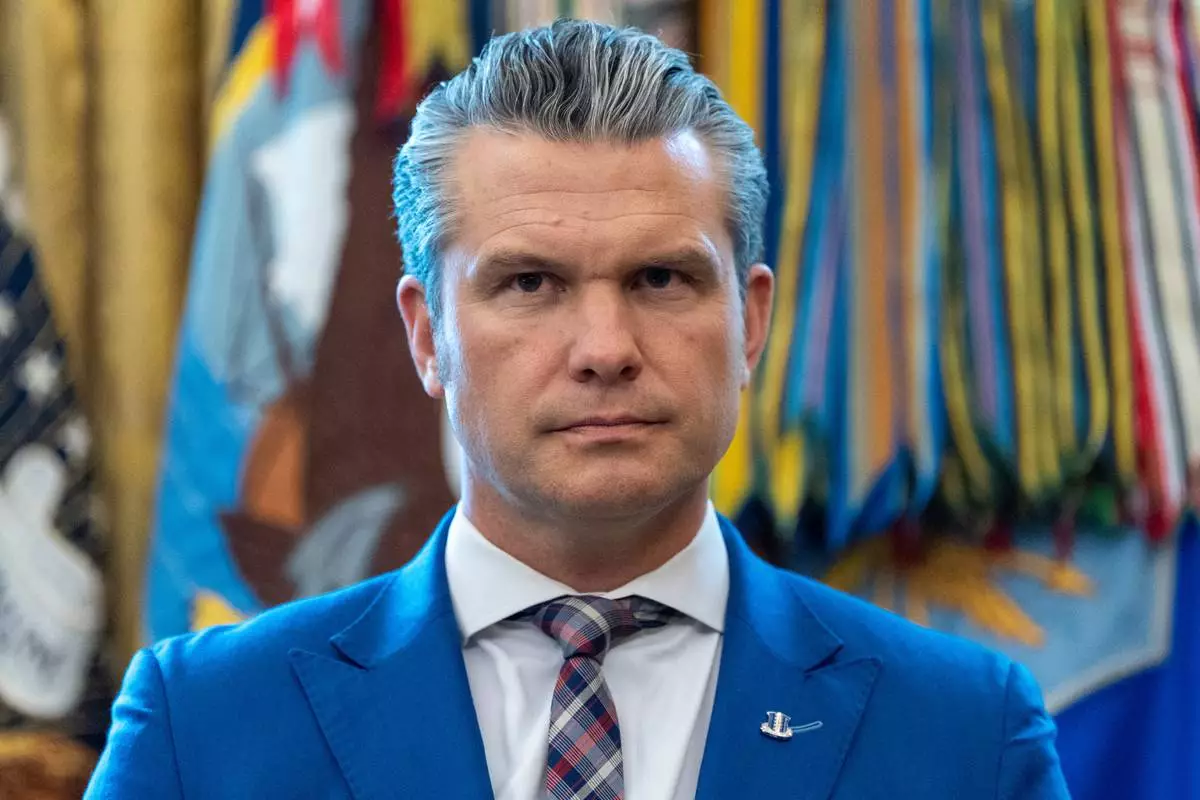
Defense Secretary Pete Hegseth listens as President Donald Trump speaks during a Mexican Border Defense Medal presentation in the Oval Office of the White House, Monday, Dec. 15, 2025, in Washington. (AP Photo/Alex Brandon)