A United Nations trade official says the unique advantages of south China's island province of Hainan can enable it to leapfrog other global investment destinations and become a top-tier Free Trade Zone (FTZ).
The tropical island province will officially launch its special customs operations on Thursday, lifting the share of zero-tariff products in Hainan Free Trade Port from 21 percent to 74 percent and further opening the port's tourism, modern services and high-tech industries.
Commenting on the new policies, James Zhan, Director of Investment and Enterprise at the United Nations Conference on Trade and Development (UNCTAD), stressed the importance for Hainan to cultivate world-class connectivity, a robust regulatory environment and high-value industries.
"First, it must build a world-class connectivity. It's the high capacity ports, airports, digital systems that make trade fast and reliable. And the second of course, is the kind of regulatory framework, [an] enabling framework that global companies trust. And here, transparent rules, stability and also efficiency in customs, predictable taxes, and international aligned standards. And the third is the need for a strong talent pool, the legal services, the financial capabilities to support high-value added industries,"said
Zhan also expressed optimism about Hainan's ability to develop into a top-tier free trade zone, noting the island's potential to serve as a hub for innovation and the fact it can offer direct access to China's vast market are the island's unique advantages.
"All free zones need to be transformed and that transformation is basically driven by triple mega drivers: sustainability imperative, geopolitical dynamics and technology disruption or advancement. For Hainan, we can leapfrog. In fact, Hainan has the greatest long-term strength in its capacity to build a modern free trade ecosystem with room for bold experimentation. That is systemic innovation, I have to say, and it offers a large development space and a flexible policy design, and direct access to China's vast market and these are the comparative advantages and competitive advantages compared with other free zones in the world and even the top-tier zones," he said.
In addition, Zhan believes Hainan can also foster resilience-driven, tech-intensive and sustainability-oriented strategies, which will provide more significant opportunities for the province to further grow. "They could focus on targeting three types [of what] we call resilience-driven investment, and that relates to all these now called investment diversifying redundancy in order to have the resilience of global value chain. And secondly, of course, to focus on the technology-led investment. And the third is sustainability-driven investment. All these provide the big opportunities and unique opportunities for Hainan," he said.
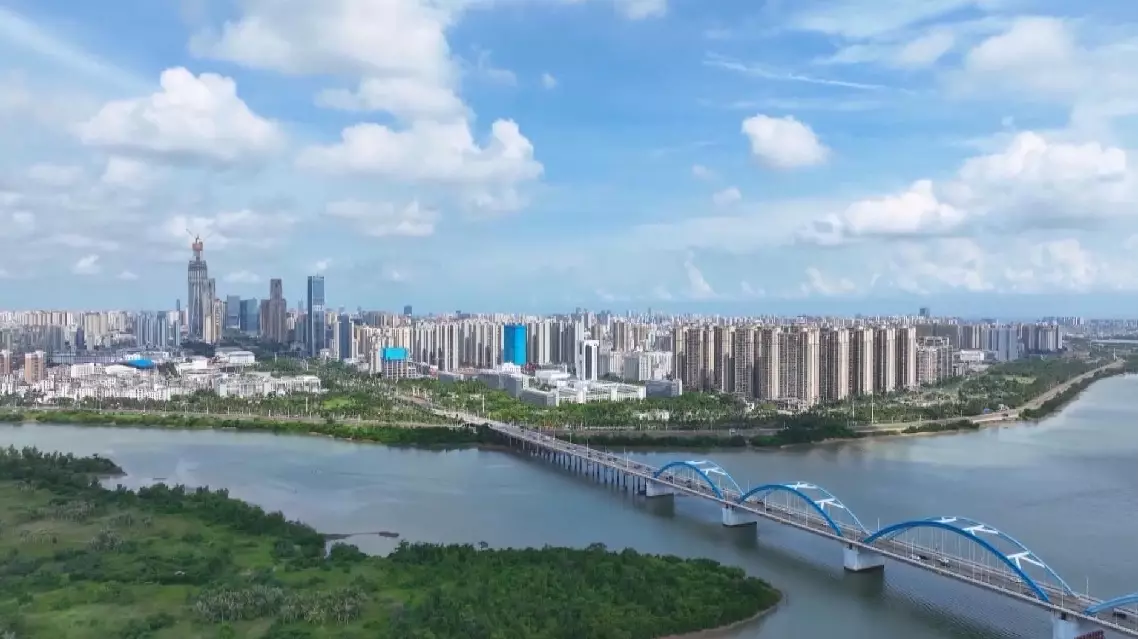
Hainan can become top-tier FTZ with unique competitive advantages: UN official