As Hainan, China's southernmost island province, gears up to launch island-wide special customs operations for the Hainan Free Trade Port (FTP) on Thursday, new policies are already catalyzing trade and reducing costs for businesses.
At Yangpu Port, one of Hainan's premier deep-water ports, a cargo ship laden with approximately 48,000 tons of soybeans from overseas exemplifies the tangible impact of these reforms.
The arrival of this massive shipment highlights the significant policy upgrades currently underway in the province.
After the ship docked at the pier, customs officers immediately conducted inspections, reflecting the increased workload as Hainan accelerates its transformation into a FTP. To meet the demands of this transition, officers are on standby around the clock, ensuring foreign grain is screened for contaminants. For the thousands of other incoming containers, the port utilizes electronic screening technology.
Selected shipments are processed through the H986, a domestically developed scanner that operates much like a giant X-ray machine, capable of examining a container in approximately 30 seconds.
As the official launch of Hainan's special customs operations on December 18 is around the corner, new reforms are being implemented to enhance efficiency.
"Zero-tariff imports and bonded goods that do not involve inspection, quarantine, or licensing requirements will be released directly," said Zhou Aiyu, head of the third section of supervision under the Supervision Division of Yangpu Port Customs.
These initiatives are aimed at accommodating the anticipated increase in trade volume, as more businesses begin to reap the benefits of the Free Trade Port reforms, including the company responsible for the soybean shipment.
Under a pivotal FTP policy introduced in 2021, goods that achieve over 30 percent value-added through processing in Hainan can enter the domestic market duty-free.
"Since July 23, 2021, when the company first started using the 30 percent value-added duty-free policy, it has already saved about 300 million yuan in import tariffs," said Zhang Hui, chair of the Ausca International Oils and Grains.
This shipment serves as a notable example of the positive outcomes resulting from Hainan's FTP reforms. Starting this month, with the initiation of island-wide special customs operations, the zero-tariff policy will expand to encompass more than 70 percent of commercial goods.
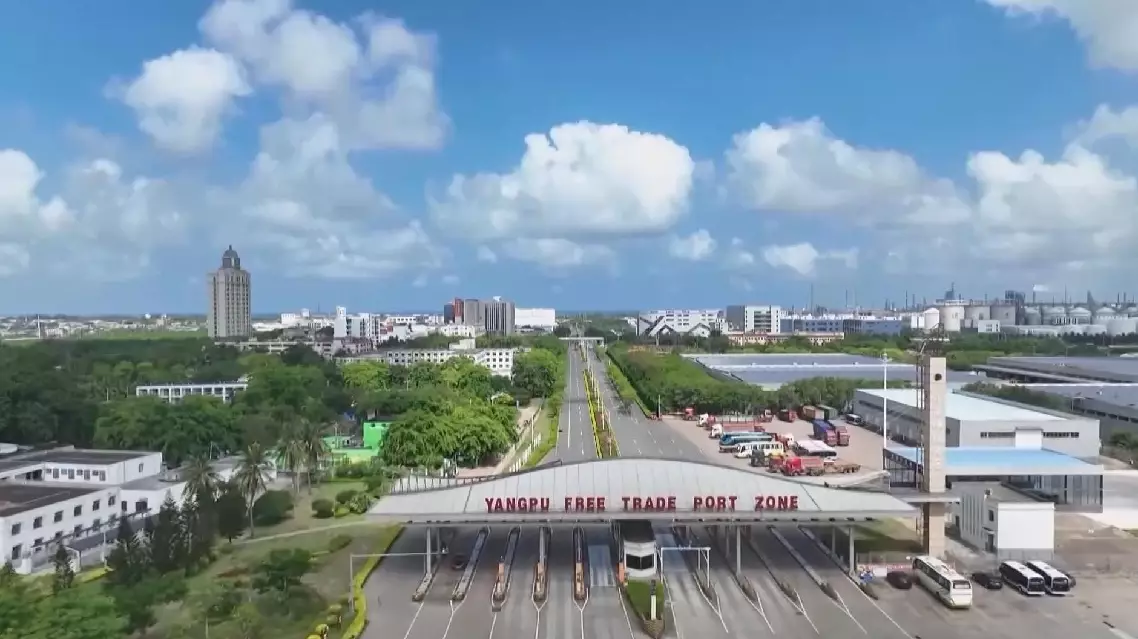
Hainan's deep-water port gears up for customs upgrade
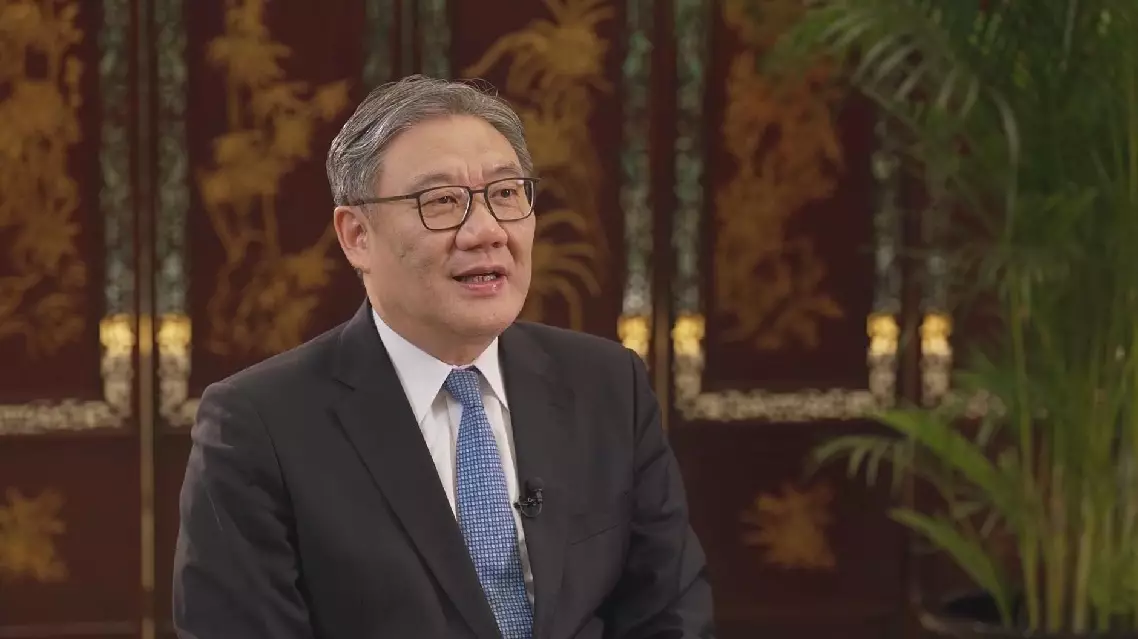
Shares of Chinese graphics processing unit (GPU) producer MetaX Integrated Circuits soared nearly 700 percent on its trading debut in Shanghai on Wednesday.
Priced at 104.66 yuan (about 14.86 U.S. dollars) in the initial public offering on the Science and Technology Innovation Board of Shanghai Stock Exchange, MetaX shares skyrocketed 687.79 percent to close at 824.5 yuan in the morning, bringing the Shanghai-based company's market capitalization to 329.882 billion yuan.
So far, the combined market cap of China's three major GPU chipmakers and computing service providers, namely Cambricon Technologies, Moore Threads, and MetaX, have exceeded the 1-trillion-yuan mark.
According to the prospectus, MetaX will focus its IPO proceeds on research and development of new high-performance general-purpose GPUs and related industrial products. Currently, the company's products are deployed in more than 10 intelligent computing clusters, and its computing network covers the national artificial intelligence (AI) public computing platform, the intelligent computing platforms of major telecom operators, and commercial intelligent computing platforms.
"We are entering the capital market as a core domestic supplier of base-level computing power. We will spend every penny wisely on developing our base-level core technologies, products, and ecosystems," said Sun Guoliang, senior vice president of MetaX.
MetaX's IPO is expected to boost the development of relevant upstream and downstream sectors, including manufacturing of chips, operating systems, general and industry-specific AI models, and intelligent agents.
"It's not a single company, but an entire industrial chain. I'm glad to see that models of various industries have been gradually applied in various production scenarios this year, with some small closed loops taking shape," Sun said.
Experts note the accelerated upgrading and application of general-purpose large language models and vertical models in various industries have created higher demands for computing power in China. The size of China's AI chip market is estimated to reach 178 billion yuan in 2025.
"Specifically, amid a shift from simple reasoning to the training of large language models, and a shift from single-modal text processing to numerous multimodal large language models, the demands for large models include graphics rendering, so the demands for computing power will be enormous in the future," said Zhang Bo, a professor at University of Shanghai for Science and Technology.
MetaX shares soar 687.79 pct on trading debut