China on Monday reaffirmed its commitment to combating corruption at home and strengthening international cooperation amid mounting global governance challenges at the opening of the 11th Session of the Conference of the States Parties to the United Nations Convention against Corruption (UNCAC).
More than 2,500 leaders and senior officials from around the world convened at Doha, the Qatari capital, for the five-day conference this week, which focuses on enhancing global cooperation in the fight against corruption.
The meeting coincides with the 20th anniversary of the Convention's entry into force, at a time when trust in institutions and the international governance system is under growing pressure.
China is playing an active role at this year's conference, with a high-level delegation led by Hua Chunying, vice foreign minister of the country. While addressing the opening ceremony, Hua reaffirmed China's resolute stance against corruption.
"The Communist Party of China (CPC) and the Chinese government stand firmly against corruption. Corruption and misconduct are grave threats to the Party, the people, and the healthy development of the economy and society. No one is above Party discipline or the law," she said.
Hua highlighted China's comprehensive approach, combining strict punishment with strong prevention. She pointed to the CPC's "eight-point regulation", now in place for more than a decade, as a cornerstone of improving conduct, strengthening oversight, and eliminating the breeding ground for corruption.
"China was among the first countries to sign and ratify UNCAC and has consistently supported international cooperation under the UN, G20, APEC, and BRICS frameworks. International anti-corruption cooperation should be based on equality, international rule of law, and multilateralism. We must reject selective enforcement, double standards, and the politicization of anti-corruption," she noted.
Hua also outlined China's Global Governance Initiative, stressing the principles of sovereign equality, people-centered development, and real results, particularly in asset recovery and judicial cooperation.
"China stands ready to work with all countries to build a greater political consensus, strengthen legal foundation, intensify joint action, foster a world of integrity and clean governance, advance a more just and equitable global governance system against corruption, and move closer to a community with a shared future for humanity," said the Chinese vice foreign minister.
As corruption grows more complex and cross-border in nature, China has reaffirmed its strong commitment to global anti-corruption cooperation.
The five-day conference is expected to push for stronger implementation of the UNCAC, reinforcing integrity as a cornerstone of sustainable development and global stability.
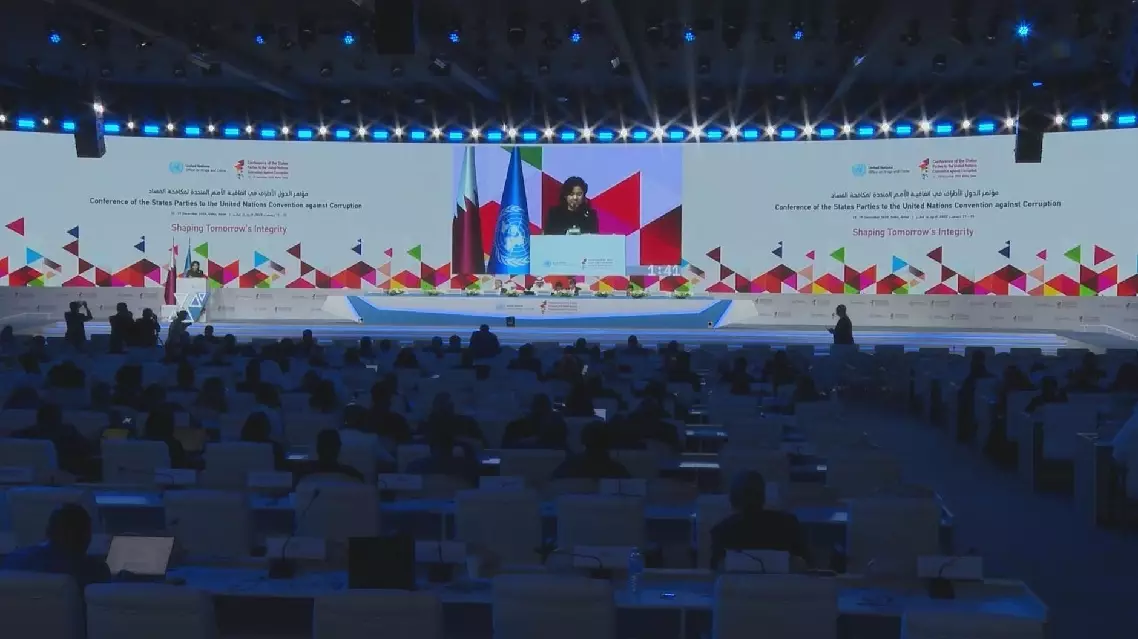
China reaffirms commitment to global anti-corruption cooperation at UNCAC conference