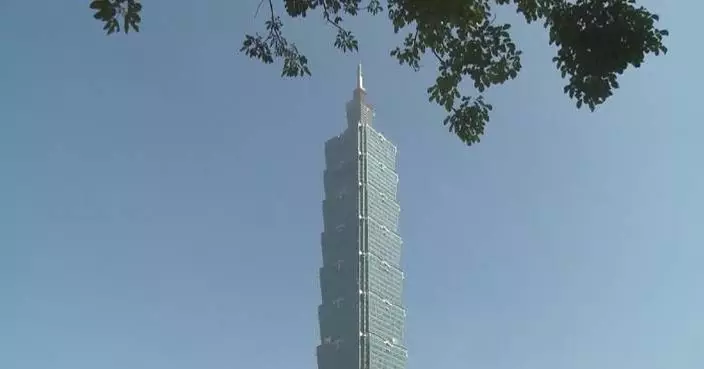
China's 240-hour visa-free transit program has greatly increased the number of visits by foreigners since its implementation 12 months ago.
The latest statistics from the National Immigration Administration (NIA) show that since the official launch of the program last December, 40.6 million foreign nationals have entered China through various ports nationwide, representing a 27.2 percent year-on-year increase. Among them, the number of travelers benefiting from the 240-hour transit visa exemption policy has grown by 60.8 percent year on year.
As national entry hubs, the airports in Beijing, Shanghai, and Guangzhou have tapped into the 240-hour visa-free transit policy, seeing remarkable growth in foreign passenger traffic.
Beijing recorded over 3.4 million international tourist arrivals, 55 percent of whom benefited from the program. Shanghai welcomed 5.346 million international travelers, 56 percent of whom benefited from the program. Guangzhou recorded over 3.2 million international visitors, over 57 percent of whom entered without a visa under the program.
Ports covered by the program in other regions of China saw even greater booms of foreign arrivals.
The number of foreign visitors entering east China's Xiamen City under visa-free program has surged over threefold, while Liaoning in northeast China saw a 5.7-fold increase. In central China's Hunan Province, the number of visa-free foreign visitors to Changsha and Zhangjiajie in the past 12 months exceeded the total of the preceding nine years.
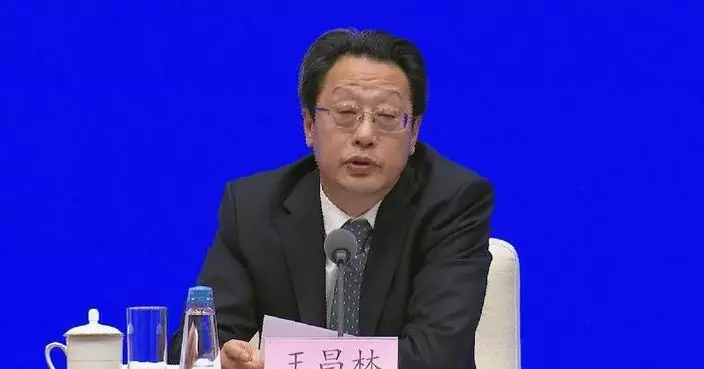
"The optimization of the visa-free transit policy has better accommodated the diverse needs of foreign travelers. Many of them came to China for short-term weekend getaways or in-depth cross-province and cross-city tours. Visa-free entry has become a primary channel for foreign nationals visiting China for tourism and business," said Liu Jia, deputy head of NIA's foreigner management department.
"Since the implementation of the 240-hour visa-free transit policy, the total number of inbound tourists has increased by 55 percent year on year, with the highest proportion of visitors staying for 4 to 7 days," said Liu Ting, PR director from a Chinese online trip agency.
Authorities across China have also spared no effort in facilitating customs clearance for foreigners.
Ports in Beijing, Shanghai, and Guangzhou have established dedicated lanes and implemented measures such as "one-stop processing" and "online declaration." Shanghai has introduced electronic self-service terminals for declaration, complemented by multilingual services to ensure every arriving passenger feels welcomed.
"I think it's great. It makes us super easy. Particularly in business, you don't have months of advanced notice when you have to do work trips," said a traveler from the United States.
China officially extended the permitted stay for eligible foreign travelers from the original 72 and 144 hours to 240 hours on Dec 17, 2024. Travelers from 55 eligible countries who meet certain criteria can enter China through 65 eligible ports in 24 provincial-level regions and stay in the country for up to 240 hours without a visa before heading to a third destination.
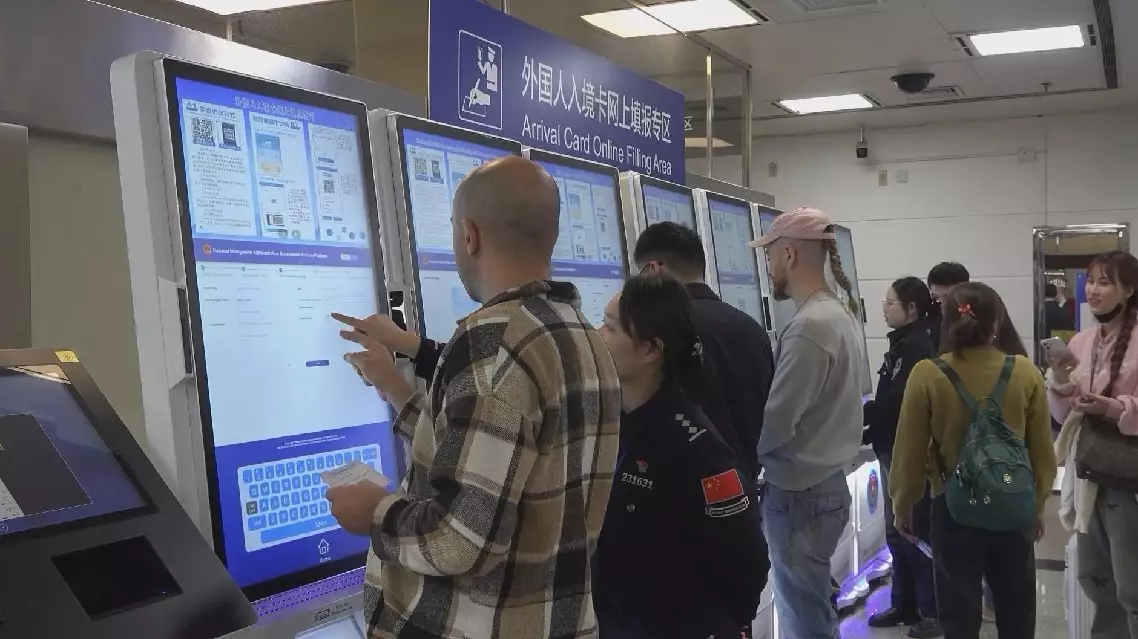
China's visa-free transit policy boosts inbound tourism
U.S. President Donald Trump said on Friday that he estimates a deal with Iran will be signed "in the next day or two."
Trump said in an interview with Israel's Channel 12 News that the United States and Iran will probably meet over the weekend to finalize a deal to end the war. "The Iranians want to meet and make a deal," he said.
He said "the naval blockade on Iran is helping to make a deal. I will not lift it until we make a deal," adding that "the biggest part of this deal is that it will make Israel safer. This deal is good for Israel."
According to the channel, one component of the deal under discussion is that the United States will release 20 billion U.S. dollars in frozen Iranian funds.
In exchange, Iran would give up its stockpile of enriched uranium, and would be only allowed to have nuclear research reactors to produce medical isotopes, all above ground.
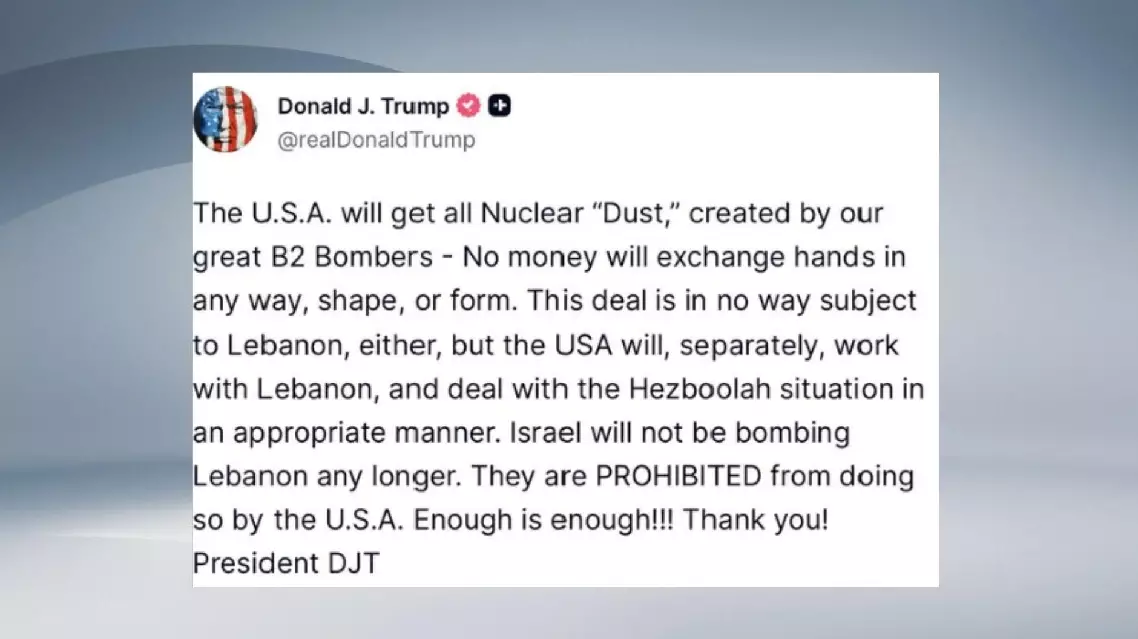
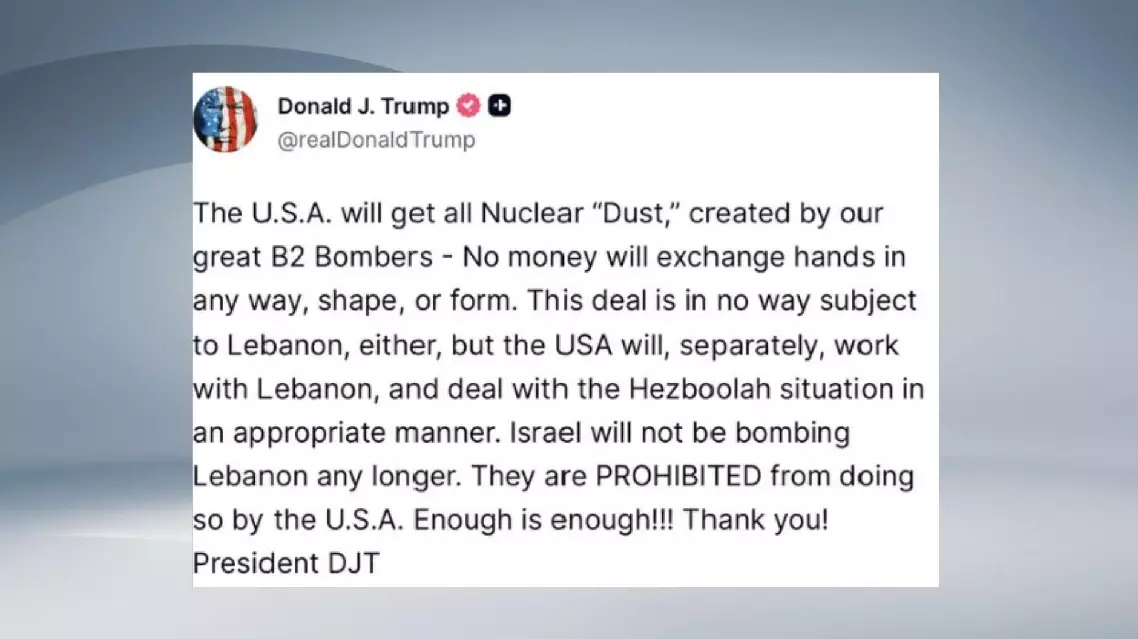
Trump also stressed that Israel must stop the strikes on Lebanon, saying, "They can't keep blowing up buildings. I'm not going to allow that."
Also on Friday, Trump said in a phone interview with Bloomberg that a deal to end the U.S.-Israeli war with Iran is mostly complete as talks over a lasting peace deal will "probably" be held this weekend in Pakistan.
Trump said in the phone interview that Iran agreed to suspend its nuclear program indefinitely, and will not receive any frozen funds from the United States.
"Most of the main points are finalized. It'll go pretty quickly," Trump said.
Asked if he would travel to Pakistan to sign the potential deal, Trump said: "I may."
Trump again denied that the moratorium on Iran's nuclear program would expire after 20 years. "No years, unlimited," Trump said.
The United States will get all of Iran's nuclear "dust" with no money having exchanged hands "in any way, shape, or form," Trump wrote on social media earlier on Friday. Multiple Western media outlets have interpreted Trump's reference to nuclear "dust" as meaning Iran's stockpile of enriched uranium.
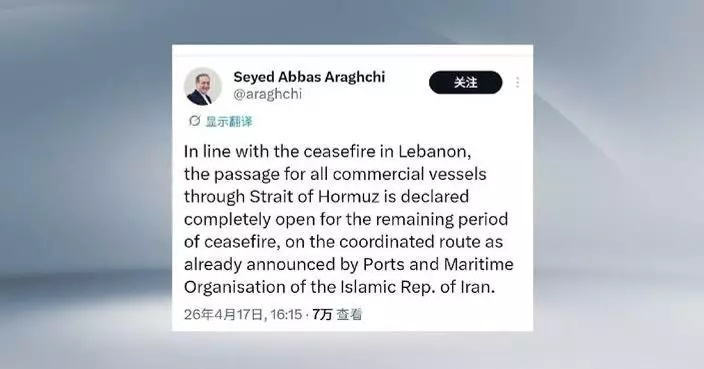
Iran has yet to comment on any deal beyond the reopening of the Strait of Hormuz, nor on claims made by Trump that Tehran had offered concessions, including over the key issue of its nuclear program.
If the United States continues its naval blockade of the Strait of Hormuz, Iran will consider it a violation of the ceasefire between the two countries and will close the waterway, the semi-official Tasnim news agency reported Friday, citing an informed source close to the Supreme National Security Council.
The Iranian side has yet to respond to the media report on the enriched uranium issue.
The United States and Iran had their first round of negotiations in Pakistan's Islamabad last weekend to ease tension in the Middle East. The talks, which failed to produce an agreement, took place after a ceasefire was announced on April 8 between Iran, the United States, and Israel, following 40 days of fighting.
Iran tightened control over the Strait of Hormuz after the United States and Israel launched joint attacks on the country on Feb. 28. The United States also imposed a naval blockade on the strait following the failed negotiations in Islamabad.
Earlier on Friday, both Washington and Tehran confirmed that the strait had been completely open for all commercial vessels. However, Trump said on Truth Social that the U.S. naval blockade would "remain in full force." In response, Iran warned of closing the waterway again if the U.S. blockade continues.
Trump says may sign deal with Iran "in the next day or two": Israeli media
Trump claims peace deal with Iran mostly complete: report