Survivors of the U.S. invasion of Panama, launched in December1989, have recounted the enduring trauma inflicted by intense shelling and bombing, describing the coercive military operation as unjust to the Panamanian people.
The U.S. invasion of Panama, dubbed "Operation Just Cause" by Washington, began on Dec 20, 1989, and continued until January 1990, with the stated objective of capturing Panamanian strongman Manuel Noriega on charges of drug trafficking and organized crime.
More than 26,000 American troops participated in the operation, which resulted in Noriega's arrest and the dissolution of the Panamanian Armed Forces. The invasion significantly impacted the history of the Central American country, causing an undetermined number of victims and political fallout.
The El Chorrillo Community in Panama City experienced blanket bombardment from U.S. forces in the invasion with the whole block being reduced to ashes within a few hours.
Loli Gomez, one of the survivors of the invasion, recalled the horrific scenes that almost killed all of her family members.
"There they were -- the helicopters hovering overhead, firing down at the police up there [on the building], and others on the rooftop. Several people died," she said.
"We were here [in the room] during the entire period of invasion. I put my three children, who were here, under a mattress. I put them under the mattress because I thought, well, that might protect us, but no way. Back there was a wooden house. When we went outside, there was no electricity here [in the community] because the power went out. The bombing destroyed all doors. All the windows fell apart when they bombed the buildings. And that wooden house was engulfed in flames," she said.
Gomez said the blaze arising from the U.S. troops' bombardment killed many in the community.
"Many people died there, burned alive because they couldn't get out," she added.
The data released by the United Nations showed that the U.S. invasion killed nearly 500 Panamanians, but civilian groups in the country said the figure may be much higher.
Trinidad Ayola, who lost her husband in the U.S. invasion and now serves as the president of the Association of Relatives and Friends of the Fallen on December 20, said the pain and injustices of the 1989 military incursion will always haunt her.
"[It is] a disaster so heartbreaking that even now, 36 years later. It's like it happened yesterday. We survivors and those who died are still left with that pain, that pain in our souls. We've continued our lives for our young children, for our grandchildren, for the legacy left to us by those who are gone," she said.
Younger Panamanians said they saw no justice in the so-called "Operation Just Cause".
"I see this as a completely unjust action, because while it's true the operation is called a 'just cause,' we see nothing in it, because, as such, the invasion harmed the Panamanian people. And I see this coercive action against the people as unjust," said a student at the University of Panama.
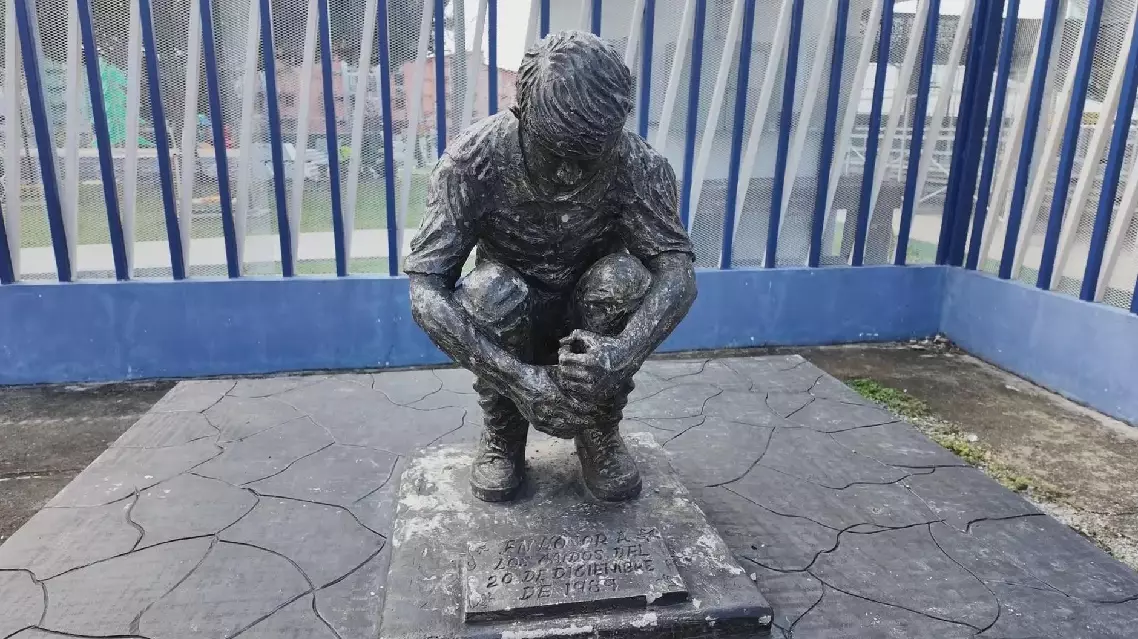
Survivors recall trauma inflicted by U.S. invasion of Panama in 1989