Syria is witnessing an unprecedented wave of returning refugees, as thousands attempt to rebuild their lives after years of displacement, confronting devastation, poverty, and an uncertain future.
Thirty-three-year-old Qadim Matar is one of the refugees returning to Syria. After 14 years of displacement, her life was shattered by war. She returned home with her three children, only to find that survival in Syria would mark the start of yet another ordeal.
Upon arriving in Damascus, Matar and her family had no income, no place to live in, and no social network to rely on. When she finally stood at the entrance of her former home in Daraya, a suburb of Damascus, what she saw was a burned and collapsed structure reduced to rubble.
"The house is badly damaged. This means we have to start from scratch. Everything needs to be rebuilt. There is nothing left in the house now. Daraya has suffered massive destruction. It's not just my home. What about the people who lost their homes? Where are they now? Where do they live? Are they displaced like us? Where will the money come from to rebuild our homes?" she said.
Matar's challenges reflect the reality confronting millions of Syrians returning from abroad. Inside the war-battered country, more than 7 million people remain internally displaced. Infrastructure is severely damaged, job opportunities are scarce, and humanitarian funding remains critically inadequate.
"Securing job opportunities is very difficult. I think only rebuilding our homes can give people a sense of safety," she said.

Syrian returnees struggling to rebuild lives from ruins
China's service industry maintained steady growth in the first 11 months of the year, with the services production index up 5.6 percent year on year, official data showed.
As investors pile into high-tech services and the potential of service consumption continues to be unleashed, the tertiary sector is playing an increasing role in supporting the national economic growth, according to the authorities.
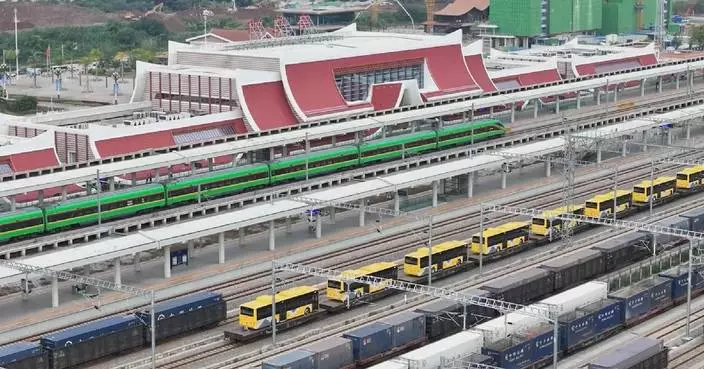
The business activity indices for rail transport, monetary financial services and other industries were all above 55 percent in the expansion range in November.
Investment in high-tech services industries rose by 4.1 percent in the first 11 months, which is 0.6 percentage points higher than the growth rate of the same period last year.
Particularly, investment in information services industries surged by 29.6 percent in the period.
From January to November, the retail sales of services grew faster than the retail sales of goods, seeing a year-on-year increase of 5.4 percent and a growth rate recovery for three consecutive months.
The retail sales of cultural, sports and recreational services, and communication and information services both recorded double-digit year-on-year growths in the period.
"The structural upgrading of industries, especially the continuous growth of new industrial drivers, has effectively driven the expansion of modern producer services. In the meantime, the sustained release of service consumption demand has also driven the overall upgrading of modern consumer services. Currently, the added value of China's service sector accounts for about 60 percent of GDP and contributes also about 60 percent to national economic growth, providing strong support for the stable operation of the entire national economy," said Zou Yunhan, deputy director of the Macroeconomic Research Office of the State Information Center under the National Development and Reform Commission.

China’s service industry maintains steady growth in Jan-Nov