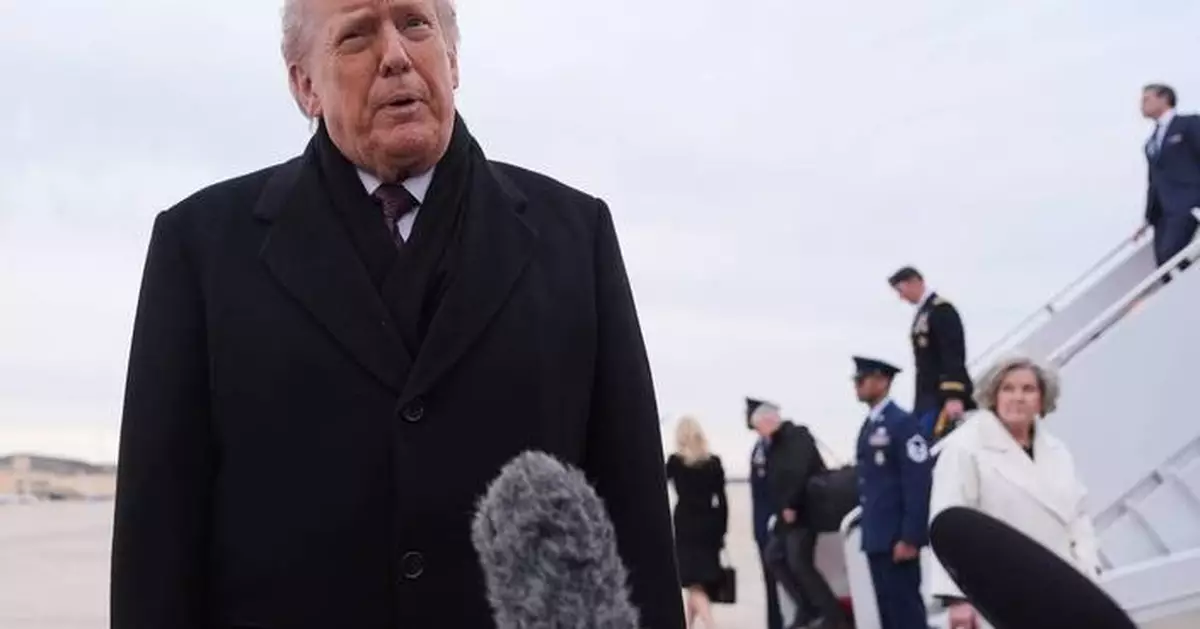
HARARE, Zimbabwe (AP) — Africa has been the hardest hit by the Trump administration’s decision to add 20 countries to a list of travel restrictions but reactions on the continent of some 1.5 billion people were largely muted on Wednesday as affected nations mulled the implications of the measure and their next moves.
The new restrictions expand on the list from June and are broader and more punitive than those during Trump’s first presidency, which largely targeted Muslim-majority countries and which were reversed in 2021.
The African Union urged the United States to protect its borders in “a manner that is balanced, evidence-based, and reflective of the long-standing ties and partnership" between the U.S. and Africa, the bloc's spokesman Nuur Mohamu said.
The stance was a repeat of the statement by the bloc in June, when U.S. President Donald Trump revived the travel restrictions from his first term in office.
Of the five countries whose citizens joined the list on Tuesday of those banned from entering the United States, four are in Africa — Burkina Faso, Mali, Niger and South Sudan, which was already facing significant travel restrictions. Also on the list are Syria and people with travel documents issued by the Palestinian Authority, which runs the West Bank.
Some other countries — including Sierra Leone in Africa and Laos in Asia — were subject to partial restrictions during Trump's first presidency and also in June, and were now moved to the full restrictions list.
Twelve of the 15 countries that face partial restrictions are also in Africa. They include Angola, Benin, Ivory Coast, Gabon, Gambia, Malawi, Mauritania, Nigeria, Senegal, Tanzania, Zambia and Zimbabwe. The rest are two Caribbean nations — Antigua and Barbuda, and Dominica — and Tonga in the South Pacific.
Trump’s expanded measures also link entry limits to security, documentation and visa-overstay concerns.
The 55-nation African Union warned of the “potential negative impact of such measures on people-to-people ties, educational exchanges, commercial engagement, and the broader diplomatic relations” built over decades.
Sierra Leone, now moved to the full ban list, said in a statement Wednesday that it hoped to engage Washington and get it to review the decision. The impoverished West African country said it would “remain committed to strengthening international cooperation and addressing immigration concerns raised by the U.S. government,” adding that officials are “actively engaged in ongoing, constructive dialogue with U.S authorities.”
In Mali, which was added to the full ban list on Tuesday, foreign ministry press officer Samuel Saye said it was “too early for us to comment” — something many other officials across Africa echoed.
Several analysts and activists described the measures as unfair, a sign of incoherent U.S.–Africa relations and an opportunity for Washington’s rivals such as Russia and China to further entrench ties with Africa.
Some ordinary citizens expressed their unease and concerns.
“I believe this position is unfair because it paints all Nigerians with the same brush,” said Ramlah Ibrahim Nok, a business lawyer in Nigeria’s capital, Abuja. Nigeria is on the list of partial restrictions.
Many Nigerians travel for “education, business and tourism,” she said and added that authorities in her own country should also do their part in confronting issues such as visa overstays by Nigerians who travel to the U.S.
Beverly Ochieng, an analyst at Control Risks Group in Dakar, Senegal's capital, predicted that Trump's ban will likely make relations between the U.S. and various African countries "incoherent, unpredictable and challenging.”
The measure also reduces prospects for cooperation and may push some governments to look elsewhere to build strong partnerships.
"It’s very unfortunate,” said Mohamed Keita, a 45-year-old Malian resident, adding that Washington's “decision may penalize Malians who do business with the United States.”
Also in Mali, Abdoulaye Fofana, 31, said he feared retaliation if Malian authorities "apply the principle of reciprocity, it is the bi-national Malians who will be affected.”
Sports enthusiasts are also worried, especially those hoping to travel to the 2026 soccer World Cup matches in the U.S., which is co-hosting the competition with Canada and Mexico.
Pape Seye, a taxi driver in Dakar, said he heard of “FIFA exemptions for the players and staff of the qualified teams” but was concerned whether "fans will be able to go as well” under the new measure.
In South Sudan, which was added to the full ban list, human rights activist Rajab Mohandis said the measure is “an open expression of increasing frustration of the Trump administration with the government" in the African country.
He added that the ban is “a way of invoking diplomatic consequences” following U.S. concerns over the slow implementation of a peace agreement signed in 2018 to end five years of conflict in South Sudan that left more than 400,000 people dead.
Associated Press writers from across Africa contributed to this report.
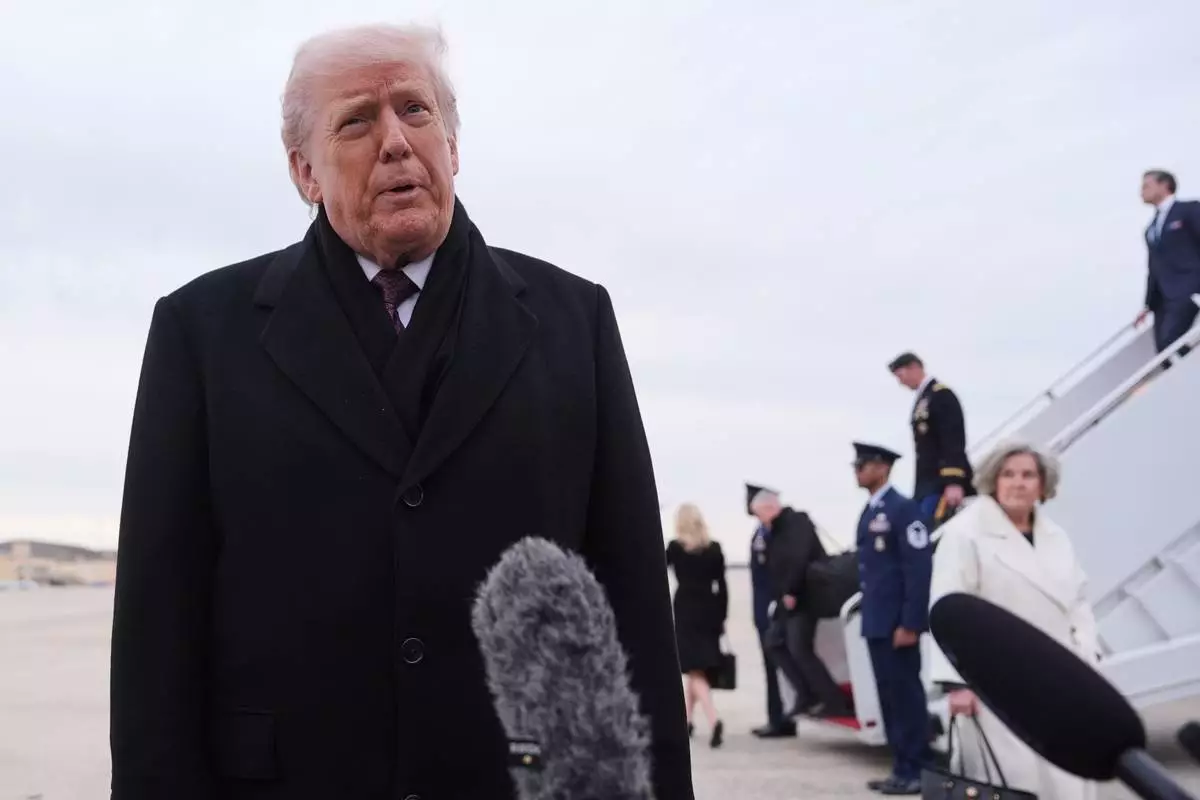
President Donald Trump talks to reporters after arriving on Air Force One, Wednesday, Dec. 17, 2025, at Joint Base Andrews, Md., after attending a casualty return at Dover Air Foce Base. (AP Photo/Evan Vucci)
LONDON (AP) — U.S. President Donald Trump and his Defense Secretary Pete Hegseth have been damning of the U.K.'s naval capabilities. Their jibes may have stung in a country with a long and proud maritime history, but they do carry some substance.
The U.K. has been at the forefront of Trump’s ire since the onset of the Iran war on Feb. 28, when British Prime Minister Keir Starmer refused to grant the U.S. military access to British bases.
Though that decision has been partly reversed with the decision to permit the U.S. to use the bases, including that of Diego Garcia in the Indian Ocean, for so-called defensive purposes, Trump is adamant he was let down. He has repeatedly lashed out at Starmer and branded the Royal Navy’s two aircraft carriers as “toys.”
“You don’t even have a navy,” he told Britain's Daily Telegraph in comments published Wednesday. "You’re too old and had aircraft carriers that didn’t work.”
Hegseth, meanwhile, said sarcastically that the “big, bad Royal Navy” should get involved in making the Strait of Hormuz safe for commercial shipping.
For numerous reasons, the Royal Navy is not as big and bad as it used it to be when Britannia ruled the waves. But it's not as feeble as Trump and Hegseth imply and is largely similar with the French navy, which it is often compared with.
“On the negative side, there is a grain of truth, with the Royal Navy being smaller than it has been in hundreds of years,” said professor Kevin Rowlands, editor of the Royal United Services Institute Journal. “On the positive side, the Royal Navy would say that it’s entering its first period of growth since World War II, with more ships set to be built than in decades.”
It’s not that long ago that Britain could muster a task force of 127 ships, including two aircraft carriers, to sail to the south Atlantic after Argentina’s invasion of the Falkland Islands. That 1982 campaign, which then-U.S. President Ronald Reagan was lukewarm about, marked the final hurrah of Britain’s naval pedigree.
Nothing on that scale, or even remotely, could be accomplished now. Since World War II, Britain’s combat-ready fleet has declined substantially, much of it linked to changing military and technological advances and the end of empire. But not all.
The number of vessels in the Royal Navy fleet, including aircraft carriers, destroyers frigates and submarines has fallen from 166 in 1975 to 66 in 2025, according to The Associated Press' analysis of figures from the Ministry of Defense and the House of Commons Library.
Though the Royal Navy has two aircraft carriers at its command, there was a seven-year period in the 2010s when it had none. And the number of destroyers has halved to six while the frigate fleet has been slashed from 60 to just 11.
The Royal Navy faced criticism for the time it took to send the HMS Dragon destroyer to the Middle East after the war with Iran broke out. Though naval officials worked night and day to get it shipshape for a different mission than the one it was readying for, to many it symbolized the extent to which Britain’s military has been gutted since the fall of the Berlin Wall in 1989.
For much of the Cold War, Britain was spending between 4% and 8% of its annual national income on its military. After the Cold War, that proportion steadily dropped to a low of 1.9% of GDP in 2018, fuel to Trump's fire.
Like other countries, Britain, largely under the Labour governments of Tony Blair and Gordon Brown, sought to use the so-called “peace dividend” following the collapse of the Soviet Union to divert money earmarked for defense to other priorities, such as health and education.
And the austerity measures imposed by the Conservative-led government in the wake of the global financial crisis of 2008-9 prevented any pickup in defense spending despite the clear signs of a resurgent Russia, especially after its annexation of Crimea and parts of eastern Ukraine.
In the wake of Russia's full-blown invasion of Ukraine in 2022, and with another Middle East war underway, there's a growing understanding across the political divide that the cuts have gone too far.
Following the Ukraine invasion, the Conservatives started to turn the military spending tide around. Since the Labour Party returned to power in 2024, Starmer is seeking to ramp up British defense spending, partly at the cost of cutting the country's long-vaunted aid spending.
Starmer has promised to raise U.K. defense spending to 2.5% of gross domestic product by 2027, and the updated goal is now for it to rise to 3.5% of GDP by 2035, as part of a NATO agreement pushed by Trump. That, in plain terms, will mean tens of billions pounds more being spent — a lot more kit for the armed forces.
The pressure is on for the government to speed that schedule up. But with the public finances further imperilled by the economic consequences of the Iran war, it's not clear where any additional money will come.
The jibes will likely keep coming even though the critiques are unfair and far from the truth, said RUSI's Rowlands, who was a captain in the Royal Navy.
“We are dealing with an administration that doesn’t do nuance," he said.
This story has been corrected to show there were 166 vessels in 1975, not 466.
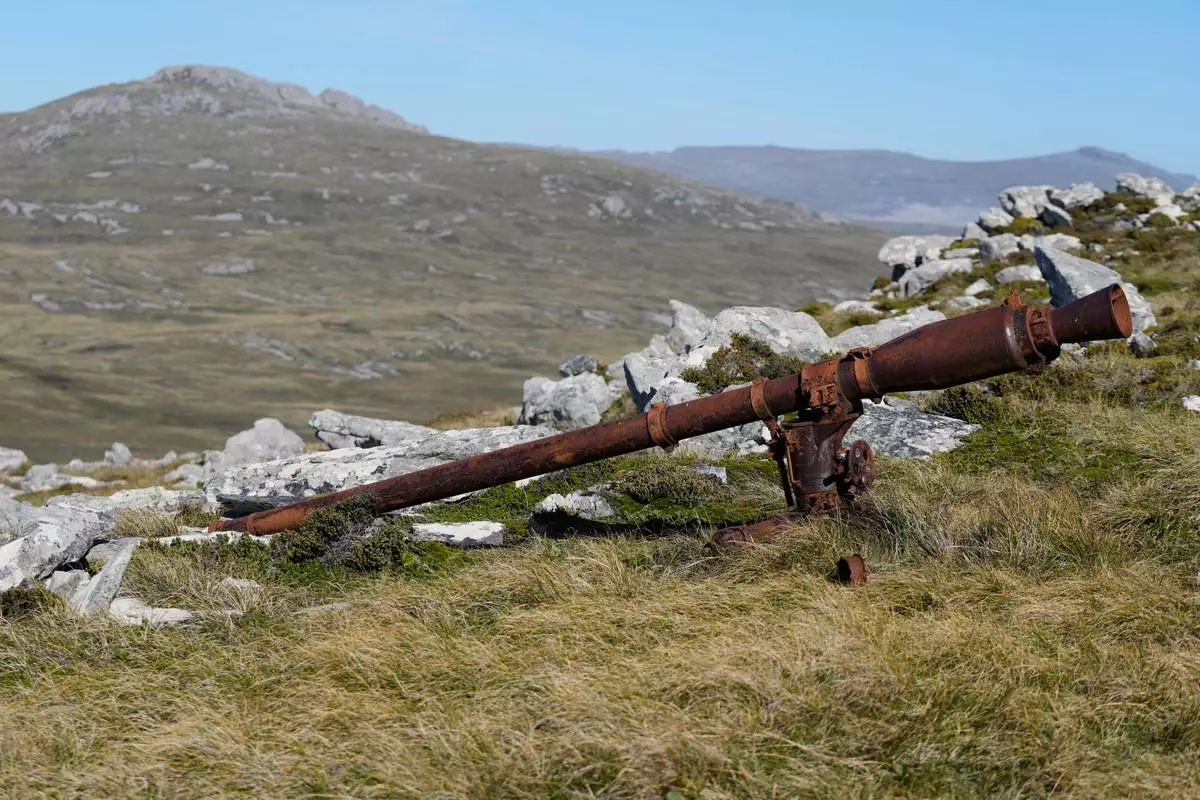
An artillery piece from the 1982 Falklands War between Argentina and Britain lies on Mount Longdon on the Falkland Islands, also known as Islas Malvinas, Monday, March 16, 2026. (AP Photo/Ricardo Mazalan)
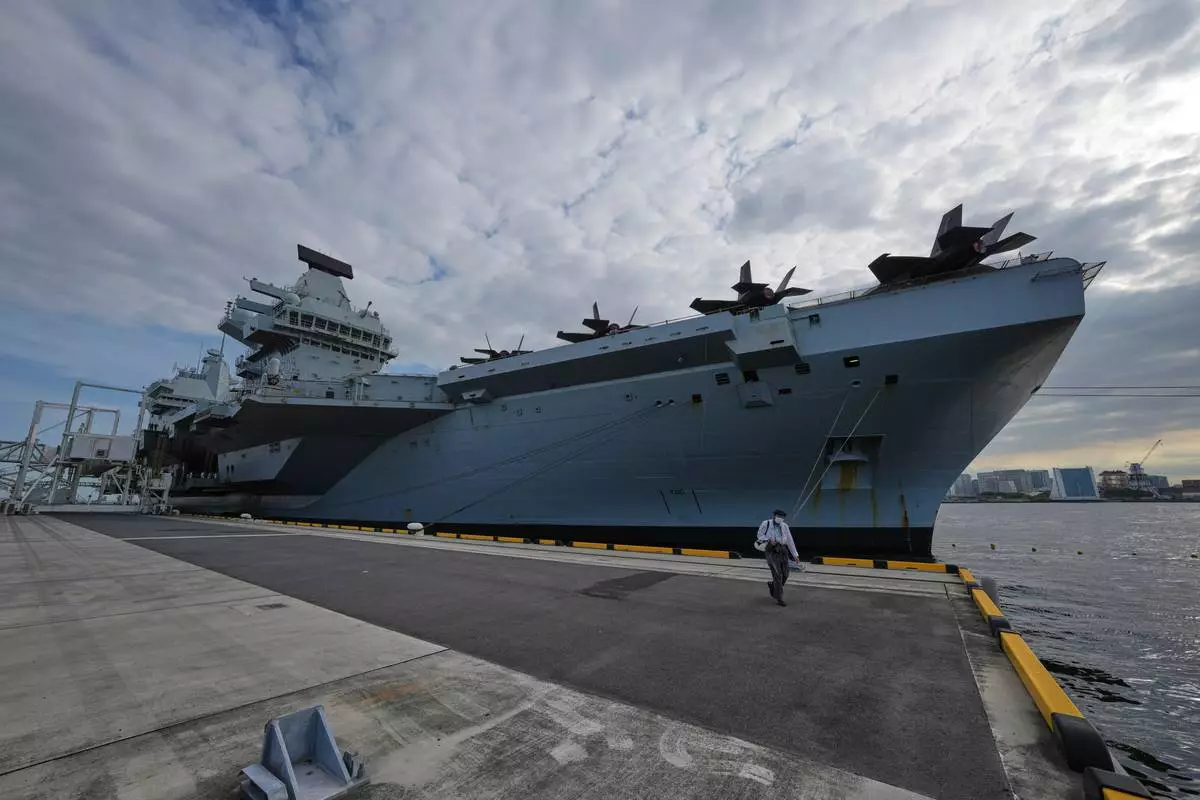
FILE - The Royal Navy aircraft carrier HMS Prince of Wales is pictured before its port call in Tokyo, Thursday, Aug. 28, 2025. (AP Photo/Eugene Hoshiko, File)
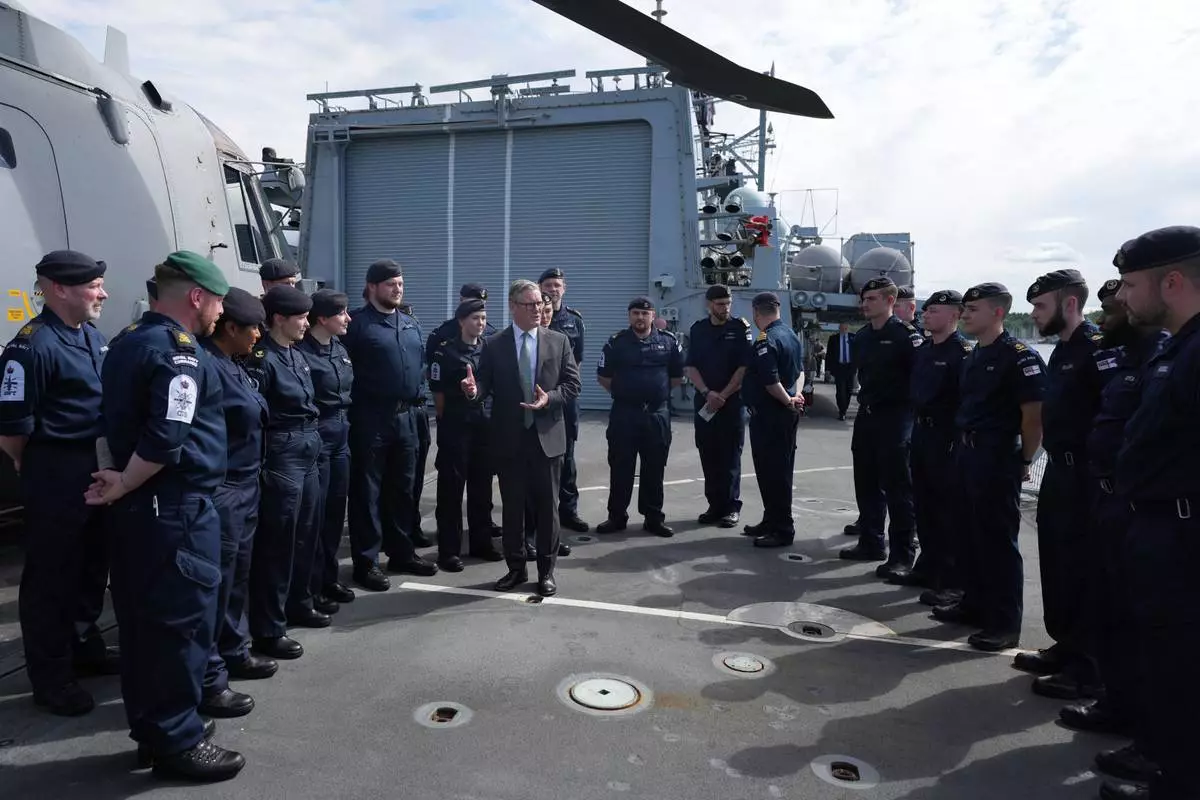
FILE - Britain's Prime Minister Keir Starmer speaks to Royal Marines onboard the HMS ST Albans in Oslo, during his visit to Norway on Friday, May 9, 2025.(AP Photo/Alastair Grant, Pool, File)
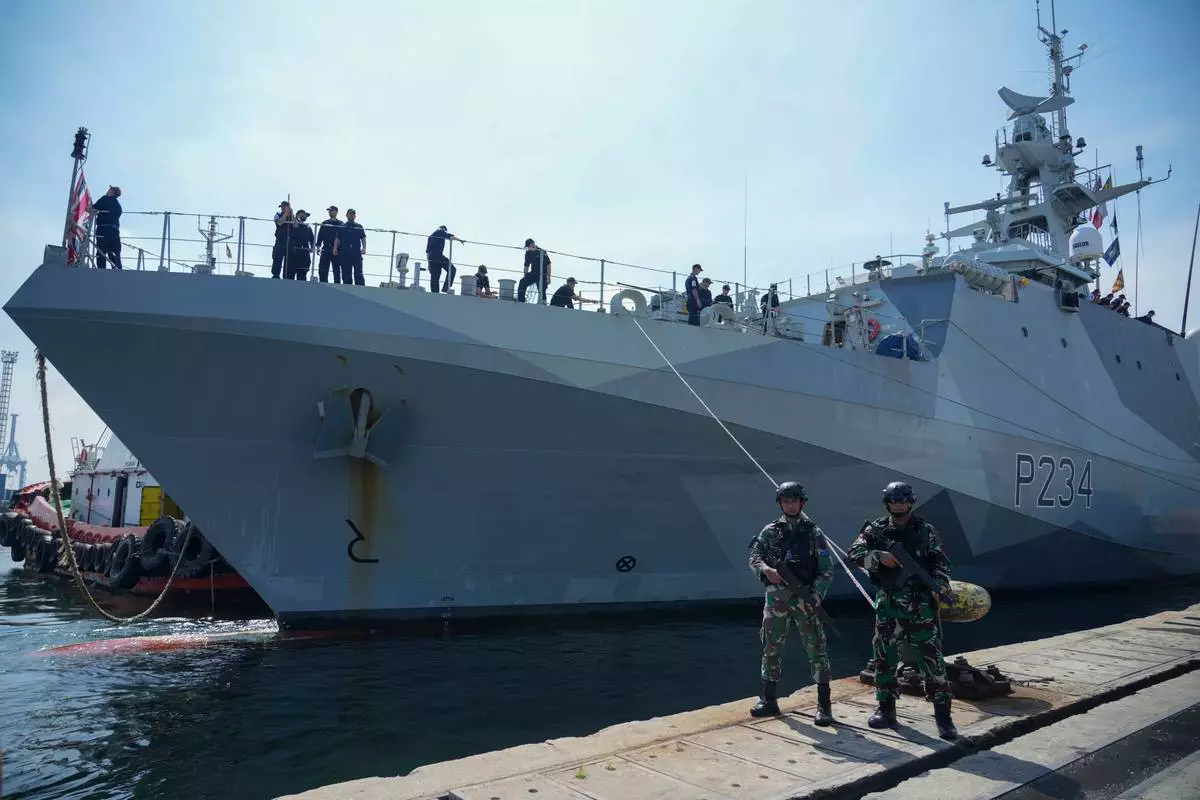
FILE - Indonesian soldiers stand guard as Royal Navy offshore patrol vessel HMS Spey is docked at Tanjung Priok Port during a port visit in Jakarta, Indonesia, Wednesday, Jan. 15, 2025. (AP Photo/Tatan Syuflana, File)
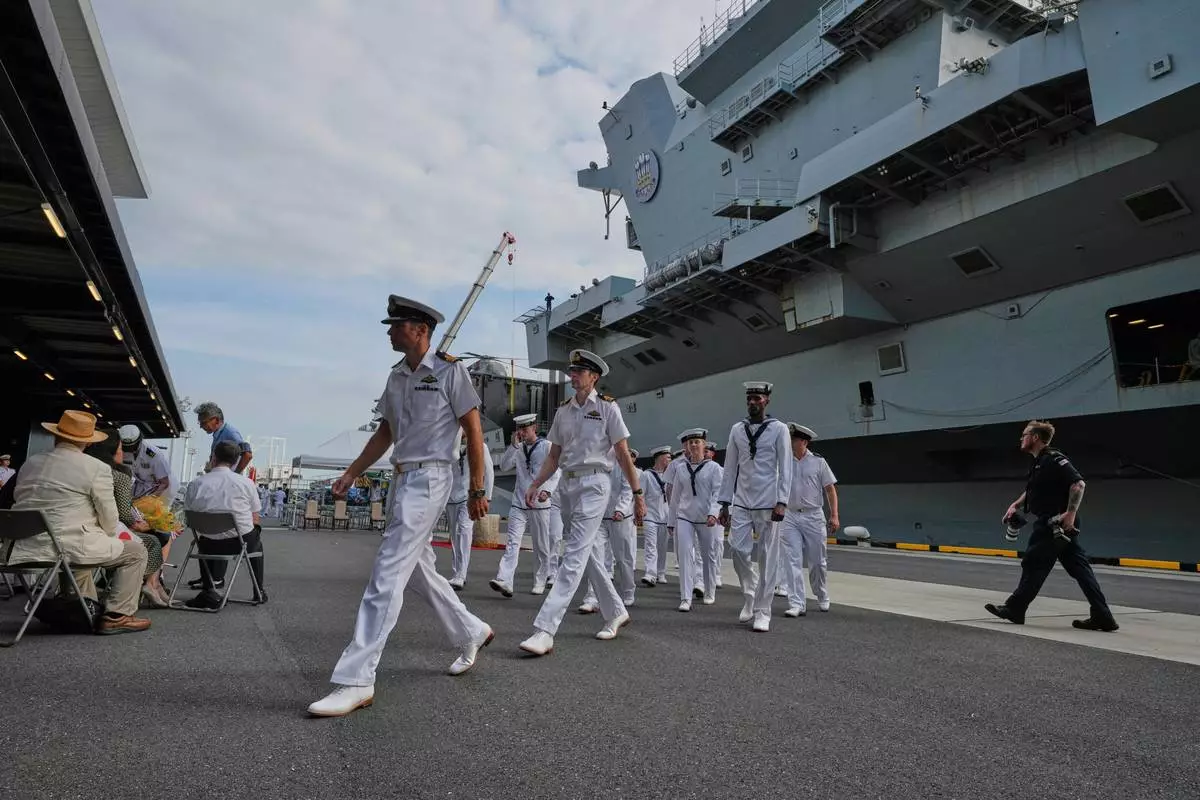
FILE - Crews walk near the Royal Navy aircraft carrier HMS Prince of Wales before its port call in Tokyo Thursday, Aug. 28, 2025. (AP Photo/Eugene Hoshiko, File)