Australian Prime Minister Anthony Albanese acknowledged in a local radio interview on Wednesday that the deadly shooting at Sydney's Bondi Beach has shown Australia's intelligence system has serious issues and needs to undergo review.
The horrific incident occurred at the renowned tourist attraction on Sunday, when a father and son gunmen opened fire on a crowd who had gathered to celebrate the the first day of Hanukkah, the Jewish Festival of Lights. The brutal attack left 16 people dead, including one of the perpetrators, and over 40 injured, making it Australia's worst mass shooting since 1996.
It was later revealed that the Australian Security Intelligence Organization (ASIO) had previously investigated Naveed Akram, the younger of the gunmen involved in the shooting, several years ago, but did not designate him as a person of interest.
Albanese said the ASIO investigation into Akram in 2019 and its assessment at the time need to be re-examined. He said the Australian government must conduct a comprehensive review of how the intelligence system operates.
In an interview on Tuesday, Albanese said the father-son gunmen responsible for carrying out the shooting appeared to have been driven by extremist ideology.
Australian media reported on Tuesday, citing New South Wales police sources, that the gunmen, 24-year-old Naveed Akram and 50-year-old Sajid Akram, had traveled to the Philippines in November this year and only returned to Australia weeks before the incident.
Media reports on the same day, citing New South Wales police sources, said that the gunmen, including the now deceased 50-year-old Sajid Akram and his 24-year-old son Naveed, had traveled to the Philippines in November and only returned to Australia weeks before the incident.
Meanwhile, an Indian government official disclosed on Tuesday that Sajid Akram, who originally hails from India's Hyderabad, emigrated to Australia on a student visa in 1998, with reports stating that he rarely returned to his native land afterwards but did retain his Indian passport.
Victims in the attack ranged in age from just 10 to 87 years old, while 41 people, including four children, were taken to hospital after the attack.
As of Wednesday afternoon, 20 injured people were still receiving care in Sydney hospitals, five of whom were in critical or critical but stable conditions.
On Wednesday, the main scene of the shooting incident remained cordoned off and closed to the public, as investigative and evidence-gathering procedures continue. Police say it remains unclear when the site will be fully re-opened.
Local residents are still in a state of disbelief over a brutal crime which has shocked the entire nation and the world, with some even paying a visit to the scene as they try to come to terms with the tragedy.
"I came here because I feel like I needed to be at the place [where the incident took place]. And I thought that that would make it more real for me. So I came with flowers from the garden and with a friend. It hasn't really made it more real. It's still very, very unbelievable," said Judi, a local resident.
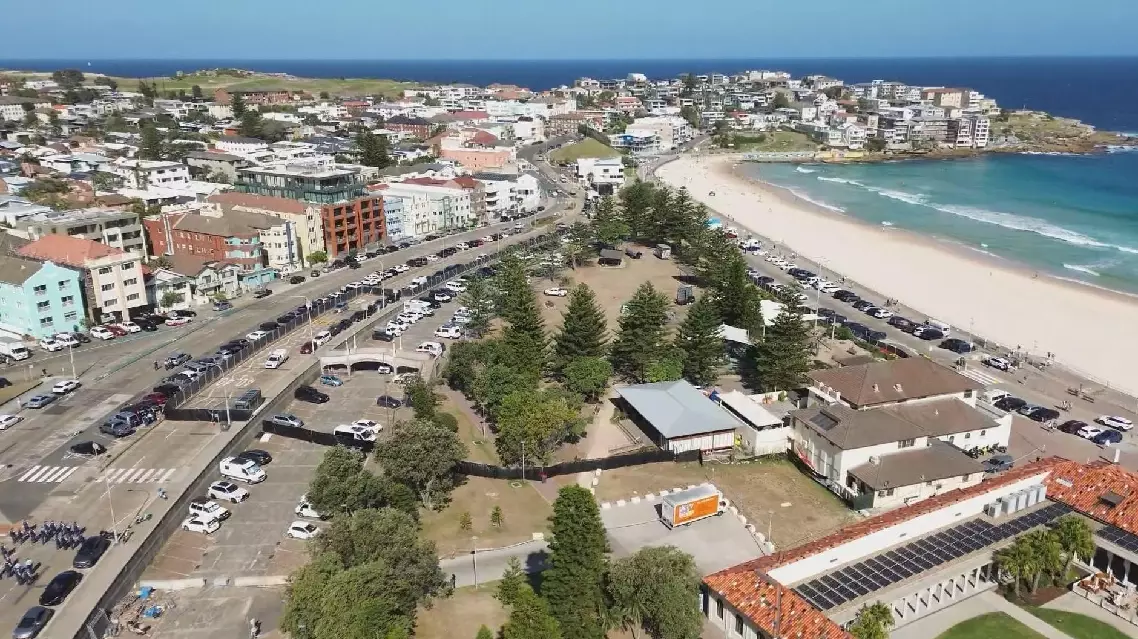
Bondi beach attack exposes flaws in Australia's Intelligence system: Australia PM