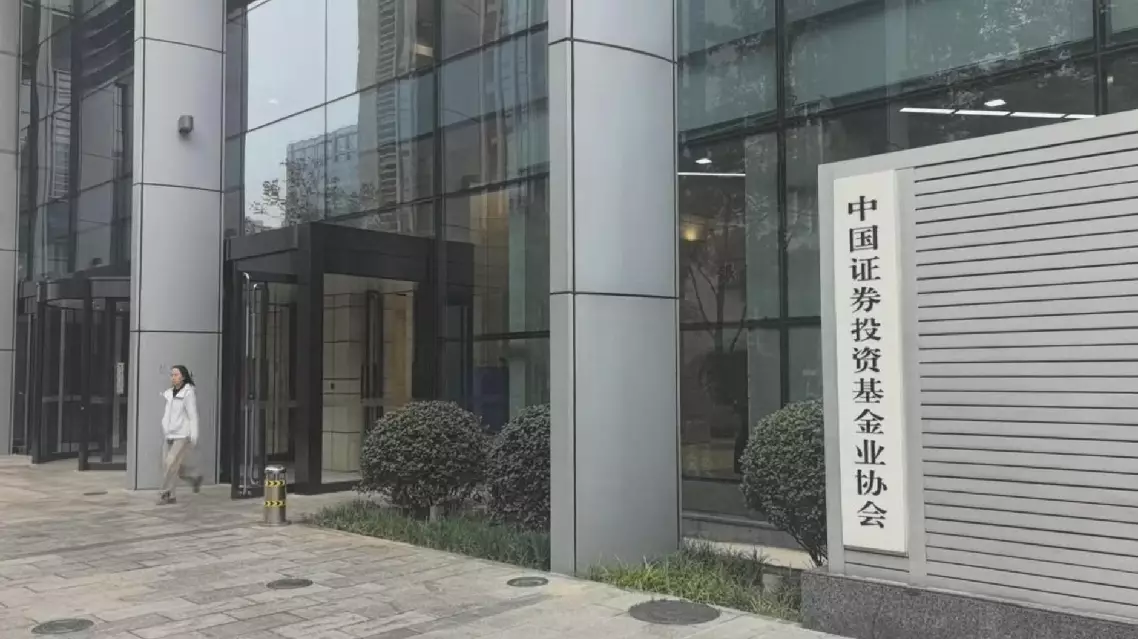
China's fund assets have surpassed the 80-trillion-yuan (about 11.4 trillion U.S. dollars) mark, data from the Asset Management Association of China showed on Wednesday.
As of the end of the third quarter, the total value of China's public fund assets, private fund assets, and private asset management products of securities and futures institutions had grown by 11 percent year on year to above 80 trillion yuan, the association said.
Specifically, China's public fund assets rose by 14.6 percent year on year to 36.74 trillion yuan (about 5.22 trillion U.S. dollars), while private fund assets climbed 10.4 percent to nearly 22 trillion yuan (about 3.12 trillion U.S. dollars).
Xuan Wei, chief strategist at China Asset Management Company, attributed the vibrancy of public funds to investors' confidence in China's high-quality economic development.
He noted the industry is vigorously promoting equity public funds and index investing, saying the significant increase in the issuance of index funds and pension funds has provided investors with a wide range of low-cost, transparent, and efficient investment options.
Among public funds, equity funds saw the largest increase, growing by 39.4 percent year on year, followed by bond funds at 9.3 percent, money market funds at 12.5 percent, and hybrid funds at 15.1 percent.
Meanwhile, private securities funds outpaced other private funds with an increase of 32.3 percent year on year, while private equity and venture capital funds grew by 2.2 percent and 6.3 percent year-on-year, respectively.
Since the State Council released a guideline on strengthening regulation, forestalling risks and promoting the high-quality development of the capital market last April, the quality and investment value of listed companies have gradually increased, and their awareness of the need to reward investors has gradually grown, making equity assets more attractive to investors in a low-interest-rate environment, according to Yang Ling, vice chairwoman of StarRock Investment Management.
The rise of the fund industry will not only add dynamism to the capital market but also guide the stock market toward a future with more professional, long-term investment, Yang said.
China's fund assets top 80 trln yuan
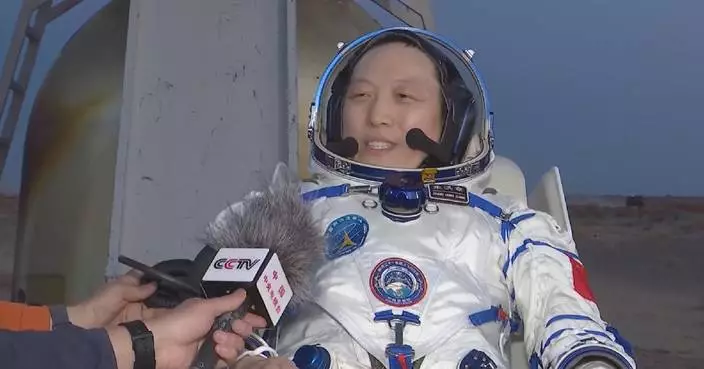
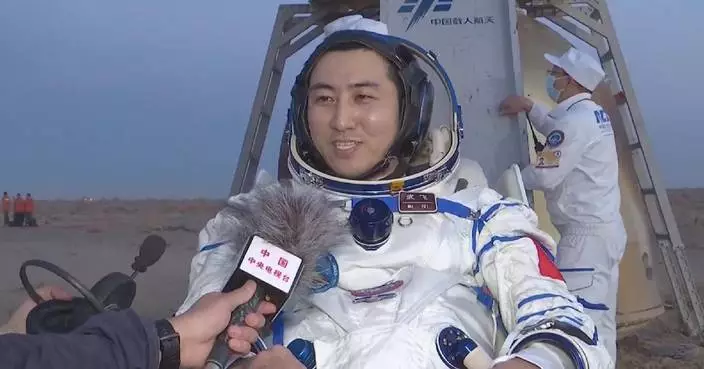
The three astronauts of China's Shenzhou-21 crewed spaceflight mission returned safely to Earth on Friday after completing their planned tasks aboard the Tiangong space station.
The return capsule of the Shenzhou-22 spaceship, carrying Shenzhou-21 astronauts Zhang Lu, Wu Fei and Zhang Hongzhang, touched down at the Dongfeng landing site in north China's Inner Mongolia Autonomous Region at 20:11 Beijing Time (1211 GMT), according to the China Manned Space Agency.
The returned astronauts were reported to be in good physical condition after landing, according to staff on site.
Zhang Lu was the first to exit the return capsule after it touched down on Earth.
"I'm thrilled to once again return to the embrace of our motherland. The Shenzhou-21 crew's seven-month stay in orbit would not have been possible without the care of our families and comrades, the support of leaders at all levels and all colleagues involved in the project, and above all, the backing of our country and our people. One sentence sums up my thoughts on my second space mission: 'It takes a whole team's devotion to make one person's voyage into the sea of stars,' " Zhang said in an interview with China Central Television (CCTV) shortly after he was carried out of the return capsule.
"I also have a gift to share with everyone. On the day of the Shenzhou-21 launch, the ground support team gave us an apple, wishing us a safe and smooth mission. Our safe return is their greatest wish. Tomorrow is May 30, the National Science and Technology Workers' Day. So when we left the space station, we specifically brought back an apple. We want to give it to all science and technology workers, and say 'thank you for your hard work'. At the same time, I wish our space industry continued prosperity, and every mission safe and smooth," he said.
"Returning to Earth and to the embrace of our motherland, I feel extremely secure and proud. Being entrusted with such a significant responsibility in my first space mission is a great honor. It is the trust of my country, the guidance of my predecessors, and the teamwork of the entire crew that enabled me to successfully complete the mission. This mission has taught me that the most beautiful posture of youth is to march out for the country. I will turn this space experience into the driving force for my continued progress, and continue to fight and strive for the manned space program," said crew member Wu Fei.
"From the ground laboratory to China's space station, it is our great motherland that has enabled me to achieve a perfect integration of my scientific ideals and spaceflight dreams. With the support of the entire project team, the assistance of researchers and scientists, and the care of so many people, our crew has worked as one and successfully completed all assigned scientific projects, including the first successful in-orbit breeding of small mammals, the growing of a thriving space vegetable garden with an even wider varieties, and the collection of valuable data from projects such as in-situ electrochemical and optical studies on lithium-ion batteries," said Zhang Hongzhang, who was the last of the astronauts to exit the spacecraft.
"Looking at Earth from space, I deeply felt that humanity is an indivisible community with a shared future. Now that I am back on Earth and have returned to my motherland, I feel an immense sense of security and warmth. Going forward, I will continue to build on these achievements and contribute to making China a strong power in space, science and technology," he said.
The returned crew members will now head to Beijing by plane and enter a quarantined recovery period, during which they will undergo comprehensive medical examinations and health assessments and start their recuperation process.
Prior to their return, the astronauts completed all planned tasks and handed over the space station to their three colleagues of the Shenzhou-23 mission who boarded the space station on May 25.
The crew's planned stay in-orbit was extended by approximately one month to further verify the technologies regarding the long-term stay of astronauts in orbit and fully use the supplies delivered by the Shenzhou-22 spacecraft in an emergency launch.
The Shenzhou-21 crew's original spaceship, which sent them into space on Oct 31 last year, was previously returned to Earth carrying the astronauts of the preceding Shenzhou-20 mission after tiny cracks were found in the viewport window of the Shenzhou-20 manned spacecraft's return capsule. That spacecraft was later safely brought back to Earth.
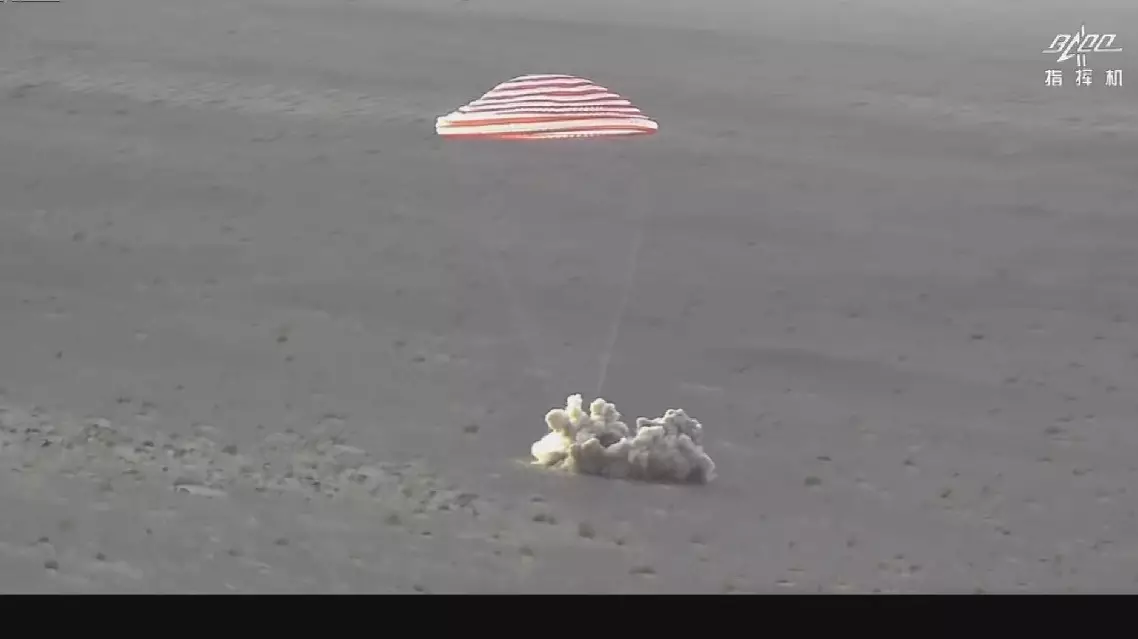
Shenzhou-21 crew return to Earth after successful seven-month mission in space