BEIRUT (AP) — The move by the United States to lift sweeping sanctions on Syria could encourage more refugees to return to their country and also help encourage investments, the head of the U.N. refugee agency in Lebanon said Thursday.
The U.S. Senate voted on Wednesday to permanently remove the so-called Caesar Act sanctions after President Donald Trump previously temporarily lifted the penalties by an executive order. The vote came as part of the passage of the country's annual defense spending bill. Trump is expected to sign off on the final repeal Thursday.
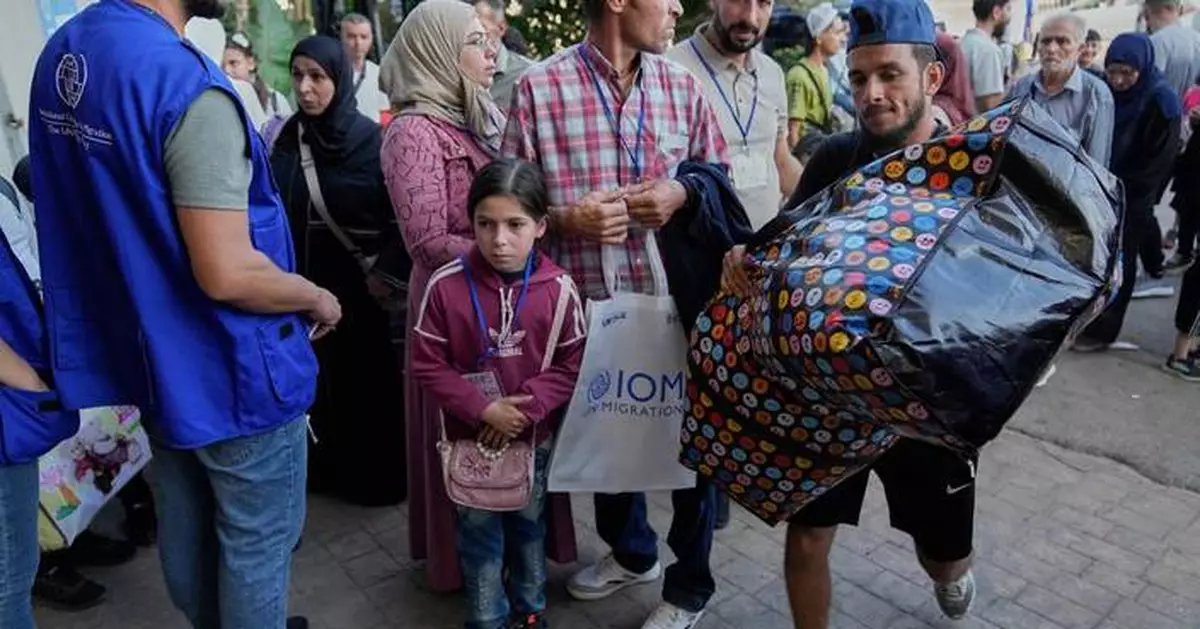
An estimated 400,000 Syrian refugees have eturned from Lebanon since the ouster of former Syrian President Bashar Assad in December in 2024 following a nearly 14-year civil war.
UNHCR Lebanon Representative Karolina Lindholm Billing said that around 1 million remain in Lebanon. About 636,000 of them are officially registered with the refugee agency.
Altogether, more than 1 million refugees have returned from neighboring countries and nearly 2 million internally displaced Syrians have returned to their homes since Assad’s fall.
Refugees returning from neighboring countries are eligible for cash payments of $600 per family upon their return, but with many coming back to destroyed houses and no work opportunities, the cash does not go far. Without jobs and reconstruction, many may leave again.
The aid provided so far by international organizations to help Syrians begin to rebuild has been on a “relatively small scale, compared to the immense needs,” Billing said, but the lifting of U.S. sanctions could “make a big difference.”
The World Bank estimates it will cost $216 billion to rebuild the homes and infrastructure damaged and destroyed in Syria's civil war.
“So what is needed now is big money in terms of reconstruction and private sector investments in Syria that will create jobs,” which the lifting of sanctions could encourage, Billing said.
Lawmakers imposed the wide-reaching Caesar Act sanctions on Syria in 2019 to punish Assad for human rights abuses during the country’s civil war.
Despite the temporary lifting of the sanctions by executive order, there has been little movement on reconstruction. Advocates of a permanent repeal argued that international companies are unlikely to invest in projects needed for the country’s rebuilding as long as there is a threat of sanctions returning.
While there has been a steady flow of returnees over the past year, other Syrians have fled the country since Assad's ouster by Islamist-led insurgents.
Many of them are members of religious minorities, fearful of being targeted by the new authorities. In particular, members of the Alawite sect to which Assad belonged and Shiites are fearful of being targeted in revenge attacks because of the support provided to Assad during the war by the Shiite-majority Iran and the Lebanese Shiite militant group Hezbollah.
Hundreds of Alawite civilians were killed in outbreaks of sectarian violence on Syria’s coast in March.
While the situation has calmed since then, Alawites continue to report sporadic sectarian attacks, including kidnappings and sexual assaults on women.
About 112,000 Syrians have fled to Lebanon since Assad’s fall, Billing said. Coming at a time of shrinking international aid, the new refugees have received very little assistance and generally do not have legal status in Lebanon.
“Their main need, one of the things they raise with us all the time, is documentation, because they have no paper to prove that they are in Lebanon, which makes it difficult for them to move around,” Billing said.
While some have returned to Syria after the situation calmed in their areas, she said, “many are very afraid of being returned to Syria because what they fled were very violent events.”
Also Thursday, U.N. deputy humanitarian chief Joyce Msuya urged donors to reverse a downward trend in funding for Syria. She said that while the United Nations reached 3.4 million Syrians with aid every month this year, it couldn’t help millions of others because the 2025 U.N. appeal for Syria was only 30% funded.
Associated Press writer Edith Lederer at the United Nations contributed to this report.
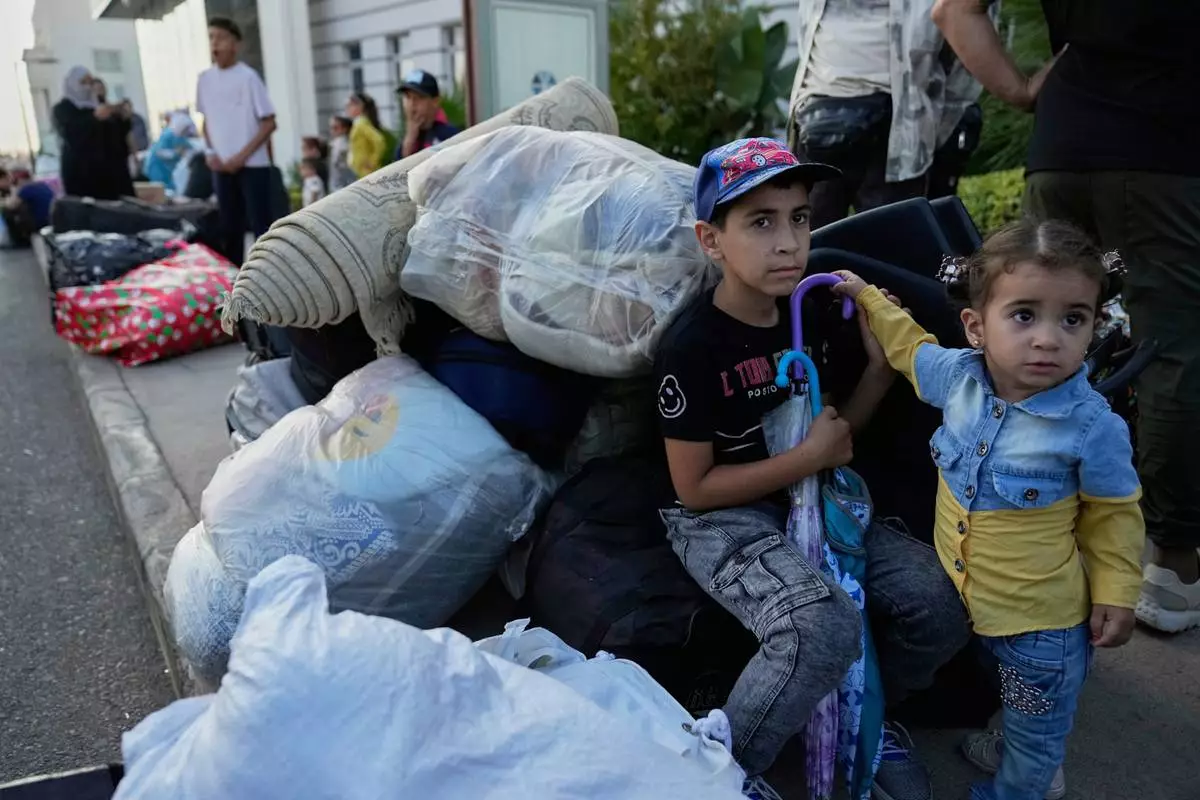
FILE - Syrian children sit next to their belongings at a gathering point, as they wait to be checked by Lebanese security forces before boarding buses to return home to Syria, in Beirut, Lebanon, Thursday, Sept. 11, 2025. (AP Photo/Hussein Malla, File)
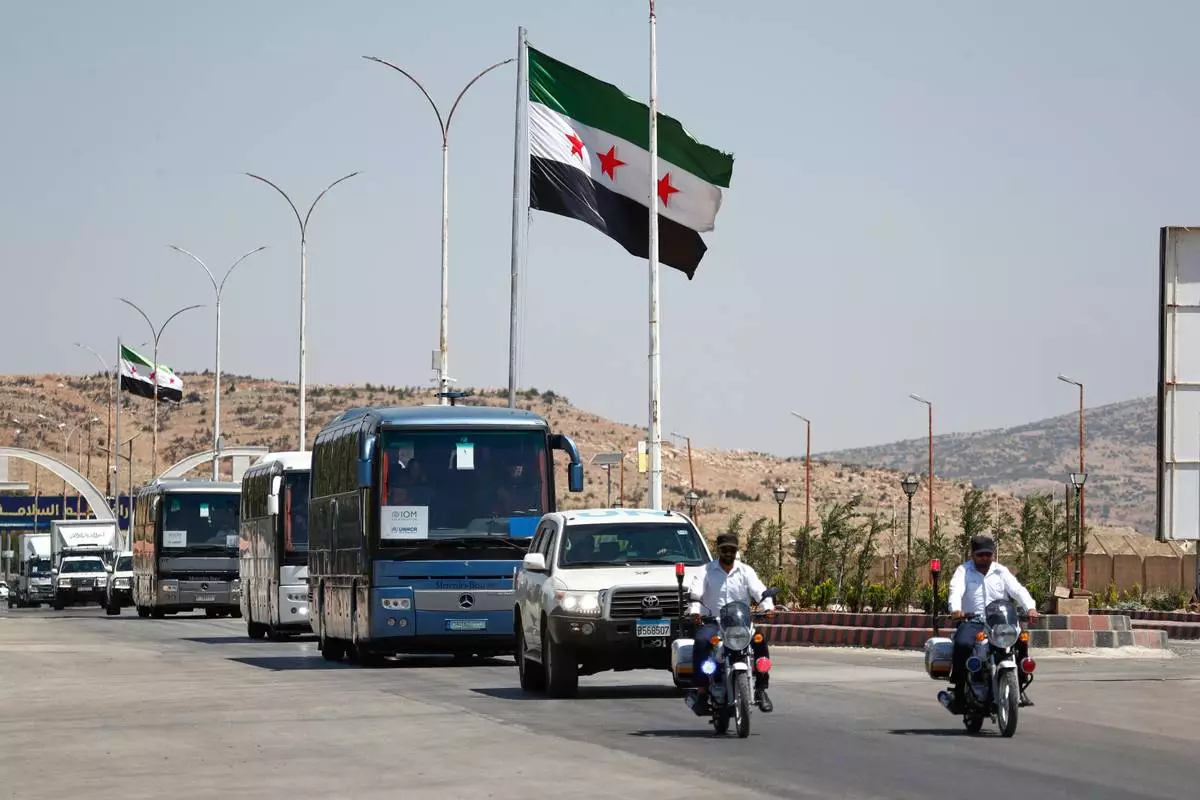
FILE - A convoy of buses carry Syrian refugees who return home from Lebanon, arrive at the Syrian border crossing point, in Jdeidet Yabous, Syria, Tuesday, July 29, 2025. (AP Photo/Omar Sanadiki, File)
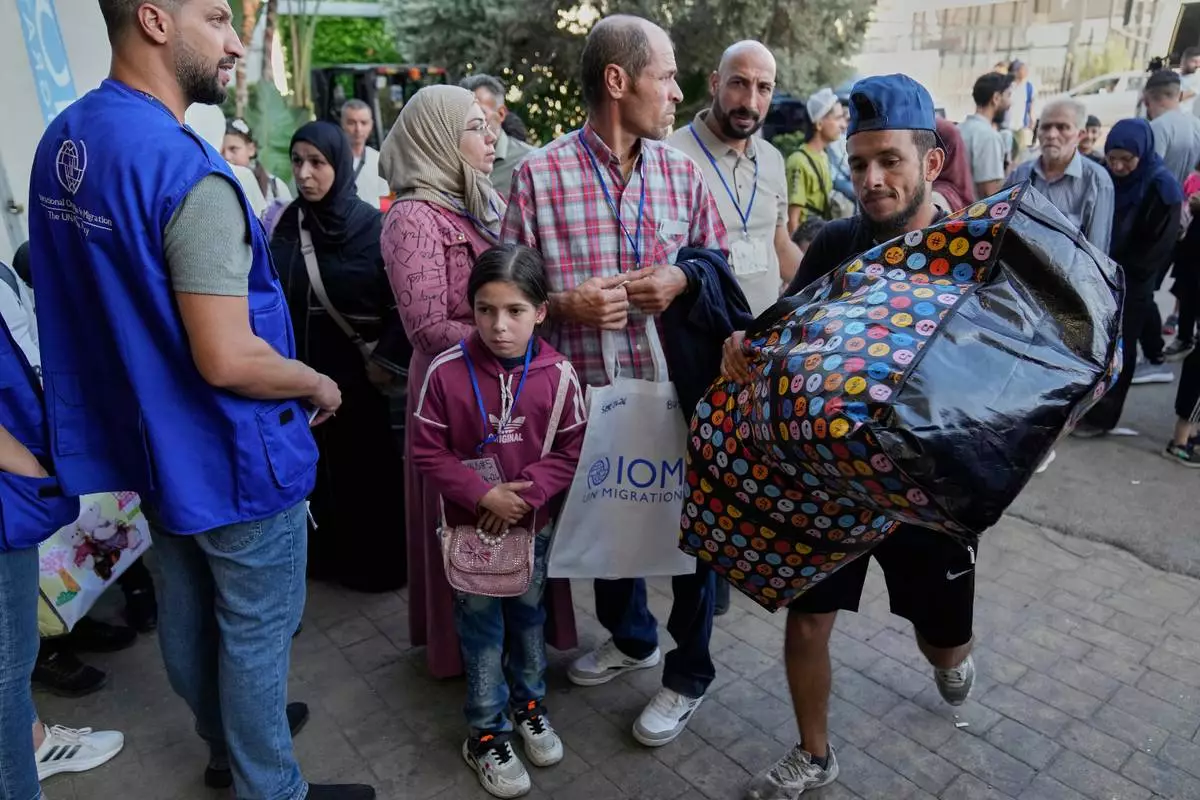
FILE - A worker, right, carries a bag as Syrian refugees line up at a gathering point to be checked by Lebanese security forces before they board buses to return home to Syria, in Beirut, Lebanon, Thursday, Sept. 11, 2025. (AP Photo/Hussein Malla, File)
BRUSSELS (AP) — The European Union is delaying a massive free-trade deal with South American countries after fiery protests by farmers and last-minute opposition by France and Italy threatened to derail the pact, seen by its backers as an important geopolitical move for both continents.
Top EU officials had hoped to sign the EU-Mercosur deal in Brazil this weekend, after 26 years of negotiations. Instead, European Commission chief spokesperson Paula Pinho confirmed that the signature had been put off until January.
Experts say the delay could dent the EU’s negotiating credibility globally as it seeks to forge new trade ties amid commercial tensions with the U.S. and China. Once ratified, the trade deal would cover a market of 780 million people and a quarter of the globe’s gross domestic product, and progressively remove duties on almost all goods traded between the two blocs.
French farmers unions, who fear the deal would undercut their livelihoods, welcomed the postponement. France had led opposition to the deal between the EU and the five active Mercosur countries — Brazil, Argentina, Uruguay, Paraguay and Bolivia. Italy raised new reservations Wednesday.
Thursday's agreement for a delay was reached between European Commission President Ursula von der Leyen and European Council President Antonio Costa on the sidelines of an EU summit with Italian Premier Giorgia Meloni, on the condition that Italy would vote in favor of the agreement in January, an EU official said.
The decision came hours after farmers in tractors blocked roads and set off fireworks in Brussels to protest the trade deal, prompting police to respond with tear gas and water cannons.
The farmers brought potatoes and eggs to throw and waged a furious back-and-forth with police. Protesters burned tires and a faux wooden coffin bearing the word “Agriculture.” Their fire unleashed a black cloud that swirled with white tear gas. The European Parliament evacuated some staff due to damage caused by protesters.
“We are fighting to defend our jobs,” said Armand Chevron, a 23-year old French farmer.
Hundreds of farmers like Pierre Vromann, 60, had arrived on tractors, which they parked to block roads around the key institutions of the EU.
The Mercosur deal would be “bad for farmers, bad for consumers, bad for citizens and bad for Europe,” said Vromann, who raises cattle and grains in the nearby Belgian city of Waterloo.
Other farmers came from as far away as Spain and Poland.
French President Emmanuel Macron dug in against the Mercosur deal as he arrived for Thursday’s EU summit, pushing for further concessions and more discussions in January. He said he has been in discussions with Italian, Polish, Belgian, Austrian and Irish colleagues among others about delaying it.
“Farmers already face an enormous amount of challenges,″ he said, as farmer protests over the trade deal and a cattle disease roil regions around France. “We cannot sacrifice them to this accord.”
Worried by a surging far right that rallies support by criticizing the deal, Macron's centrist government has demanded safeguards to monitor and stop large economic disruption in the EU, increased regulations in the Mercosur nations like pesticide restrictions, and more inspections of imports at EU ports.
Italy's Meloni told the Italian Parliament on Wednesday that signing the agreement in the coming days “would be premature.”
“This doesn’t mean that Italy intends to block or oppose (the deal), but that it intends to approve the agreement only when it includes adequate reciprocal guarantees for our agricultural sector,” Meloni said.
Von der Leyen is determined to sign the agreement, but she needs the backing of at least two-thirds of EU nations. Italy’s opposition would give France enough votes to veto von der Leyen’s signature.
In Greece, farmers have set up roadblocks along highways across the country for weeks, protesting delays in agricultural subsidy payments as well as high production costs and low product prices that they say are strangling their sector and making it impossible to make ends meet.
Supporters say the EU-Mercosur deal would offer a clear alternative to Beijing's export-controls and Washington's tariff blitzkrieg, while detractors say it will undermine both environmental regulations and the EU's iconic agricultural sector.
German Chancellor Friedrich Merz said ahead of the Brussels summit that the EU's global status would be dented by a delay or scrapping of the deal.
“If the European Union wants to remain credible in global trade policy, then decisions must be made now,” Merz said.
The deal is also about strategic competition between Western nations and China over Latin America, said Agathe Demarais, a senior fellow at the European Council on Foreign Relations. “A failure to sign the EU-Mercosur free trade agreement risks pushing Latin American economies closer to Beijing’s orbit,” she said.
The political tensions that have marked Mercosur in recent years — especially between Argentina’s far-right President Javier Milei and Brazil’s center-left Luiz Inácio Lula da Silva, the bloc’s two main partners — have not deterred South American leaders from pursuing an alliance with Europe that will benefit their agricultural sectors.
Lula has been one of the most fervent promoters of the agreement. He was betting on closing the deal Saturday and scoring a major diplomatic achievement ahead of next year’s general elections. He said he was surprised by Italy’s hesitancy, and had spoken about it directly with Meloni.
At a Cabinet meeting Wednesday, Lula was clearly irked by Italy and France's positions.
“If we don't do it now, Brazil won't make any more agreements while I'm president,” Lula said, adding that the agreement would “defend multilateralism” as Trump pursues unilateralism.
Milei, a close ideological ally of Trump, also supports the deal.
“We must stop thinking of Mercosur as a shield that protects us from the world and start thinking of it as a spear that allows us to effectively penetrate global markets,” he said some time ago.
Associated Press writers Debora Rey in Buenos Aires, Claudia Ciobanu in Warsaw, Kirsten Grieshaber in Berlin, Elene Becatoros in Athens, Gabriela Sá Pessoa in Sao Paulo, and Sylvain Plazy and Angela Charlton in Brussels contributed to this report.
A protestor sits on a curb injured during a demonstration of European farmers near the European Parliament in Brussels, Thursday, Dec. 18, 2025. (AP Photo/Marius Burgelman)
Police try to disperse protestors during a demonstration of European farmers near the European Parliament in Brussels, Thursday, Dec. 18, 2025. (AP Photo/Marius Burgelman)
A protestor picks up tire to throw onto a fire during a demonstration of European farmers outside the EU Summit meeting in Brussels, Thursday, Dec. 18, 2025. (AP Photo/Marius Burgelman)
Protestors burn tires during a demonstration of European farmers outside the EU Summit meeting in Brussels, Thursday, Dec. 18, 2025. (AP Photo/Marius Burgelman)
French President Emmanuel Macron speaks with the media as he arrives for the EU Summit in Brussels, Thursday, Dec. 18, 2025. (AP Photo/Omar Havana)
A fire burns in a barrel as European farmers block a road with their tractors during a demonstration outside the EU Summit in Brussels, Thursday, Dec. 18, 2025. (AP Photo/Marius Burgelman)
Police stand behind a barrier as European farmers block a road with their tractors during a demonstration outside the EU Summit in Brussels, Thursday, Dec. 18, 2025. (AP Photo/Marius Burgelman)
European Commission President Ursula von der Leyen speaks with the media as she arrives for the EU Summit in Brussels, Thursday, Dec. 18, 2025. (AP Photo/Omar Havana)
A farmer drives a tractor with a sign that reads in Dutch 'Don't forget, without farmers there's no food' during a demonstration outside a gathering of European leaders at the EU Summit in Brussels, Thursday, Dec. 18, 2025. (AP Photo/Marius Burgelman)
Farmers drive their tractors to block a main boulevard during a demonstration outside a gathering of European leaders at the EU Summit in Brussels, Thursday, Dec. 18, 2025. (AP Photo/Marius Burgelman)
A farmer puts wood in a fire during a demonstration outside the EU Summit in Brussels, Thursday, Dec. 18, 2025. (AP Photo/Omar Havana)
Protestors and farmers stand next to a wood fire during a demonstration outside the EU Summit in Brussels, Thursday, Dec. 18, 2025. (AP Photo/Omar Havana)
Farmers use their tractors to block a main road during a demonstration outside a gathering of European leaders at the EU Summit in Brussels, Thursday, Dec. 18, 2025. (AP Photo/Omar Havana)