MINNEAPOLIS (AP) — Half or more of the roughly $18 billion in federal funds that supported 14 Minnesota-run programs since 2018 may have been stolen, a federal prosecutor said Thursday, describing the massive and multilayered fraud schemes as staggering.
First Assistant U.S. Attorney Joe Thompson said the scale of fraud puts services at risk for people who need them, including adults leaving addiction treatment centers who needed help finding a stable place to live and children with autism who were seeking one-on-one therapy.
Click to Gallery
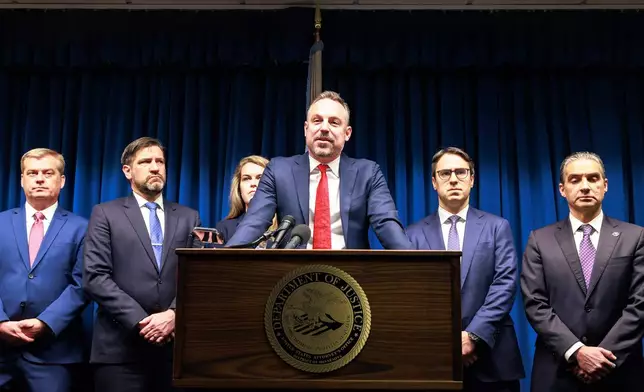
First Assistant U.S. Attorney Joseph H. Thompson delivers a statement during a news conference at the U.S. Attorney's Office inside the United States Courthouse on Thursday, Dec. 18, 2025, in Minneapolis. (Kerem Yücel/Minnesota Public Radio via AP)
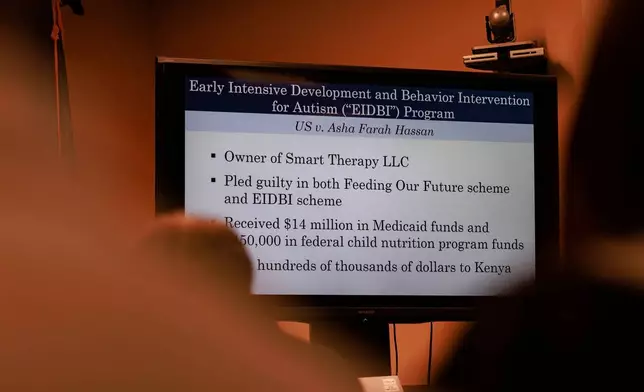
A slide outlining details is displayed during remarks by the U.S. Attorney's Office at a news conference at the United States Courthouse on Thursday, Dec. 18, 2025, in Minneapolis. (Kerem Yücel/Minnesota Public Radio via AP)

First Assistant U.S. Attorney Joseph H. Thompson delivers a statement during a news conference at the U.S. Attorney's Office inside the United States Courthouse on Thursday, Dec. 18, 2025, in Minneapolis. (Kerem Yücel/Minnesota Public Radio via AP)
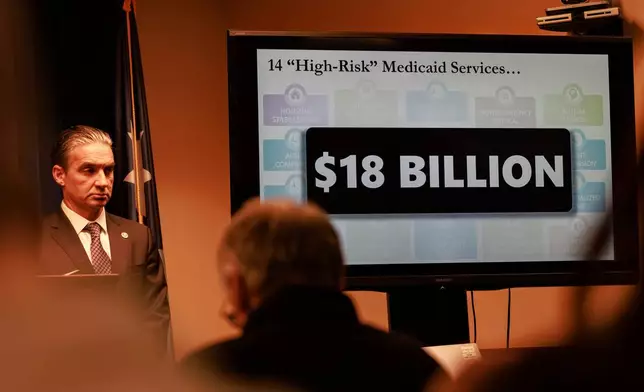
A sign is shown as first Assistant U.S. Attorney Joseph H. Thompson, not seen, delivers remarks during a news conference at the U.S. Attorney's Office inside the United States Courthouse on Thursday, Dec. 18, 2025, in Minneapolis. (Kerem Yücel/Minnesota Public Radio via AP)
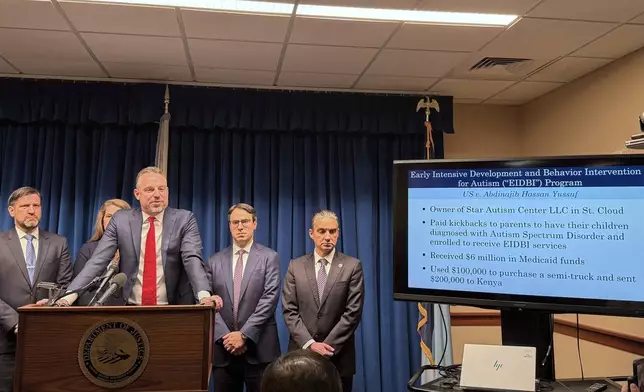
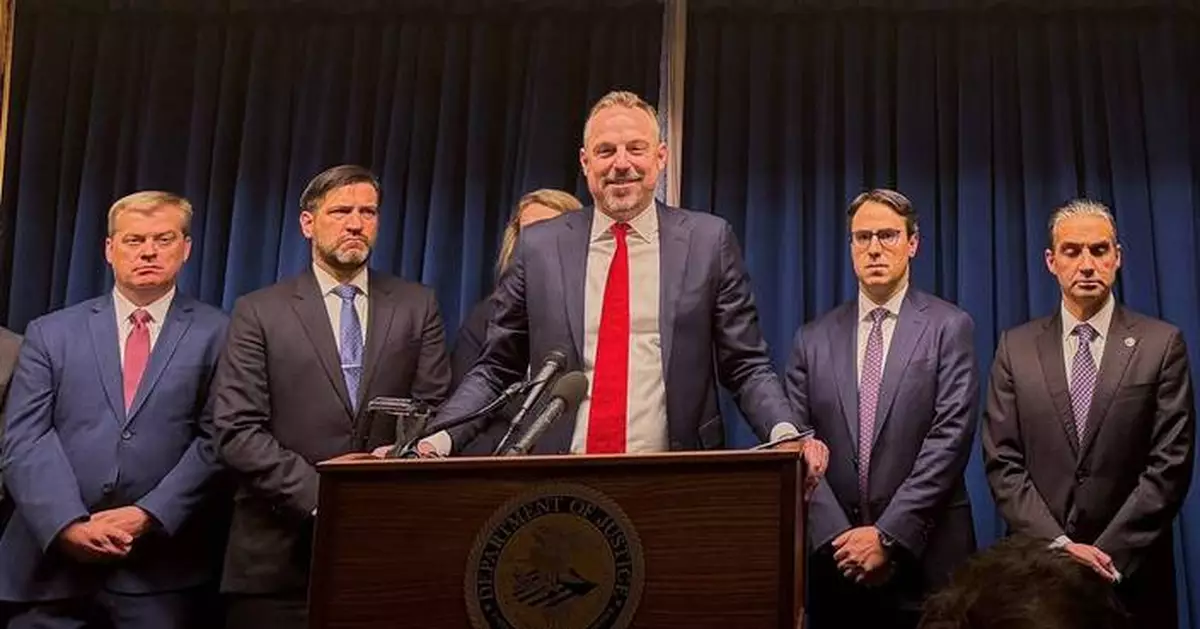
First Assistant U.S. Attorney Joe Thompson describes a sprawling fraud investigation involving state-run programs in Minnesota at a news conference Thursday, Dec. 18, 2025, in Minneapolis. (AP Photo/Giovanna Dell'Orto)
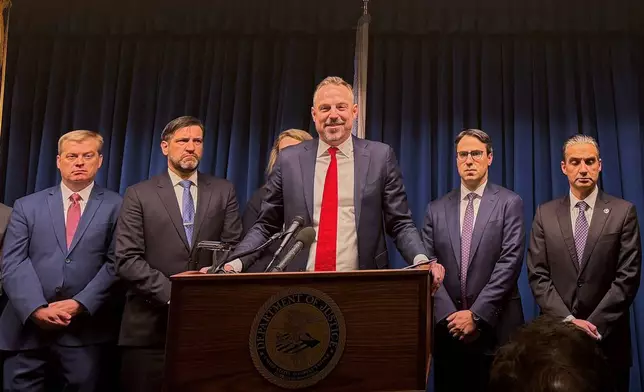
First Assistant U.S. Attorney Joe Thompson describes a sprawling fraud investigation involving state-run programs in Minnesota at a news conference Thursday, Dec. 18, 2025, in Minneapolis. (AP Photo/Giovanna Dell'Orto)
While prosecutors typically see fraud manifest as providers overbilling, Thompson said during a news conference in Minneapolis that companies have been created to provide zero services while submitting claims to Medicaid and pocketing federal funds for international travel, luxury vehicles and lavish lifestyles.
“The magnitude cannot be overstated,” Thompson said. “What we see in Minnesota is not a handful of bad actors committing crimes. It’s staggering, industrial-scale fraud.”
The investigators’ new findings may bolster President Donald Trump in his claims that Minnesota is a “hub of fraudulent money laundering activity” under Gov. Tim Walz, who was the Democrats’ vice presidential nominee in last year’s election.
Trump has capitalized on the fraud cases to target the Somalia diaspora in Minnesota, which has the largest Somali population in the U.S. Eighty-two of the 92 defendants in the child nutrition, housing services and autism program schemes are Somali Americans, according to the U.S. Attorney’s Office for Minnesota.
In October, Walz initiated a third-party audit of and paused payments to the 14 high-risk Medicaid programs for 90 days.
“We will not tolerate fraud, and we will continue to work with federal partners to ensure fraud is stopped and fraudsters are caught,” Walz said in a statement Thursday.
Walz last week appointed a director of program integrity, who is tasked with finding and preventing fraud statewide. It’s not stopped his Republican counterparts from criticizing his administration for failure to protect Minnesota’s taxpayer dollars.
The announcements Thursday follow years of investigation that began with the $300 million Feeding Our Future scheme, for which 57 defendants have been convicted. Prosecutors said the Feeding Our Future nonprofit was at the center of the country’s largest COVID-19-related fraud scam, when defendants exploited a state-run, federally funded program intended to provide food for children.
Thompson said the investigation into a state program to support children on the autism spectrum, the Early Intensive Developmental and Behavioral Intervention benefit, grew out of Feeding Our Future.
“Roughly two dozen or so Feeding Our Future defendants were getting money from autism clinics,” Thompson said. “That’s how we learned about the autism fraud.”
Prosecutors on Thursday named a new defendant accused of defrauding the program, alleging he approached parents in the Somali community to “recruit their children” for the clinic and paid them kickbacks to drive up enrollment, according to court filings.
His clinic ultimately submitted $6 million worth of claims for Medicaid reimbursement, prosecutors say.
One woman previously charged for exploiting that program pleaded guilty Thursday morning. Prosecutors allege she received $14 million in Medicaid reimbursements.
Five new defendants were charged Thursday in connection with a Minnesota housing services fraud, in which they stole the money instead of helping Medicaid recipients find stable housing, Thompson said. One defendant fled the country after his company received a federal grand jury subpoena, the prosecutor said.
The five charged include two Philadelphia residents who have been accused of “fraud tourism," Thompson said, because they saw the Minnesota Housing Stability Services Program as a source of “easy money.” They are accused of submitting $3.5 million in fraudulent claims.
They join eight others who were charged in September for their alleged roles in the scheme to defraud the program, which has been shuttered entirely.
Authorities also served a search warrant Thursday in an investigation of a third state-run program, Integrated Community Supports, which was intended to support adults with disabilities who want to live independently. Payments to providers are on track to reach $180 million this year — exponentially more than when the state program was introduced in 2021 — leading prosecutors to believe it's another program that has been abused.
“Every day, we look under a rock and find a new $50 million fraud scheme,” Thompson said.
Trump’s rhetoric against Somalis in Minnesota has intensified since a conservative news outlet, City Journal, claimed last month that taxpayer dollars from defrauded government programs have flowed to the Somali militant group al-Shabab, an affiliate of al-Qaida.
While Thompson said money sent to Somalia might have indirectly gotten into the hands of al-Shabab, he emphasized that there was no evidence that defendants were sending money to or otherwise supporting terrorist organizations.
Still, Trump has referred to the Somali community as “garbage” and said he doesn’t want immigrants from the East African country in the U.S., rhetoric that has stoked fear and frustration among many in the community.
Thompson said a significant amount of the fraudulently obtained funds have been sent abroad, and much of it has been used to purchase real estate in Nairobi, Kenya’s capital, which has a large Somali diaspora.
“There’s no indication that the defendants that we’ve charged were radicalized or seeking to fund al-Shabab or other terrorist groups,” Thompson said.
Instead, one Feeding Our Future defendant spent hundreds of thousands of dollars on an aircraft in Nairobi. Another wired $1.5 million to China and Kenya, prosecutors said, and sent a text message claiming to have invested $6 million in Kenya. And one man bought Mediterranean coastal property in Alanya, Turkey.
Fingerhut reported from Des Moines, Iowa.
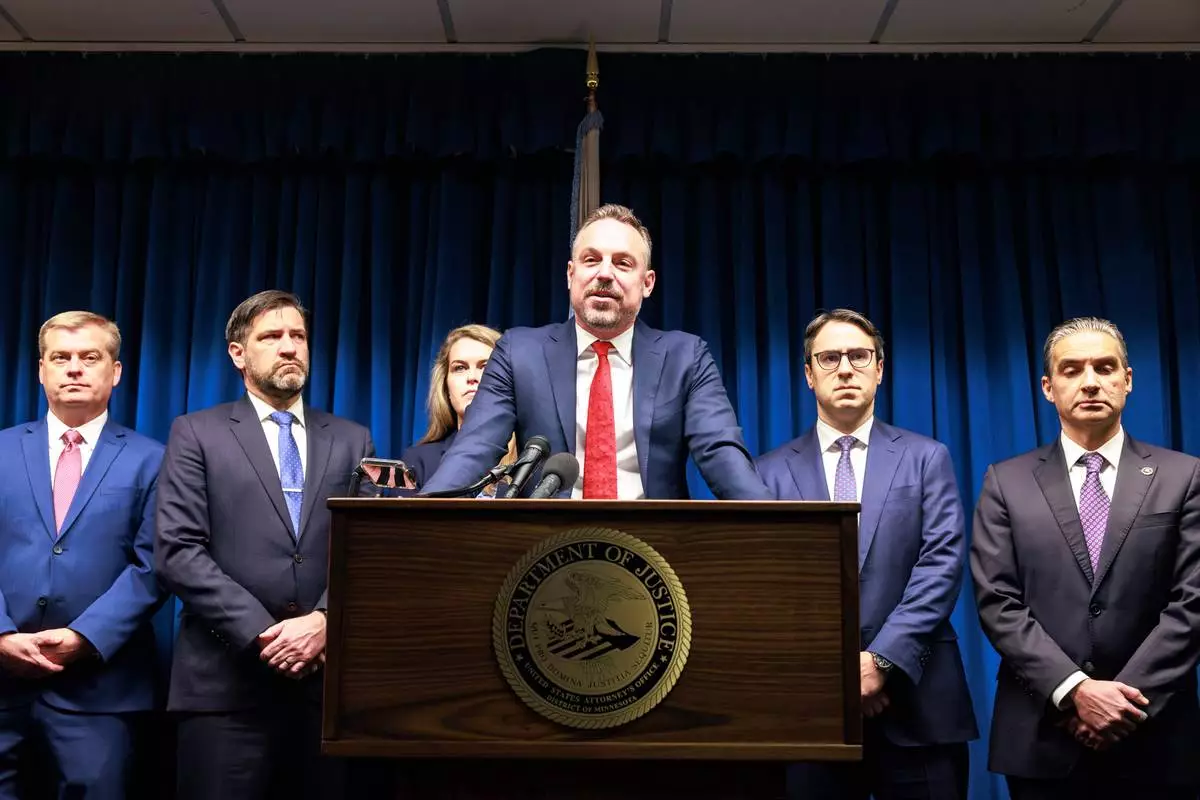
First Assistant U.S. Attorney Joseph H. Thompson delivers a statement during a news conference at the U.S. Attorney's Office inside the United States Courthouse on Thursday, Dec. 18, 2025, in Minneapolis. (Kerem Yücel/Minnesota Public Radio via AP)
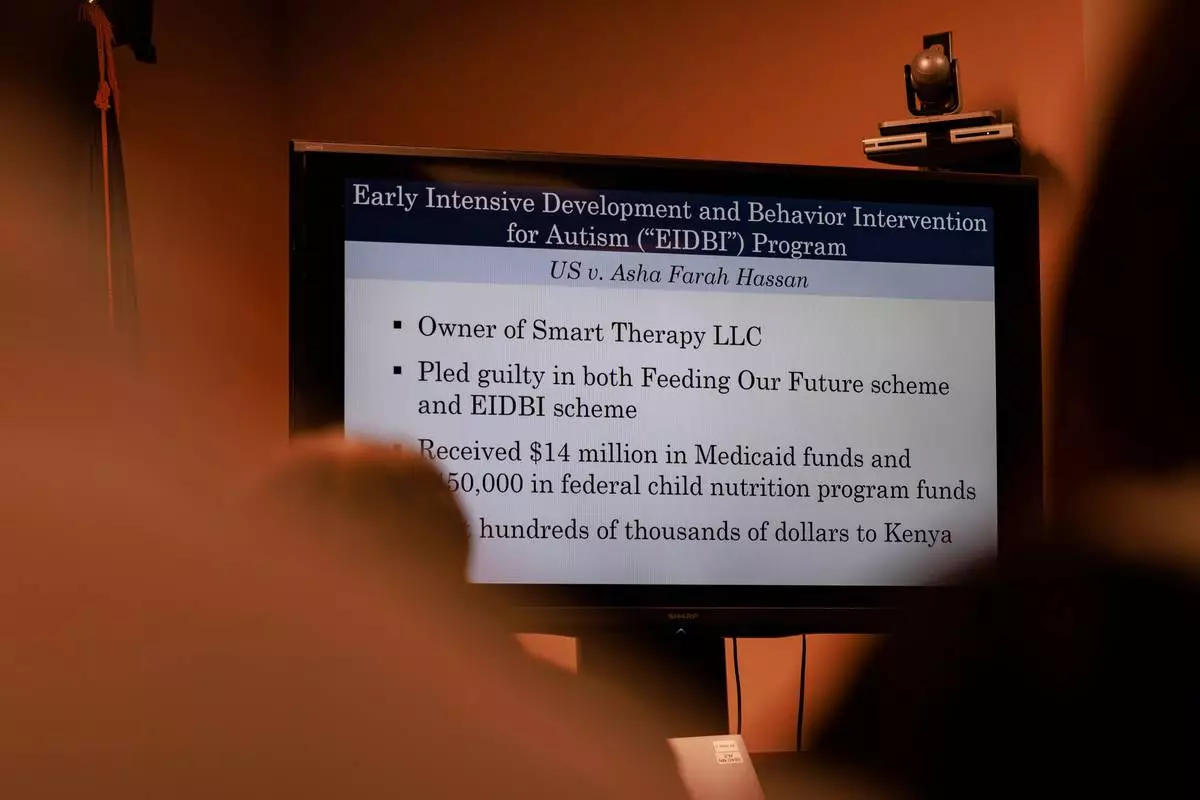
A slide outlining details is displayed during remarks by the U.S. Attorney's Office at a news conference at the United States Courthouse on Thursday, Dec. 18, 2025, in Minneapolis. (Kerem Yücel/Minnesota Public Radio via AP)
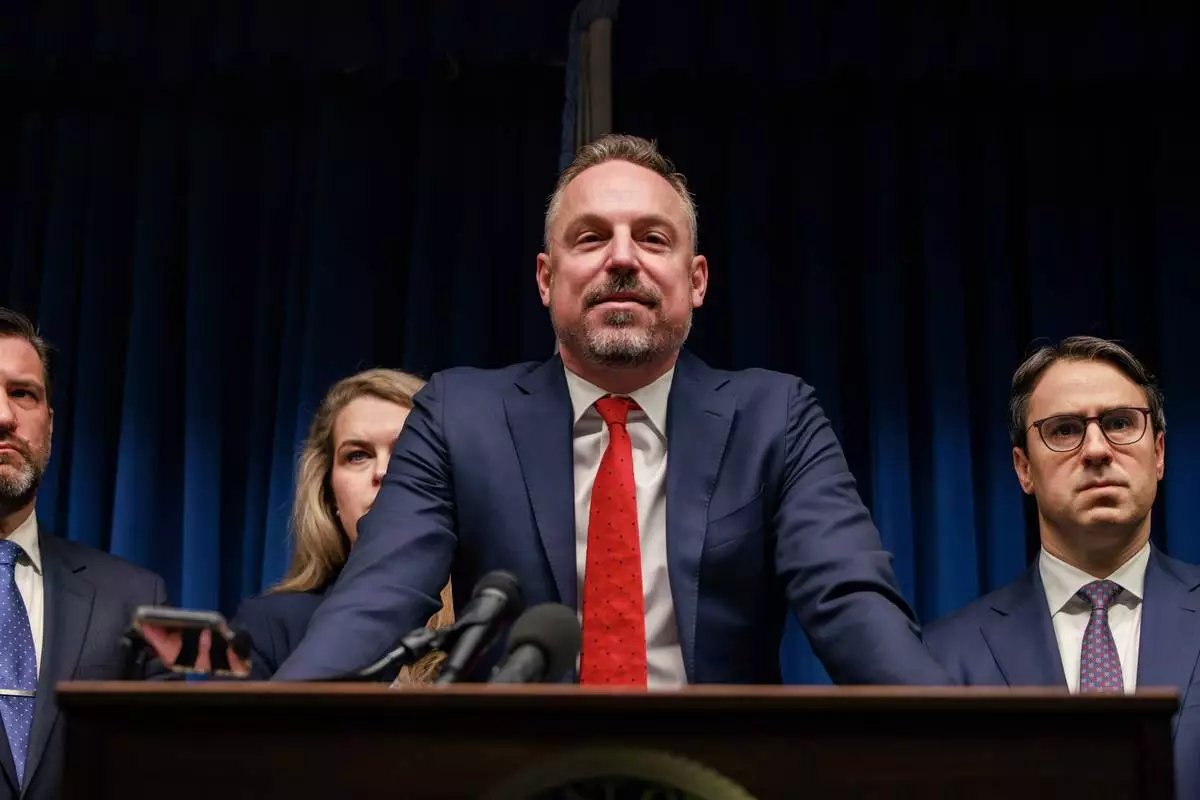
First Assistant U.S. Attorney Joseph H. Thompson delivers a statement during a news conference at the U.S. Attorney's Office inside the United States Courthouse on Thursday, Dec. 18, 2025, in Minneapolis. (Kerem Yücel/Minnesota Public Radio via AP)
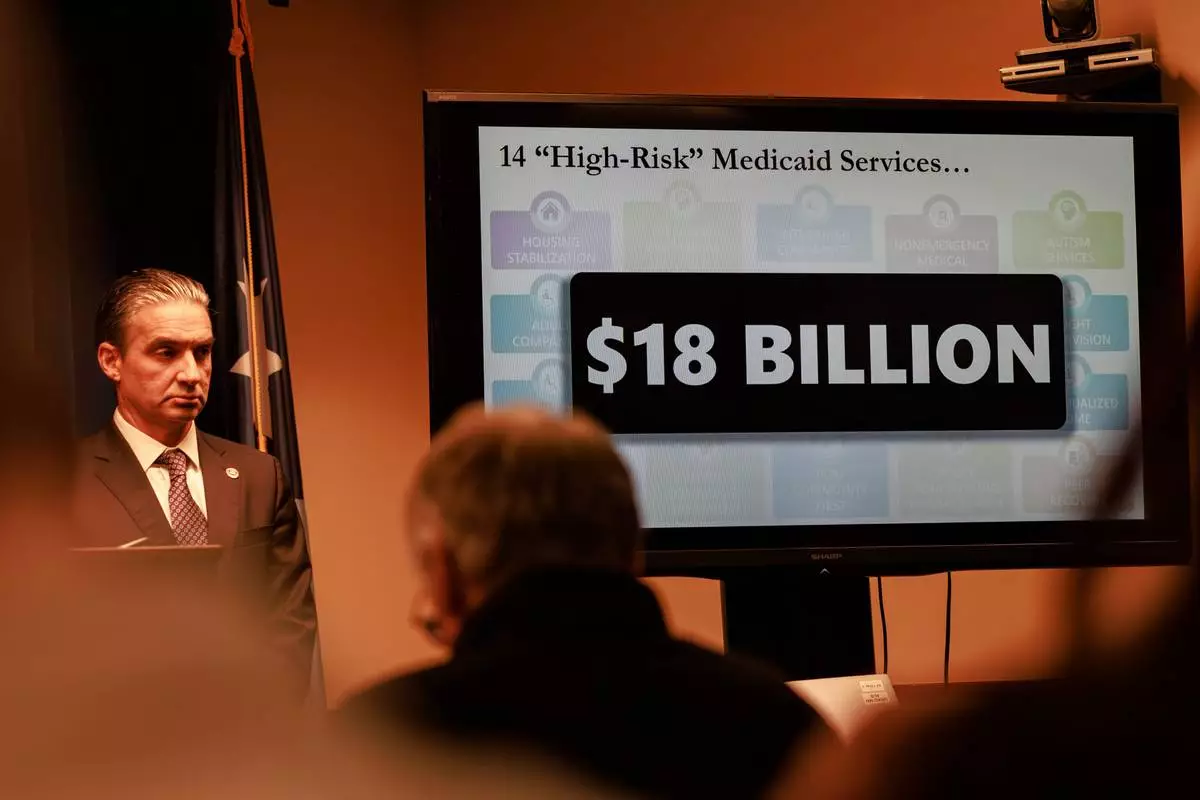
A sign is shown as first Assistant U.S. Attorney Joseph H. Thompson, not seen, delivers remarks during a news conference at the U.S. Attorney's Office inside the United States Courthouse on Thursday, Dec. 18, 2025, in Minneapolis. (Kerem Yücel/Minnesota Public Radio via AP)
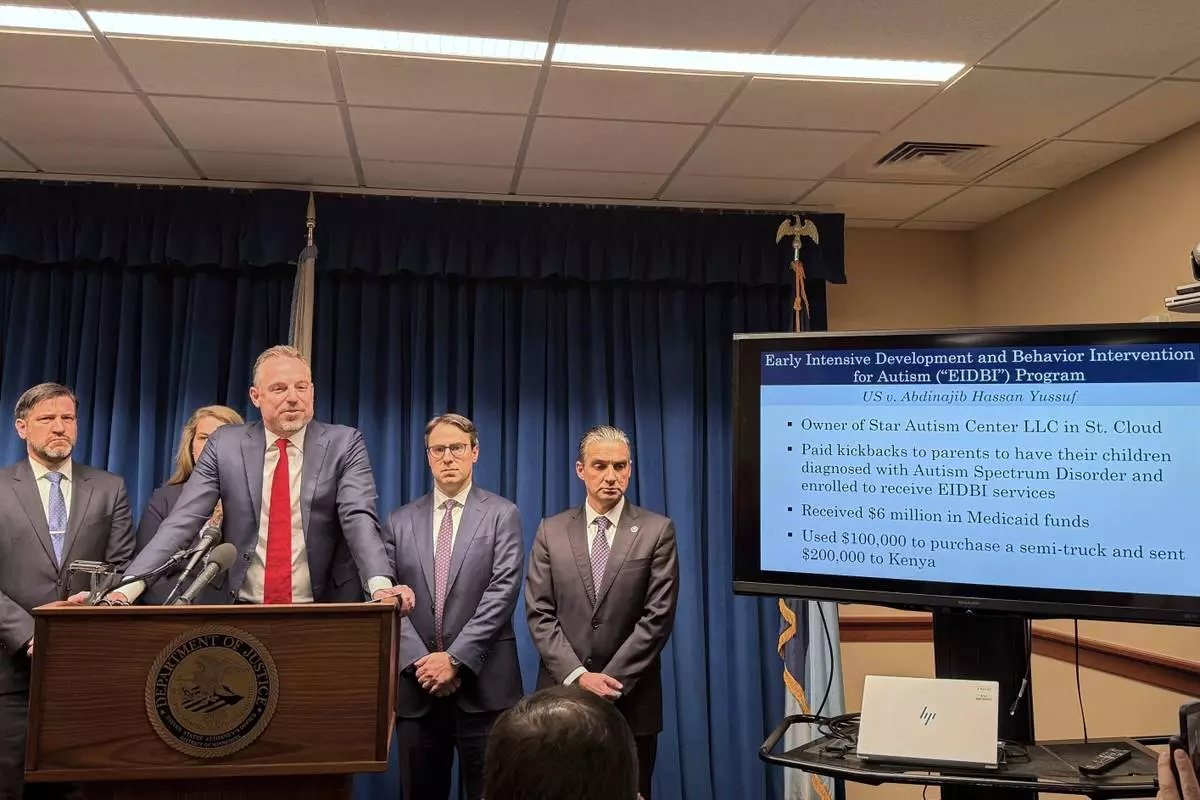
First Assistant U.S. Attorney Joe Thompson describes a sprawling fraud investigation involving state-run programs in Minnesota at a news conference Thursday, Dec. 18, 2025, in Minneapolis. (AP Photo/Giovanna Dell'Orto)
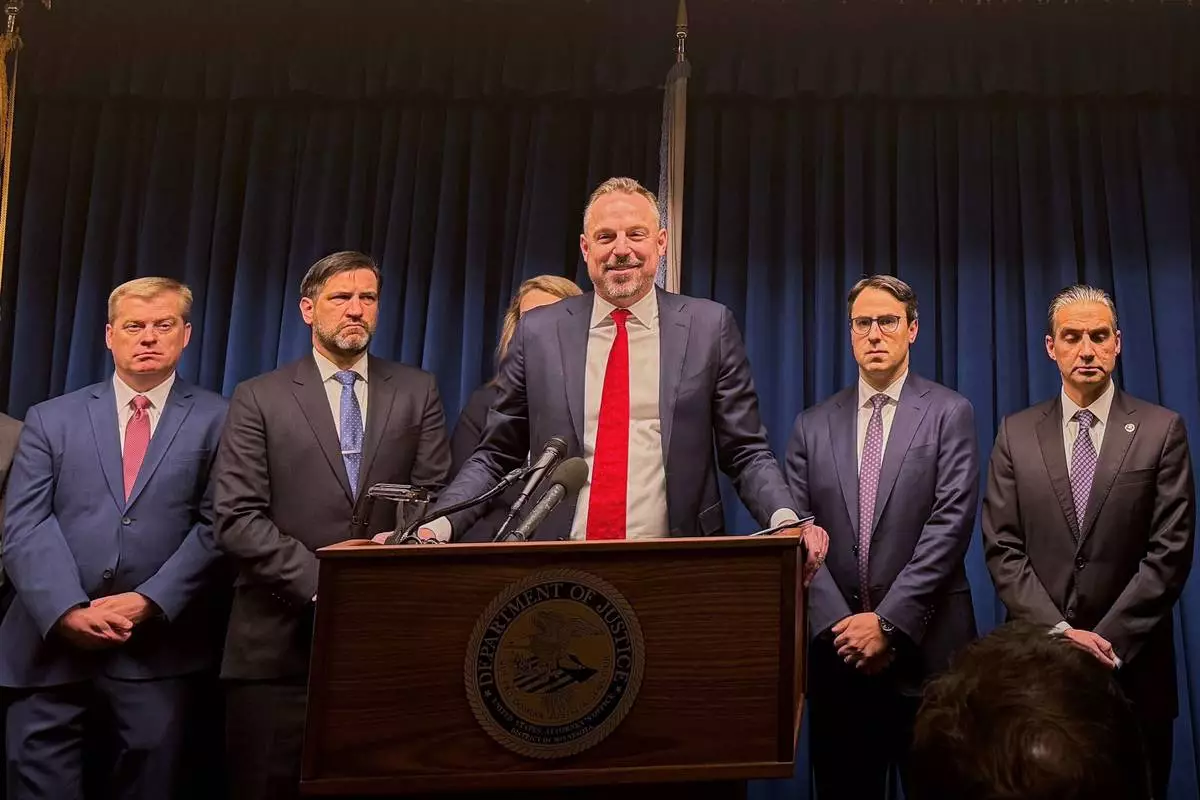
First Assistant U.S. Attorney Joe Thompson describes a sprawling fraud investigation involving state-run programs in Minnesota at a news conference Thursday, Dec. 18, 2025, in Minneapolis. (AP Photo/Giovanna Dell'Orto)