
SHELBYVILLE, Ky. (AP) — When the funding for Shannon Johnson's job as a school mental health counselor came to an abrupt end, two years into a five-year grant, she thought about the work left to be done.
Johnson taught elementary and middle-school students in rural Kentucky how to navigate conflict, build resilience and manage stress and anxiety before a crisis happens. Few districts, especially rural ones, can dedicate a full-time role to early intervention amid a national shortage of mental health staff.
Click to Gallery
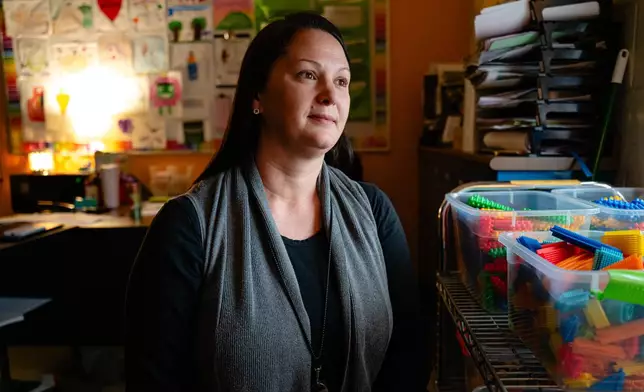
Katie Strange sits for a portrait at Simpsonville Elementary School, Nov. 18, 2025, in Simpsonville, Ky. (AP Photo/Jon Cherry)
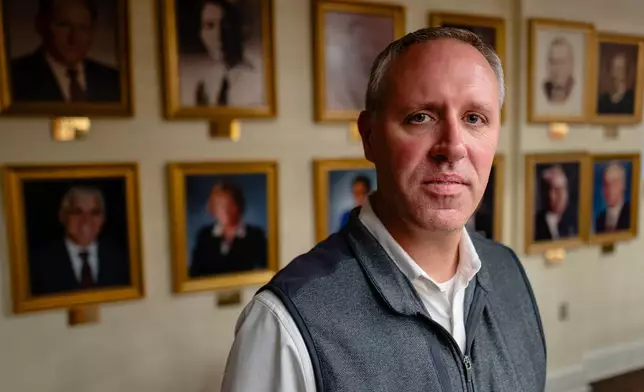
Superintendent Dr. Joshua Matthews sits for a portrait at the Shelby County Public Schools Central Office, Nov. 18, 2025, in Shelbyville, Ky. (AP Photo/Jon Cherry)
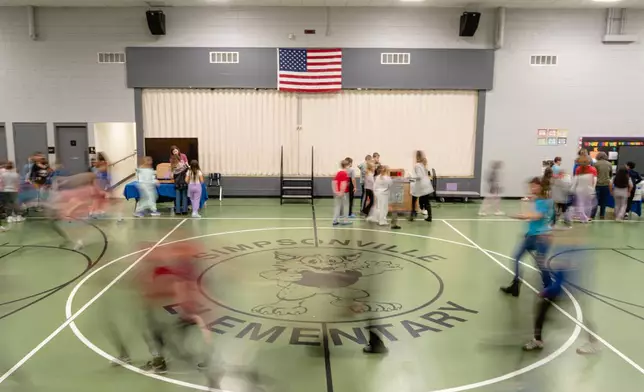
Students rotate stations during a science, technology, engineering and mathematics activity, facilitated by the Kentucky Science Center, in Simpsonville Elementary School, Nov. 18, 2025, in Simpsonville, Ky. (AP Photo/Jon Cherry)

Shannon Johnson stands for a portrait at Martha Layne Collins High School, Nov. 18, 2025, in Shelbyville, Ky. (AP Photo/Jon Cherry)

Students work together on a science, technology, engineering and mathematics challenge, facilitated by the Kentucky Science Center, in Simpsonville Elementary School, Nov. 18, 2025, in Simpsonville, Ky. (AP Photo/Jon Cherry)
But the Trump administration discontinued her grant, giving her a sudden end date. So when another job opened in Shelby County Public Schools — this one not reliant on federal grants — she took it.
The district 30 miles east of Louisville does not plan to fill her former position. Without the federal money, it cannot.
Federal dollars make up roughly 10% of education spending nationally, but the percentage is significantly higher in rural districts, which are not able to raise as much money on property taxes.
When the funding is reduced, many districts have no way to make up the lost money.
Since President Donald Trump’s administration began its sweeping examination of federal grants to schools and universities, millions of dollars for programs supporting mental health, academic enrichment and teacher development have been withheld or discontinued. The Republican administration says the grants do not focus on academics and they prop up diversity or inclusion efforts that run counter to White House priorities.
Some grant cancellations have been temporarily paused during legal challenges. But for schools whose states are not fighting Washington's decisions, there is little relief to be found.
That is the case in Kentucky. Nine rural school districts that received grants to hire counselors will have to decide whether they can afford to keep them. Already, more than half those counselors have left for other jobs.
Federal money supports school programs for the most disadvantaged students, such as those with disabilities, kids learning the English language and children living in poverty. Some is appropriated by Congress for bipartisan priorities such as reducing barriers to education and improving youth mental health.
In Shelby County, where federal spending makes up about 18% of schools' budgets, it also helps pay for teacher development opportunities — a key to staff retention — plus expanded after-school offerings that include tutoring, clubs and transportation.
The programs are not political, Superintendent Joshua Matthews said, and the funding loss only hurts students.
“I don’t know about everywhere in the country,” Matthews said. “But I can tell you in Shelby County, our teachers show up every day to make for sure that our kids are well taken care of, and we’re not promoting anything one way or the other.”
Even current levels of funding sometimes do not feel like enough, Matthews said. The district could try to use state or local money to help sustain the programs, but at the cost of paying for field trips or keeping class sizes small, he said.
For the counselors leaving districts that cannot afford to extend their positions, their youth mental health work is left unfinished.
“We had our minds and our goals and our plans really prepped for five-year work,” Johnson said. “We can’t really see a lot of change through systems in a year.”
The deep uncertainty has required educators to be prepared for an abrupt halt to their work while they look for ways to keep momentum, said Brigitte Blom, president and CEO of the Prichard Committee for Academic Excellence, which administers a federal grant for Shelby County and other school systems in Kentucky to expand engagement with the community and families.
"We have encouraged them to think about sustainability two years sooner than we would have,” she said.
In December, Blom learned that the administration would discontinue the federal grant.
In Washington County, a rural district south of Shelby County with roughly 1,800 students, the grant helped launch a mentoring program, a career exploration class and expanded after-school academics. Schools with those programs have seen reductions in absenteeism, said Tracy Abell, the district’s community schools director.
As federal money begins to dwindle, the effects will not be immediate. Superintendent Robin Cochran said it may take years for districts to see the gaps that emerge from programs that end today. Eventually, rural schools run out of options.
When larger districts lose funding, they may need to scale back programs. “For us, it means that it goes away,” Cochran said.
Shelby County has used funding from the same federal grant to expand its community schools program, seeking out new partnerships with city government and local businesses for more classroom and after-school learning. In Simpsonville, when the city parks department noticed a shortage of fresh vegetables at its farmers market, the district saw an opportunity for Simpsonville Elementary School, just down the street.
There, students in Katie Strange’s class now learn about agriculture, biology and ecology by growing produce for the market. Strange incorporated the work of the garden — germination, planting and harvesting — into her lessons, while parents and community organizations volunteered supplies and time to build a set of garden beds, funded by the community schools grant.
Although deer ate much of the lettuce, Strange said the school cafeteria was able to collect enough leafy greens to serve the students for lunch — a highlight for the kids. In November, long after the growing season had ended, members of the school's garden club still spoke over each other with rushed excitement, recounting the harvest.
Fourth grader Stefan Viljoen explained how they treated the garden with deer repellent and listed out their crops.
“We grew cherry tomatoes, regular tomatoes,” he started to say.
“Cucumbers!” second grader Raylee Longacre interjected. “And we tried to make them into pickles.”
“They didn't taste too good,” said Savannah Cull, a third grader.
Nate Jebsen, the district's community schools director, said that without dedicated funding for a role like his, the work to pursue such partnerships would fall to administrators who are already stretched thin.
In Eminence Independent Schools, just north of Shelby County, Emily Kuhn hopes her district will be able to extend her role as a school counselor beyond the end of this school year, when the money for the position runs out. In her district, with two schools and just under 1,000 students, the grant-funded role came without the administrative tasks most counselors juggle and focused on working with students on their mental health and emotional skills.
“It takes more than one year to build that with people here, because they're a very tight-knit, small community,” Kuhn said. “I've noticed a huge difference this year compared to last, of kids coming in and trusting me.”
The Ohio Valley Educational Cooperative, which manages the grant that funded Kuhn and Johnson’s jobs, unsuccessfully appealed the administration's decision to discontinue the funding, said Jason Adkins, chief executive officer. The federal lawsuit filed to challenge the grant's termination temporarily restored the funding, but only for a subset of districts, not including those in Kentucky.
This fall, the U.S. Education Department announced it would seek new applicants for the school mental health grants it pulled back. The Ohio Valley cooperative reapplied but was not awarded the new grant, Adkins said. Even if the cooperative had won the money, that would not have helped the staff originally hired. The new guidance limits recipients to hiring school psychologists and not counselors.
In the initial grants, the organization focused on hiring counselors, in part because of a shortage of psychologists in rural areas, Adkins said. School psychologists require more training and are in high demand in larger, urban districts. The goal was to hire quickly and start boosting mental health support right away.
Even if there was the money to hire more psychologists, Adkins said, he was unsure whether there would be enough applicants to fill those roles.
The Associated Press’ education coverage receives financial support from multiple private foundations. AP is solely responsible for all content. Find AP’s standards for working with philanthropies, a list of supporters and funded coverage areas at AP.org.
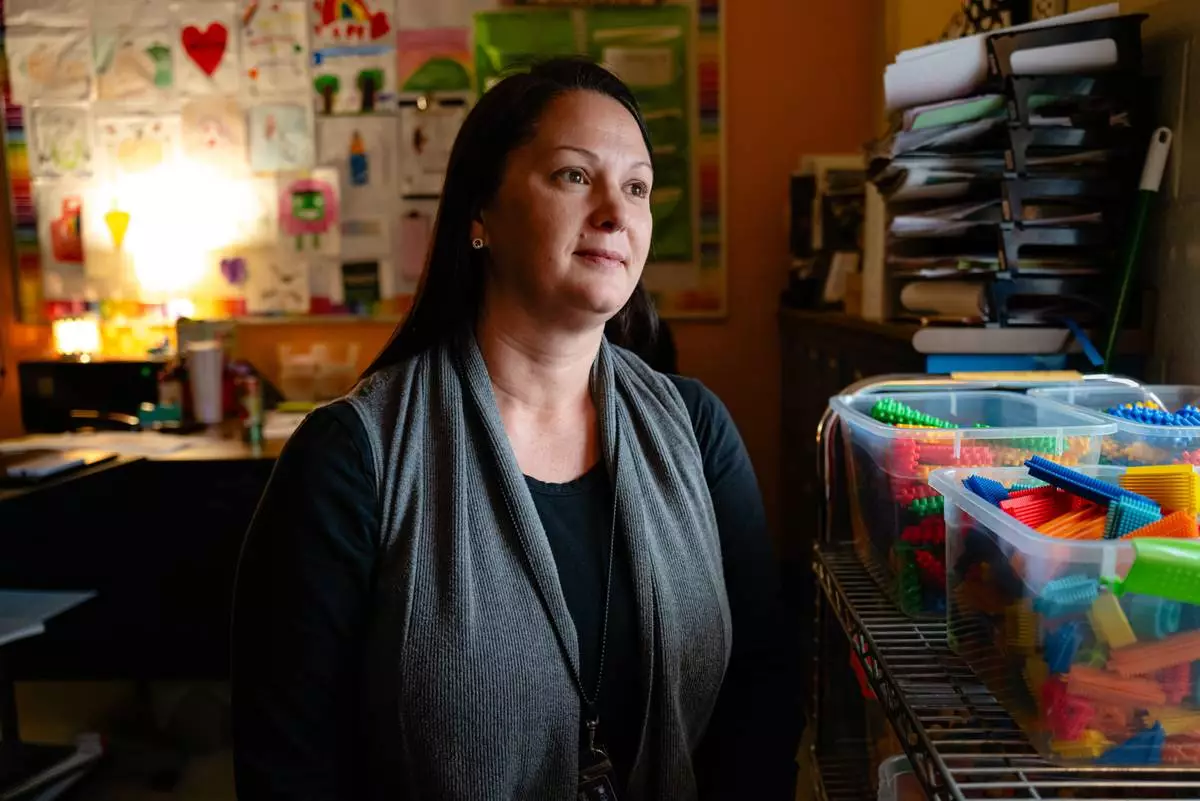
Katie Strange sits for a portrait at Simpsonville Elementary School, Nov. 18, 2025, in Simpsonville, Ky. (AP Photo/Jon Cherry)
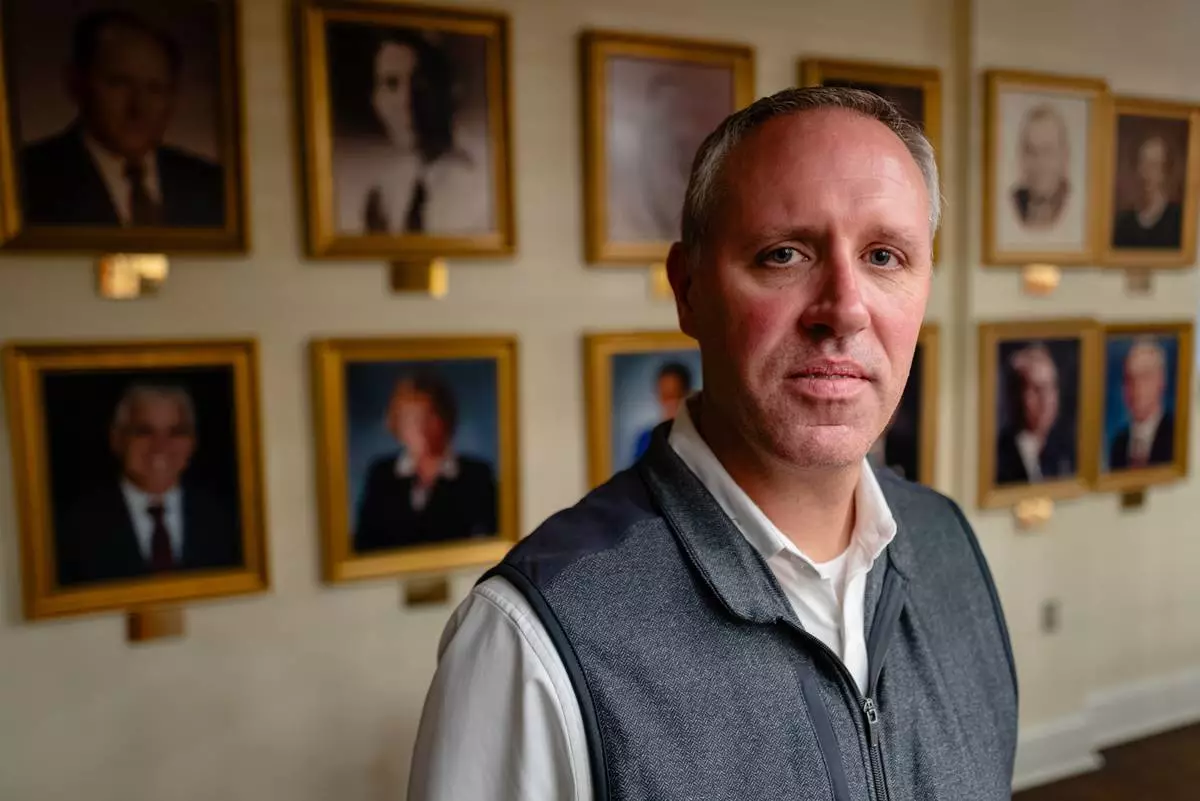
Superintendent Dr. Joshua Matthews sits for a portrait at the Shelby County Public Schools Central Office, Nov. 18, 2025, in Shelbyville, Ky. (AP Photo/Jon Cherry)
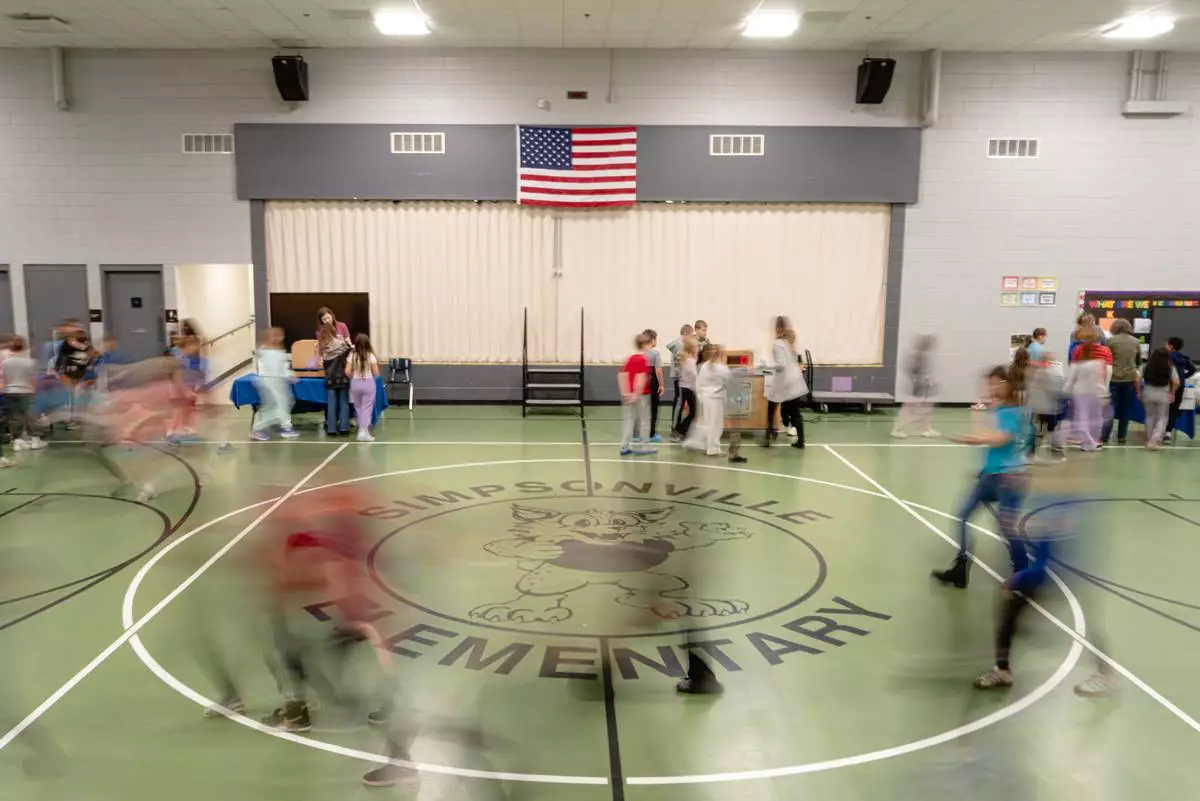
Students rotate stations during a science, technology, engineering and mathematics activity, facilitated by the Kentucky Science Center, in Simpsonville Elementary School, Nov. 18, 2025, in Simpsonville, Ky. (AP Photo/Jon Cherry)
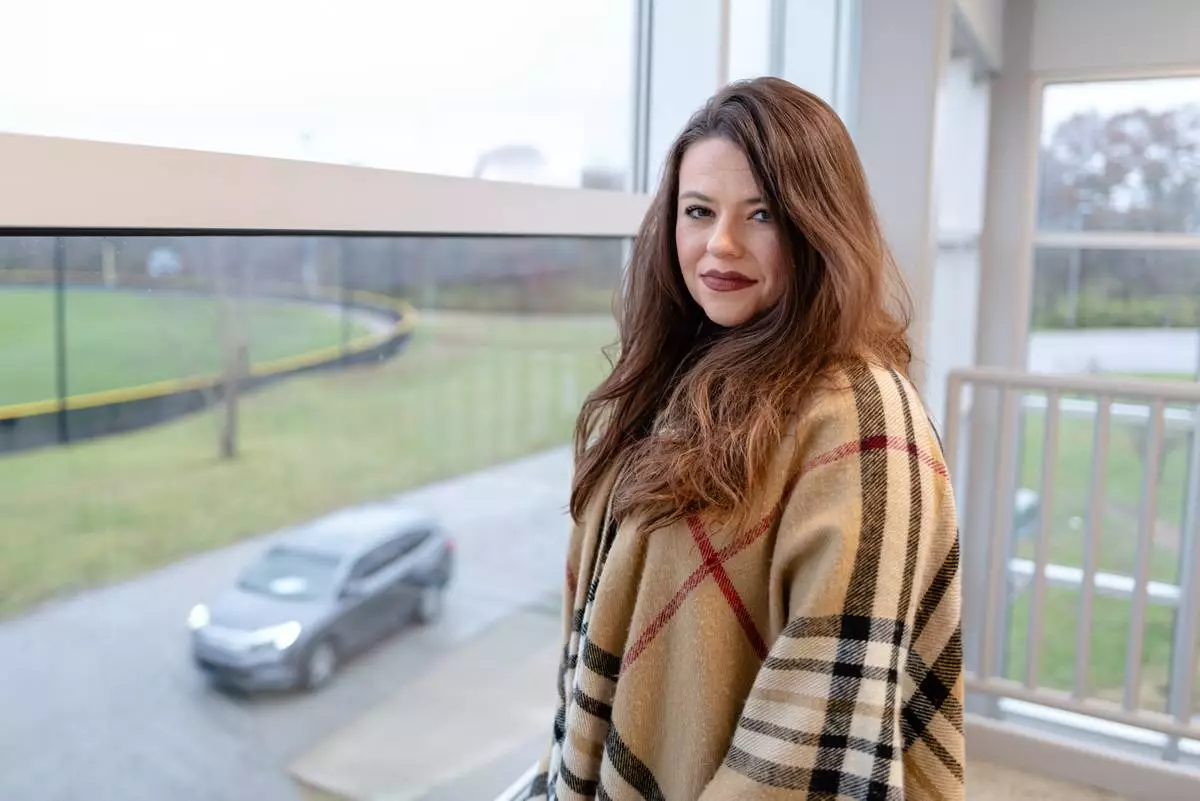
Shannon Johnson stands for a portrait at Martha Layne Collins High School, Nov. 18, 2025, in Shelbyville, Ky. (AP Photo/Jon Cherry)

Students work together on a science, technology, engineering and mathematics challenge, facilitated by the Kentucky Science Center, in Simpsonville Elementary School, Nov. 18, 2025, in Simpsonville, Ky. (AP Photo/Jon Cherry)