Japanese citizens held a rally in front of the Prime Minister's Office in Tokyo on Thursday morning, demanding the Japanese government face up to history, urging Prime Minister Sanae Takaichi to retract her erroneous remarks regarding China's Taiwan region, and voicing opposition to her plans to amend the constitution and expand Japan's military capabilities.
At the rally, protesters argued that such remarks and moves could potentially steer Japan back toward the old path of militarism.
At a Diet meeting in early November, Takaichi claimed that the Chinese mainland's "use of force on Taiwan" could constitute a "survival-threatening situation" for Japan and implied the possibility of armed Japanese intervention in the Taiwan Strait, which drew strong criticism worldwide.
Supported by revisionist groups seeking a return to imperial "glory," Takaichi has accelerated Japan's military ambitions by advocating significant increases in defense spending and loosening restrictions on arms exports.
In updating Japan's National Security Strategy and two related documents, last revised in 2022, she is also reportedly considering revising the long-standing Three Non-Nuclear Principles, which prohibits nuclear weapons from entering Japan's territory.
"I believe that Japan as a whole is now retracing the old path of militarism, but many people are not aware of this. I am completely opposed to the constitutional amendment that the government is promoting, the relaxation on the Three Non-Nuclear Principles, and the unilateral decisions made by the government cabinet regarding the use of weapons. I think the current prime minister is the worst prime minister," said a protester.
"As politics continues to deteriorate, school education is also distorting the facts and no longer teaching students the true history. This is interlinked with the Japanese government's regression in historical perception. Because of this, Japanese citizens are becoming less and less aware of the truth, and politics is getting worse and worse, forming a vicious circle. Therefore, we must study history seriously, deeply reflect on the war crimes, conduct necessary self-examination, and face the international community earnestly on this basis. Otherwise, we will have no future," said another protester.
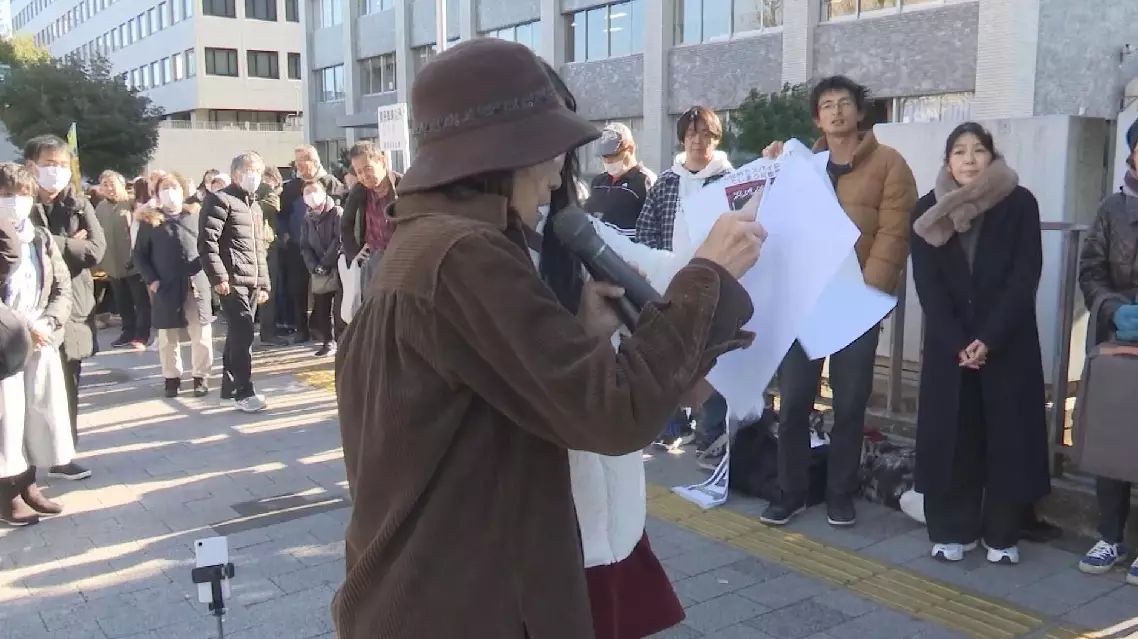
Japanese rally against PM, military buildup
A World Health Organization (WHO) medical epidemiologist on Sunday sought to ease public concerns over a hantavirus outbreak linked to a cruise ship, stressing that the virus is not airborne like COVID-19 and that the average person has no reason to worry.
Spain began evacuating passengers the same day from the hantavirus-stricken cruise ship MV Hondius, which had anchored earlier off the Port of Granadilla on the island of Tenerife.
The MV Hondius departed Argentina on April 1 with more than 140 passengers and crew from 23 countries on board. The ship has reported eight infections, including three deaths. Six of the cases have been laboratory-confirmed as Andes virus infections, caused by a rodent-borne hantavirus endemic to South America and the only known hantavirus strain capable of limited human-to-human transmission.
Boris Pavlin, a medical epidemiologist with the WHO, said the cruise ship affected by a hantavirus outbreak had been carefully managed by Spanish authorities and posed little risk to the general public. "This is not COVID. The average person does not need to be worried about hantavirus here in this setting. These folks are being managed very carefully, very deliberately, by the Spanish authorities; they're getting off the ship, they are getting into small boats, they are being spaced apart in the buses so there's no risk to one another. Even if one were to become symptomatic -- we know that none of them were symptomatic as they have been leaving the ship -- they're going straight to their aircraft and they're being taken to their respective national jurisdictions," he said.
Pavlin said the exact source of exposure remained under investigation, but the initial cases appeared to be linked to a pre-cruise land excursion in South America.
"From what we understand of the initial cases, there was -- as one does often on a cruise -- there was a land-side excursion before the cruise in which places were visited that are home to these specific rodents that are associated with the Andes hantavirus. These are not worldwide rodents; the long-tailed rice rat is very specific to the Andes Cordillera region of South America, and that's where people who are exposed to the rodents were. So it was in one of those places they were exposed. We don't know exactly because there are several possibilities, and I believe that the Argentinian authorities are actually even going to look at that and try to do some animal sampling to get to the very bottom of it. But that part's not unexpected at all," he said.
The official praised Spanish authorities' handling of the ship and described the response as a closely coordinated international effort.
"This has been an extremely cooperative, collegial international effort. The Spanish authorities are very diligent and deliberate about what's happening here. There's nothing that would surprise us. I think that somebody might become exposed; we want to obviously make sure that people who are coming off the ship are not newly exposed to one another as they get off and go to their respective places, and we're not seeing that," Pavlin said.
But while the immediate disembarkation process had gone smoothly, he emphasized that health officials were not letting their guard down.
"However, the contact tracing and follow-up of every person who has been in even the lightest contact with the patients will continue until a maximum incubation period. In any case, there are contingency plans should someone become ill, and we know that it doesn't just spread like wildfire, so even if they were to become ill, we don't expect a large outbreak after this," the official said.
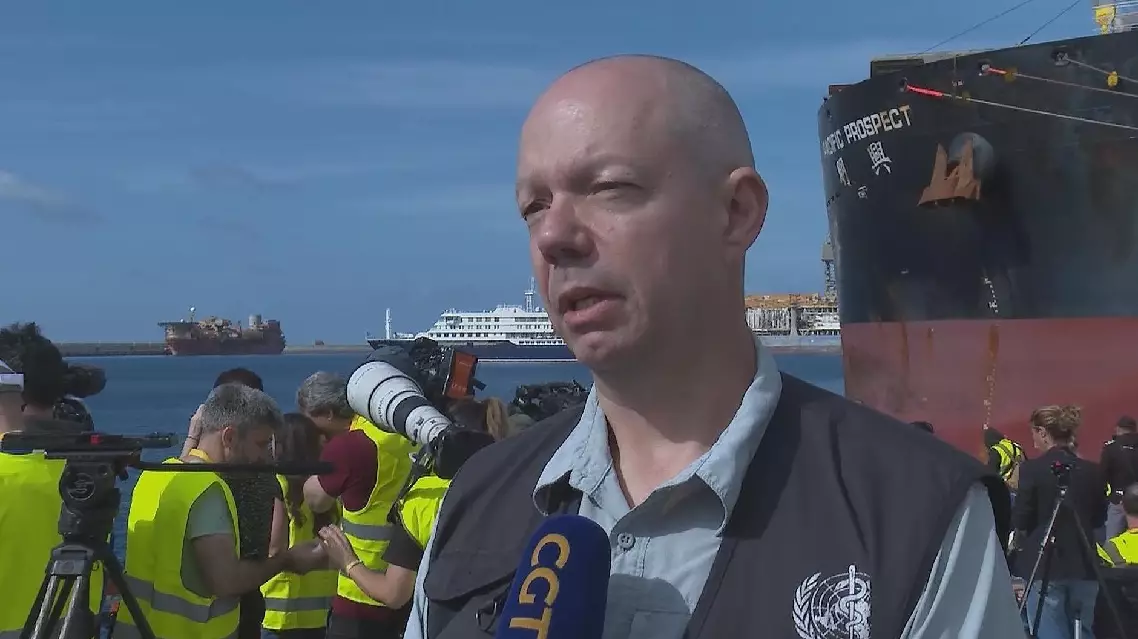
Cruise ship hantavirus outbreak "not COVID," poses low public risk: WHO expert